For the first time since its foundation, Makro is expanding its labelling business to include a range of filling machines. However, the Mantua-based company has chosen a very specific and well-defined segment: that of weight-based or gravimetric fillers, in which the quantity of product introduced into the container is measured using load cells. The decision is rooted in Makro’s DNA. Cristian De Monte, Area Sales Manager for the Italian region, explains: «This choice does not stem from a desire to diversify without an already established technical foundation. Some of Makro’s founders, managers and technicians come from industrial groups where they had previously worked on the design of filling machines, particularly weight-based ones. For us, therefore, it was not a case of entering a completely new world». This gave rise to the project that took Makro from the initial decision to the sale of the first machine in around a year and its installation in less than a year and a half.
A targeted choice
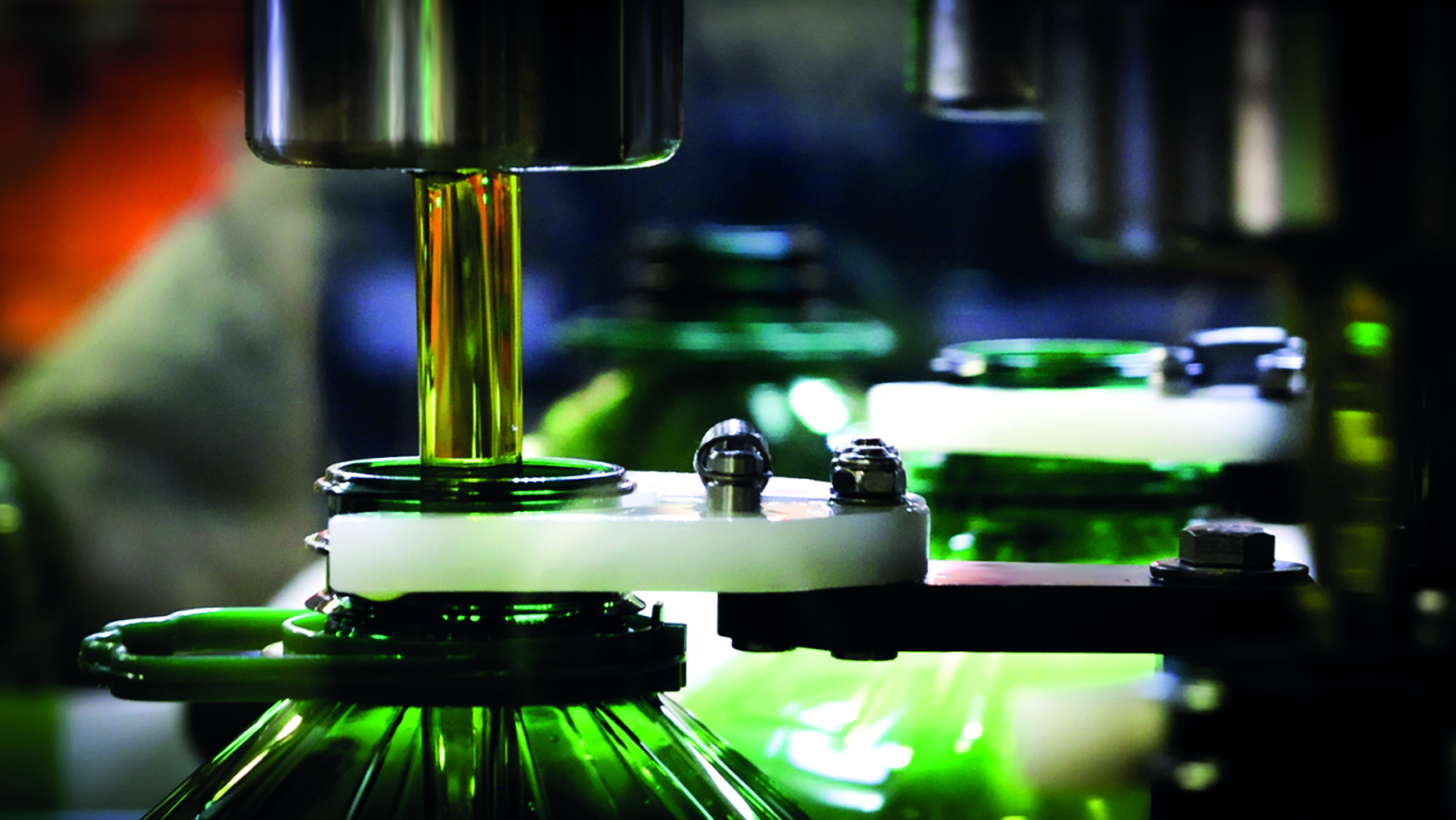
Makro’s filling machine is designed for weight-based filling of non-viscous liquids and dense products. The first target markets identified are the food sector, with a particular focus on oil, and home & personal care. Possible applications also include detergents, creams, spreads and mineral oils. In the beverage sector, the technology can be used for non-carbonated products compatible with gravimetric filling, such as certain fruit juices. However, it is not the solution chosen by Makro for water, still wine, beer, sparkling wines and carbonated soft drinks, which are generally associated with other filling technologies, such as light vacuum or isobaric filling.
This decision also reflects developments in the markets in which the company operates. De Monte says: «Makro has built a significant part of its business on the labelling of wine and spirits, but in recent years has seen the food and chemicals sectors gain in importance». De Monte points to a shift from around 60 per cent to 40 per cent of turnover in wine and spirits, whilst the food sector’s share has risen to 35 per cent. According to the company, these figures highlight the need to focus on sectors with more dynamic demand. Weight-based filling also enables Makro to target customers it has already acquired through its labelling machines. On closer inspection, this represents not only a commercial advantage but also a practical one: the company is already familiar with the products, containers, speeds and requirements of the production lines into which the new machine will be integrated.
From labelling to filling
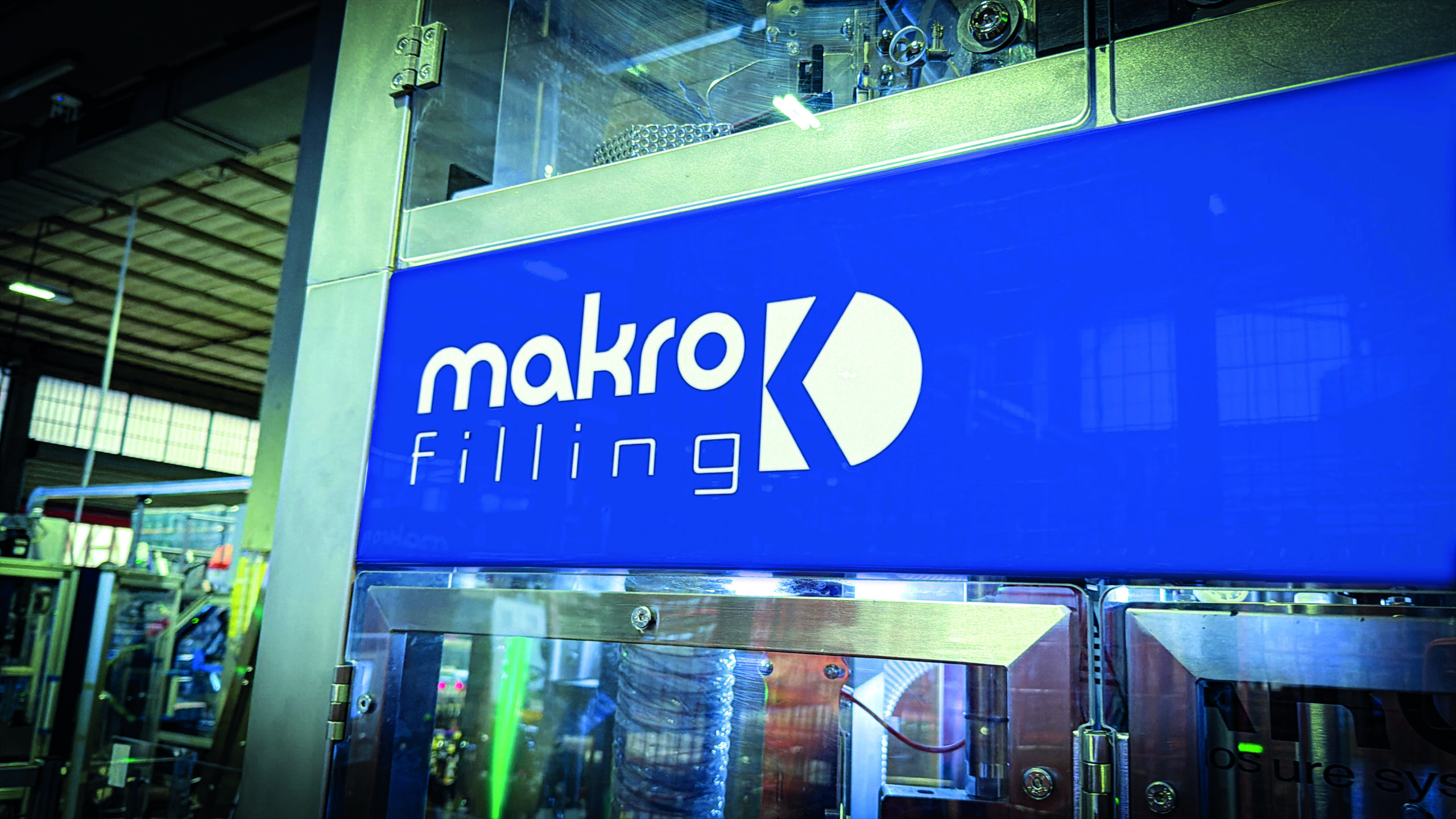
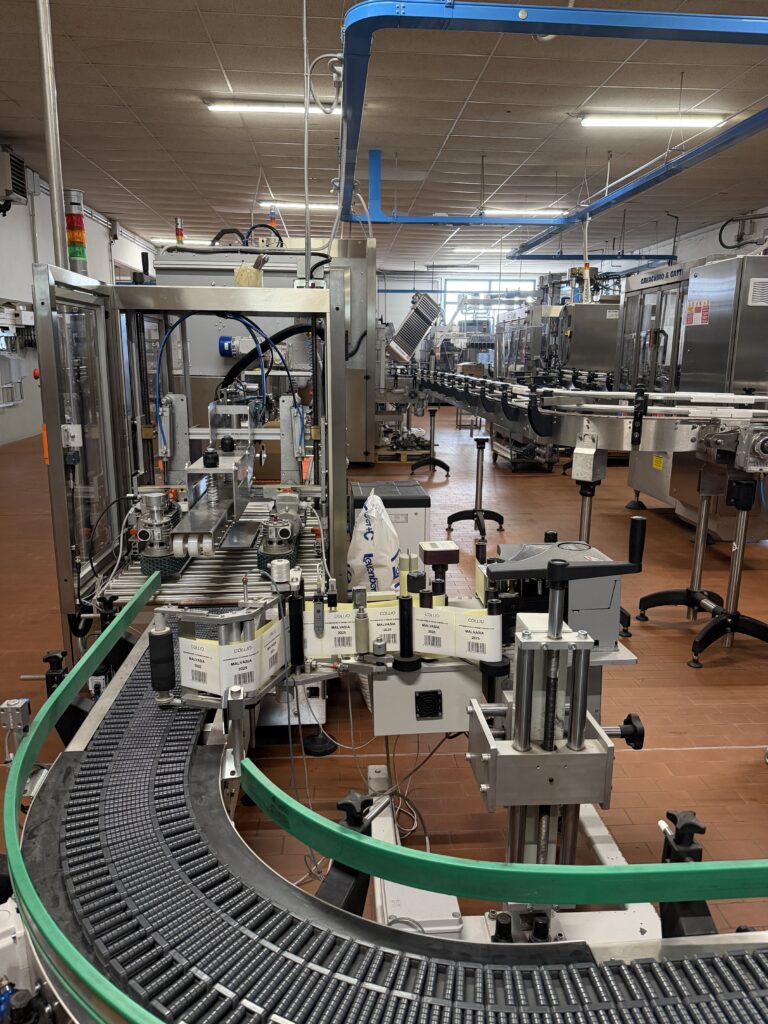
The key element on which Makro bases the differentiation of its filler is the transfer to the filling process of the electronic architecture used on its labelling machines.
According to De Monte, many gravimetric fillers currently available on the market still rely heavily on mechanical transmissions. «Our filler uses brushless motors to drive the machine. This choice reduces dependence on cardan joints, gears and other mechanical systems, and allows movements to be controlled electronically».
The benefit extends beyond energy consumption: in gravimetric filling, the container is weighed whilst receiving the product. The vibrations generated by the machine can therefore interfere with the load cell readings, introducing fluctuations and making it more difficult to control the dispensed quantity. «By having an electronically driven machine, we have significantly reduced vibrations, allowing the load cells to operate more stably». This reduction in stress thus contributes to the continuity of the weighing process and the accuracy of the filling. It is this, rather than simply the use of brushless motors, that forms the technical link between Makro’s experience in labelling and the new machine.
However, the decision to use weight-based control does entail a higher investment compared with some alternative solutions, as each filling point requires a load cell. Makro is therefore focusing on applications where direct control of the quantity dispensed into the container can justify the cost of the technology.
The first installations
Makro’s first filling machine is already operational today following a successful field trial at Salvadori in Florence, where it handles three olive oil bottle sizes using an 8-valve system, achieving speeds of 2,000 bottles per hour for the 3-litre size and 1,600 bottles per hour for the 5-litre size. Salvadori already uses Makro labelling machines. The new solution is capable of filling sizes up to 5 litres at speeds of up to 7,500 bottles per hour and sizes up to 1 litre at speeds of up to 24,000 bottles per hour, with configurations ranging from 8 to 50 valves.
This installation also served as an industrial trial. Makro directly oversaw the commissioning and continues to monitor the machine’s performance under real production conditions.
Makro has already made further offers but is maintaining a gradual approach for the time being. «In-house tests are necessary, but it is only when a machine is operating for two shifts a day that its performance can truly be assessed», emphasises De Monte. Before stepping up its commercial presence, Makro therefore wishes to gather further feedback from the field.
The range covers applications up to approximately 24,000 containers per hour, a figure that De Monte associates primarily with the oil and home & personal care markets. However, the machines’ final performance depends on the product, format, container material and line configuration.
The Italian market
In the Italian market, Makro is building on an established position in labelling. De Monte points out that Italy accounts for an average of between 25 and 30 per cent of the company’s turnover and that, over the past year, 40 of the approximately 110 machines produced in total were sold in the country.
The presence of numerous food, olive oil, wine and spirits companies makes Italy a significant market for this new venture as well. At the same time, Makro is entering a segment in which manufacturers with established experience are already operating. The chosen positioning therefore does not involve presenting itself as a generalist manufacturer of any type of filling technology. Makro is starting in one segment – gravimetric filling – where it believes it can utilise its existing expertise and introduce greater electronic control over the filling process. A possible expansion into other types of filling machines is not ruled out but will be assessed in light of market trends and customer demand.
Towards complete production lines
Entering the filling sector also changes the role Makro can play within a project. With just the labelling machine, the company was involved in a specific stage of packaging. With the filling machine, however, it can now position itself as a point of contact for complete lines, integrating filling, labelling and the other units required for the process.
The filling machine is, in fact, the central machine around which the other stations are sized and coordinated. Makro can thus apply to the line the expertise already possessed by its technicians, drawn from their experience in designing complete plants.
Labelling remains a key activity, on which the research and development department continues to focus. Filling does not, therefore, replace the company’s original core business. It simply broadens the scope within which the company intends to operate. Future prospects will now depend on the performance of the first installations, the ability to consolidate the new product range and the evolution of demand in the food, non-carbonated beverage and home & personal care sectors.