Sustainability continues to be of interest to citizens, yet it faces challenges related to understanding and trust. At a time when the need for credible information is growing, businesses are tending to communicate less. This is one of the contradictions that emerged during the fifth edition of the “Good Communication Forum” (Forum della Buona Comunicazione), held on November 4th at Ecomondo. Before a packed room, representatives from institutions, the business sector, the media, and the communications field gathered to discuss the climate emergency and the social sustainability of the transition.
Between Distrust and the Climate Emergency: Data and Obstacles to Action
According to data presented by Andrea Alemanno, Head of Public Affairs and Corporate Reputation Service Lines at Ipsos Doxa, more than 60% of Italians are unable to determine whether a company is truly sustainable, while 22% of top managers surveyed globally have scaled back their communication regarding ESG progress. Yet, 71% of people state they are willing to change their lifestyle to become more sustainable. Concrete obstacles remain: for 42%, price is a barrier to sustainable purchasing, and 32% do not know how to identify sustainable products. Change—perceived as a risk—threatens to be fueled by a vicious cycle of distrust, confusion, and corporate silence.
Climatologist Serena Giacomin, Scientific Director of the Italian Climate Network, underscored the urgency of taking action, outlining the growing climate risks expected in Italy—impacting local territories, public health, and the economy. She also explored the mechanisms of “climate delay,” which lead to the postponement of action despite scientific evidence—ranging from the shifting of responsibility and the belief that it is already too late, to the psychological and institutional barriers that hinder collective action.
The theme of responsibility also resonated throughout the institutional remarks. Alessandra Astolfi, Global Exhibition Director of the Green & Technology Division at the Italian Exhibition Group, noted that the ecological transition requires not only technological innovation but also dialogue, awareness, and the engagement of society. Filippo Nani, President of FERPI, highlighted the role of communication professionals in interpreting and guiding social change by fostering knowledge and awareness. Domenico Repetto, Director of Institutional Communication at the Ministry of the Environment and Energy Security, highlighted the value of communication as a tool for social empowerment. Meanwhile, Franco Cavalli, a board member of the Order of Journalists for the Emilia-Romagna region, underscored the importance of high-quality information and professional training for journalists—especially in light of the transformations brought about by artificial intelligence.
Building Alliances, Narrating Change
How can we continue to communicate sustainability without losing touch with people? This was the focus of a discussion between Isabella Manfredi, President of Sustainability Makers and Chief Sustainability and Communications Officer at Feralpi Group and Giampaolo Cerri, Editor-in-Chief at VITA.
“Sustainability must be integrated into corporate decision-making, going well beyond mere compliance and risk management. It serves as a driver for innovation in processes and products, enhances competitiveness, and, above all, ensures the long-term viability of a business,” Manfredi emphasized. “At a time when there is a decline in public support for the socio-environmental transition, it is more essential than ever to focus on effective sustainability communication. We must move past self-referential narratives and technical jargon to speak to people in concrete terms, highlighting the positive impacts on both the environment and society.”
According to Giampaolo Cerri, it is crucial to bridge the gap between the environmental and social dimensions of sustainability by forging alliances to combat misinformation and distrust. “Since its inception in 1994—long before the term ‘ESG’ became widely known—VITA has focused on both social and environmental issues. At a time when the very concept of sustainability is under attack, and climate change is being downplayed or undermined by ‘fake news,’ the most sensible approach is to join forces. We must provide citizens with clear evidence of why it is necessary to transform the way we produce and consume.”
From Information to Practice: How to Rebuild Trust
Emanuele Bompan, editor-in-chief of Materia Rinnovabile, highlighted the role of “agenda setting”—how the selection of topics, the space allocated to them, and the perspectives adopted shape the public’s understanding of the climate crisis, as evidenced by media coverage of the COP summits.
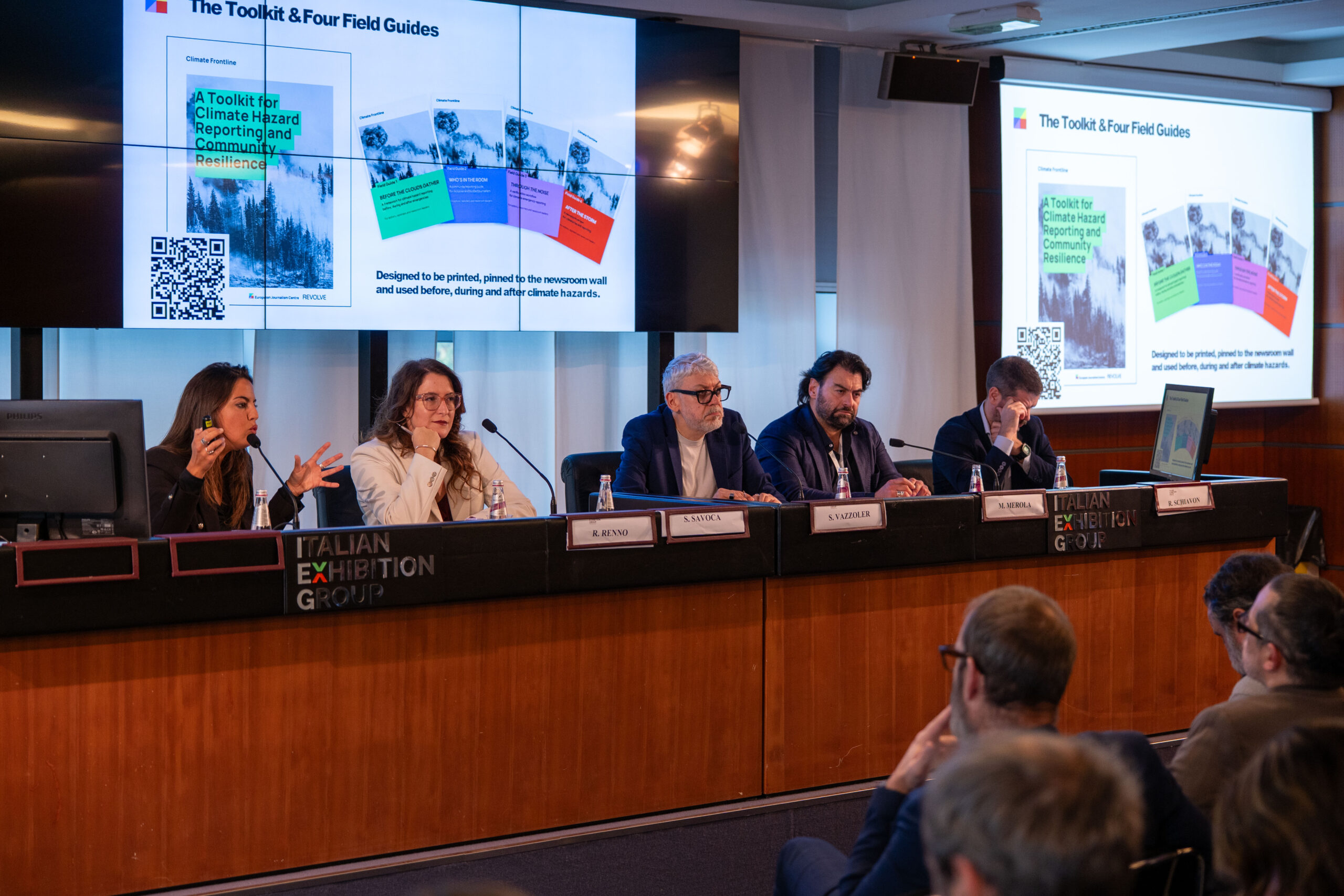
The roundtable discussion showcased concrete examples. Rachele Renno, a journalist and media specialist at Revolve, presented the Climate Frontline Toolkit—developed in collaboration with the European Journalism Centre—which emphasizes proactive reporting, local media, and community engagement as a means to build trust both before and during climate-related emergencies. Marco Merola, a journalist and science communicator, underscored the importance of tailoring language to different audiences, advocating for “constructive journalism” that focuses on solutions and climate adaptation.
“For AssoBirra, the ‘Forum for Good Communication’ (Forum della Buona Comunicazione) served as a significant platform for discussing sustainability. It provided an opportunity to share the consultative process initiated with our member companies—a process that is shaping a collective reflection on the principles and priorities that may eventually form an ESG Manifesto for the brewing sector. We firmly believe that dialogue and collaboration among businesses, institutions, and stakeholders are essential for building a shared vision of sustainability—one that balances environmental responsibility and care for people with the competitiveness of the entire supply chain,” stated Serena Savoca, Vice President of AssoBirra, with a remit for ESG and Sustainability.
Riccardo Schiavon, Communication & External Relations Manager at Logista Italia, shared his company’s experience: “Long-term sustainability and effective communication are both indispensable for developing truly transformative projects. Through T-COLLECT—Logista’s initiative for the recovery of small WEEE (Waste Electrical and Electronic Equipment)—we have collected approximately 100 tons of spent e-cigarettes, ensuring they undergo proper treatment. This experience has taught us how crucial it is to analyze how our communications are perceived and understood. The real challenge lies in translating complexity into clear, simple actions, while simultaneously building partnerships that can amplify our impact.”
In the closing session, Giulia Bassetto, a climate-focused contributor at Will & Chora Media, and Laura Magnani, a Project Manager at FROM, introduced the INEDITA Award. This initiative was created to highlight and promote ecological transition efforts taking place in mid-sized cities, inland areas, and less visible regions.
“The Forum stems from the conviction that communication should not merely describe the transition, but should actively contribute to making it possible,” remarked Sergio Vazzoler, coordinator of the FERPI Sustainability Commission, who moderated the event. “Faced with the accelerating climate crisis and the social tensions that accompany such change, we cannot afford to step back. We need knowledge, active listening, and dialogue to build alliances and engage people in the necessary transformations. This is the responsibility we define as ‘good communication’.”
The Good Communication Forum (Forum della Buona Comunicazione) is an event organized by IEG Expo and FERPI—in partnership with the Ministry of the Environment and Energy Security and the Order of Journalists of Emilia-Romagna, with Amapola serving as a technical partner—held within the framework of Ecomondo.