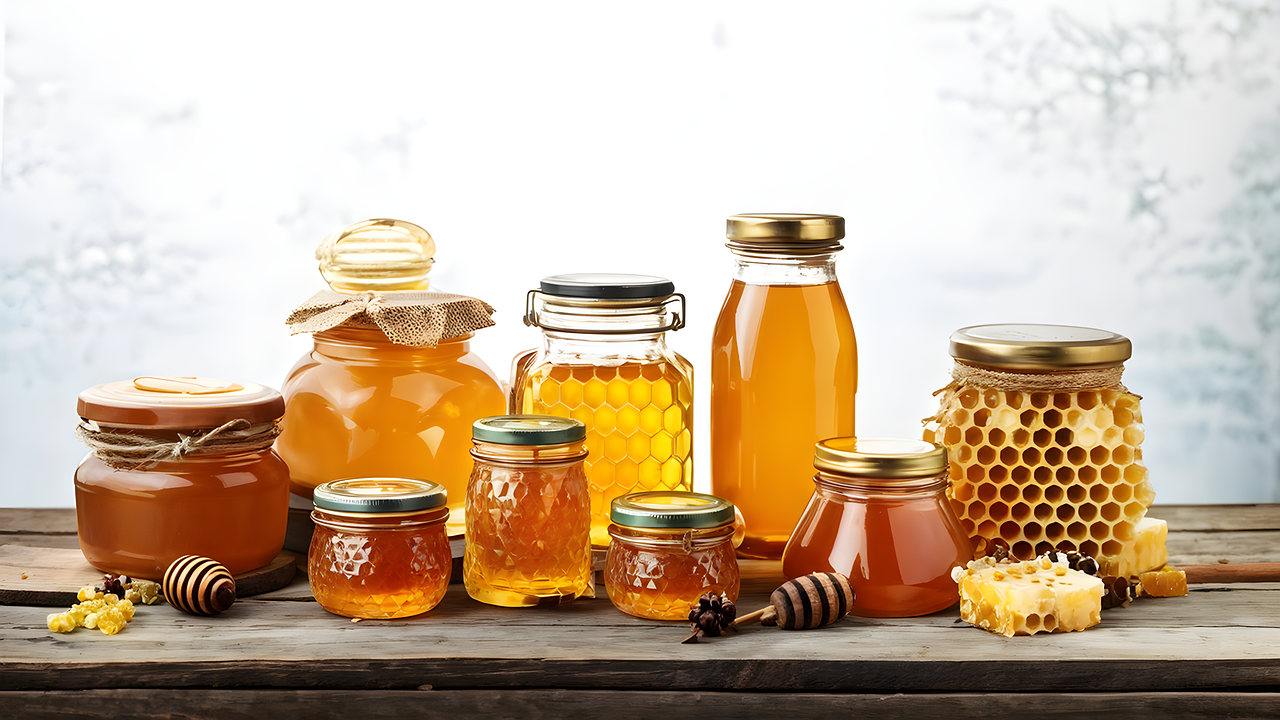
Honey adulteration is one of the most widespread and difficult-to-detect forms of food fraud.
In a recent study carried out by a team of Italian researchers (De Angelis et al., 2025), predictive models were developed for the detection and quantification of such adulteration, using near-infrared (NIR) spectroscopy and fluorescence spectroscopy.
Two authentic honeys (citrus and wildflower) were adulterated with three types of sugar syrups (glucose-fructose mixtures derived from maize and beetroot) in percentages ranging from 2% to 40%.
The NIR spectra were processed using Principal Component Analysis (PCA), followed by Partial Least Squares (PLS) regression. For the fluorescence data, PARAFAC (Parallel Factor Analysis) was used, followed by linear regression
PCA of the NIR spectra shows a clear separation between honey and adulterants, with the PC1 component correlating with the level of adulteration. The PLS model shows greater accuracy.