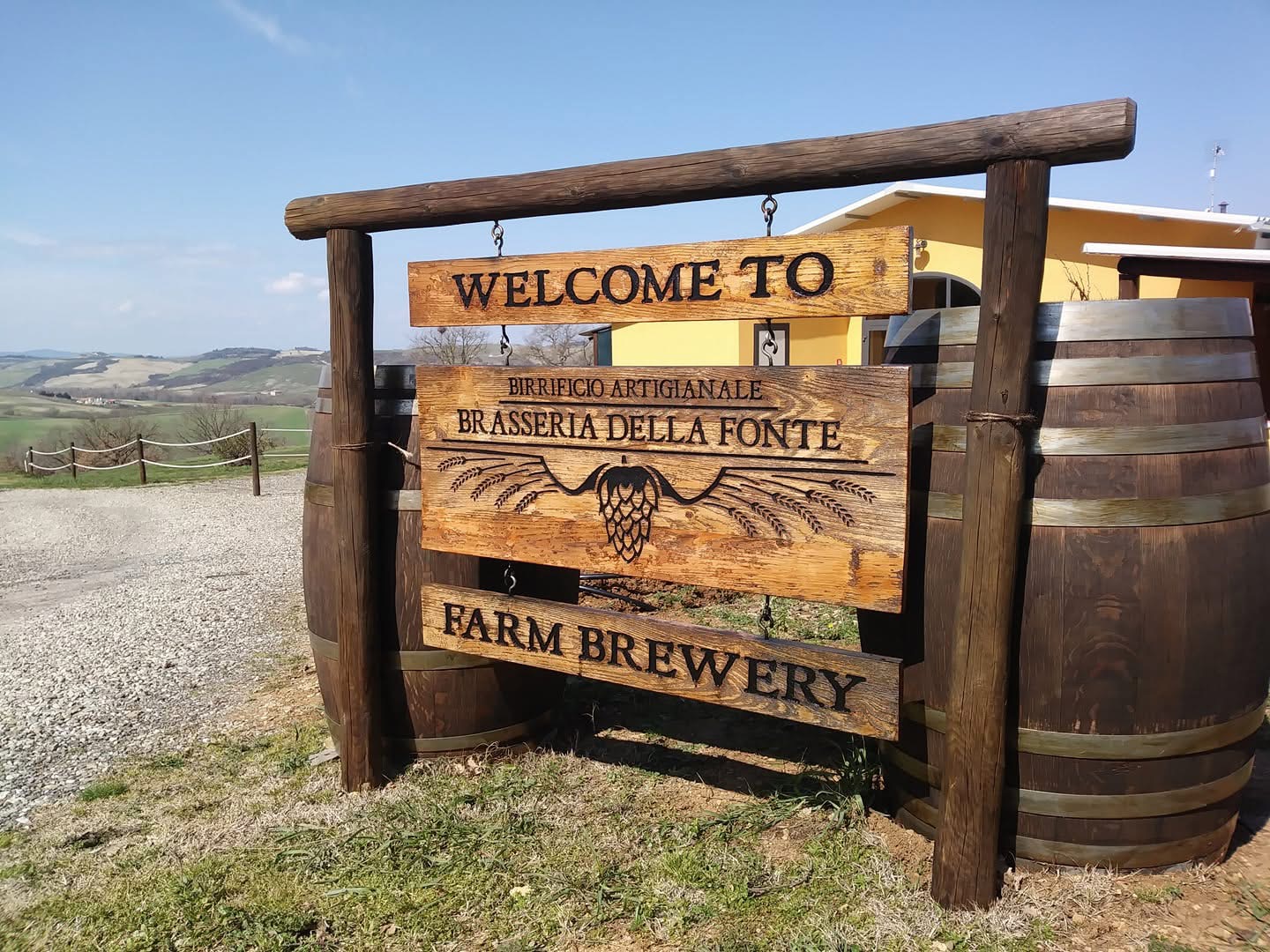
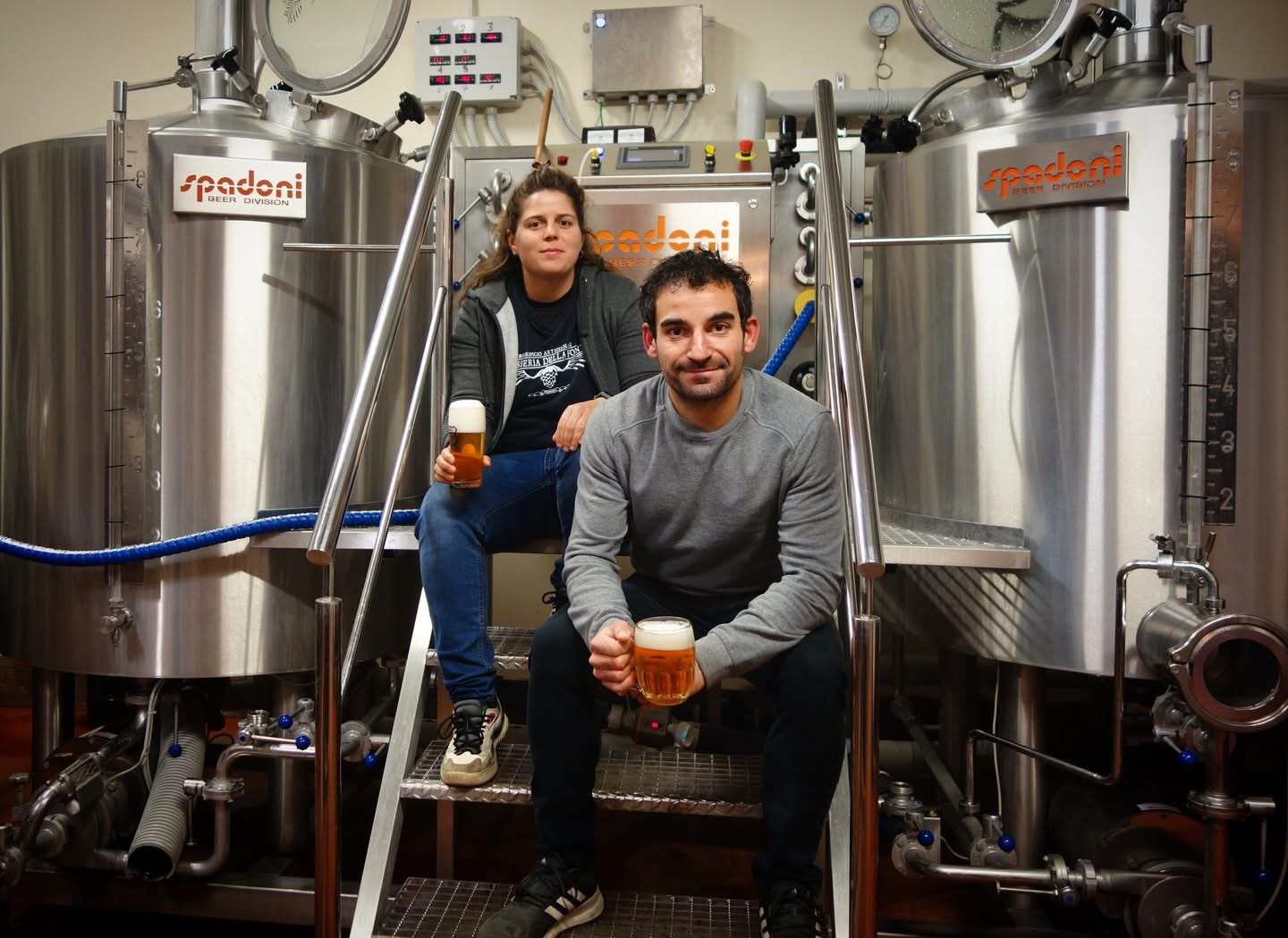
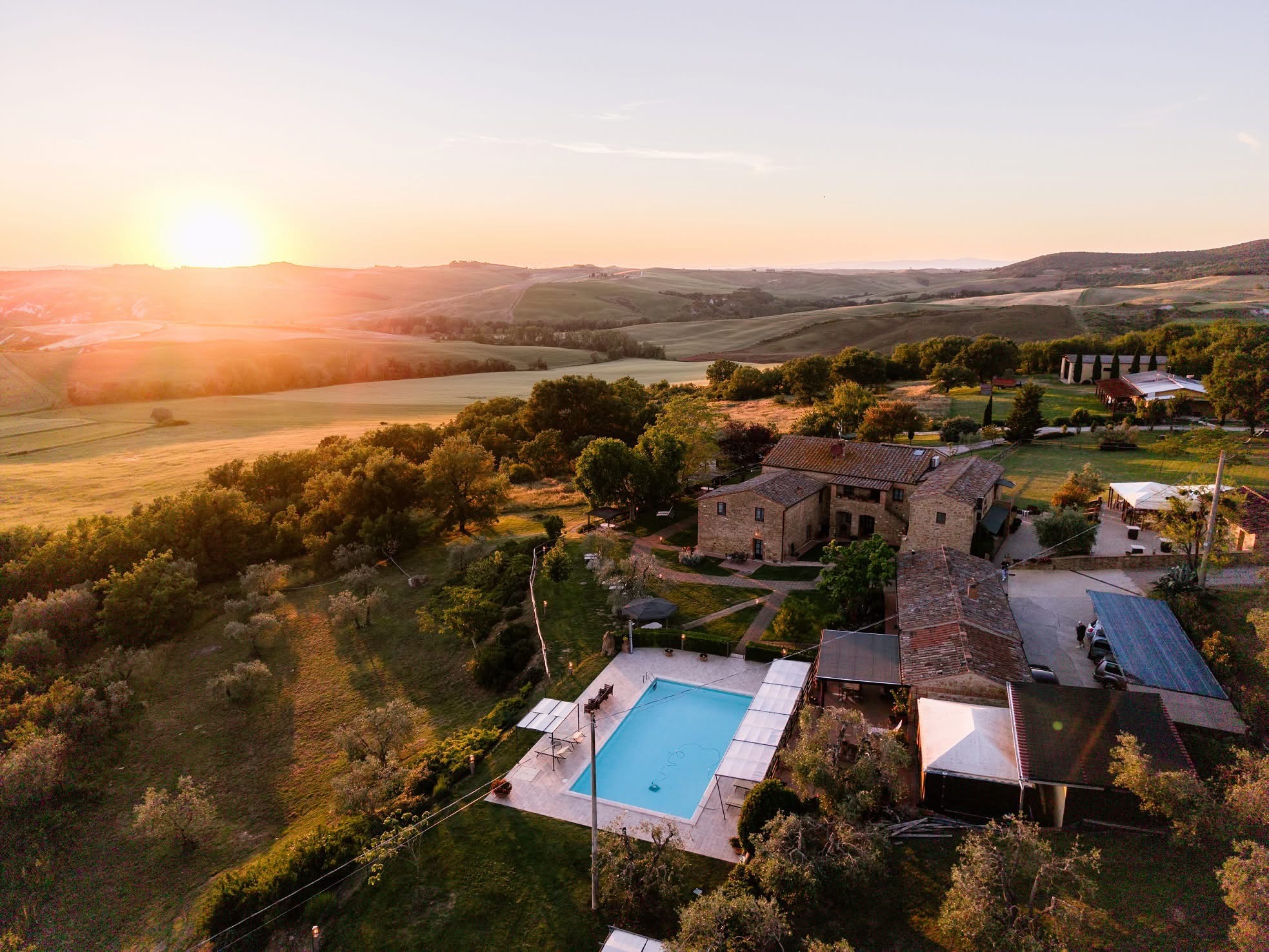
In the Crete Senesi, your gaze is lost in the greenery as the light of dusk grows thicker. In the park, among rows of olive trees and farmyard animals, you can glimpse the brewery and a handful of outdoor tables. This is the microcosm of Samuele Cesaroni: entrepreneur and master brewer. “I started out as a homebrewer and over the years I have become a specialist.” In 2016, La Fonte opened its brewery. “In the first year, I produced two or three beers as a beer firm, using a brewery in the province of Siena. The purchase of my first brewhouse marked the start of my own production.” In May 2020, Samuele opted for the technology of Spadoni Beer Division, the division of Spadoni Meccanica dedicated to the brewing sector. The plant was thus upgraded and expanded, without changing the company’s positioning, which deliberately remains niche. “For at least four years, demand has exceeded our production capacity. It’s a positive sign, but I don’t intend to increase volumes. Today, direct distribution covers around 35 customers, including pubs and specialist venues, mainly in central and northern Italy
Farm Brewery
Located just a few kilometres from Pienza, La Fonte is a business that combines beer production, hospitality and the promotion of the Tuscan countryside: “We started out as a farm. Ours has been a family-run business for over thirty years. Between 2011 and 2012, we expanded with the agritourism business, also opening the restaurant to the public.” The production style is inspired by the English school, with a marked preference for dark beers, the brewery’s pride and joy. In addition to beers inspired by American and German styles, there are also farmhouse beers, which reflect the brewery’s agricultural roots. “We cultivate 40 hectares of wheat and two-row barley. Of these, 7–8 hectares are used to grow barley for our beers. We also have a water well on the estate, which we use as our water supply”.
Multifunctionality is key
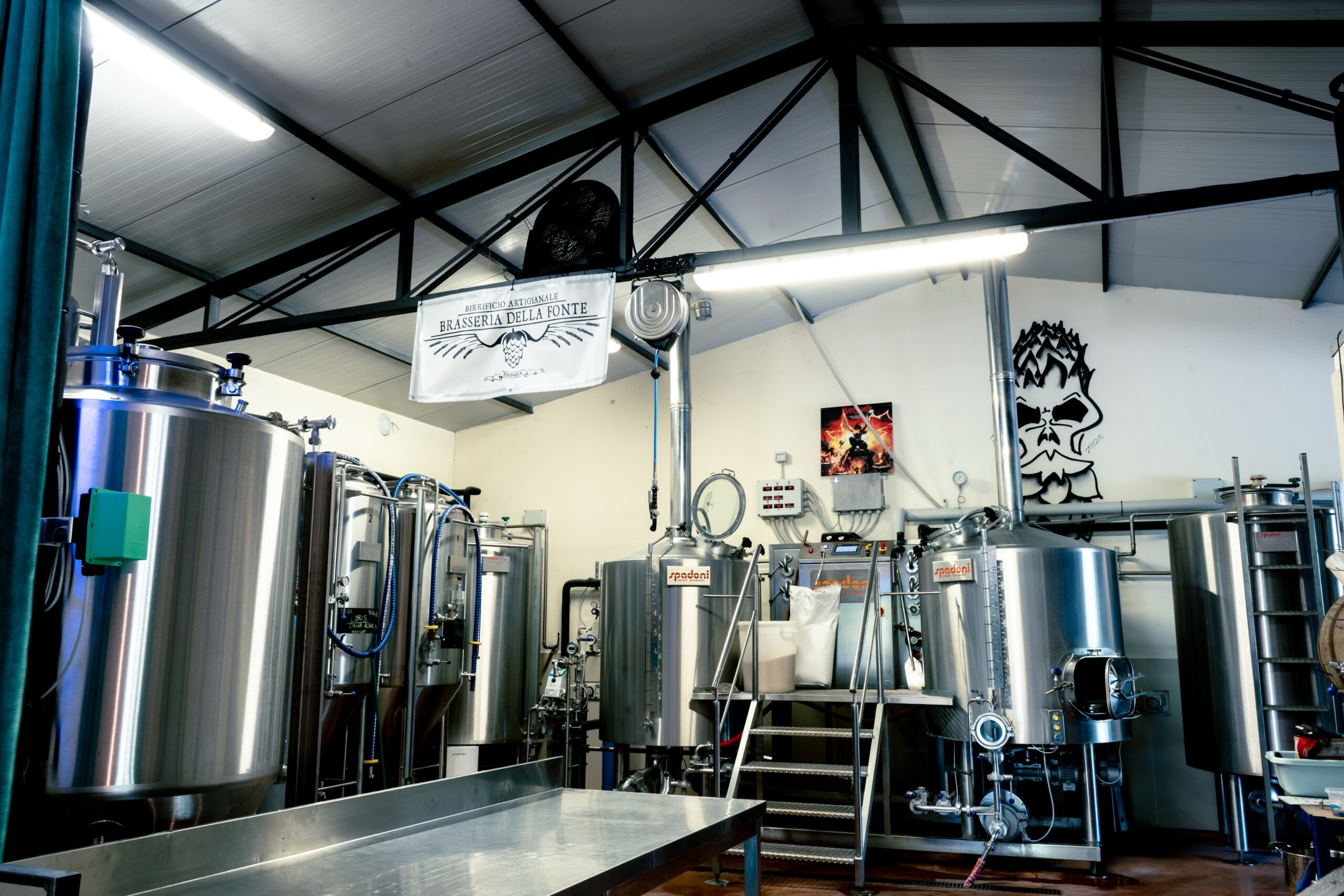
The brewhouse has a capacity of 600 litres. The extra capacity compared to the nominal capacity allows for the expansion of the wort during boiling. Mashing and filtration take place in the first tun, while boiling and whirlpooling occur in the second tun. The yield per brew is 680–700 litres of wort, for an annual total of about 74–77 brews. “Last year, we packaged 400 hectolitres of beer. The figure is slightly lower than in 2024, but up on 2023. We are on track to meet our targets,” says Cesaroni.
The winery has a total capacity of 52 hectolitres: the brewhouse is complemented by seven 7-hl vats and one 3.5-hl vat. All the tanks are Spadoni tanks with a truncated-conical shape and patented UNITANK 2.0 technology. “In addition to fermentation, they also serve as maturation vessels.” These multifunctional systems enable different stages of the production process to be managed in a single piece of equipment. “I can carry out all the operations without intermediate transfers, with a significant reduction in time and the risk of contamination and oxidation.” The temperature is controlled by means of jackets that surround the cylindrical body of the tanks, inside which the cooling fluid circulates. Spadoni UNITANKS also incorporate the functions of priming, dry hopping, carbonation and pressurisation, offering greater flexibility. They are equipped with pressure relief valves, sampling points and DIN connections, which facilitate the cleaning and sanitisation of the system.
They allow you to work under pressure and to adjust the carbonation directly in the tank, up to 2.5 bar. Dry hopping can be carried out without transfers, and sampling can be done directly, limiting foam formation. “It’s a useful solution for quality control during fermentation and ageing. It enables us to carry out constant checks,” explains Cesaroni.
The tank configuration also helps to improve the management of the beer. The truncated conical base facilitates the collection and removal of yeasts and sediments, while the partial discharge from the cone allows deposits to be removed and the beer to be drawn off at different levels. This advantage is also reflected in yeast management. “We buy it four or five times a year. We use different strains that we re-inoculate into the next batch, taking them from the cone of the previous batch. On average, we use them for four generations. As these are specific strains, they cover about 75% of our needs”.
Human-centred
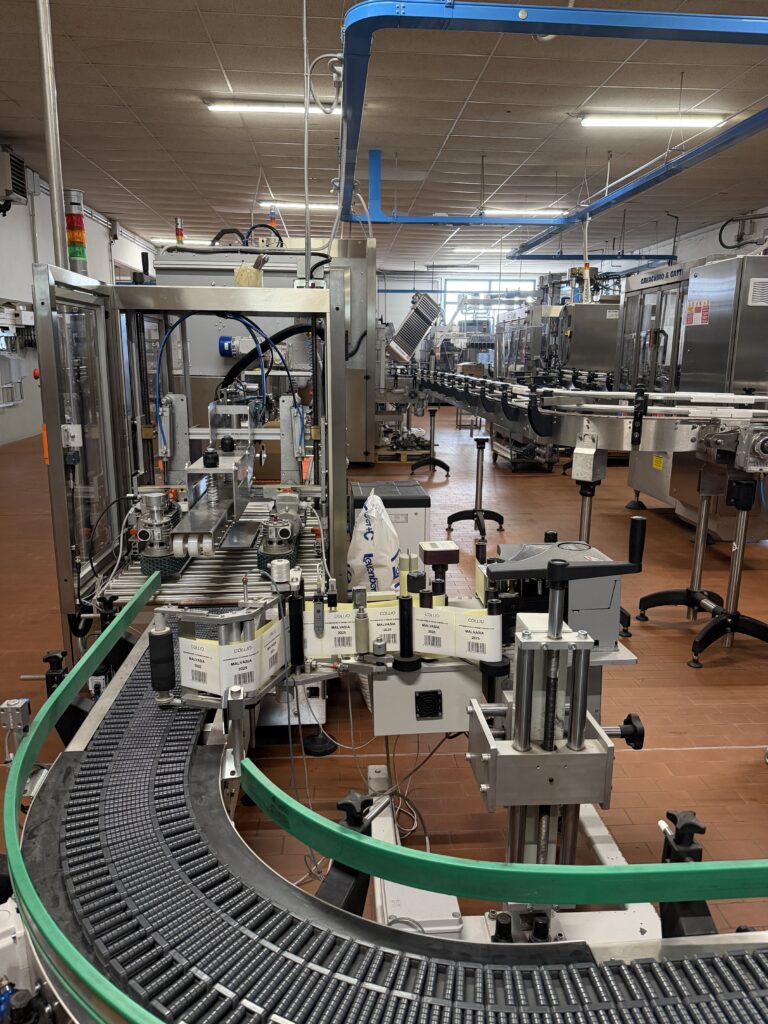
“We package using an isobaric process, with the exception of our farmhouse ales, which are barrique-aged and subsequently bottle-conditioned“. The packaging line consists of a manual isobaric bottling machine equipped with a custom-built, six-head filling system. This setup allows for an output of approximately 130 bottles per hour — exclusively in the 50 cl format — while labeling is done by hand. The department is currently evolving. “In the coming months, we will introduce an EMMA three-head canning machine, with the goal of adding the 44 cl can format to our glass lineup“. However, keg packaging remains the core business: “Our market is geared towards this format. We use 20-liter slim steel kegs and 15-liter gravity-dispense kegs. We stopped using PET at least four years ago“.