The beverage sector – spanning winemaking, brewing, distilleries, and the bottling of spirits and soft drinks – is undergoing a profound technical and economic transformation. Managing a modern manufacturing plant requires absolute precision: operating margins remain stable only if material waste is eliminated, raw material yields are tracked down to the milliliter, and unscheduled downtime is avoided. Compounding this operational complexity is a stringent regulatory framework requiring real-time telematics data transmission to the Italian Customs and Monopolies Agency (ADM) and SIAN/MASAF.
J-Software operates as a reference partner in Italy for the digitalization of customs processes, excise duties management, and 4.0 automation tailored to the beverage industry. Drawing on over fifteen years of domain expertise alongside sector leaders, the company develops specialized telematics solutions engineered to turn regulatory compliance into levers of operational control and industrial competitiveness.
The 2026 Hyper-Depreciation initiative (Transition 4.0/5.0 Plan) provides the market with a historic window to overhaul plant infrastructure and equipment. The measure allows companies to benefit from an increased tax-deductible cost for IRES and IRAP purposes of up to 180% for investments capped at €2.5 million. Consequently, a substantial portion of the capital expenditure dedicated to industrial machinery, packaging lines, and management software converts directly into tax savings, drastically reducing the net cost of technological renewal.
Bidirectional interconnection and CAPEX financial model compliance
To legitimately qualify for these tax relief rates and mitigate audit risks, purchasing standalone machinery or isolated software is legally insufficient. The cornerstone of the Hyper-Depreciation framework lies in the requirement of bidirectional interconnection: the production plant must exchange real-time data with the Enterprise Resource Planning (ERP) system, receiving operational instructions and recipes while transmitting actual production metrics, batch data, and process telemetry back to the system.
From an accounting perspective, Hyper-Depreciation applies exclusively to intangible assets classified as capital expenditures (CAPEX, Item B.I.3 of the Balance Sheet). Software delivered strictly under subscription models (SaaS/OPEX) is accounted for as operational service expenses and is therefore excluded from the tax bonus. Fully aligned with these statutory requirements, J-Software’s proprietary ERP solutions – including J-BEER for breweries, J-DIVINO for the wine sector, and J-DRINK for distilleries and liquor manufacturers – are issued under proprietary On-Premise software licenses. This model guarantees 100% eligibility for Hyper-Depreciation while preserving complete operational flexibility, whether accessed via web interfaces or deployed within private corporate server environments.
Plant equipment and J-Hub 4.0 technology
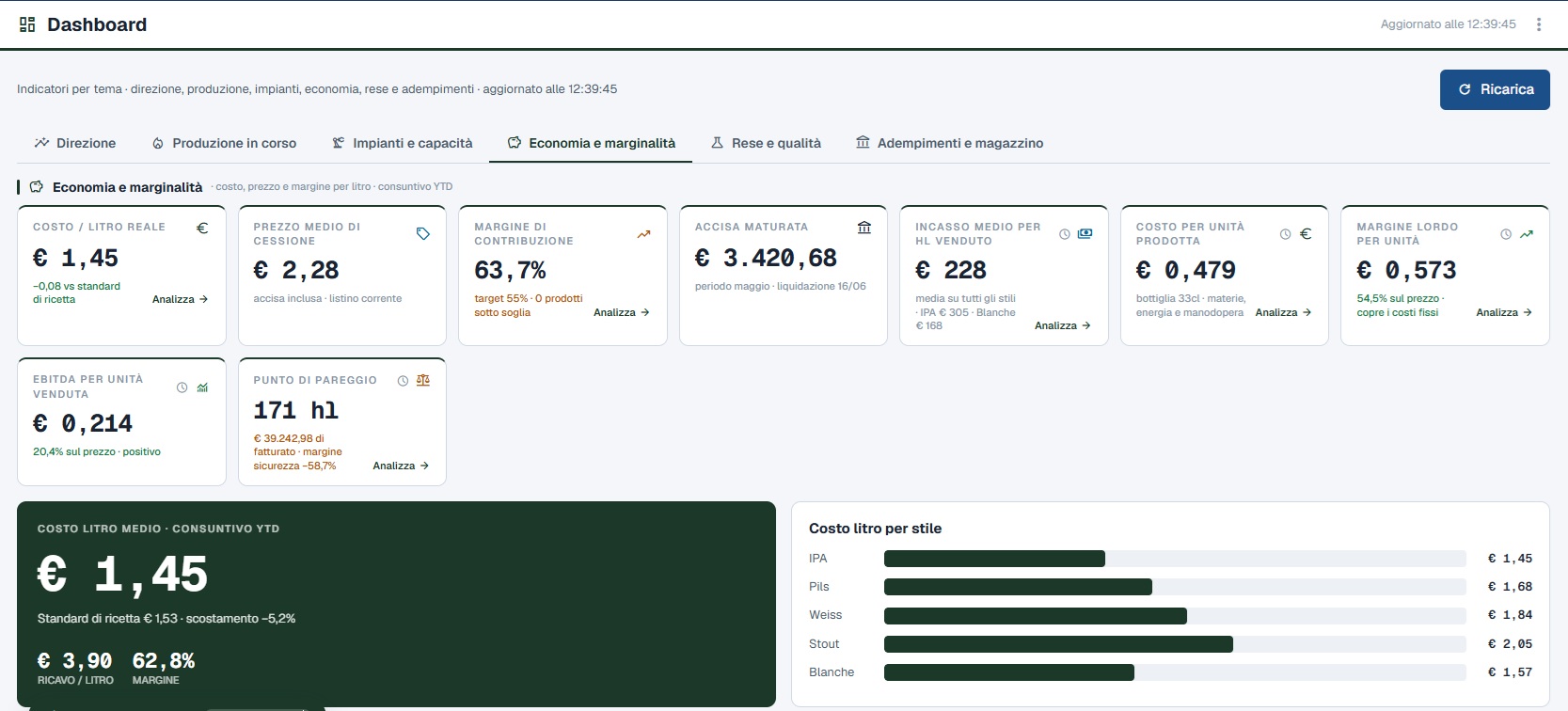
When a beverage enterprise modernizes its manufacturing infrastructure – investing in processing or distillation equipment, automated cellar management systems, or bottling, kegging, and canning lines – the core engineering challenge is preventing new equipment from operating as an isolated island of automation. Advanced 4.0 machinery loses value if generated operational data must be manually transcribed into spreadsheets to update inventory or compile customs excise registers, giving rise to hidden costs and tax non-compliance risks.
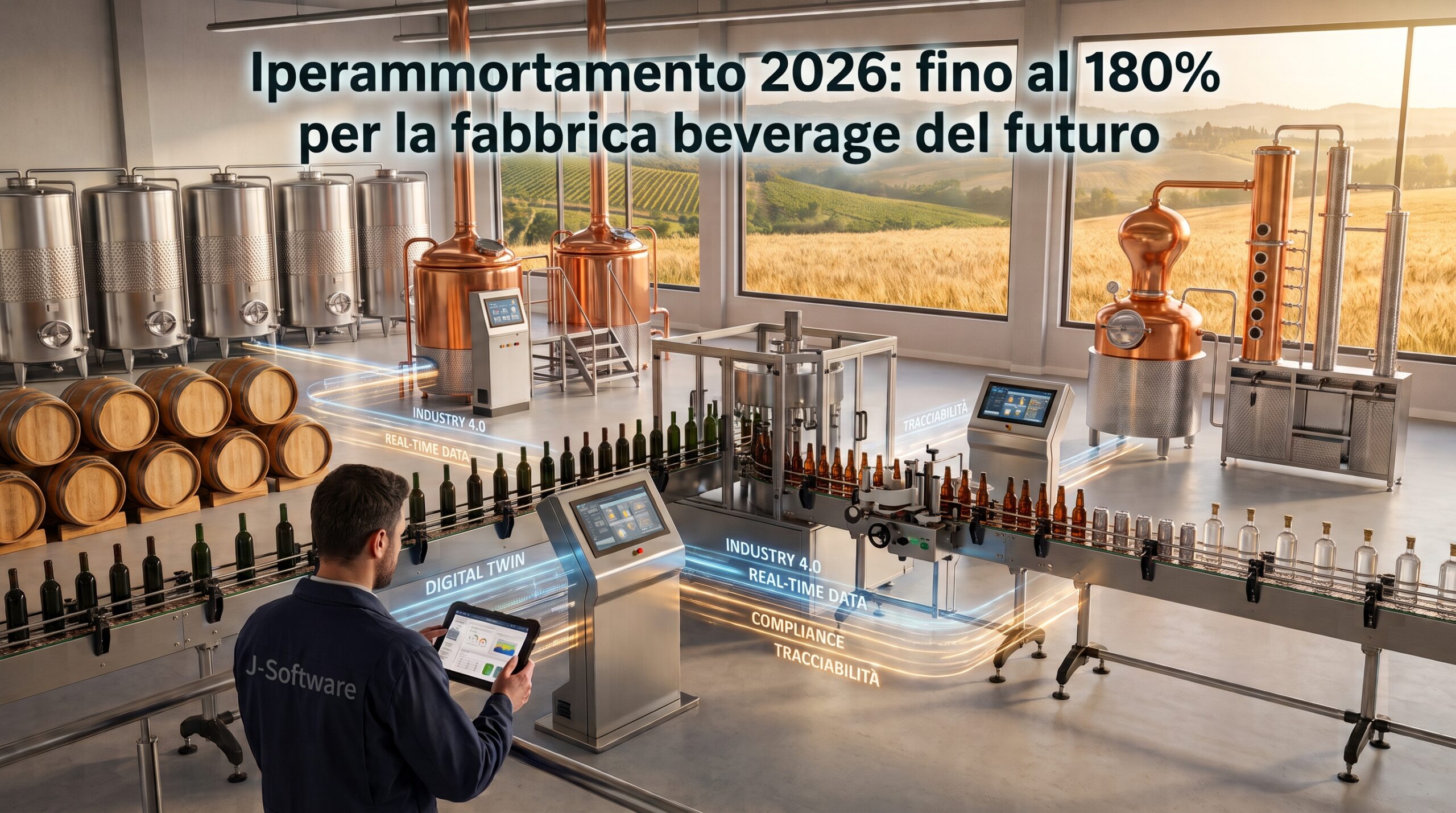
In this context, J-Software’s telematics-enabled ERPs and native J-Hub 4.0 technology act as the central pillar of the tax incentive compliance process. Functioning as a universal integration hub, J-Hub 4.0 establishes bidirectional communication with Programmable Logic Controllers (PLCs) and SCADA systems from any industrial manufacturer via standard protocols (including OPC UA, Modbus/TCP, Siemens S7, ODBC, and dedicated APIs).
The digital operational workflow: from machine to customs register
Driven by this native integration, the complete beverage manufacturing workflow is automated. During production setup, the ERP schedules job orders, and J-Hub 4.0 transmits work orders directly to the plant PLC (brewhouse, still, or filling machine), specifying item codes, batch numbers, target volumes, recipes, and thermal parameters to enable automated machine arming. Throughout processing or storage within fermentation and aging cellars, the system continuously ingests field sensor data, tracking temperature curves, density, and alcohol content to update the plant’s digital twin in real time.

On packaging lines – developed alongside international technology partners such as GAI, Comac, TMCI Padovan, Emma, Alfatek, Wild Goose, Spadoni, and Cime Careddu – J-Hub 4.0 captures line counter data in real time, calculating exact final volumes and yield losses upon cycle completion. Actual production data feeds work-in-progress logs, updates inventory, and automatically compiles ADM telematics excise registers (ALCOMB/ALCODA) alongside SIAN regulatory filings. This eliminates manual data entry, ensures end-to-end traceability from tank to shelf, and automatically generates the objective data-exchange logs required for the Technical Validation Dossier supporting the 4.0 Sworn Technical Appraisal.
«The 2026 Hyper-Depreciation must not be viewed merely as a tax compliance exercise to lower liabilities, but rather as a strategic opportunity to equip manufacturing facilities with true factory intelligence – emphasizes Marco Battaglia, Sole Director of J-Software -. In the beverage sector, production metrics cannot remain siloed within the machine; they must flow in real time toward administration and customs registers to measure yield efficiency to the milliliter, protect margins, and ensure 100% regulatory compliance. Through the J-Software ecosystem and J-Hub 4.0 technology, we transform a regulatory obligation into an indispensable driver for business growth and international expansion».