At the SPS Italia 2026 trade fair, SMC Italia (Hall 6, Stand G016) will present an advanced vision of the digital factory, focusing on a key concept: sustainability as a strategic lever for industry. SMC is not merely a supplier of automation and pneumatics components; it also positions itself as a technology partner capable of supporting companies on their digital transformation journey by providing both expertise and services.
The company’s offering is built around a systemic approach, in which each technology makes a tangible contribution to the efficient use of resources and the reduction of consumption, as well as to the improvement of production performance. Sustainability is the common thread running through all the solutions presented at the trade fair, and it is structured along four key strands.
- The first is the 4BAR factory, which promotes energy efficiency by optimising the use of compressed air.
- The second is digitalisation, understood as the collection and exploitation of data to make processes smarter and more transparent.
- The third area is predictive maintenance, which enables the reduction of waste and machine downtime through continuous monitoring of systems.
- The fourth area concerns the development of sustainable products, which have a low environmental impact and are designed to ensure efficiency, durability and reduced consumption throughout their entire life cycle.
4BAR factory: a tangible commitment to net zero
Reducing the operating pressure is a key lever for improving efficiency. Each bar reduced can lead to energy savings of between 6% and 8%, up to a total of 20–25%. Furthermore, lower pressure reduces leaks and wear on pneumatic components, thereby improving reliability and reducing operating costs. However, achieving this reduction requires a technical approach: while not all applications can operate at lower pressures without modification, many can be optimised using components designed to work at low pressures.
Although compressed air is essential for industry, it is often overlooked. In Europe, around 87 TWh of electricity is used to produce compressed air, resulting in significant annual CO₂ emissions.
For this reason, SMC offers the 4BAR factory model, which is structured in three phases. The first phase involves monitoring consumption to identify inefficiencies. The second phase involves optimising the pressure on individual production lines. The third phase extends the intervention to the entire plant.
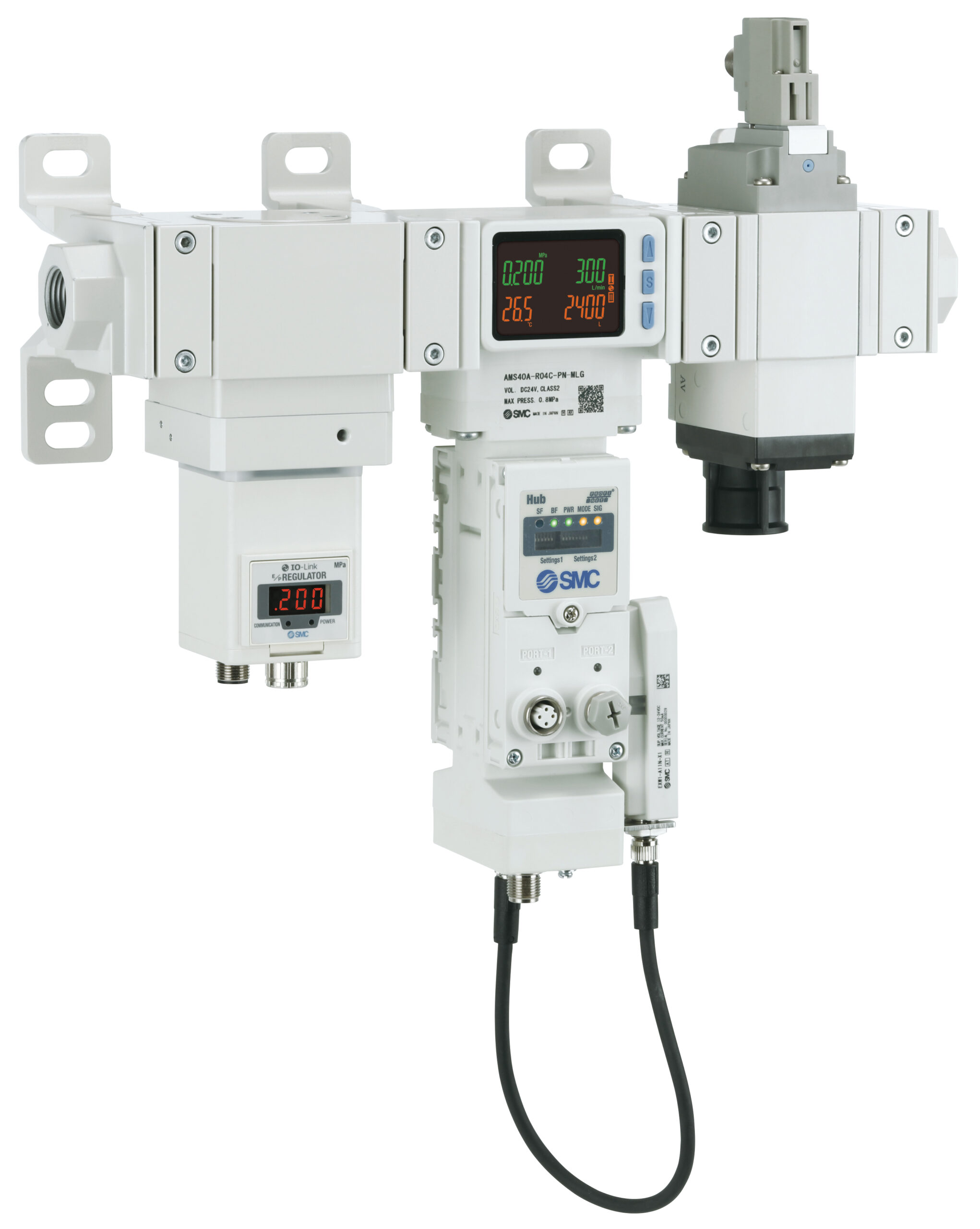
The results speak for themselves: consumption is reduced on machine tools, performance improves on screen printing machines, and productivity is maintained on assembly lines even at lower pressures. The monitoring system enables the monitoring of parameters such as flow rate, pressure and temperature in order to identify waste and opportunities for improvement.
Sustainable digitalisation: data and control for industrial efficiency
Digitalisation is also an essential element in transforming the way production processes are monitored and optimised through the intelligent use of data.
This approach is based on the continuous collection of information from production systems, its analysis in real time, and the ability to translate this information into concrete actions. This provides full visibility of plant performance, enabling the early identification of inefficiencies. As a result, digitalisation becomes a key tool for making informed decisions focused on continuous improvement. In this context, sustainability plays a strategic role. Thanks to digitalisation, it is possible to monitor and reduce energy consumption and make more efficient use of resources: for example, data analysis enables the detection of anomalies in compressed air flows. Therefore, the digitalisation offered by SMC Italia acts as an enabler of industrial sustainability, capable of combining production performance and energy efficiency within a single, advanced factory model.
Predictive maintenance: operational efficiency and long-term sustainability
In the field of predictive maintenance and Condition-Based Maintenance (CBM), the company offers advanced solutions that enable businesses to transition towards more efficient and sustainable production models. Condition-based maintenance is based on the real-time acquisition and analysis of operational parameters such as pressure, temperature, flow rate and vibrations. This approach enables the timely identification of anomalies and signs of deterioration, allowing maintenance to be scheduled only when actually necessary. This marks a shift from a reactive or preventive approach to a truly predictive strategy, capable of preventing breakdowns and unscheduled downtime.
SMC’s CBM solutions enable increased plant reliability and improved utilisation of production assets. The contribution to sustainability is significant here too: by reducing sudden failures and improving the management of maintenance cycles, waste of energy and resources is avoided. In systems using compressed air, intelligent consumption monitoring enables action to be taken on leaks, reducing environmental impact and operating costs. Furthermore, more targeted maintenance extends the service life of components and systems, limiting the need for frequent replacements and contributing to a more circular industrial model.
Sustainable products: responsible design throughout the entire life cycle
For SMC Italia, sustainability also means developing products designed to reduce their environmental impact throughout their entire life cycle. From the design phase right through to disposal, every solution is designed to make a tangible contribution to a more responsible industrial model.
The approach is based on a comprehensive assessment of environmental impact: reducing material use through more compact and lightweight designs, extending component lifespan, minimising energy consumption during use, and paying attention to packaging and waste management. This enables the development of solutions that not only improve performance but also reduce the overall environmental footprint.
During the design phase, the creation of more compact products leads to a reduction in CO₂ emissions as early as the production stage. During use, however, energy efficiency helps to further limit the environmental impact, generating both economic and sustainable benefits.
A concrete example is provided by long-life cylinders – such as the XB24 series – designed to offer a significantly longer service life than traditional standards. With a lifespan that can exceed 50 million cycles, these components increase machine availability and reduce the frequency of maintenance interventions. The increased longevity translates into lower resource consumption, fewer replacements and a reduction in the amount of waste produced.
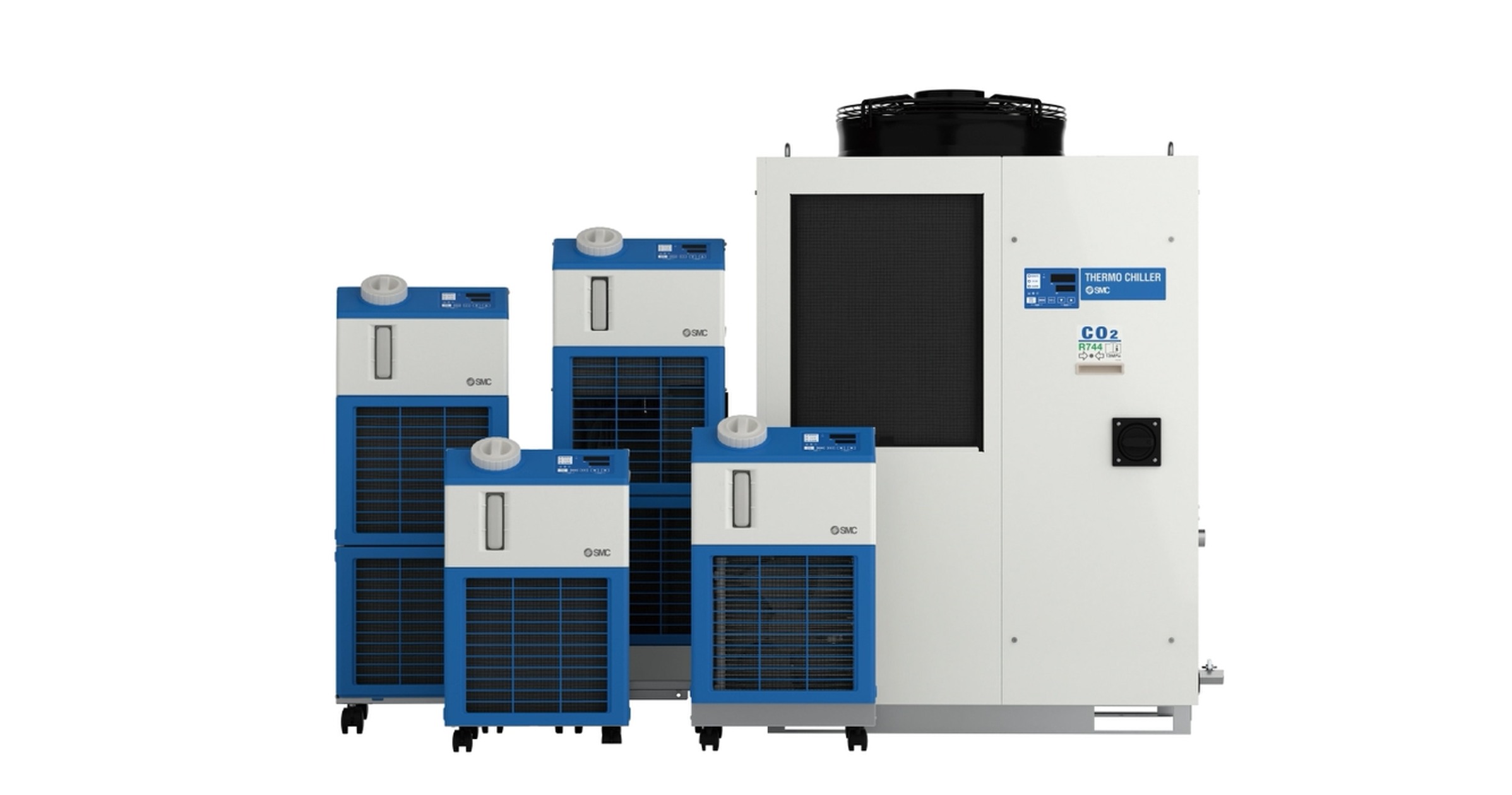
Another example concerns the industrial chillers developed by SMC Italia that use CO₂ as a natural refrigerant. The HRZC Series non-F-gas Thermo-chillers were developed with the aim of using fluids with a Global Warming Potential (GWP) of 1 or less: CO₂, in fact, has a GWP of 1, is non-flammable and non-toxic. The use of this refrigerant required a complete rethink of the design, leading to the development of technologically advanced and more sustainable solutions.
This approach is particularly relevant in light of the evolving F-gas regulations, which impose increasingly stringent restrictions on refrigerants with a high environmental impact. In particular, the regulations prohibit refrigerants with a GWP exceeding 150 in chillers with a cooling capacity of 12 kW or less, with the ban coming into force on 1 January 2027. Anticipating these changes allows companies to adopt solutions that are already compliant and future-oriented today.
Digital twin, practical applications
At the culmination of this sustainability-focused journey, the digital twin represents its most advanced manifestation, bridging the physical and digital worlds. This technology enables the creation of a virtual replica of plant facilities, powered by real-time data and continuously updated, offering new opportunities for analysis and optimisation. The distinctive feature of the solution proposed by SMC is standardisation: the digital twins are built according to the Asset Administration Shell model, which enables structured and shareable data exchange throughout the industrial supply chain. The adoption of a common standard allows information to be leveraged, making it interoperable and reusable.
At the SMC Italia stand, visitors will be able to see practical applications. The first involves a pick-and-place demonstration station, where the AMS (Air Management System) monitors compressed air consumption in real time. The system is able to automatically estimate CO₂ equivalent emissions, linking them to the individual object being handled. Thanks to the link between the physical component and its digital twin, it is possible to analyse operational data and identify anomalies, enabling predictive maintenance strategies that reduce downtime and optimise costs.
A second application involves the use of augmented reality for operational support. By using a digital twin of a chiller, the operator can view information and interactive 3D models directly on the machine via a tablet, making maintenance operations easier and reducing the need for highly specialised skills.