Italy’s inland areas are at risk of losing over 1.3 million inhabitants1 by 2050, while rural tourism continues to grow and the South in particular is proving to be one of the most dynamic areas of the country: in 2024, the number of agritourism visitors in Italy reached 4.7 million2, up 4.3% on the previous year, while the number of agritourism businesses grew mainly in the South. These two trends highlight the same challenge: transforming the agricultural, landscape and productive assets of these areas into new opportunities for the economy, employment and long-term residency in local communities. It is with this in mind that “Olive Oil is Tourism” has been developed, one of the three main themes of the third edition of EVOLIO Expo, the B2B trade fair dedicated to extra virgin olive oil and the olive-growing and olive oil production sector, organised by Senaf on behalf of Nuova Fiera del Levante, scheduled to take place from 28 to 30 January 2027 at the Fiera del Levante in Bari.
But what role can tourism play today in agricultural areas and, in particular, in inland areas?
It is precisely on this interplay that Carmine Cicala, Councillor for Agricultural and Forestry Policies of the Basilicata Region, focuses his reflections as the guest on one of the episodes of the EVOLIO Podcast. According to Cicala, the challenge is to move beyond viewing agriculture as an isolated sector and to link production, tourism, economic development and long-term residency in these areas.
“Today, we have come to understand how closely linked and interconnected aspects that once seemed unrelated actually are,” Cicala points out. “We want and need to continue investing in tourism: we have the skills and we have the places. Tourism means preserving inland areas, tourism means a circular economy, but it also means curbing depopulation.” An approach that broadens the very meaning of olive oil tourism. Not just visits to oil mills or tastings, but the opportunity to build an experience around olive oil that brings together the product, the landscape, culture, hospitality and local identity, creating new opportunities for businesses and helping to make rural areas more attractive throughout the year.
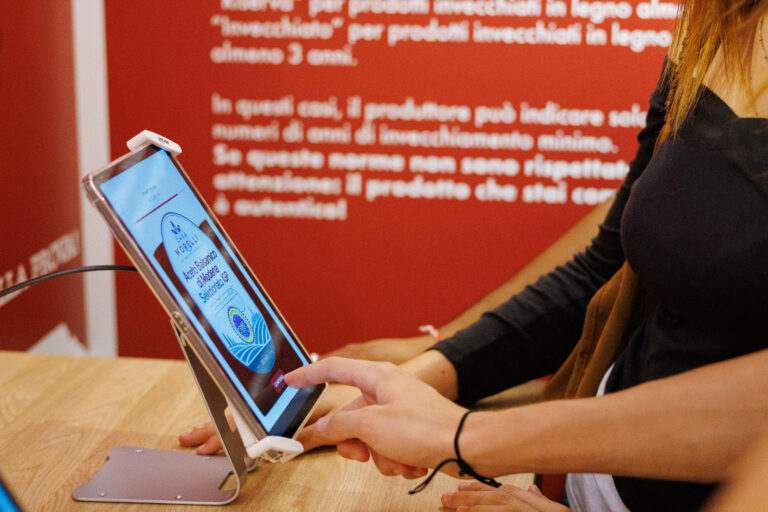
This transformation is also reflected in the evolution of Italy’s agritourism offering. Indeed, an increasing number of farms are complementing their agricultural activities with services and experiences linked to exploring the local area: tastings, excursions, hiking, nature activities, educational farms and courses. In 2024, over half of Italian agritourism businesses offered at least one complementary activity, confirming a demand that is increasingly focused not only on accommodation but also on the opportunity to engage directly with the places, the produce and the people who represent them. This trend is even more evident in olive oil tourism. According to the Second Report on Olive Oil Tourism 2026, edited by Roberta Garibaldi, 70% of Italians are interested in tasting EVO oil paired with local products, 71% in dining in olive groves and 65% in visiting historic oil mills, underground sites or buildings linked to olive-growing culture.
For olive oil regions, this means being able to promote not only the product, but everything that surrounds it: olive groves, mills, cultivars, production techniques, gastronomy, landscape and local culture. Opening farms to visitors, offering tasting tours, explaining the production process and creating olive oil-related experiences means making extra virgin olive oil a genuine key to understanding the local area.
And how does the role of the agricultural enterprise change in this scenario?
It is a transformation that, according to Cicala, also concerns how we perceive the agricultural enterprise today and its relationship with the new generations.
“Many young people have come to realize that being an entrepreneur in the agricultural sector entails much more: it encompasses tourism, as well as well-being“, Cicala continues. “You need the ability to take a 360-degree view and to work together“. Indeed, the growth of olive-oil tourism depends on the capacity to build relationships among agricultural businesses, tour operators, the restaurant industry, accommodation providers, institutions, and cultural heritage. It is a collaborative dimension that Cicala highlights repeatedly throughout the podcast: “We must work as a team. Only by working as a team can we achieve great results“.
It is precisely this capacity to build an integrated system that EVOLIO Expo 2027 aims to spotlight through its core theme, “Olive Oil is Tourism”. The event will create opportunities for dialogue among businesses, institutions, and industry professionals to explore how to transform olive-growing heritage into an increasingly structured and recognizable tourism offering. From showcasing olive mills and groves to developing itineraries—and connecting these with gastronomy, hospitality, and cultural heritage—the goal is to strengthen the role of extra virgin olive oil as a powerful tool for telling the story of its home territories and making them more attractive.
The “Olive Oil is Tourism” focus will be part of a broader program. Over the course of the three-day event, the expo will also delve into two other key themes: “Olive Oil is Health“—exploring the link between extra virgin olive oil and well-being—and “Olive Oil is Innovation“, which centers on new technologies, advanced production models, and solutions designed to make the entire supply chain more competitive and sustainable. The third edition will retain the event’s signature format, featuring B2B meetings, talks, conferences, guided tastings, masterclasses, tasting courses, show-cooking sessions, and in-depth discussions with producers, buyers, experts, chefs, medical professionals, researchers, and institutional representatives.
Building on the success of the previous edition—which saw 6,720 visitors, 150 exhibiting companies, over 100 sessions (including conferences, talks, tastings, masterclasses, and other events), and 50 international buyers from 16 key countries—EVOLIO Expo returns to Bari. Its goal is to strengthen its position as a B2B platform for Italian and Mediterranean extra virgin olive oil, fostering dialogue between supply and demand while helping to establish extra virgin olive oil as a product of excellence—in terms of production, technology, and its connection to the territory.