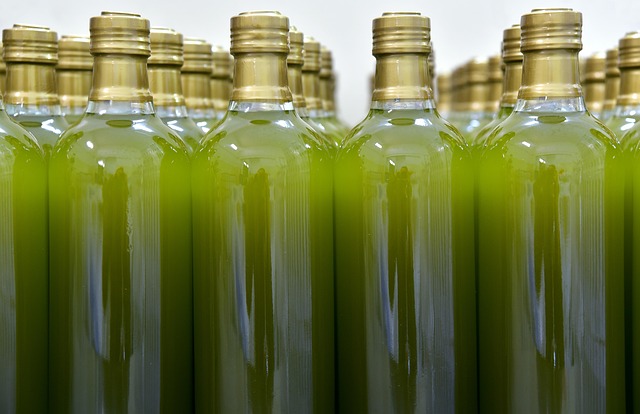
From the mill to the shelf, extra virgin olive oil (EVOO) can withstand long journeys and extreme temperature fluctuations.
But how much do these conditions affect its quality?
The study by Ferreiro and colleagues sought to answer this question by simulating situations similar to those that can occur during transport.
The researchers used two EVO oils, one ripe fruity and one light green, packaged in 100 ml bottles made of dark green glass and amber PET.
For 45 days, the oils were subjected to conditions designed to simulate those of real transport: kept in the dark, they were exposed to a daily “winter” temperature cycle, between 4 and 16 °C, or a “summer” cycle, between 16 and 45 °C.
As the days went by, acidity and oxidation indicators increased, although all the samples remained within the physico-chemical limits set for EVO.
At the same time, phenols and antioxidant activity decreased: under the most unfavourable conditions, the loss of phenols reached 83%.
However, the oils did not react in the same way. The ripe oils showed a more pronounced increase in acidity, while the oxidation indicators increased more in the light green oils. Overall, glass offered slightly better protection than PET, but the bottle material was not the dominant factor. On tasting, the light green oil showed no defects over the 45-day period and remained extra virgin in all the conditions tested. In the mature oil, on the other hand, rancidity appeared after just 15 days in PET and after 30 days in glass, resulting in a downgrading from extra virgin to virgin.
When it comes to transport, therefore, it is not enough to consider only the bottle. The characteristics of the oil, the duration of the journey and temperature fluctuations all play a role together. And a product that still meets the chemical parameters for EVO could lose its category due to a sensory defect.
Bibliographical references: Ferreiro, N., Rodrigues, N., & Peres, A. M. (2026). Impact of packaging materials and non-isothermal temperature conditions on extra virgin olive oil quality during simulated transport. European Food Research and Technology,252, 278. DOI: 10.1007/s00217-026-05193-7