«An industrial process designed to preserve the oil’s characteristics right up to the point of consumption, with full product traceability thanks to digital systems based on QR codes and blockchain technology, across a 100% Italian range». It is on these foundations that Carapelli’s current production identity is built, a company founded over 130 years ago in Tuscany with the aim of promoting extra virgin olive oil as a cultural and qualitative expression. Over time, the company has built its positioning on the balance between olive oil expertise and industrial capacity, evolving towards an organisational model capable of integrating tradition and innovation. Today, Carapelli Firenze, part of the Deoleo Group – a world leader in olive oil bottling with a presence in over 70 countries – operates on a global scale whilst maintaining strong local roots and a structural commitment to quality, sustainability and transparency throughout the supply chain. «It is not just a matter of producing and bottling oil, but of contributing to the enhancement of the Italian olive oil sector by investing in technology, research and product culture», emphasises Carapelli Firenze. Quality control is carried out throughout the entire process, from the selection of raw materials to analytical and sensory tests – supported by an in-house panel certified by MASAF – defining an industrial process underpinned by continuous investment and designed to preserve the unique characteristics of each product right through to the consumer.
Production rates of between 6.000 and 15.000 units per hour
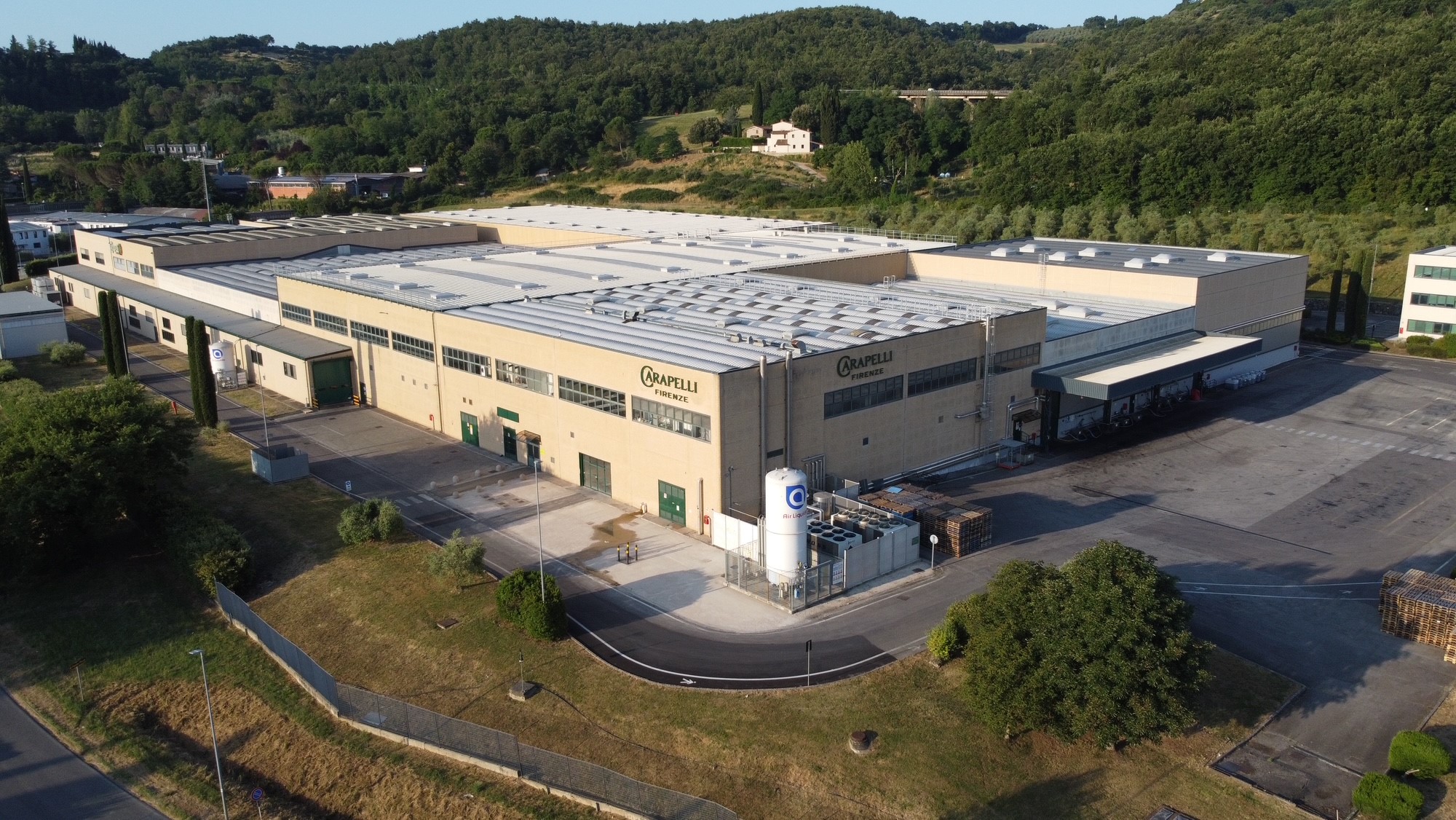
The layout of the Barberino Tavarnelle (FI) plant, which recently celebrated its 30th anniversary, reflects this approach, with a production organisation designed to handle high complexity and extensive diversification. The site, covering approximately 80.000 square metres and employing over 130 staff, is the Group’s flagship Italian production hub, with a potential capacity exceeding 100 million litres per year. Some 35-40% of production is destined for the Italian market and the remaining 60-65% for export, with a widespread distribution network covering Europe, the Americas, Oceania and Asia. The plant configuration comprises eight bottling lines: six fully automated high-speed lines and two semi-automatic lines dedicated to specific products, such as the Toscano PGI. Five automatic lines are reserved for glass, whilst one is for tinplate cans, with an extremely wide range of formats, ranging from 0,25 to 1 litre for bottles and from 0,1 to 25 litres for cans. Operating speeds, ranging from 6.000 to 15.000 units per hour, enable the company to handle approximately 250 product lines per year across 38 different types of containers, marketed under the Carapelli, Bertolli, Sasso, San Giorgio, Lupi, Azalea and Friol brands. «Plant flexibility is an essential requirement for us – notes Chief Operations Officer Carlos Sanchez -: we must adapt to different markets whilst successfully meeting the challenge of combining production complexity with consistent quality standards». In this context, sustainability is integrated into industrial design: the plant is in fact Zero Waste certified and uses predominantly energy from renewable sources, supported by a photovoltaic system of over 400 kWp and the IcoPower energy optimisation system, which stabilises the power supply, eliminates voltage spikes and improves the plant’s overall efficiency.
Filling, labelling, product protection
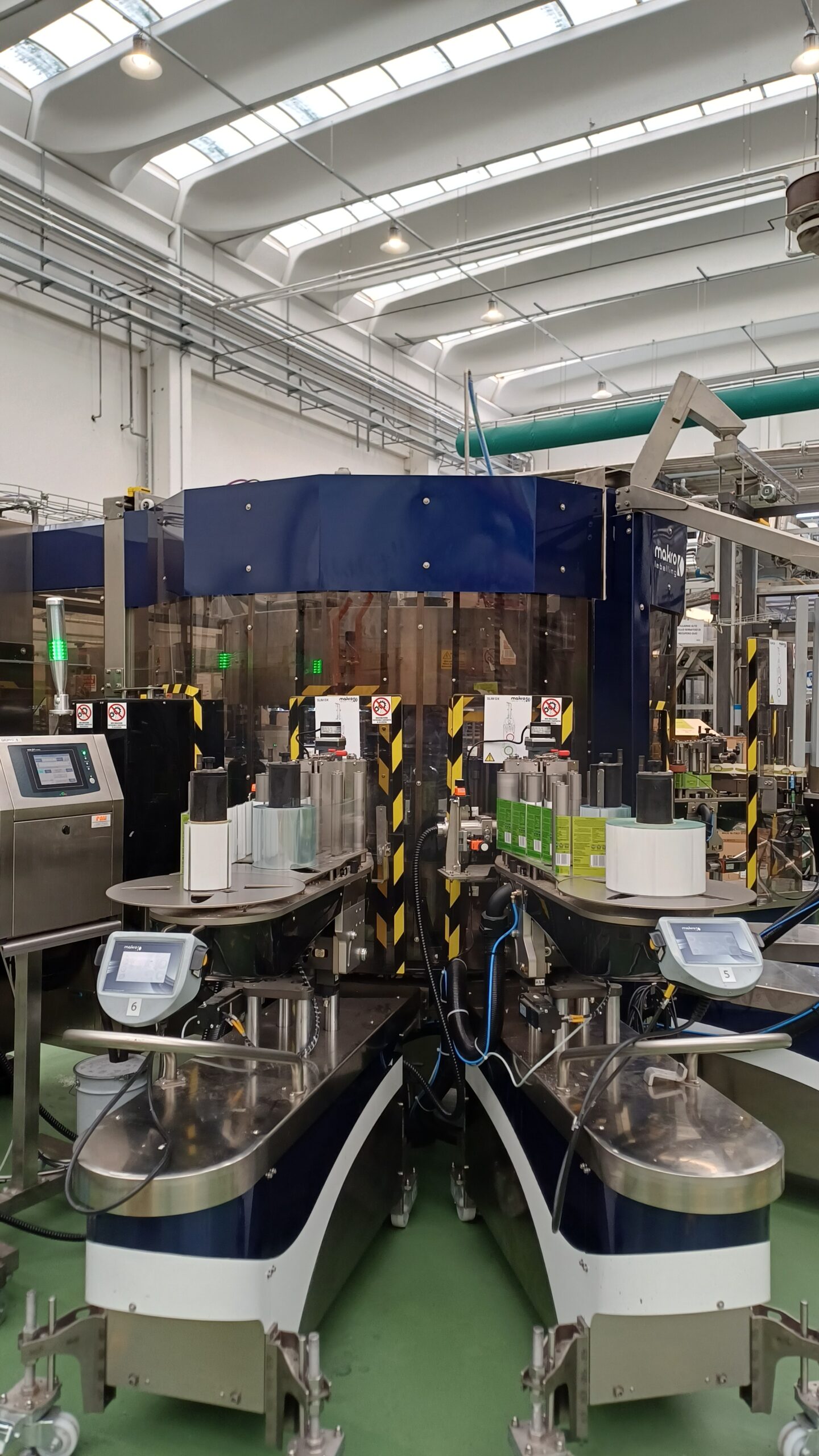
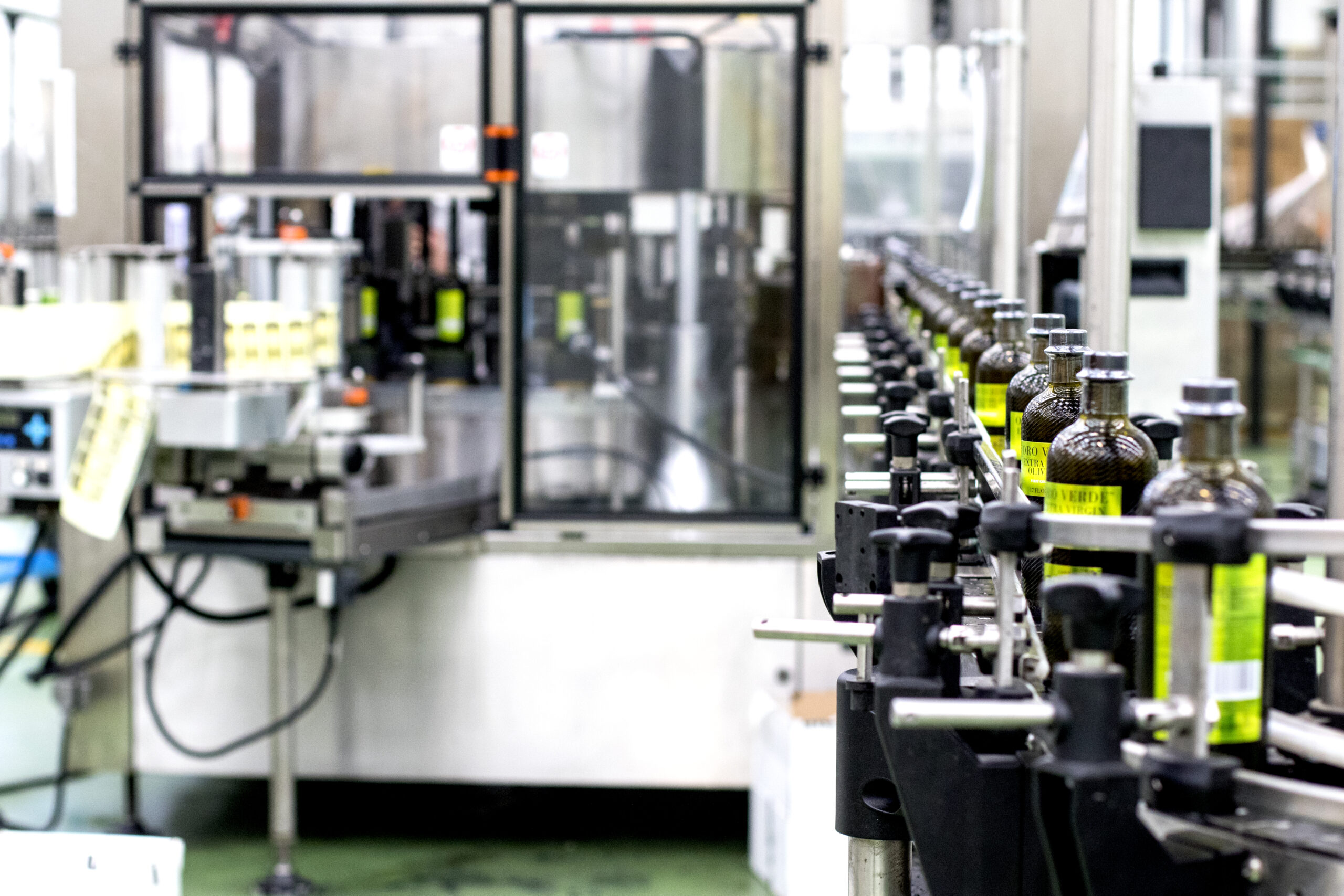
In recent years, the site has undergone a modernisation programme focused not only on sustainability but also on process precision and packaging quality. Specifically, investments have concentrated on three areas: filling, labelling and product protection. The introduction of weight-based filling machines to replace volumetric ones represented a significant leap in quality, ensuring consistent performance and more accurate control of the dosage into the bottle, regardless of variations in the oil’s density and temperature throughout the year. «The use of load cells, combined with regular calibration checks by our maintenance team, has enabled us to reduce waste and offset the higher investment required by these machines compared to volumetric fillers», explains Sanchez. On the labelling front, the switch from paper labels to self-adhesive systems has led to the adoption of Makro Labelling machines equipped with the Alice vision system, capable of performing advanced checks on positioning, integrity and print quality thanks to over ten verification parameters and real-time self-correction and self-adjustment systems. This approach allows high standards to be maintained even on complex containers, improving line efficiency. At the same time, the switch from silicone-coated paper label substrates to recyclable PET represented a logical evolution and a further step towards reducing Carapelli’s environmental impact. To complete the picture, the integration of Vacuum Barrier Systems’ Nitrodose G2 PRO systems, designed to introduce and dose nitrogen into each bottle of extra virgin olive oil, eliminating residual oxygen in the oil and limiting oxidative processes, with direct benefits for its shelf life and the quality perceived by the consumer.
L11 Line: over 8 million bottles in 2025
The level of technological integration is exemplified by the L11 line, dedicated to premium products and designed to combine packaging quality with industrial performance. The process begins with the Italpal 11008-IT automatic push-type depalletiser, which feeds the line by conveying the bottles to the KTF monoblock, the first stage of which is carried out by the blow moulding machine; inside, a stream of compressed air removes any foreign bodies.
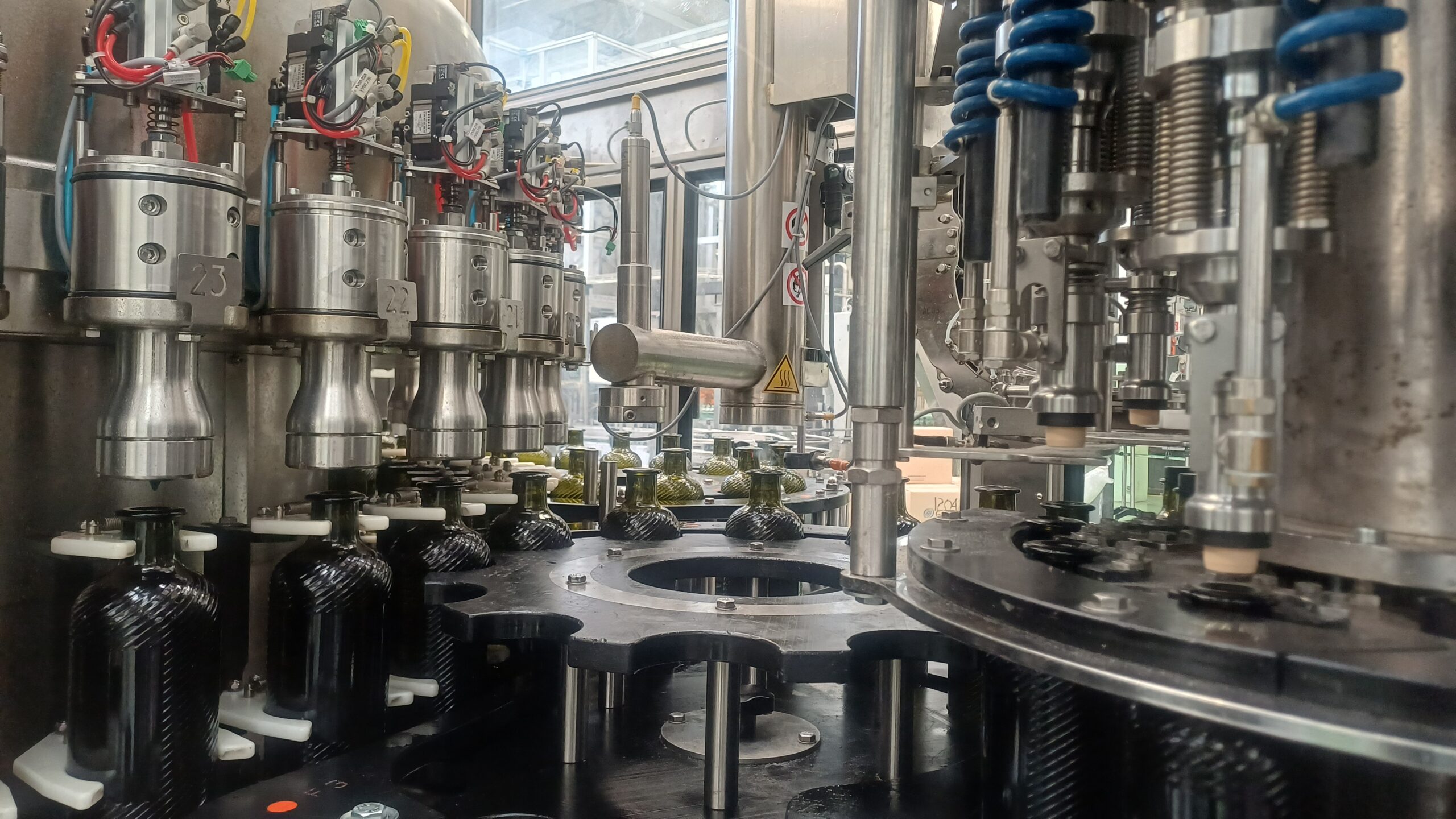
The bottles then enter the KTF 36-nozzle weight-filling machine, operating at an average speed of 7.000-8.000 bottles per hour, but with a higher capacity (10.000 bottles per hour) to accommodate any future increases. Before capping, the Nitrodose system introduces nitrogen into each container; this is followed by the AROL unit, configured to handle both 35 mm pressure caps and screw caps, with further developments planned for the 31,5 mm diameter aluminium format. The Nortan Prisma 120 T capping machine then seals the bottles, whilst the Makro modular labelling machine, equipped with six self-adhesive stations and the Alice system, applies labels, back labels and promotional, informational or decorative materials, with integrated optical controls designed to detect errors in orientation or application. Following the ink-jet printing of traceability data, the flow continues to the Novopac VF300WR case packer, which packs the bottles into cartons of 6, 8 and 12 units, before reaching the ItalPal PS80R palletiser, which currently handles 40 palletising patterns, and, finally, the ItalPal ATR35 stretch wrapper.