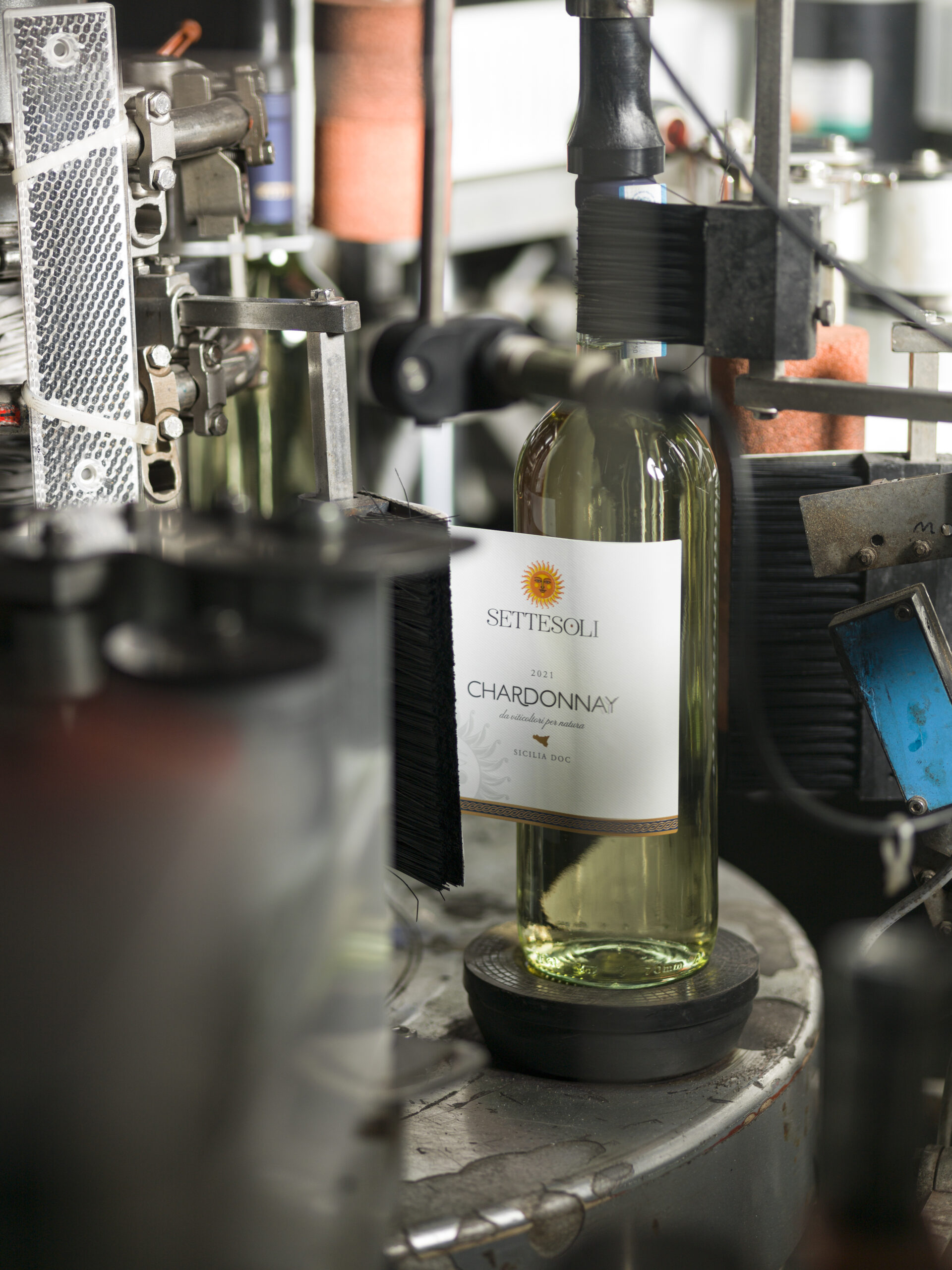
In a large contemporary wine cooperative bottling is not simply the final stage in the supply chain, but the point of maximum technical, organisational and strategic concentration of the entire production process. It is here that the work of thousands of winegrowers, spread across the Terre Sicane area in a wide variety of vineyards, is brought together to create unity, continuity and recognisability. At Cantine Settesoli, a cooperative based in Menfi, in the province of Agrigento, the bottling line takes on a value that goes beyond its mechanical function: it becomes an infrastructure for managing complexity, a place of quality control and a decisive tool for competitiveness. This industrial space measures the winery’s ability to translate the agricultural dimension into a finished product, preserving territorial identity, wine stability and the standards required by international markets. «Bottling accounts for about 50% of the entire production process», emphasises President Giuseppe Bursi, highlighting how technology is a key factor not only for quality but also for optimising costs and human resources.
High reliability and operational continuity

Cantine Settesoli operates as an extended production community, rooted in the territory of the province of Agrigento, between Menfi, Montevago and Santa Margherita di Belice. It is a reality in which human and agricultural capital are the real driving force behind the company: around 70% of the 5,000 families involved in the cooperative supply chain participate in production, contributing to a model that integrates viticulture, industrial processing and a presence on foreign markets. «Our strength is the community – says Bursi – and it is from this base that the possibility arises to support a large organisational and technological structure, which allows us to be among the most important wine cooperatives in Europe, with exports to over 44 countries worldwide».
The bottling plant, built in 2003 and subsequently modernised between 2020 and 2021 by replacing the palletiser, inspector, labeller and wrapper, now consists of two separate production lines. The main and most efficient line is designed to operate two eight-hour shifts per day, reaching a total production capacity of approximately 100,000 bottles per day, with a peak speed of 12,000 bottles/hour. The second line, which is smaller in size, operates on a single shift and allows for a production of approximately 17,000 bottles. This configuration ensures production flexibility and the ability to adapt to different formats and the different requirements of the product lines, while maintaining high levels of reliability and operational continuity.
Depalletising and inspection of bottles
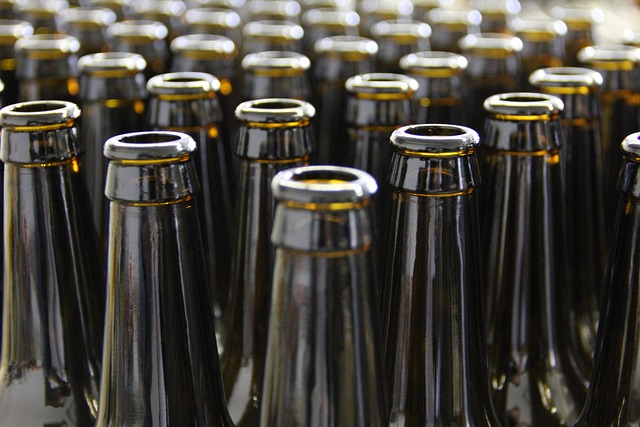
The bottling cycle begins with the collection of new bottles, which arrive from the glassworks and are stacked on wooden pallets. Initial handling is carried out using forklift trucks, which place the pallets on motorised roller conveyors, allowing for an orderly flow towards the depalletiser. The system used is a Sipa Berchi Genius DS sliding depalletiser, designed to ensure high efficiency and precision in container handling. The machine first removes the protective paper packaging and shrink wrap, then picks up the bottles arranged in overlapping layers and feeds them into the line continuously. This preliminary phase, which is often underestimated, is crucial to ensuring a regular flow and preventing stoppages or misalignments along the production line. Once on the line, the empty bottles undergo the first quality control operation: inspection. At Cantine Settesoli, this phase is entrusted to the Loginspect I1100 modular machine from Logics&Controls, equipped with an advanced multi-camera system and pulsed LED lighting. The system is capable of checking up to 60,000 bottles/hour, accurately inspecting all surfaces of the container: side walls, bottom, neck and base. The system detects foreign bodies, liquid residues, breakages and contamination, as well as assessing the degree of surface abrasion of the glass. A specific module for detecting residual liquids also uses high-frequency sensors to detect any traces of water on the bottom of the bottle. All non-compliant containers are automatically diverted by pushers to a special waste area, ensuring that only suitable bottles proceed to the next stages.
Water management and sanitation
Once they have passed the preliminary inspection stage, the empty containers continue along the bottling line on conveyor belts until they reach MBF‘s Fillblock/U rinsing-filling-capping monoblock. This section of the plant is where one of the most delicate operations in terms of process hygiene takes place: the internal preparation of the glass before it comes into contact with the wine. The Rinsmatic rotary rinser is equipped with 54 grippers and the same number of spray nozzles, designed to ensure uniform and effective rinsing of the inside of the bottles. The system operates at a pressure of 3 bar and uses appropriately treated water to eliminate any potential source of contamination. The quality of the water used in this phase is a determining factor, as it directly affects the microbiological neutrality of the container. The water used for rinsing undergoes a treatment process that involves a Nalco BPS 8S reverse osmosis system, with a capacity of 4 m³/h, followed by a Sartorius Stedim modular microfiltration system from MFM. The latter allows filtration to 0.2 microns, ensuring high standards of purity. The same system is also used for CIP sanitisation of the lines and for sterilising filtration of the wines at 0.45 microns, as well as the nitrogen used in the process, filtered at 0.2 microns. The integration of these systems allows a high level of hygiene and health control to be maintained, reducing the risk of contamination and ensuring operational continuity even during prolonged production cycles.