Whey is a liquid by-product containing varying amounts of protein, lipids and minerals, produced in significant quantities during the manufacture of ricotta.
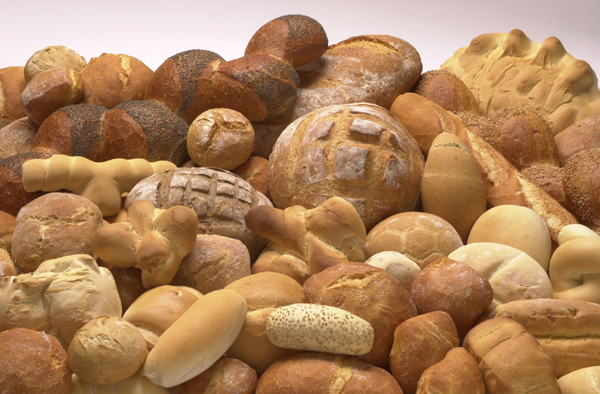
The aim of a recent study, carried out by a group of Italian researchers (Toumi et al., 2025), was to investigate the use of this by-product, either as is (SNF) or fermented (SF), as a sustainable alternative to water in bread-making, assessing the effect on the fermentative and viscoelastic properties of a soft wheat-based dough.
The results show that samples formulated with both types of whey, regardless of the level of substitution, did not adversely affect the rheological behaviour of the dough. Samples containing 100% SNF exhibited significantly improved dough development, as shown by higher values for maximum height and final height compared to the control. Regarding carbon dioxide production, samples with 50% SF exhibited significantly higher values for maximum release height, total production and gas retention compared to the other doughs, indicating superior fermentation activity. Furthermore, viscoelastic analysis reveals that all samples containing skimmed milk have significantly higher elastic moduli (G′) and viscosities (G″) compared to the control, demonstrating improved viscoelastic behaviour.
These results highlight the promising potential of whey as a sustainable alternative to water in bread-making, offering functional benefits and an opportunity to make better use of a dairy by-product. However, it is important to emphasise that these results should be regarded as preliminary, as further research is needed to fully explore and optimise the use of whey in bread-making.
References: O. Toumi et al., National Conference on Food Science and Technology, Bologna, 9–10 June 2025, 75