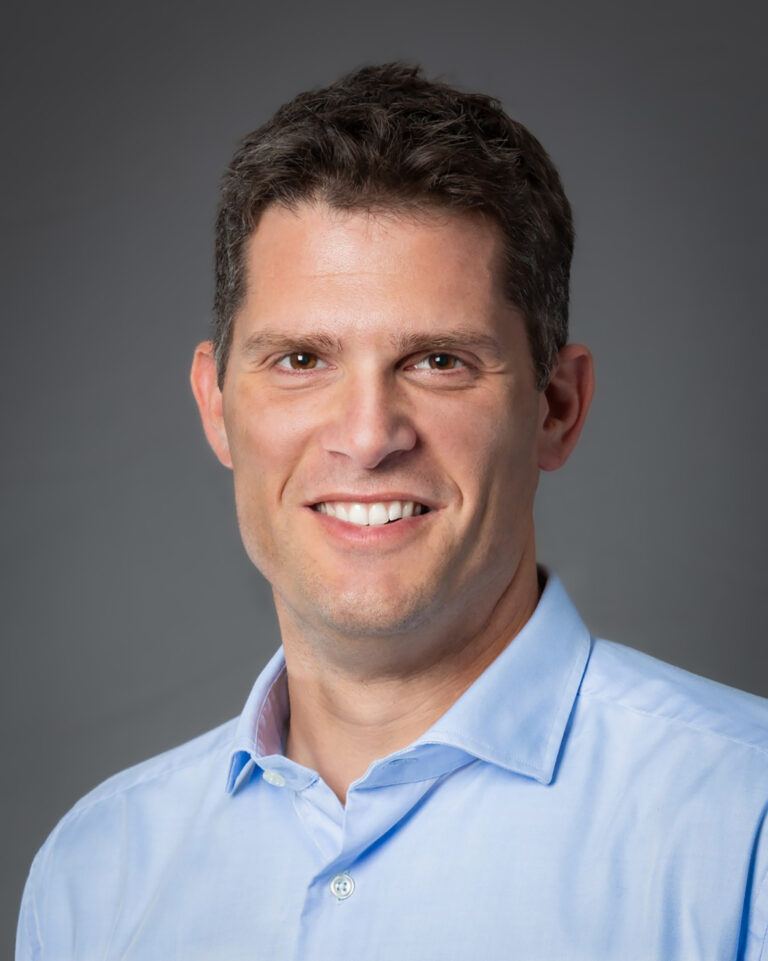
Every entrepreneur owes their success to the overlap between personal history and business decisions. A journey made up of goals, strategies, challenges to overcome, opportunities to seize, and future prospects. We spoke with Dr. Franco Bucciarelli, a chemistry graduate and CEO of the Bucciarelli Group. The company was founded in the 1970s by his father, Bruno, a biologist, who established a laboratory specializing in chemical and microbiological analysis for food companies. Today, the Group has experienced significant growth and offers clients a tailored consulting service, from problem identification to practical implementation of the solution.
Why did you choose to study chemistry?
I’ve always had a natural aptitude for scientific disciplines. From my earliest school years, teachers recognized this aptitude in me. Subjects like math, physics, and science never posed any difficulties for me. I lived in a country house near Ascoli Piceno, and my father, Bruno, a biologist by profession, had converted stables and cellars into a laboratory dedicated to chemical and microbiological analysis of food products. During my fourth year of high school, chemistry was one of my subjects, and it seemed natural to consider it the best university choice to prepare me for working in the family business. After graduation, I enrolled in the Chemistry program at the University of Bologna. When my father told a client of his, he commented that it was an extremely difficult course of study and that I would probably fail my studies. Those words hurt a little, but that’s precisely why I decided to work hard to prove to myself and others that I could graduate within the required five years. And so it was. There were few students, and some of my classmates were truly brilliant, a situation that further fueled my determination. Immediately after graduation, I passed the state exam, becoming the youngest person to be registered as a chemist in Italy.
What were your first steps in the world of work?
The family business had grown and moved to the industrial area of Ascoli Piceno. I felt like I was “all theory and little practice,” so I put on my lab coat and dedicated myself to the instrumental laboratory, where I primarily analyzed food. However, the environment was an emerging topic. There were critical situations, and companies were asking us to explain the mechanisms of pollution formation and spread, and they wanted advice on which prevention and monitoring measures to adopt. So we opened a dedicated division. We specialized in monitoring air and water pollution, focusing on the impacts of industrial activities. We then acquired a competitor and subsequently three additional laboratories. Today, we are a single organization, spread across two locations: the historic one in Ascoli Piceno and a second, smaller one in Pomezia.
How are you structured?
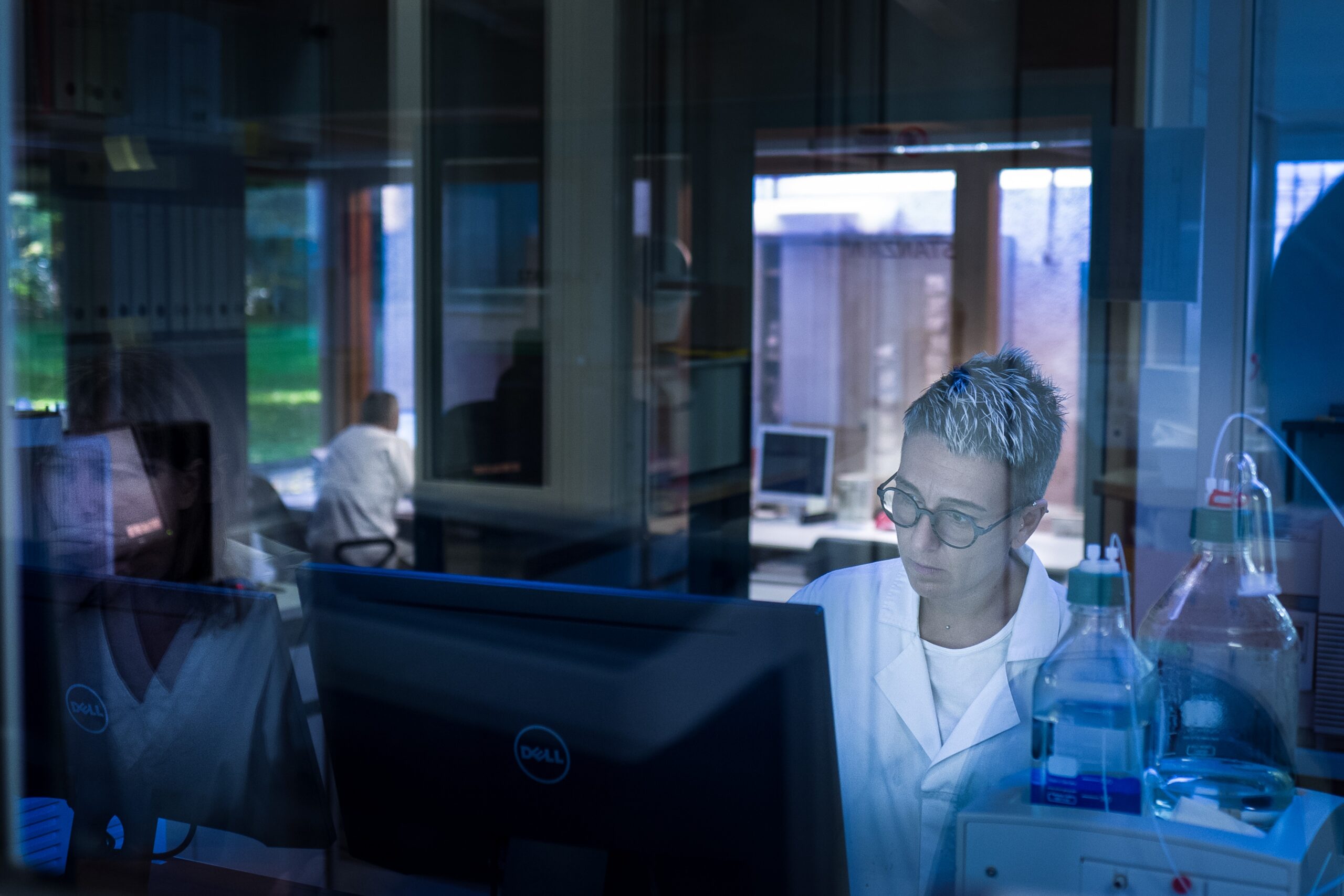
We have three operational areas: microbiological and chemical analysis, consulting, and an effective customer care division. Our clients are food companies, pharmaceutical companies, healthcare facilities, and water service providers. Our core business remains analysis, but we also provide extensive consulting services in environmental and workplace safety matters. With just under fifty employees, we can say we’ve become a medium-sized company. To better organize ourselves, a few years ago, we hired a business organization expert. The first step was to create middle managers to head our three departments: the laboratory, customer care/front office, and the customer-facing team, made up of samplers and consultants who help companies navigate the complex regulatory landscape of the sector.
Organizational skills and entrepreneurial vision
For a time, you were President of Confindustria Giovani of Ascoli Piceno and later Vice President of the Young Entrepreneurs of Confindustria. What opportunities does membership offer?
Joining the Young Entrepreneurs Group allowed me to meet other young entrepreneurs, learn from their experiences, and establish new collaborations. Actively contributing to association life allows you to acquire key managerial skills to solve the problems that arise daily in the company. I was President of the Ascoli Piceno Group and later Vice President of the national organization. It was an extraordinary chapter in my life. Despite coming from a small town, I was chosen over older and more experienced candidates representing larger, more organized local communities, such as Milan, Rome, Naples, or Sicily.
What characteristics must a young entrepreneur possess who wishes to ensure the continuity of their company?
Leadership, understood as the ability to guide, inspire, and motivate people toward the achievement of shared goals, is necessary but not sufficient if it is not accompanied by a sense of responsibility, curiosity, creativity, optimism, and passion. Equally important is having a clear vision of your company and the context in which it operates. Responsibility cannot be delegated. Every decision an entrepreneur makes impacts their own life, the lives of their employees, suppliers, customers, and, more broadly, the life of the community in which the company operates. Curiosity drives innovation, impacts the way we approach problems and adapt to change. Being curious leads us to consider the many facets of a problem one by one, facilitating its solution. Optimism helps transform difficulties into opportunities. It’s a positive emotion that spreads throughout the entire company. It instills a sense of humor, facilitates collaboration, and makes everyday life more enjoyable. Passion is the inner driving force that drives us to love our work so intensely that we dedicate much of our time and energy to it.
What do you mean by a clear vision for your company?
Knowing your company’s strengths and weaknesses clearly allows you to define concrete goals and plan in detail the actions needed to achieve them, even in uncertain situations or when faced with numerous, enticing opportunities. A good entrepreneur is confident in their choices and knows that challenges are part of the journey. They know the importance of facing them with determination, persevering, and leveraging their strategic skills. Without a clear plan, precious time and energy are wasted. Sometimes the initial vision may be wrong. If so, it’s necessary to acknowledge the error and have the courage to change direction. Achieving a goal is satisfying, but what drives growth and progress is the desire to constantly face new challenges.
The GB Academy
How do you train your staff?
Our technical team is composed of graduates in scientific disciplines: engineering, chemistry, microbiology, pharmaceutical chemistry and technology, food science and technology, geology, and environmental science. For years, we have welcomed students for internships, research projects, and theses. To enhance their time with us, we established the GB – Gruppo Bucciarelli Academy. For us, hosting a student means signing agreements with their institutions, defining detailed training plans, appointing company tutors, and ensuring adequate supervision while the students are at our offices. For the students, it is an extraordinary opportunity to put into practice what they have learned during their studies. Convinced that neither party is interested in passive collaboration, we do not treat students as mere spectators, but integrate them into our operations under the supervision of a tutor. Each student has a specific task and must ensure continuity of presence, consisting of a minimum number of hours per day at the company. At the end of the internship or thesis project, we select the most promising candidates, asking them to join our team permanently. After hiring, we ensure all employees receive ongoing training through internal courses, courses at equipment suppliers, or external specialized institutions. We also actively collaborate with a local technical institute (ITS). This initiative reflects our values and our commitment to sustainable innovation. We currently offer a high-level training program in eco-sustainability and innovation in polymeric and composite materials. Successful candidates earn the title of Higher Technician for Circular Production in Green Chemistry and Innovative Materials.
Given professional ability, what other qualities are needed to pass your selection process?
During interviews, we explore the candidate’s level of motivation: how much they believe in what they will do and how willing they are to commit to growth and improvement. We pay close attention to their compatibility with our core values: ethics, respect and care for others, intellectual honesty, and the ability to acknowledge their mistakes and turn them into opportunities for professional growth. We don’t underestimate the value of curiosity, because every member of our team must want to understand and therefore be willing to think deeply to solve the problem. Added to this is a passion for their work and the ability to collaborate with colleagues. Every new hire will be part of a team, and an individualistic approach undermines or slows down the group.
The strengths
What are your strengths compared to your competitors?
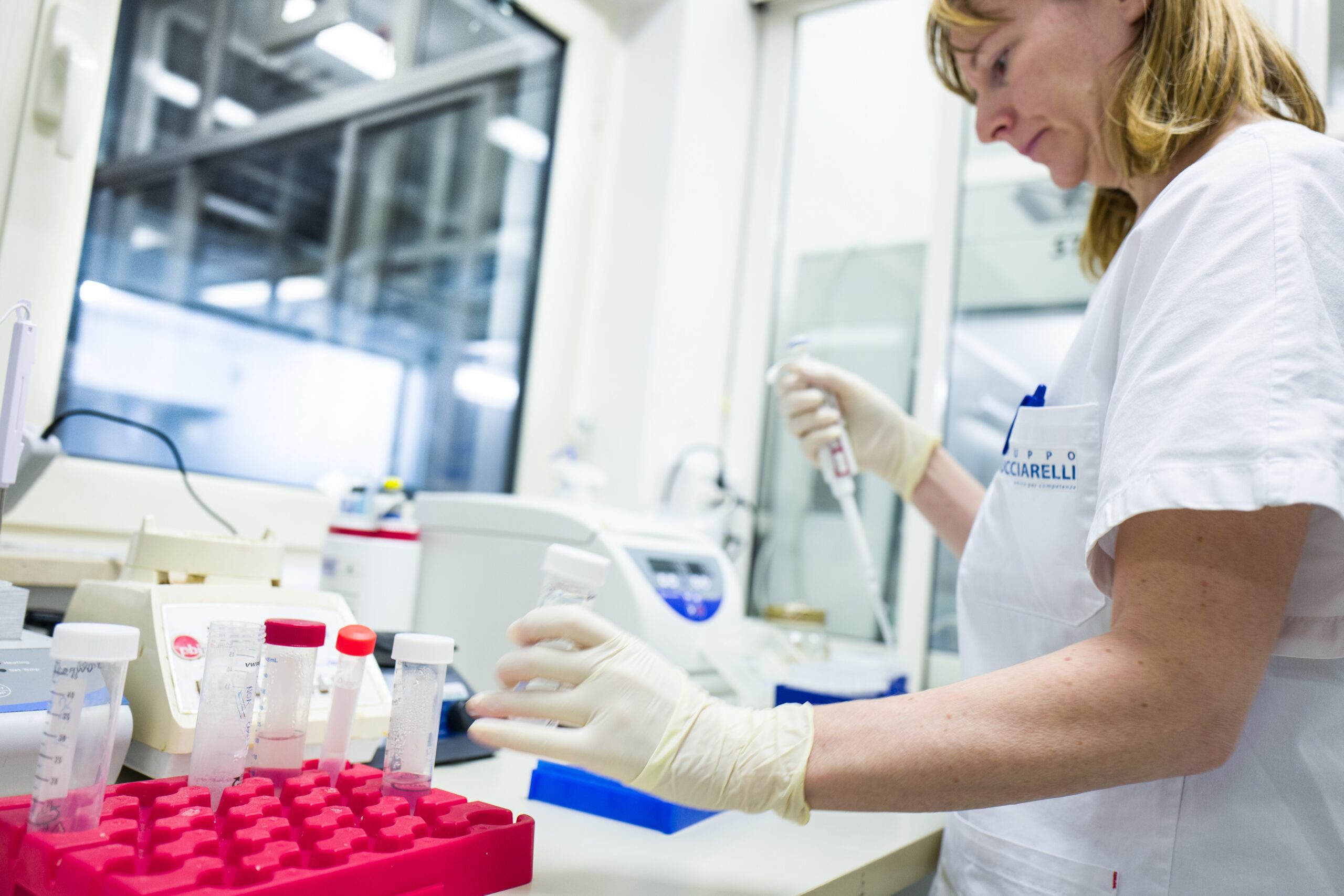
Multidisciplinarity and continuous investment in new technologies applied to laboratory equipment and customer service. The 2020 lockdowns forced two innovations into effect: customer calls and the strengthening of last-mile logistics. Until then, not visiting customers was considered disrespectful; now we realize how much time and energy we were wasting on long and sometimes unprofitable journeys. During the same period, couriers were forced to expand their services. Today, sample and reagent deliveries are safer and more punctual, allowing us to acquire new customers with locations relatively distant from ours. We strive to anticipate the market. Sometimes we purchase innovative instruments even though we know we won’t be able to fully exploit their potential. On the other hand, we know that latest-generation equipment is an asset that increases our expertise and ultimately our offering. We have also invested heavily in customer service. In customer care, we’ve adopted automation, artificial intelligence, and advanced personalization to increase the efficiency and quality of our contacts and to introduce ourselves to new potential clients. Those who contact us know they can count on a specialized operator with in-depth knowledge of the company they’ve written or called. Another strength is that we’re always available. We never close for vacation; if the phone rings and we can’t answer, we’ll call back within minutes. As I mentioned, we want to grow, we believe in technology, and we’re also investing in our headquarters, specifically installing a photovoltaic system. Self-generating energy makes us partially independent, will help us reduce costs, and will improve our ESG performance.
What services do you offer specifically to food companies?
Comprehensive consulting: chemical and microbiological analyses, analyses for compiling EU and non-EU nutritional tables, shelf-life testing, hygiene self-monitoring systems, general and targeted sanitation protocols for specific microorganisms (e.g., Listeria), validation of cleaning and disinfection plans, selection of the best supplier based on the samples received and the product the client intends to develop, microbiological and chemical testing of raw materials, semi-finished products, and finished products.
In the absence of legal requirements, what parameters can a food company consider to assess the compliance of its processes and products?
It’s a complex topic. Laws are constantly evolving and sometimes unclear. When they give rise to different interpretations, it’s necessary to carefully consider the scope of the regulation and the objectives pursued by the legislator. Where there is no law, experience, scientific literature, and analyses are used as a basis. The last resort is to lay our cards on the table: there’s a problem, the regulations aren’t helping us, we consult the official on duty, the certification body, or the competent Ministry to determine what they believe is the best protocol to adopt.
Have you gotten the feeling that in this period of international crisis, food companies are less attentive to the compliance of what they produce and sell?
My answer applies to both production and environmental aspects. In some cases, current regulations are truly too stringent, and constant amendments require controls that can appear redundant and costly. Less structured companies could decide to sacrifice the highest possible quality. Our job is to point this out and persuade them to return to the “right path,” reminding them that Made in Italy is and increasingly will be their lifeline. Abroad, Italy is sometimes portrayed as a country of appeals, sudden regulatory changes, and high energy and labor costs. Nevertheless, Made in Italy is and remains the most famous and copied brand in the world, and must therefore be protected with quality. I’m convinced that Made in Italy will save Italy, allowing it to excel in many new markets.
Projects underway?
Demand for environmental consultancy is growing. Businesses and the local community must continue to coexist, because they are each other’s strengths. By neglecting or underestimating environmental regulations, entrepreneurs are in trouble when faced with audits, fines, and claims for damages. Our intervention is only effective if we understand the company’s true situation, so we ask our clients for maximum honesty and transparency. In the case of food companies, the most pressing environmental issue is the huge water consumption used in the food processing phases.