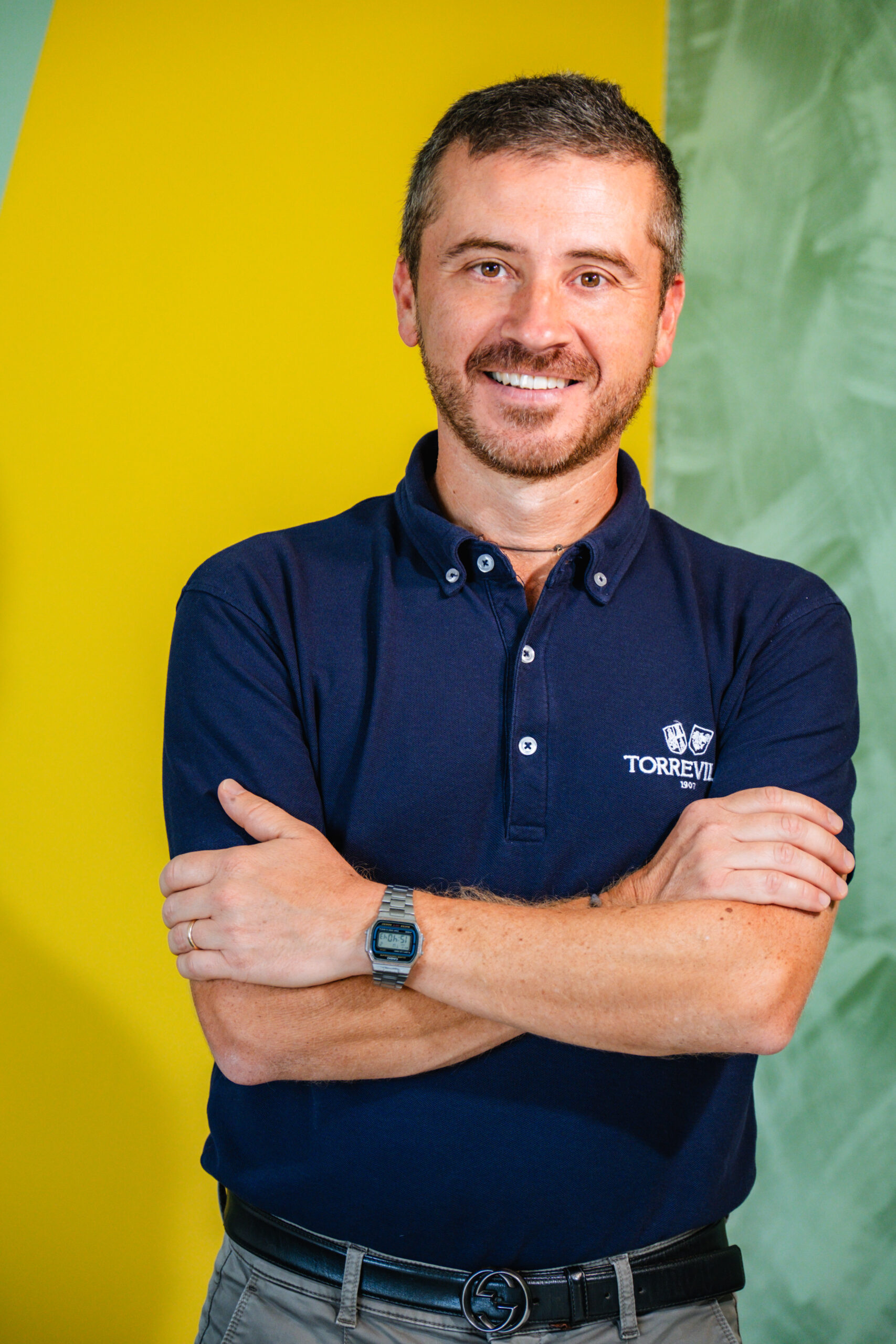
Gabriele Picchi‘s career could be described as a trajectory that didn’t emerge through sudden ruptures or twists, but was defined over time by stratification, as happens with the most suitable soils: progressive and coherent, full of decisive moments that matured within a context that was never merely professional, but profoundly personal. Born in Broni (PV) in 1979, Picchi belongs to a generation that first experienced wine as a daily experience and, only later, as a conscious choice. The vineyards weren’t discovered, but inhabited from childhood; the cellar wasn’t experienced as a place to learn, but as a family space in which to identify. “Growing up in a family of winemakers, where vineyards have been cultivated and wine has been produced for generations, allowed me to discover and express my passion from an early age,” he says. The choice to study Agriculture, and then Oenology at university, was a natural consequence. This original bond has given rise to an operational vision and a professional approach that have never separated technique and territory, expertise and memory, and which have long translated into a leading role at the helm of one of the most representative cooperatives in the Oltrepò Pavese area.
Between roots, memory and education
In his childhood recounting, the head winemaker of Cantina Torrevilla reveals a concrete dimension, based on direct and repeated experiences rather than symbolic episodes. “I have vivid memories of long afternoons playing hide-and-seek in the vineyards and the moments after school spent with my grandparents among the rows or on the tractor, in the garden, or in the cellar.” These images convey a sense of early familiarity with rural work, its logic internalized from an early age. “As a child, I learned about agricultural rhythms and made them my own: this experience helped build my relationship with the land and with the families of local winemakers. This connection has remained central to my work and has become one of the driving forces behind the work I’ve done over the years to improve the quality of the vineyards and wines of the Oltrepò Pavese.”
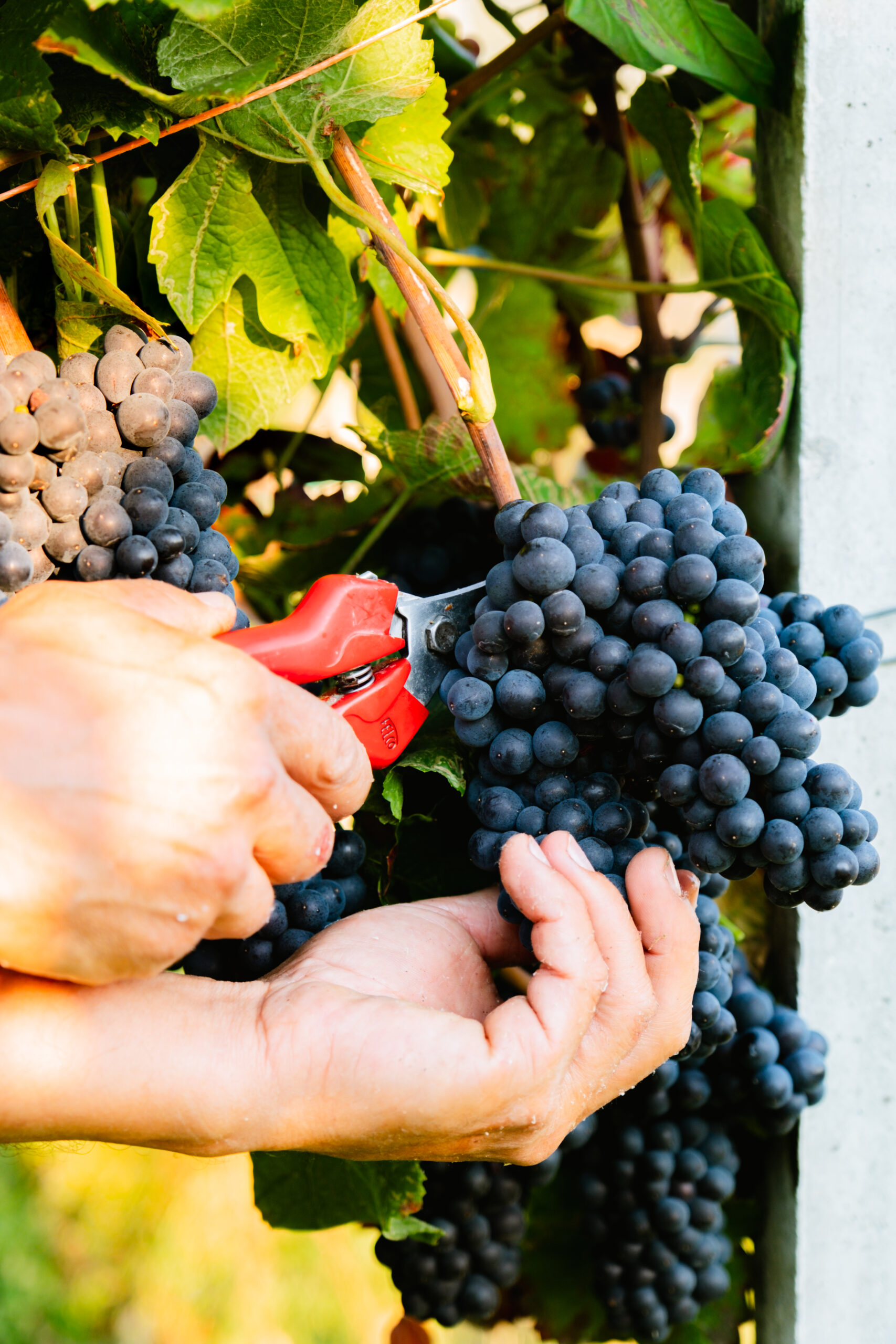
His training also developed as a continuous and progressive process: “I’ve always explored this path, I’ve studied and lived in this world, so there haven’t been any particular moments of revelation.” His agricultural studies, however, represented a fundamental transition: “They taught me to be a conscious farmer.” Joining Torrevilla in 2003 marked the beginning of an internal journey built gradually. “I originally worked as a consultant on the members’ farms,” Picchi explains, emphasizing how this initial phase was crucial to understanding the dynamics of a cooperative. Fieldwork, in direct contact with farms often similar to his own, then allowed him to put the knowledge he had acquired into practice and develop a concrete vision of the system.
Improve overall quality
The first ten years at the company were characterized by continuous training: “First in the laboratory, where I deepened my knowledge of the analytical side, then in the cellar, working alongside the previous director. As I gradually learned the trade, I was given more and more space.” He transitioned to general management in 2016, at the age of 37, following a process of progressively increasing responsibility. “I must thank President Barbieri and the entire Board of Directors for their trust: their support has been, and continues to be, crucial.” From that moment on, the General Manager’s focus has been on improving the quality of production, a process that led, a few years later, to the development of the La Genisia project, based on the selection of Cantina Torrevilla’s best Crus and the valorization of local specialties. “Today, this organization embodies the balance between cooperative identity and production excellence, which is one of the central themes of my work.” Specifically, the model is nurtured and grown thanks to the commitment of its members, who value the unique terroir of each individual vineyard. It is based on an ongoing dialogue between the Winery and the winemakers, supported by a system of technical and training support, as well as coordination by a team of professionals provided by the Cooperative. This aims to build a shared path of growth and improvement, in which each supplier contributes to the overall quality.
More and more activities and recognition
Specifically, the foundations of the La Genisia project are rooted in a vision developed in the early 2000s: since then, the goal has been to build widespread awareness of the region’s true potential. This process wasn’t imposed from above, but evolved gradually, involving different generations: “We started with the fathers of our partners, and today we work with their children: it was a natural evolution”. At the same time, a young and skilled working group has also consolidated within the company structure, gradually integrated and supported by a strategic continuity mandated by the board of directors, an element that, according to Picchi, has made the difference. “The same trust that was placed in me ten years earlier, we have, over time, also placed in a younger generation of colleagues, which has allowed the project to significantly accelerate. We have achieved levels of quality that have allowed us to be ranked among the best companies in the region by national and international critics, and this recognition concerns not only the product, but the entire system we have built over the years.” This is accompanied by an expansion of activities, both in terms of hospitality and storytelling methods, with the introduction of innovative tools such as virtual reality, for exploring the vineyards during visits and events. “The recognition from industry professionals and the results of the press review are a great satisfaction for us, confirming the direction we are taking.” The Oltrepò Portal, a project promoted by Torrevilla, also fits into this framework: “Ours is a company of the local area and for the local area, always focusing on the overall enhancement of the reference area.”
Pinot Noir MC: the ultimate expression

In outlining the Oltrepò Pavese, Picchi highlights an often misunderstood complexity: that the region is certainly extremely suited to viticulture, but that, over the last 50 years, it has been expressed in many different ways. This plurality, while attesting to the richness of the context, has also led to a certain fragmentation. In this scenario, the winemaker identifies Pinot Noir — particularly the Metodo Classico version — as the pinnacle of the vineyards’ qualitative expression. “This wine represents the excellence our area can achieve. In fact, I feel particularly ‘mine’ for the entire range of Pinot Noir, both the Metodo Classico and the reds: they are the wines that have fascinated me since the beginning of my career, and those we have developed the most.” Quality, he recalls, always comes from meticulous selection of the vines: “Perfection must be sought in what nature can provide in specific microclimate and terroir conditions, and what the winemaker can express through expert care of the vineyard.” A method that over time has coincided with concrete technical choices, such as zoning, the modernization of the cellar for the production of Metodo Classico and Pinot Noir, and the creation of a highly qualified team, constantly engaged in technical and human exchanges. Picchi’s daily work is guided by diligence, dedication, care, meticulousness, and punctuality in every activity: “These are operational values that define a precise standard both in the vineyard and in the cellar; they represent the foundation upon which we build the final quality of each wine.” Among his key figures, the winemaker cites Professor Leonardo Valenti, with whom he has maintained a long-standing relationship. A significant presence throughout his studies and professional career, Valenti is now involved as a key consultant in the La Genisia project.
A personal and collective success
Last December, Picchi was elected “Winologist of the Year” by AIS Lombardia, an award inaugurated on that occasion and dedicated to professionals who have significantly contributed to the qualitative development of wine in their home region. For him, this recognition transcended the individual: “Such a prestigious award honors me for the work I’ve done, but I would like it to be interpreted as recognition of the development of the entire production area, since so many winemakers and companies — with the support of the Consorzio Tutela Vini Oltrepò Pavese — are committed to improving the quality and promoting local wines.” This perspective reflects a collective understanding of success, tied to the contributions of businesses, technicians, and institutions. And looking to the future of Oltrepò Pavese, Picchi identifies the consolidation of a cohesive system as his goal: “I aspire to an increasingly cohesive region in the production of high-quality wines, with well-distributed and growing vineyards. We’re in an intermediate phase now, but with the Consortium we’re developing many projects with consistency, patience, and vision. These have been difficult years, yet today the group of wineries that are trying to enhance the area through Classese, our Classic Method, is working together. As a producer, winemaker, winery manager, and father, I believe my ultimate goal is to leave, to those who follow in my footsteps, an area renowned for the production of excellent Pinot Noir, with Classese renowned throughout the world.