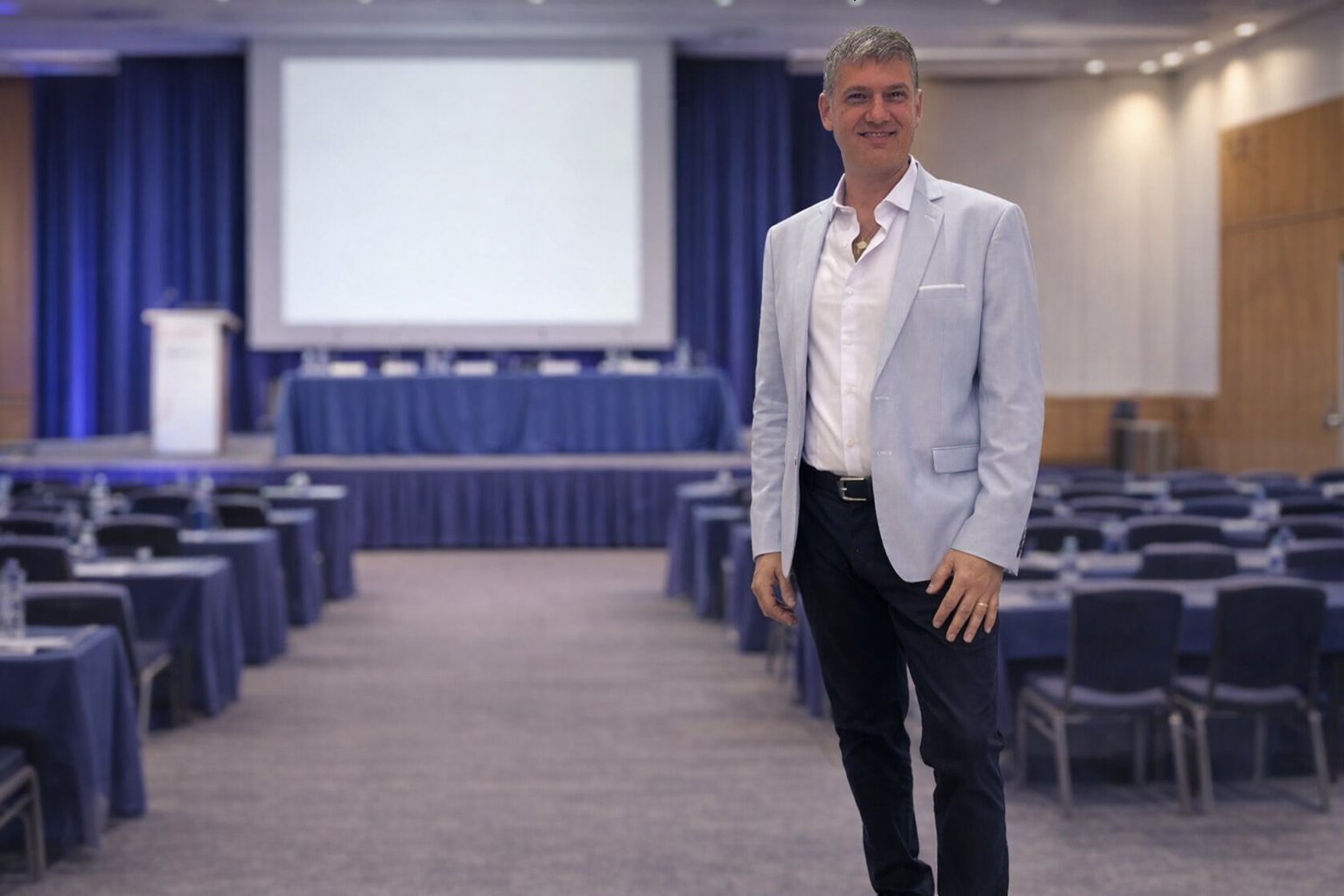
In the food sector, the Research and Development consultant promotes innovation by combining technical and scientific knowledge, solving problems of industrialisation and production scalability, ensuring compliance with regulations and safety standards, and using new technologies to reduce costs and time to market. We discussed this with Dr Giorgio Attanasio, a food technologist, business consultant, university lecturer and successful novelist.
What was your educational background?
My education was, so to speak, “heterogeneous”. After completing my middle school studies at the Istituto Landriani dei Padri Scolopi in Portici, I was determined, driven by a visceral love for literature and, above all, for writing, to pursue classical studies. However, the choice fell on the exact opposite. My parents guided me and convinced me to go to the technical institute for Surveyors. At that time, there was the myth of the “finished diploma“. Technical studies were not for me, but when I enrolled, luck had it that my class (I A) was selected, the only one in an institute with over thirty sections, for the experimental teaching of computer science. Those five years of logic and linear programming (GW Basic, Fortran, Cobol, etc.) gave me a mindset that still comes in handy today. After graduating in 1992, I chose to continue my studies in the scientific field by enrolling in the Degree Course in Food Preparation Sciences (which later became Food Sciences and Technologies), which I completed voraciously in 4 years and two sessions, at the age of just 23.
Why this choice?
First of all, because of my interest in science in general and secondly because of the opportunity to focus on a profession that, in 1992 – despite being unknown to most people, partly because the law establishing the profession of Food Technologist had not yet come into force at the time – was seen by many as the profession of the future. It is a pity, then, that we had to wait until 2000 (the year in which the Regional Associations of Food Technologists were established) for it to be recognised as a true profession. To date, although it is not the profession most in demand on the market, enormous progress has been made, but there is still a lot of work to be done in terms of the professional association. Fortunately, today’s graduates no longer have to hear the question we were all used to: “Food Technologist? And what’s that?”
What was the topic of your degree dissertation?
I was the first student from Portici to graduate with an Experimental Thesis in Marketing. The aim of the experimental study was to create analytical accounting criteria based on technological cost centres. To this end, using Microsoft Access, I developed an advanced relational database that made it possible to automatically process the analytical costs of each wine produced in the winery, also allocating indirect costs to it according to Total Cost Management logic.
The beginnings
You then worked for a long time at Strega Alberti Benevento Spa. What was your role?
My time at Strega Alberti Benevento Spa, which lasted more than 13 years, can be divided into three phases. From 1998 to 2001, I was in charge of quality control. As product certifications did not exist at that time and ISO standards were not widely required, my day-to-day work centred on HACCP. From 2001 to 2003, I was appointed production manager for the spirits division. I thoroughly enjoyed those two years because there was so much to do (just think, my predecessor used nothing but a typewriter – he didn’t even have a computer…) – improving, implementing and experimenting. In 2003, partly thanks to the excellent results I’d achieved, I was moved to the more complex confectionery sector. That experience, for the first few years – let’s say up until 2008 – was exciting, because the technologies governing the confectionery sector are wide-ranging and varied. A great testing ground for any Food Technologist. I was able to grow a great deal professionally, not only through the experience gained in managing complex production processes with sales peaks concentrated mainly over two months, from mid-October to mid-December, but also thanks to the extensive training I received. From the fundamentals of Research and Development to confectionery production technologies, from management systems (ERP) to IT reporting techniques, and finally more distinctly managerial training such as Project Management and Procurement.
You’ve been working as a consultant for fifteen years – why did you decide to go freelance?

As is often the case in small and medium-sized businesses, work at Strega Alberti Benevento had become repetitive in recent years and, with no challenges or fulfilling career paths on offer, I began to find the daily routine monotonous and longed for a change. No longer wishing to work as an employee, I saw self-employment as a viable and appealing solution. I won’t deny that, at the age of 37, leaving a permanent job was a real leap of faith. Some might call it a gamble. After fifteen years of intense work, I can say with satisfaction that the decision has proved to be a success. This profession presents new challenges every day and offers the opportunity to learn something new all the time. An old advertising slogan used to say: ‘What more could you want from life?’.
Consultancy
What services does it offer to businesses?
Primarily Research and Development. Over the years, I have learnt and refined advanced techniques and methodologies that enable me to approach the development of a food product by applying a genuine scientific method, which involves ‘conceptualising’ on the basis of an in-depth knowledge of technologies, products and ingredients. The product the client desires is the combination of a recipe and a process that can be developed through testing designed to minimise development time and costs. The use of predictive mathematical models and in-depth statistical analyses to evaluate the results completes the package. At the same time, I develop Quality and Food Safety Systems that comply with multiple certification standards simultaneously and, as a Part I and Part II Auditor – particularly for GFSI certifications – I am able to quickly identify the strengths and weaknesses of any type of organisation, clearly with the aim of rectifying them in the best possible way. To round things off, albeit to a lesser extent, I am involved in training and all matters relating to the role of Food Technologist, including expert witness duties as a court-appointed technical consultant (CTU) and private technical consultant (CTP).
How is your business organised?
Over the course of my 28-year career, I have forged key partnerships with various companies operating in the distribution of ingredients, flavourings and fragrances, food gas technologies and services (laboratory analysis, training, exports). These partnerships enable me to offer clients ‘comprehensive packages’. I often mentor start-ups from the very beginning, supporting them through every stage of their establishment and growth: designing production layouts, identifying the most suitable sites to house them, sorting out the administrative formalities involved in launching operations, selecting and training staff, and choosing the plant and technologies – including packaging – required for the full-scale industrial production of their products. All this is done without ever neglecting Research and Development into products that are often innovative. Having said all that, I consider myself an experienced and flexible professional. Throughout my career, I have worked with over 200 clients across the country and abroad. I am always available to meet their needs and, over time – partly due to the fact that I have more grey hairs than the entrepreneurs who rely on me – I help them select the consultancy package best suited to their requirements and financial resources. I also help them distinguish between what they really need and what may not be essential.
What is your typical customer like?
I don’t really have a ‘typical client’, at least not in terms of company size, geographical location or the type of products manufactured. One of the advantages of being self-employed is having the opportunity to choose to work only with decent people who have a clear understanding of what it means to run a business and, above all, who know what it means to show respect for the person first and foremost, even before the professional.
The key strengths
What are its strengths?
That’s a difficult question – I’d even go so far as to say a tricky one. My eclectic approach, the result of a multidisciplinary educational background, has been a real asset, as has the fact that I’m, by nature, extremely meticulous. I don’t like doing things just because they have to be done. For me, things have to be done properly. These traits are sometimes interpreted as excessive zeal or, worse still, pedantry, but they’ve always brought me results and satisfaction. After all, the fact that all my clients come from ‘word of mouth’ must mean something…
Have there been any projects that have given you a particular sense of fulfilment?
Among many others, I can mention winning the ‘Best Bakery Product’ award at Yummex Middle East (now ISM Middle East), the leading international trade fair dedicated to the confectionery, snack and bakery sectors in the Middle East and North Africa. It was a significant achievement, but the real satisfaction comes from the feedback I receive every day from my customers.
What is the value of certifications in the food sector?
They are important but not essential. Increasingly, certifications are reduced to a mere prerequisite for accessing certain sales channels. Consequently, if pursued from this perspective, they become nothing more than ‘pieces of paper’ that, in the long run, bring no benefit whatsoever. I have enough experience to say, however, that when – first and foremost on the part of senior management – they are approached in the right way and with the right level of commitment, certifications always pay off. They are like long-term investments: they need time to bear fruit, and only when their true meaning is deeply understood can their value be fully appreciated.
There are calls from many quarters for a cultural shift within the food industry, which can be achieved by investing resources in digitalisation. What are your thoughts on this? Is this shift already underway in the companies you usually work with?
I must reiterate: it is important, but not essential. The Italian agri-food sector is made up of a myriad of small and medium-sized enterprises that do not have the necessary resources to tackle this transition effectively and efficiently. If digitalisation is not implemented thoroughly, it risks becoming a cost that does not always translate into a benefit. Please bear with me on this point: Italy needs policies that seriously refocus attention on what matters most to businesses – which is not just digitalisation, but also, and above all, research, innovation, workers, products and professional expertise. It is time to discuss measures that will convince entrepreneurs that investing in research is truly worthwhile. It is not easy, but I believe it is the only way to give our sector a new lease of life. In this context, digitalisation becomes a highly useful means, not an end in itself.
The mismatch between university courses and business needs
For several years, he was a contract lecturer in the subjects of Confectionery Product Formulation Technologies and Food Protection with Elements of Packaging at the University of Sannio. To which degree or postgraduate programme do these subjects belong?

They were part of the professional degree programme in Food Technologies for Confectionery Production (LP02). A course designed to train mid-level professionals, for whom the Italian business sector is in desperate need. I am speaking in the past tense because this programme, which was launched in 2020, has unfortunately been closed this year. The University of Sannio has, in fact, chosen to focus its resources on degree programmes geared towards the healthcare sector. I am convinced that the idea behind the programme was nothing short of brilliant. Who knows? Perhaps it could be revived at another university…
Why did you decide to become a teacher?
I have, so to speak, been involved in and supported this degree programme from the very beginning. As a Councillor of the Regional Association of Food Technologists of Campania and Lazio, responsible for institutional affairs in the provinces of Benevento and Avellino, I was tasked with assisting the University in structuring the curriculum. Since October 2019, together with the then Head of the Department of Science and Technology at the University of Sannio, I have been personally involved in identifying confectionery companies in Southern Italy where students would undertake the required 1,300 hours of work placement. I also contributed to defining the teaching content and organising all other aspects: from recruiting professional lecturers for the introductory courses to the practical organisation of the students’ work placements.
What were the pros and cons of your experience as a university lecturer?
The downside was discovering, much to my regret, the gap between university and the real world. This disconnect is particularly noticeable when dealing with tenured lecturers who have never had any contact with the world of industry or with students. In vocational degree programmes, this gap has been partly bridged, but it still weighs heavily on traditional courses that do not include work placements. The positive aspects stem from the human side of things. Working with the students is wonderful. When you teach, you always learn something.
In your opinion, what are the weaknesses of Italian universities and recent graduates?
Italian universities, even the historic ones, have in recent decades lost many of the distinguishing features that once set them apart on the world stage. One need only think of the Nobel laureates who were educated at our universities – such as Levi-Montalcini, Rubbia, Natta and Giacconi – as well as the countless patents and inventions that are, sadly, now nothing more than a distant memory. It would be desirable for policymakers to find a way to bridge the gap that leaves Italian universities chronically underfunded (compared to the EU and OECD averages) and perpetually lacking in infrastructure. Measures to improve university governance and to foster greater integration with industry and the local community would also be welcome. Recent graduates sometimes have an excellent conceptual grounding – in some cases even more than the labour market requires – but they have limited knowledge of the practical applications of what they have studied. I have observed that, just as often, Italian recent graduates, compared with their European counterparts (such as those from Scandinavia or the Netherlands), have shortcomings in communication, problem-solving and the ability to work in a team. There is truly a great deal to be done in this regard…
He has been a lecturer at the Hideea Training School in Rome for many years and has also worked with the ITS Demos in Campobasso. How does he structure his courses?
I always try to structure my talk, focusing the teaching content on a few key concepts that can serve as a recurring theme throughout the lessons. It’s a bit like telling a story. The more curiosity I manage to spark in my listeners, the greater their interest becomes.
Any plans for the future?
There are many, and not all of them are work-related. What appeals to me most is closely linked to my longest-standing passion: literature. In 2024, I published my first novel, a thriller entitled Two Minutes of Hell, which enjoyed moderate success and received excellent reviews on specialist blogs. I’ll be publishing my second one shortly. It’s another thriller, with a publisher that should ensure widespread distribution across the whole country. I have no intention of changing careers, but the circumstances are right for me to devote myself to this little personal project as well. And who knows? Perhaps one day I might write a novel about a food technologist. Suggestions welcome…