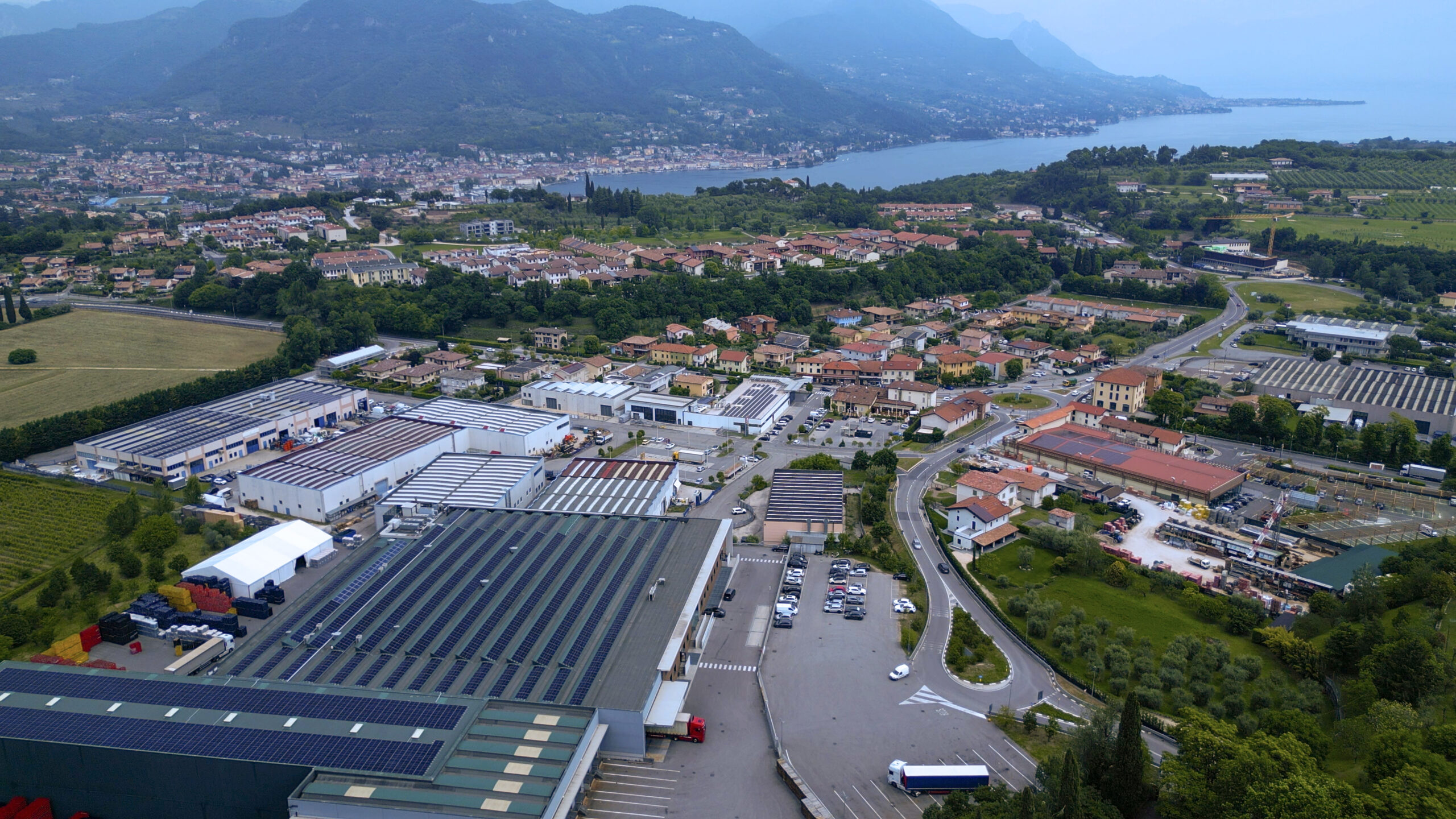
Three PET lines and one glass line, around 300 million bottles a year, and a production process that demands continuity and reliability. This is the picture at the Fonte Tavina plant in Salò (BS), a company with sixty years of operation behind it and extensive experience in bottling mineral water. Founded on the shores of Lake Garda by the Salò-based entrepreneur Tonoli, Tavina has grown over time, eventually relocating nine years ago to its new premises, just a few kilometres from the previous site. Today, the plant has four production lines: three dedicated to PET bottles and one to glass.
This production set-up forms the backdrop to a partnership with AROL, which Carlo Andreotta, the plant manager, describes as a long-standing one. A relationship built not only on the supply of machinery, but also on the need to keep pace over time with the changes affecting the closures used in the water sector.
«We have been AROL customers for many, many years – says Andreotta –. This continuity stems from the supplier’s ability to support the company at key moments».
Reliability above all
When it comes to capping, speed, precision, format changes, waste reduction and material usage are closely interlinked parameters. For Fonte Tavina, however, one stands out above the rest. «All these points are extremely important, but the most crucial is the reliability of the capping process», states Andreotta. He emphasises that this requirement must also be understood in the context of the characteristics of the water market – a product he describes as «commercially unprofitable but very important, given that it ends up on the tables of all of us who consume water».
Reliability therefore becomes a key requirement in a process that must handle high volumes. Given the speeds reached by the production lines, Tavina identifies consistent performance and application reliability as key requirements: capping must form part of a production system in which consistent performance and the ability to manage different production runs are of decisive importance.
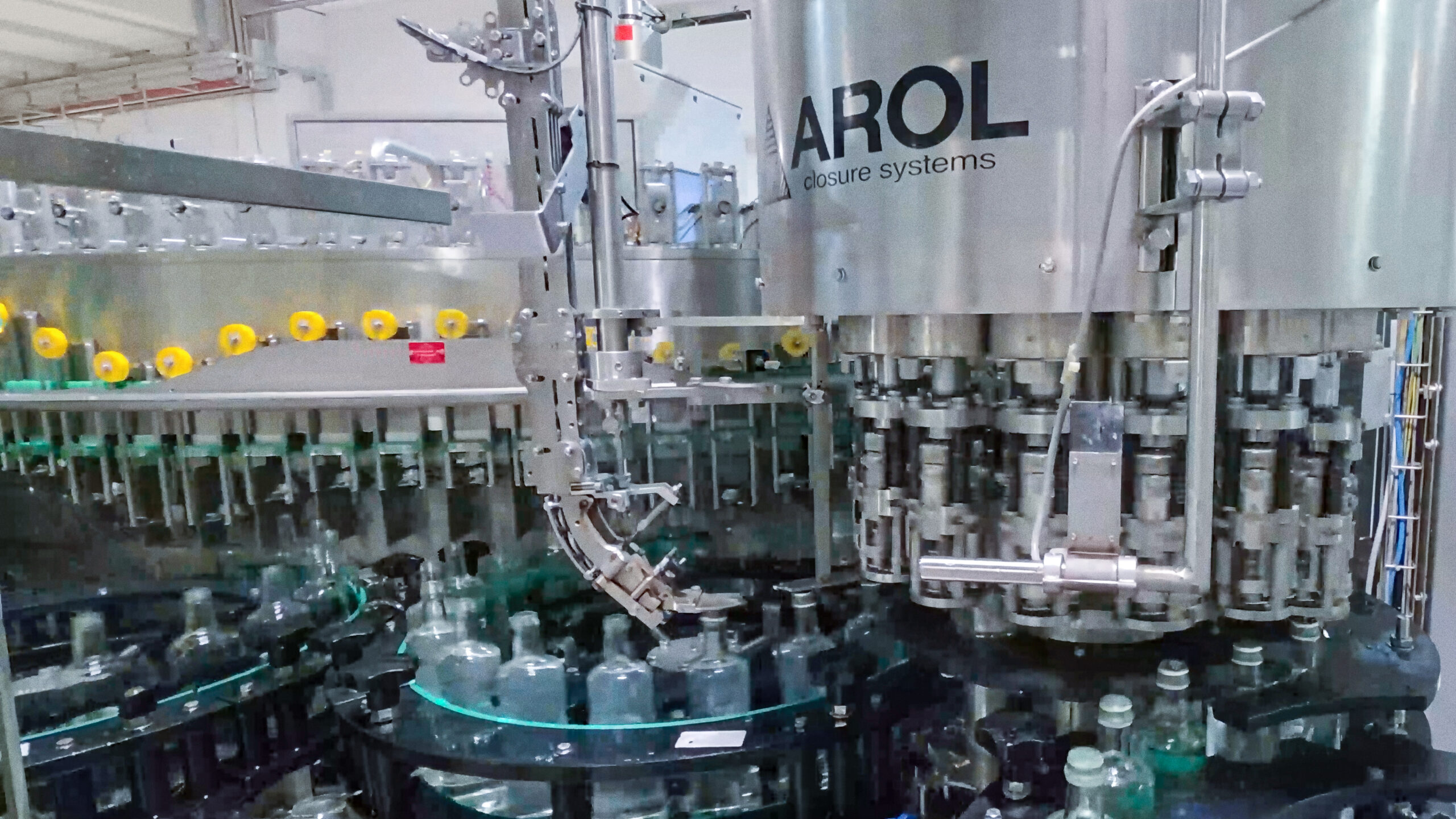
The AROL installations at Tavina reflect this structure. On the PET production lines, three EURO PK series turrets are in operation – two with a capacity of 30,000 and one with a capacity of 24,000 bottles per hour – dedicated to the application of pre-threaded plastic caps. On the glass production line, meanwhile, a 30,000-bottles-per-hour EURO VA is installed for Talog-type aluminium capsules.
Greater flexibility in production changeovers
Alongside reliability, Tavina’s experience highlights a second aspect: the ability to simplify the transition between different production runs. Andreotta sums up the outcome of the collaboration with AROL by stating that it has enabled the company to become leaner and faster. This assertion is clearly demonstrated by the management of the transition between still and sparkling water. «The collaboration has meant we no longer need to change equipment to switch between still and sparkling caps, making us faster and more efficient when changing over our production lines», Andreotta is keen to emphasise.
This is a significant operational factor because it shifts the focus from the performance of the capping machine alone to its integration into the process. In a plant comprising multiple production lines, flexibility also depends on the ability to minimise the operations required when production changes. In this sense, being leaner and faster does not simply mean increasing the machine’s speed. In the case described by Tavina, it means adjusting the way in which the production changeover is carried out, avoiding the need to replace equipment when switching between the two types of cap.
PET: continuity with high productivity
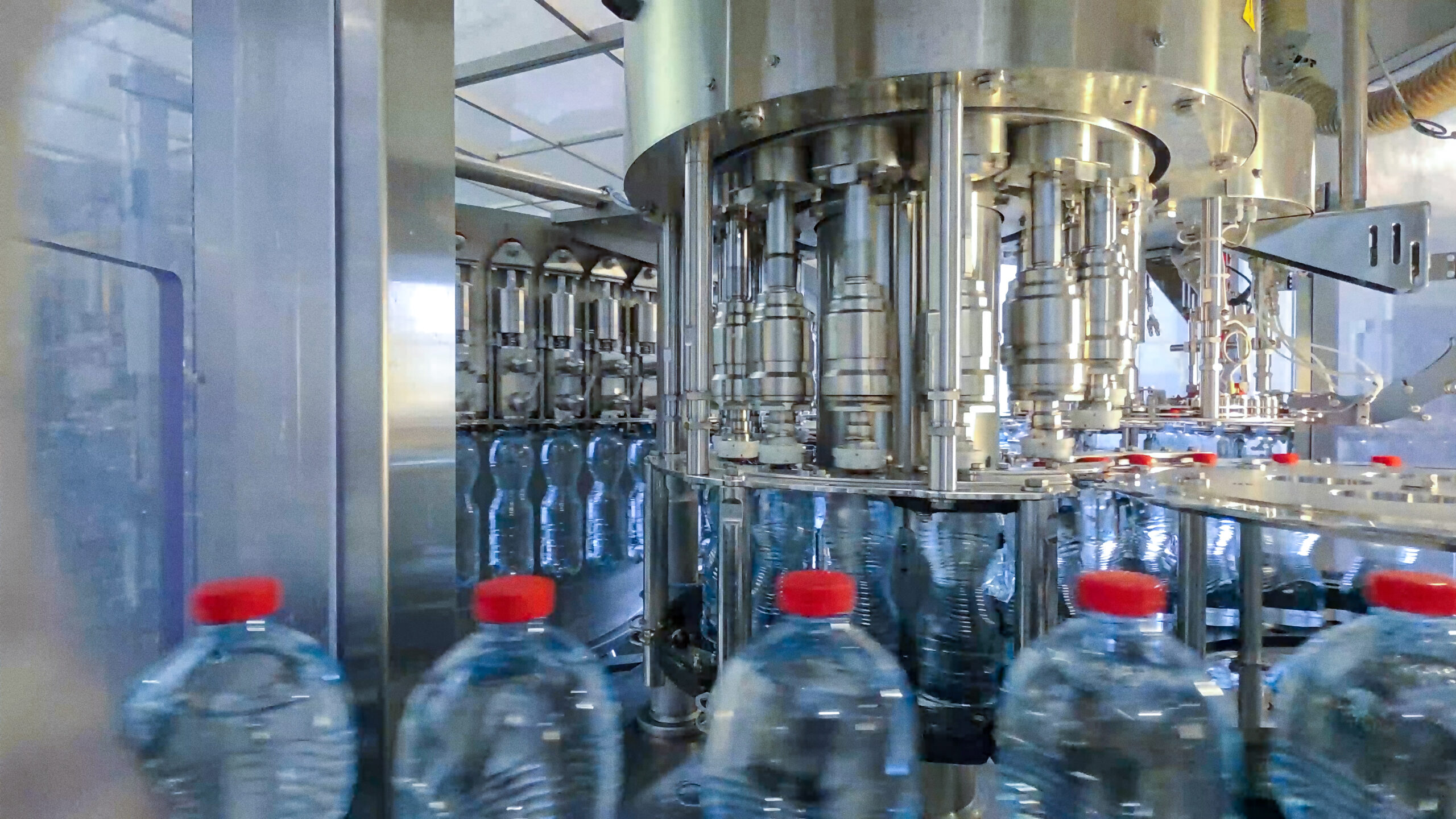
The three EURO PK turrets installed at Tavina are dedicated to capping PET containers with pre-threaded plastic caps and operate at 24,000 and 30,000 bottles per hour.
In the configurations currently in place at the plant, the technology handles the 26/22 and 30/40 formats and is equipped with a reversible dual-outlet centrifugal feeder, AED systems for the automatic ejection of incorrectly oriented caps, and dual-inlet Pick & Place units.
The capping heads also feature a tool-free closing torque adjustment system.
These features form part of a platform developed for high-throughput applications, where operational continuity is one of the key requirements. For Tavina, this aspect is directly linked to the need to manage high production volumes whilst ensuring the reliability of the closure application process.
It is within this context that the gradual change in cap sizes also takes place.
Smaller closures: one of the challenges to be addressed
In the mineral water sector, the drive to reduce cap sizes has, over time, introduced further demands on the capping process. Tavina has tackled this development in collaboration with AROL. «Given the ever-increasing costs of petroleum-derived raw materials, efforts are being made to reduce cap sizes, and this presents difficulties in applying caps weighing around 1.3 g to over 30,000 bottles per hour», notes Andreotta. According to Tavina, the collaboration developed in this area has yielded good results and reduced production waste. Andreotta also points out that, in Italy, the drive towards smaller closures has been particularly strong and attributes the ability to work with these types of caps to the technical approach developed in partnership with AROL.