In food&beverage the growing complexity of production lines is making a structural limitation increasingly apparent: the difficulty of transforming available data into timely operational decisions. Sensors, PLCs, supervisory systems and management software generate a growing amount of information, but this often remains confined within technological silos. The result is a fragmented view of the production process, which slows down decision-making and reduces overall efficiency, particularly in high-speed environments with frequent format changes. This is precisely where Factory OS comes in, the platform developed by Tetra Pak to create a unified digital infrastructure to support the factory.
A digital infrastructure, not just software
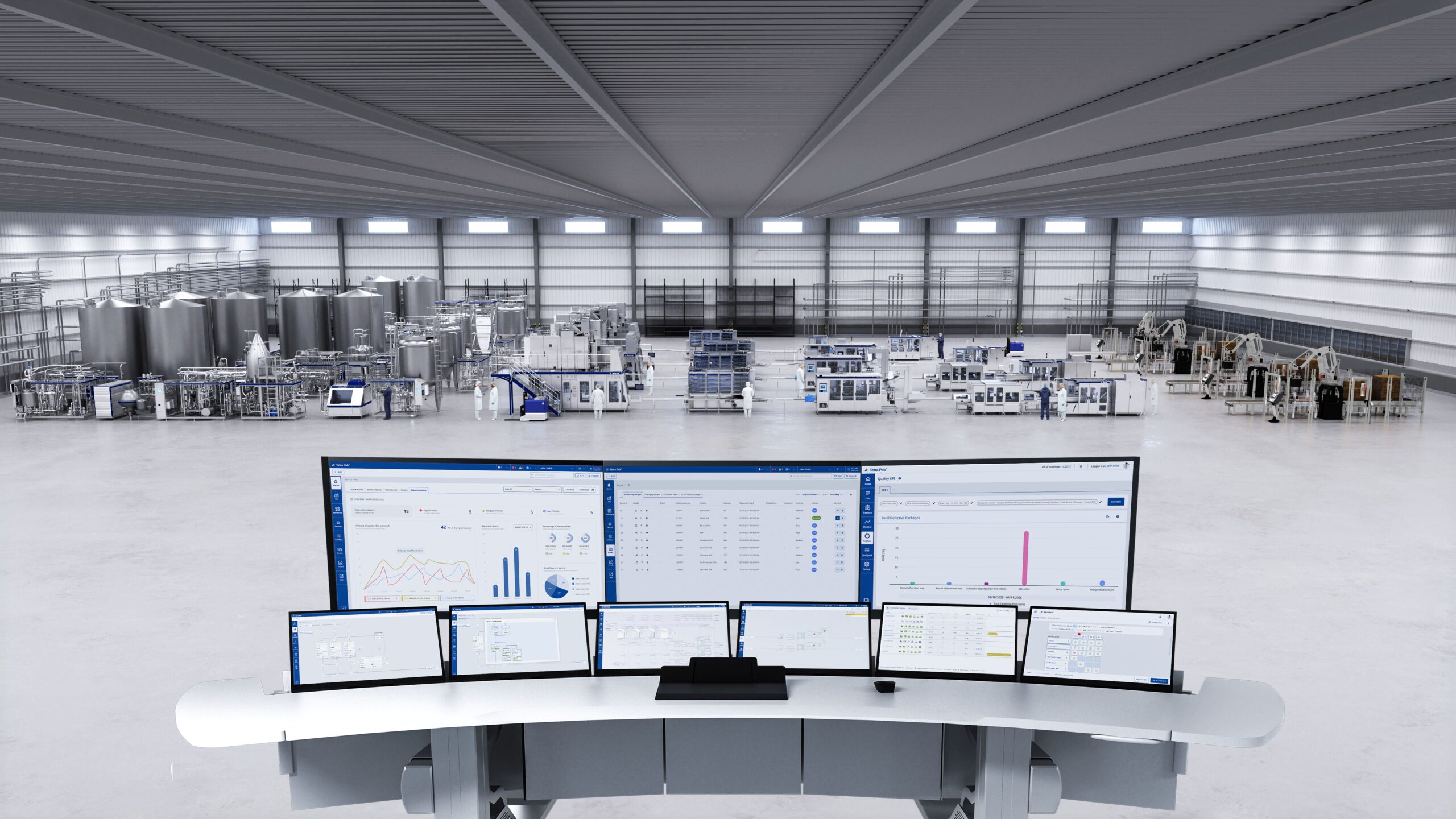
Factory OS is not simply a monitoring system or a traditional MES, but a digital infrastructure capable of orchestrating data, machines and applications. It operates on the principle of a true industrial operating system, capable of connecting disparate components and making information accessible in a coherent and structured manner. Roberto Tommasi, Services Director at Tetra Pak South Europe, explains: «Factory OS collects, aggregates and interprets data from machines, sensors and production systems, transforming it into insights that help improve plant performance, quality and availability. It enables the creation of a fully connected, scalable production environment that can be configured to meet the specific needs of each plant. It integrates with all our solutions and acts as a unifying layer that connects plants, machinery and people within a single digital platform». From a technical perspective, this means focusing on interoperability, data standardisation and open architectures – fundamental elements for overcoming the fragmentation typical of existing plants and enabling true information continuity throughout the entire line.
The issue of fragmentation in beverage lines
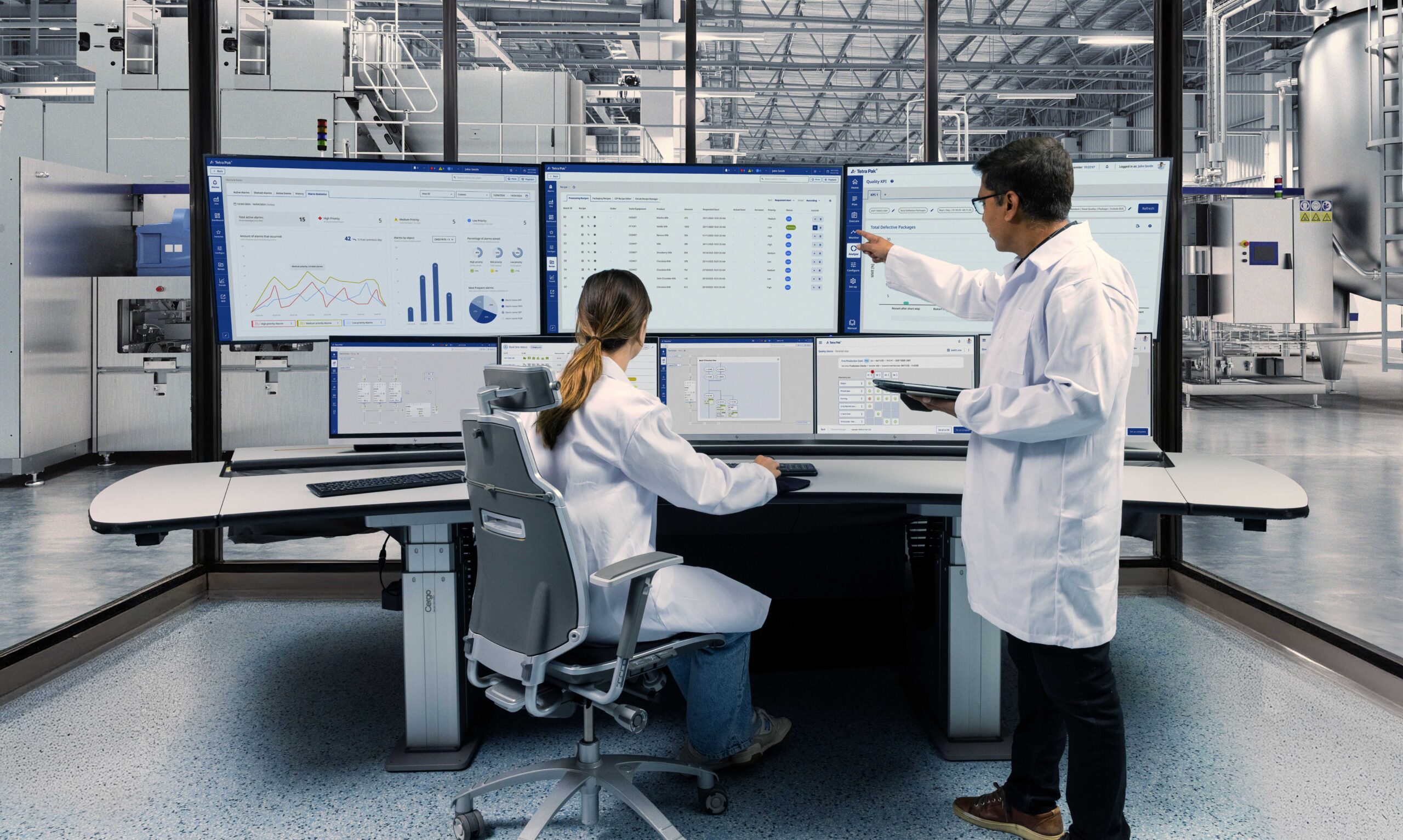
In bottling lines, the discontinuity between the various stages – processing, filling, packaging and end-of-line – remains one of the main operational challenges. Each section may be managed by different systems, often introduced at different times and not always perfectly integrated. This leads to difficulties in correlating data along the line, longer diagnosis times in the event of downtime and limited visibility into the causes of inefficiency. Factory OS addresses precisely this issue, creating information continuity that allows the line to be viewed as a single system rather than a sequence of independent machines. «Factory OS is not simply an MES system but a modular, open and natively connected platform. The real added value lies in its ability to transform fragmented data into an integrated view of the entire production process», explains Tommasi. This integration not only improves data transparency but also enables more precise action to be taken on the actual causes of inefficiencies, avoiding untargeted corrective measures.
Faster, data-driven decisions
One of the most immediate effects of introducing the platform is the acceleration of the decision-making process. Thanks to unified dashboards updated in real time, operators and line managers can quickly identify performance deviations and take targeted action. «Above all, decision-making speed, visibility into performance and the ability to prevent line stoppages have changed», says Tommasi. For beverage lines, this means more effective management of micro-stops, a better balance between machines and a greater ability to identify efficiency losses which, if not detected promptly, can significantly impact overall OEE.
From reaction to prediction
The most significant shift is from reactive to predictive management. The integration and continuous analysis of data enable the identification of recurring patterns and weak signals that foreshadow potential issues. «To give an example – explains Tommasi – a dairy plant has moved from reactive to predictive equipment management, resulting in a reduction in unplanned downtime and greater consistency in product quality».
This approach enables improved maintenance planning, a reduction in urgent interventions and increased process stability, with direct benefits for both productivity and the quality of the finished product.
Efficiency and flexibility in high-speed lines
In the beverage sector, where lines operate at high speeds, even minor misalignments can lead to significant losses in terms of yield and production continuity. Factory OS helps improve coordination between different machines and makes critical operations such as format changes – which are becoming increasingly frequent in a market characterised by high packaging and product variety – run more smoothly. «In the beverage sector, Factory OS improves the management of high-speed lines, making format changes more efficient and reducing downtime and waste», emphasises Tommasi. The overall effect is greater process stability and a reduction in operational variability, with tangible impacts on productivity and waste reduction.
Automation and the role of operators
The introduction of a cross-functional digital platform does not eliminate the role of people, but profoundly changes their activities. Manual data collection and management tasks are gradually reduced, making way for more skilled activities. «Technology does not replace people, but enhances their operational capabilities, allowing operators to focus on analysis, optimisation and quality control». Operators take on a more active role in line management, whilst management can rely on a clearer and more comprehensive view of performance, facilitating data-driven decisions even across multiple sites.