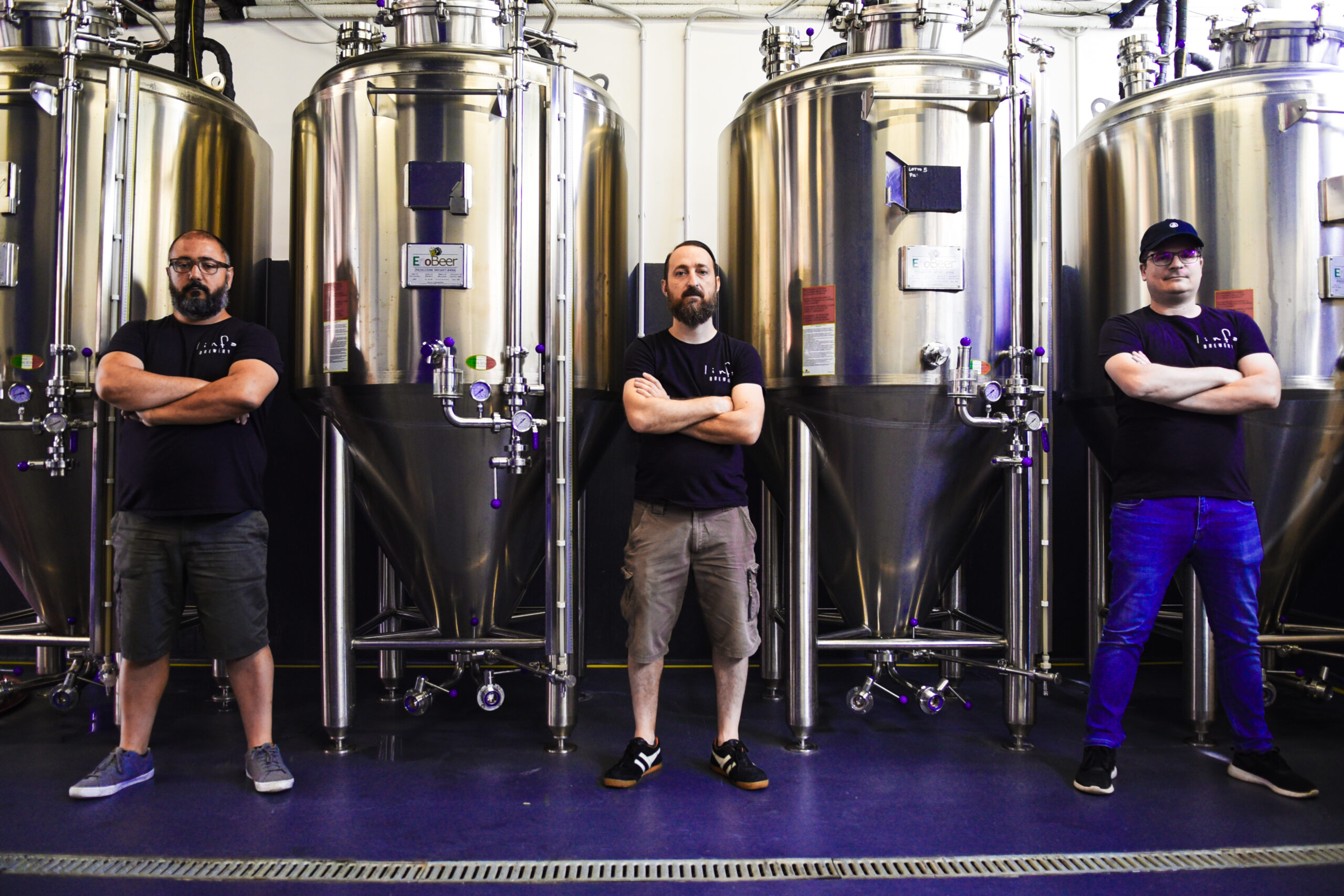
The Eternal City witnessed their debut in mid-June 2023. But, on closer inspection, it was more of a formal debut than a substantive one. The three partners had, in fact, been active in the sector for some time: a journey made up of experience gained directly in the field. Their faces have certainly not gone unnoticed. Especially to the regulars of Mad for Beer, the go-to pub in the Monteverde district. A real professional training ground: “We learned to run before we learned to walk,” jokes Andrea Nardi. A sharp wit that is also reflected in their marketing. Just take a look at the social media profile: high spirits are the order of the day! In short, a guiding principle. In terms of production, they prefer English-style interpretations and bottom fermentation, maintaining a consistent but far from rigid line. “To be serious, you also have to know how to have fun and – above all – take risks,” Nardi says with a wink. How can you disagree?
Dreams are made of Plastika
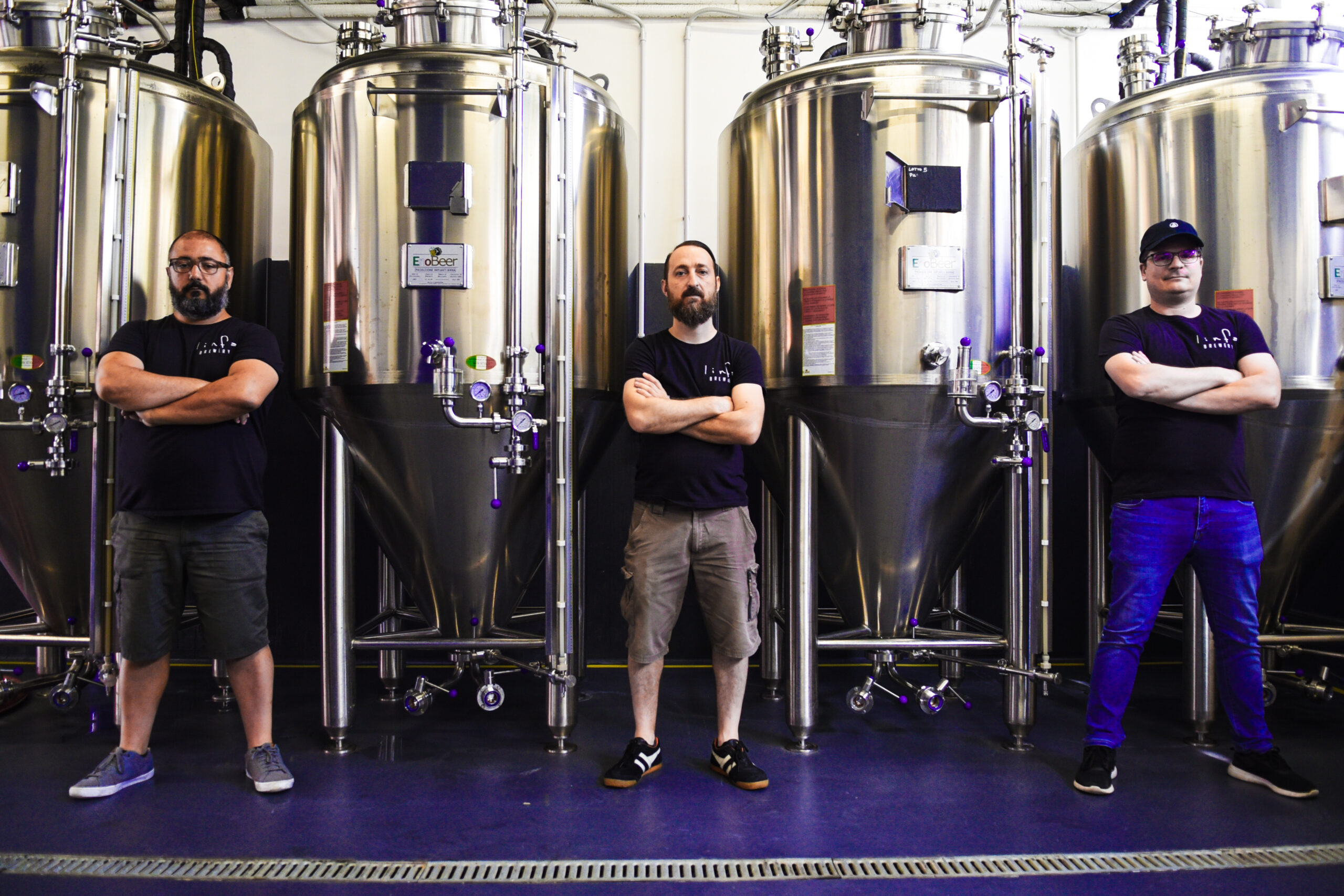
He wins the award dedicated to producers with less than three years in business at the Fermento Birra competition, an annual event that awards the title of Brewer of the Year, including the emerging category. “And who would have expected that?!” admits Andrea, with a mixture of amazement and satisfaction that is still evident. “What a nice surprise! Linfa is mainly known in Lazio. In these two and a half years, we have worked consistently and we will not let go. Ours is a close-knit team: we are grateful for this recognition. Taking part in national events, such as the EurHop Roma Beer Festival, was a great showcase: it allowed us to be under a magnifying glass.” His training began behind the bar, where he distinguished himself as an eclectic publican. He later expanded his skills in the world of homebrewing, until the decisive move to DIEFFE – Accademia delle Professioni di Padova – where he obtained the qualification of brewer. “Working at Mad was crucial: it allowed me to develop a direct knowledge of the market. At a certain point, I chose to take the plunge and devote myself to production.” The line of beers developed by Linfa stems precisely from this background, enriched by experience in various breweries. The collaboration with the Etnia Brewery in Pavia, where he worked for most of 2017, is significant. Among the project’s founding partners, Nardi holds the role of production manager. He is supported by a complementary team: Roberto Antonini, an entrepreneur, manages logistics and distribution; Andrea’s cousin was one of the mainstays of Mad for Beer. Francesco De Santis, also a veteran of the Monteverde brewery, is responsible for the administrative and management activities of the brewery.
His Excellency at work
He moves with ease around the brewhouse, almost as if with his eyes closed: Andrea is firmly in charge. The plant comprises a two-vessel system: one heated vessel, used for mashing, boiling and the whirlpool stage, and a lauter tun dedicated to separation. The maximum capacity is 6.5 hectolitres, with a theoretical annual production capacity of 850 hectolitres. Each brew yields between 680 and 700 litres of wort, with an average of 16 brews per month. Linfa Brewery looks to the future with confidence: ‘We’re a young company, but we’ve seen a rise in demand right from the start. In 2024, we produced 285 hectolitres, rising to 450 in 2025. We do not yet meet the volumes required by large-scale retailers: this is an open possibility that we are considering. Our sales are mainly aimed at a niche market, through local distribution and word of mouth. Rome, however, offers a large and dynamic market. Production activities are growing, as are investments, starting with the bottling machine. We’re already hard at work!’
Packaging: first plant on the way
‘We use seven isobaric truncated-conical fermenters, which are almost always operating at full capacity: five with a capacity of 1,400 litres and two with a capacity of 2,200 litres.’ The refermentation room has a total capacity of 8,500 litres of conditioned volume, which varies depending on the types of beer brewed. In the absence of an in-house facility, isobaric canning is currently outsourced to the mobile canning service provided by Birrificio Ciociaro in Frosinone. Canning takes place directly on-site, ensuring operational flexibility. The acquisition of the brewery’s own equipment for kegging and can filling is now at an advanced stage, with the aim of increasing volumes, optimising turnaround times and improving overall efficiency. “We are finalising the last details.” The business development plan forecasts an estimated production growth of between 15% and 20% by 2027. With its current setup, the brewery packages around 900 33 cl cans per hour whilst simultaneously filling 24-litre PET kegs, intended mainly for the craft beer market. The finished products are stored in a cold store at a constant temperature of 5 °C, with an average time-to-market of between 30 and 45 days. ‘In 2025, we produced 11,000 cans and nearly 1,700 kegs.’ The roadmap is set: by 2026, they aim to reach almost 600 hectolitres!
The final piece of the puzzle: water. The water in the capital, which is notoriously rich in bicarbonates, requires specific treatment. “We have installed a reverse osmosis system to adjust the salt levels and create the ideal profile for each recipe.”