A trade fair does not necessarily have to showcase the very latest innovations. Through the features of the products on display, it can demonstrate how the industry’s priorities have shifted. This is the approach Robino & Galandrino is taking at SIMEI: several of the solutions it will be exhibiting are technologies that have already been developed and installed, and which are now in significantly greater demand. And this decision stems from listening to the market: «By listening to our market, we have seen that demands are increasingly focused on machine flexibility, advanced automation and rapid format changes. Compared to two years ago, interest in automation has grown significantly. That is why, at SIMEI, we have decided to highlight solutions that are already part of our range but which now meet needs that have become much more central to our customers’ requirements», explains Matteo Barzizza, Sales & Marketing Director at Robino & Galandrino.
The criteria used to evaluate a machine are also changing. The correct execution of the main operation is now a prerequisite. «The fact that the capsule is produced correctly is no longer even taken into consideration: it is taken for granted. Instead, the focus is shifting to the time required to reconfigure the machine, the tasks entrusted to the operator, the continuity of the feed, and the level of automation that can be achieved», states Barzizza.
Efficiency and flexibility must go hand in hand
According to Barzizza, this demand comes at a challenging time for the alcoholic drinks market, characterised by a slowdown in consumption and a growing interest in products with low or zero alcohol content, although the volumes of these products are not yet on a par with those of traditional products. «In a less dynamic market, it becomes even more important to be able to cater to diverse demands. One option is to broaden the range of products on offer, including through packaging, by handling a wider variety of bottles, caps and configurations», says Barzizza.
But commercial flexibility has a direct impact on the production line: each variant may require adjustments, format changes and non-productive downtime. This is where flexibility and efficiency must come together: being able to respond to a wider range of demands only becomes truly advantageous if the production line allows switching between different production runs without turning variety into an excessive cost in terms of time and operational resources.
A manual adjustment may be quick and easy for someone who has known a machine for years, but much less so for a less experienced operator. Transferring certain operations to stored recipes and automatic adjustments therefore makes it possible both to reduce processing times and to lessen reliance on individual skills. When asked whether the trend is to interfere with the machine as little as possible once it has been set up, Barzizza replies: «That is the trend. This does not mean eliminating human supervision but optimising it: an operator who is less tied up with repetitive tasks can monitor more parts of the line».
Automating the processes surrounding the machine as well
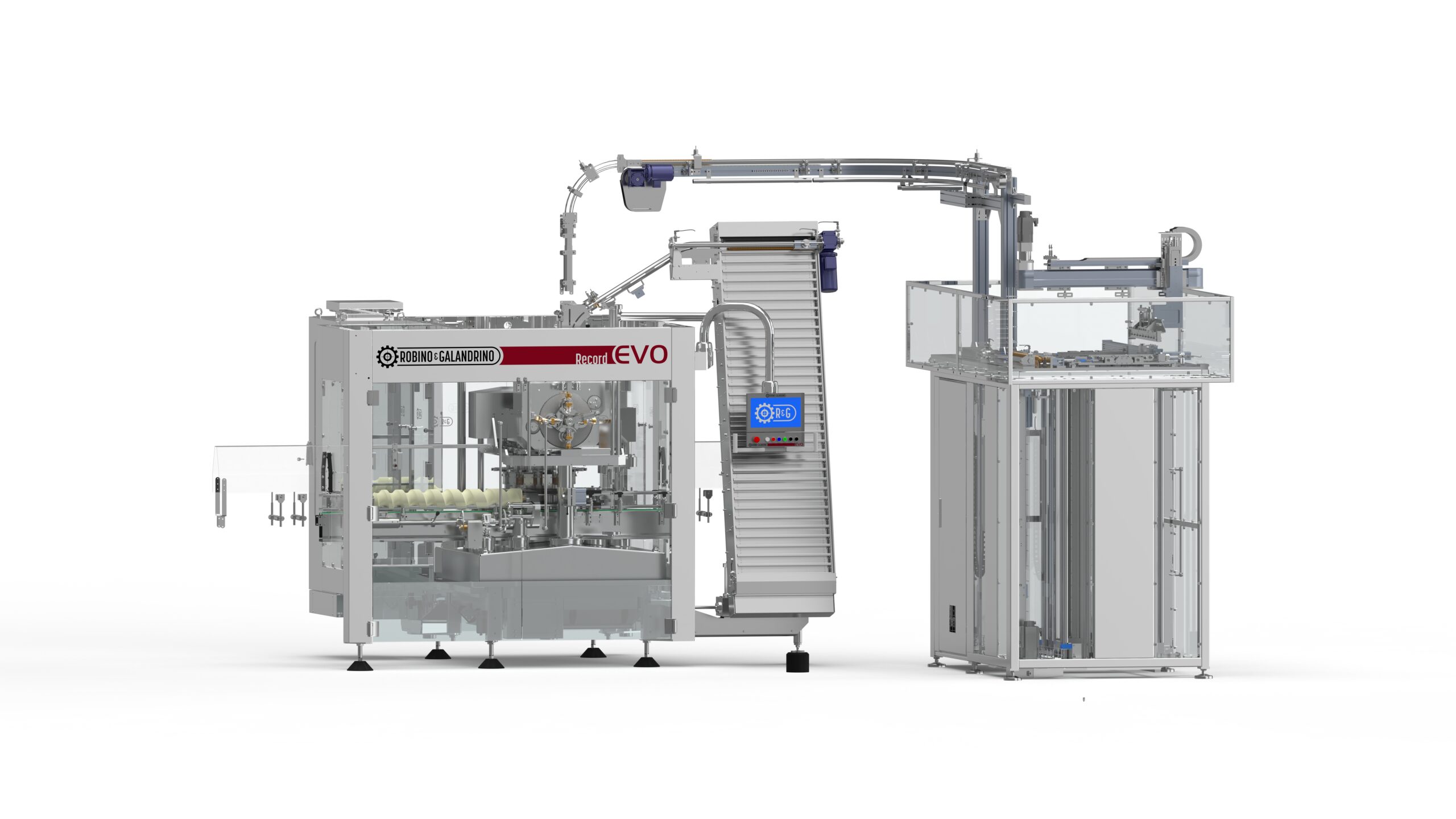
In this regard, the combination on display at SIMEI between the RECORD 12 EVO PLUS cage-forming machine and Raptor – a depalletiser designed to automate the feeding of the cages – is significant. «Traditionally, the operator has to load the cage strips manually. With the Raptor, however, a full pallet is loaded, organised across multiple levels: the system picks up the strips and transfers them to the cage-forming machine’s conveyor», explains Barzizza. The benefit does not relate to the cage-making machine’s primary function, but to what is needed to keep it supplied. This reduces the time the operator has to spend on loading, as well as the risk that a lack of or incorrect supply might interrupt production. It is therefore an example of how automation is gradually extending to auxiliary operations as well.
The Raptor is also a separate machine that operates alongside the capping machine. According to Barzizza, in most cases it can also be retrofitted onto an existing machine. The group also offers a solution based on the same principle for feeding large caps for sparkling wines, although this will not be on display at SIMEI due to space constraints.
The RECORD EVO PLUS also places particular emphasis on ease of cleaning. The base and sloping work surface are made of AISI 304 stainless steel, with channelled drainage for wash water. This configuration facilitates the drainage of liquids even in the event of an accidental bottle breakage. The machine also features electronic axes with brushless motors and storable recipes for combinations of bottle and wire cage sizes, with automatic settings.
Vision and strategies for reducing adjustments
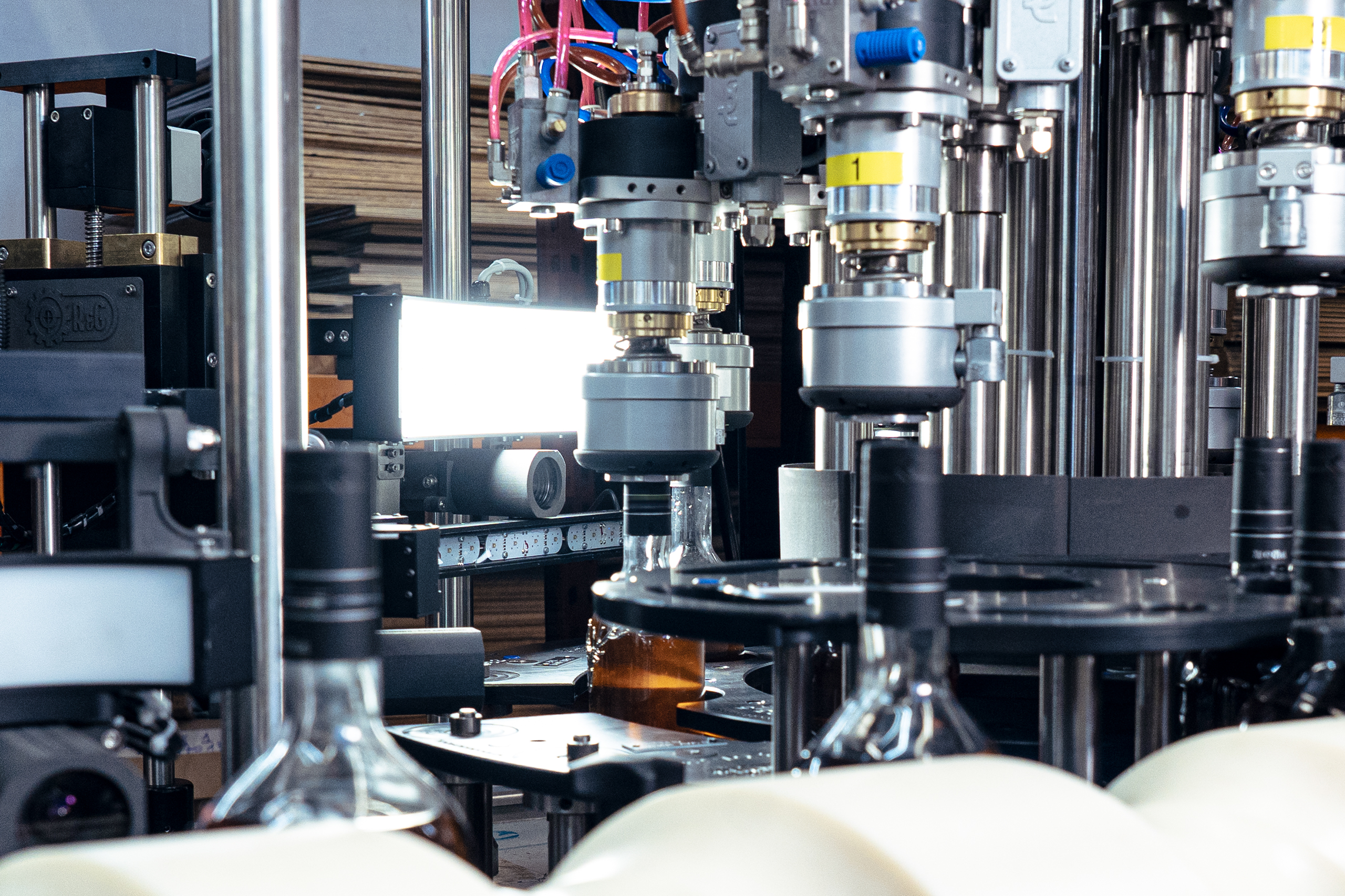
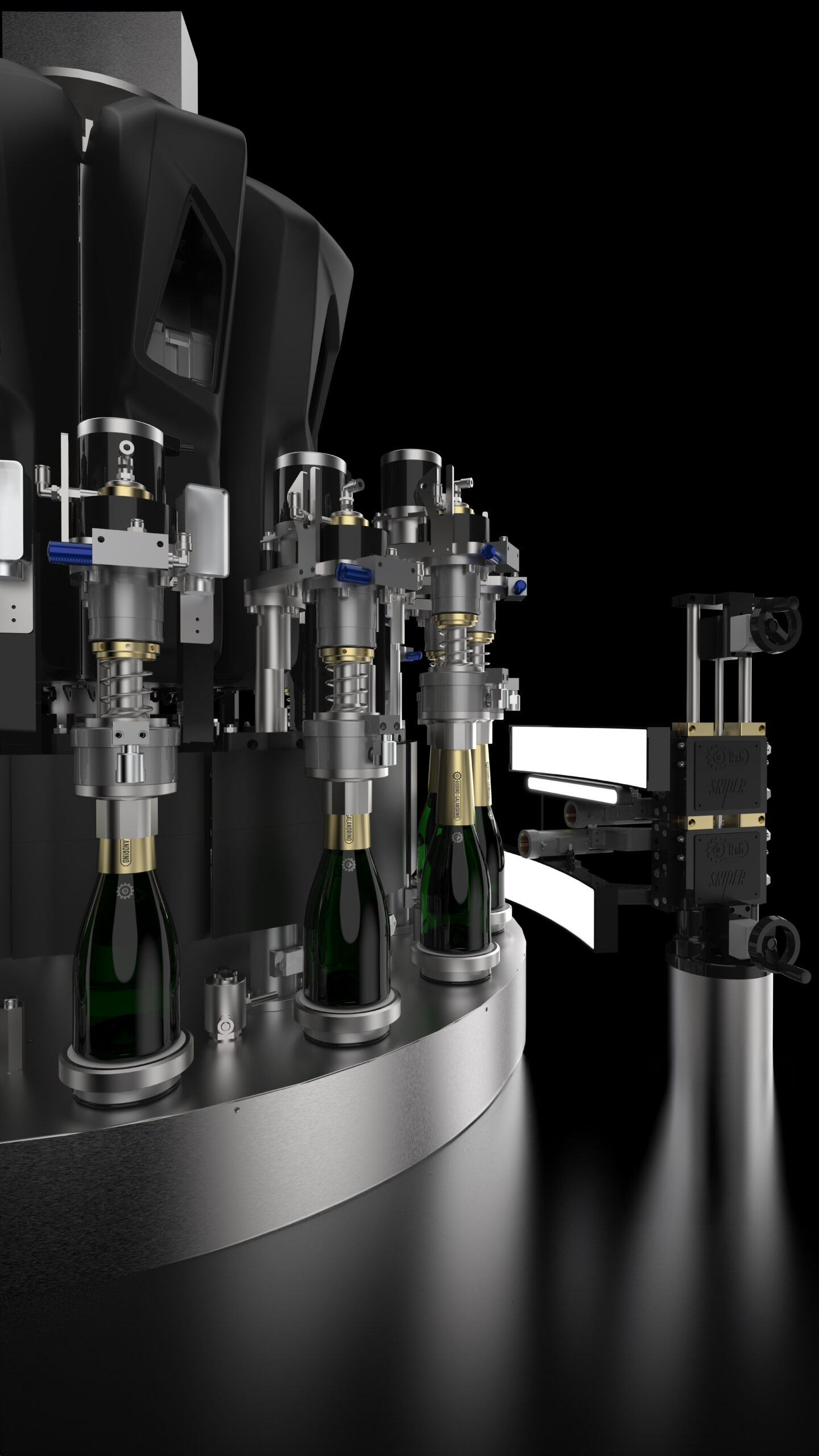
The SNIPER platform can be integrated into the range, combining vision systems – fibre optics, lasers and cameras – for orientation and centring.
Here too, two requirements come into play. The first concerns packaging precision. Whilst in the past, centring mainly involved the position of a logo or text on the cap in relation to the folds, today the cap must also be aligned with the bottle, the label or other graphic reference points. The second concerns the industrial management of this precision. In the solution described by Barzizza, an upper camera scans the cap and a lower one scans the bottle. The various configurations can be linked to recipes that can be called up via the control panel, reducing the manual adjustments required when production changes. This is particularly important when a single plant has to handle numerous combinations intended for different markets: precision and flexibility must be achieved without proportionally increasing the time taken for interventions or the skills required of the operator.