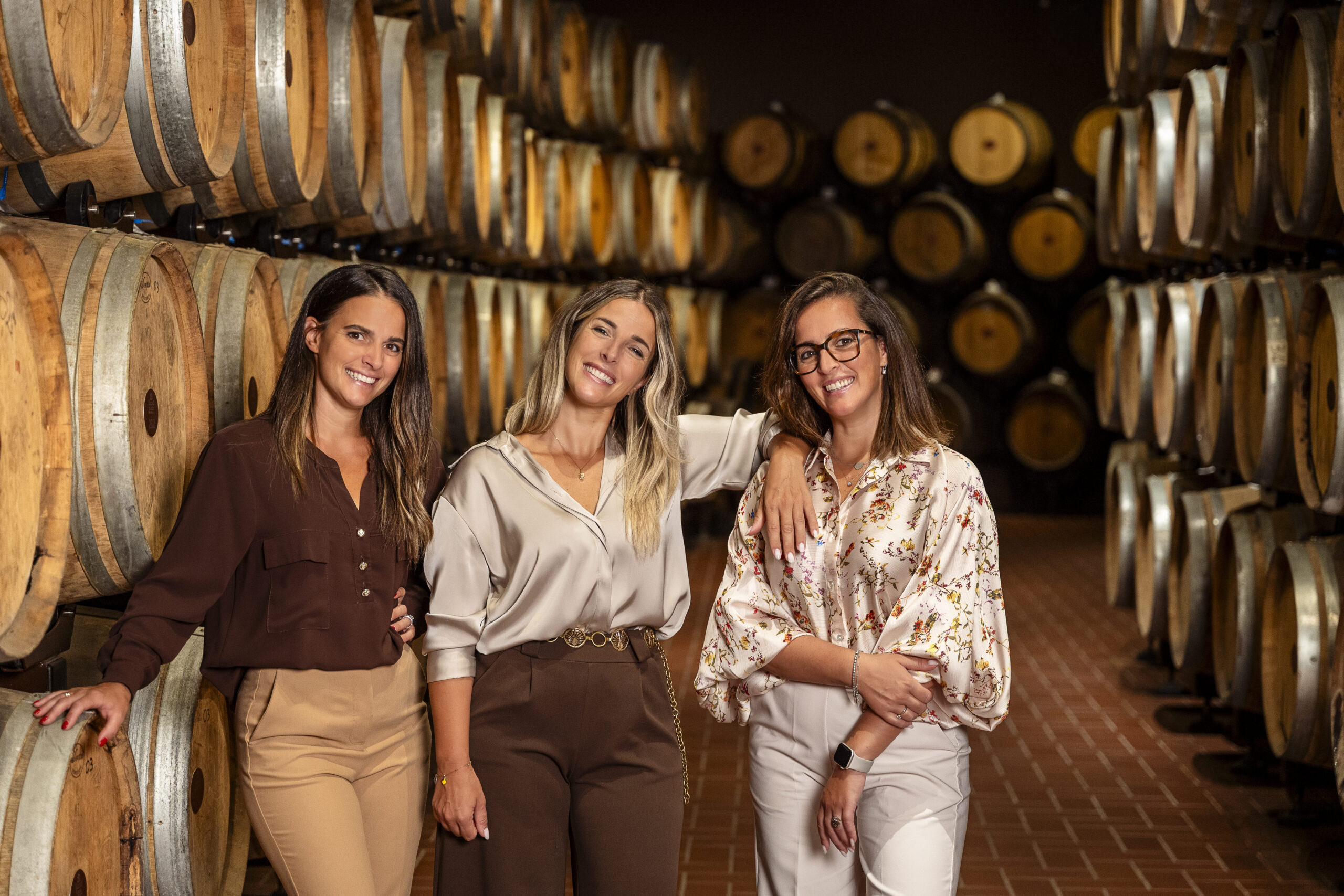
For Silvia Belvedere Mazzetti, Managing Director of Mazzetti d’Altavilla, these are the choices that have determined the success of the distillery in Altavilla Monferrato (AL): «Having always maintained its family character, its connection to its local area and its capacity for innovation».
Founded in 1846 amidst the UNESCO-listed hills of Langhe-Roero and Monferrato, the company has been passed down from generation to generation without ever breaking the link between Piedmontese grape marc and the finished spirit, and is now in its seventh generation of family management under Chiara, Silvia and Elisa Belvedere Mazzetti at the helm of a Group which, in 2025, exceeded €14 million in turnover, with its spirits reaching around 40 countries across all continents. A strong female presence has guided the distillery towards greater product refinement, whilst energy self-sufficiency from renewable sources and a plastic-free premises now define its sustainable profile. These elements foreshadow an industrial narrative centred on machinery, formats and production cycles – a narrative that is by no means secondary to the better-known focus on taste and packaging – and which in recent years has taken on an increasingly central role in the owners’ strategic decisions.
Two automated lines, six artisanal lines
Today, the Altavilla Monferrato factory – housed in a former monastery overlooking the Historic Park – is home to eight bottling lines: two fully automated and six semi-automated or manually operated, featuring machinery from Longoni, Robino & Galandrino, Borelli and Comen. A comprehensive set-up, designed to cover the entire product range, from single-varietal grappas to aged brandies, from gins to fruit liqueurs, right through to the more seasonal offerings. The coexistence of advanced automation and more artisanal processes reflects the company’s dual nature, enabling it to ensure efficiency on a large scale without compromising the manual care required for limited-run or particularly delicate products, where the operator’s eye remains irreplaceable. Many of the Group’s seventy employees are involved in overseeing the department, carrying out a variety of tasks, striking a balance between expert manual skill and instrumental control that has always characterised Mazzetti d’Altavilla’s production approach. Today, the company is called upon to combine volume growth with the increasing variety of formats and products demanded by the market – both in Italy and abroad – without compromising its quality standards.
At the heart of the B6 machine
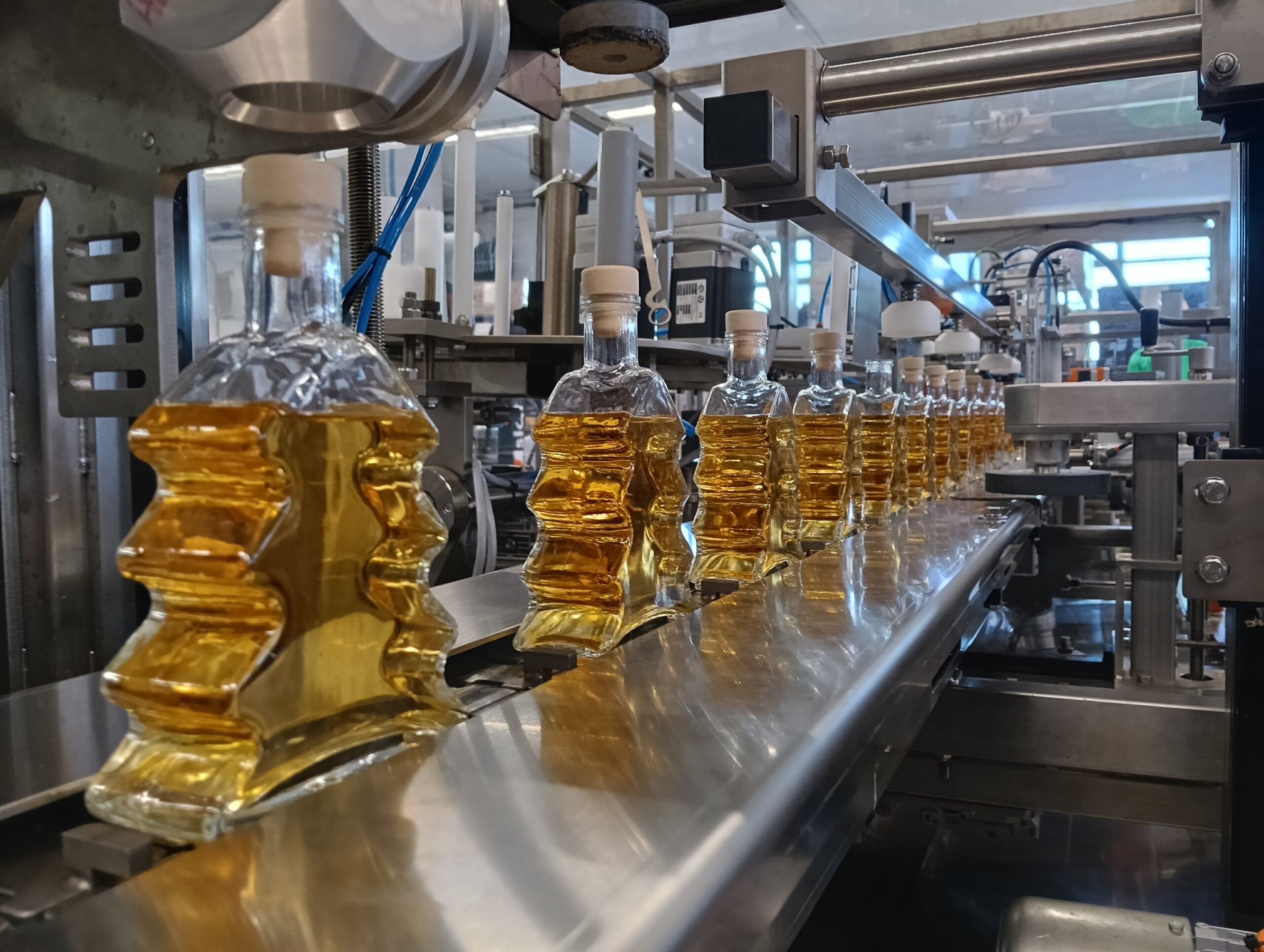
Commissioned in August 2025 as a new installation, the Polaris line – supplied by Polaris Automazioni as the B6 model – represents the most significant production investment of the past year, also geared towards Industry 5.0-style energy efficiency. With a nominal capacity of 1,500 bottles per hour, linear and intermittent operation, and automatic management of the entire primary packaging process: empty bottles enter at one end and emerge filled, capped, labelled, capped with a tamper-evident seal and fitted with a tax seal, whilst the direct link to the company’s management system makes every stage traceable in real time, from the count of processed items right through to any production rejects.
The first station is the rinsing station, where 10 bottles per cycle are tilted 180° and washed with a high-pressure jet of carefully filtered hydroalcoholic solution; this approach prevents variations in the product’s alcohol content and sensory profile – a crucial aspect for premium products destined for the most demanding markets, where even the slightest organoleptic alteration can compromise the perceived quality of the bottled spirit, regardless of the product category or the format chosen for marketing.
Precision, safety, continuity
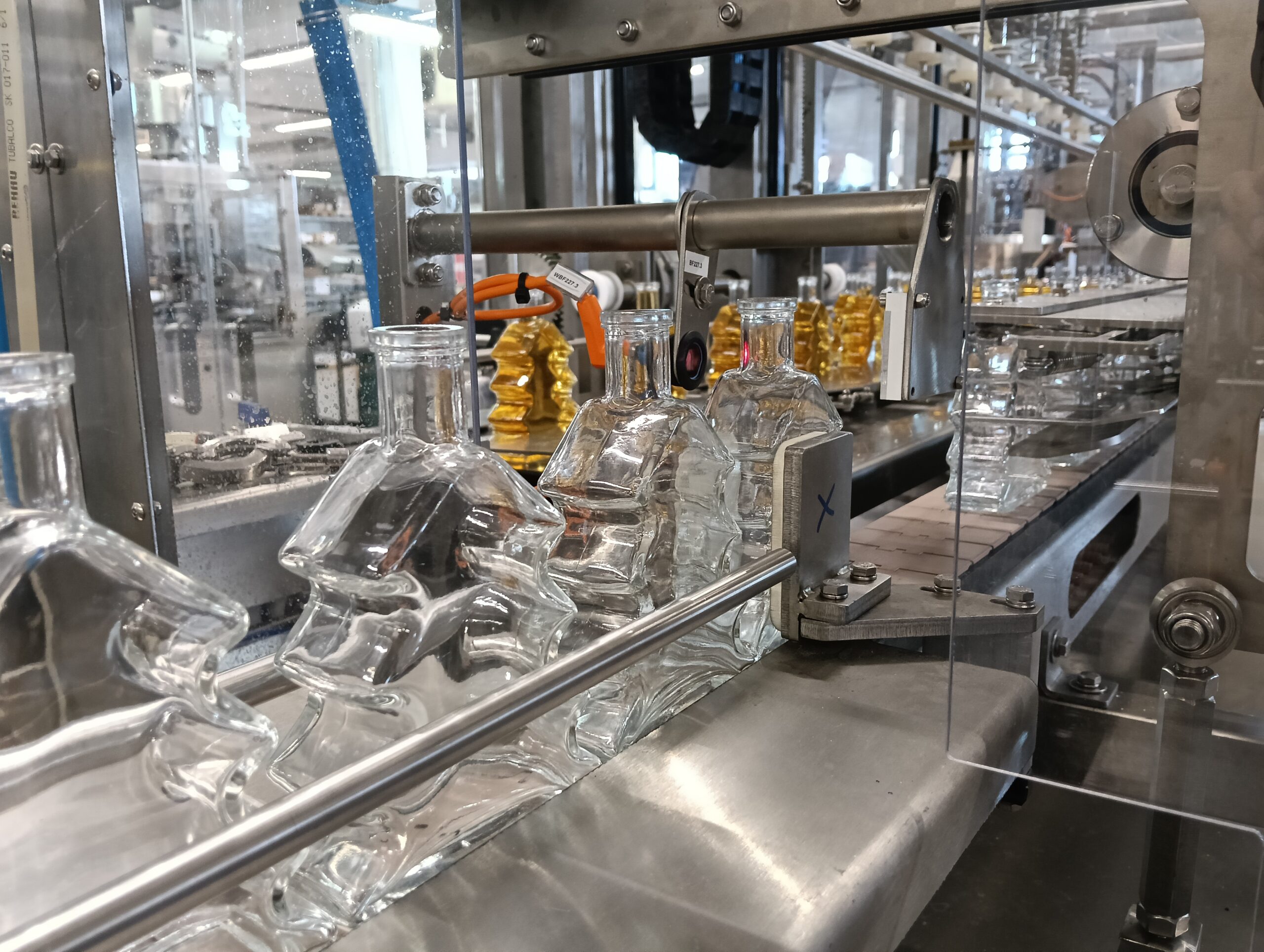
This stage is followed by filling, carried out by a unit made entirely of AISI 316L stainless steel, a material that prevents any colour changes in the distillate: small-sized hoods contain the evaporation of the alcoholic component, whilst a vacuum system – which can be activated in mixed mode with overpressure from the control panel – also handles dense products such as creams or syrups. An external leveller adjusts the fill level in the bottle, removing any foam. The capping unit accommodates screw caps, pressure caps or T-caps simply by replacing the hopper in a matter of minutes, whilst three labelling machines – front, back and neck – simultaneously apply labels to the stationary bottle, ensuring precision even on contoured shapes, prior to the application of the tax seal and the laser marking of the batch number and expiry date, which are engraved directly onto the glass. ATEX-compliant components enable the handling of explosive vapours, including 99° Vol pure alcohol, whilst for the wide range of bottle sizes – from 2 ml mini bottles to 1.5 l magnums – format changeover is carried out via the control panel, without prolonged downtime. «The aspect we are most pleased with is the format changeover itself, which is carried out automatically by setting the recipe, with all parameters adjusted simultaneously», says Silvia Belvedere Mazzetti, noting that, since it went into operation, the line has already processed almost 400,000 bottles.