I recently attended EuroSense 2026, the twelfth European conference on sensory and consumer research. It is not my main area of research, but I fully understand the importance of sensory analysis in food production and the realisation that it is pointless to design a product, in any sector, if it will not be able to appeal to end consumers, satisfying their explicit and implicit needs.
Nowadays, there is increasing talk of co-design and co-creation approaches, in which all the stakeholders in the production system in question are involved from the earliest stages of the development process, in order to minimise the risk of commercial failure.
Every day, we all perform actions and make choices that are determined by a number of factors, including our personal experiences and the context in which we find ourselves acting and making choices, and which are linked to one another according to logics that are sometimes simple and obvious, but often hidden and unclear.
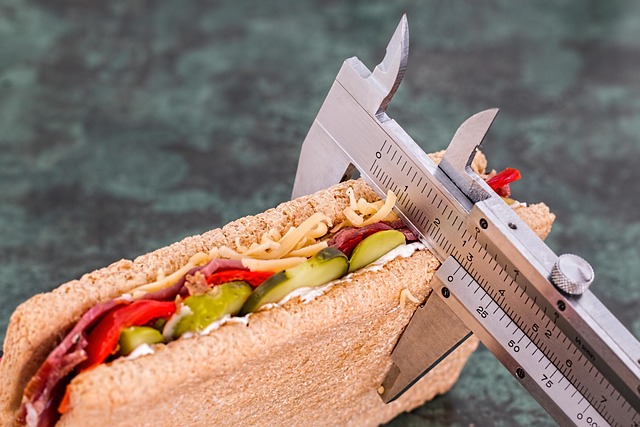
It is therefore essential to study and understand consumer psychology, but not only, let us say, in a simplistic way, for marketing purposes. The objectives are multiplying and becoming more elevated, including, for example, the development of information campaigns and effective strategies to promote healthy eating and to develop healthier foods that can appeal to different categories of consumers. The role of consumers is therefore becoming increasingly important, but their profile has changed.
From consumers with a predominantly passive role and, perhaps, more easily swayed, they have become increasingly informed and aware of their rights, at least to some extent. I emphasise “in part”, because the countless pieces of information that are now accessible are not always accurate, and the individual’s knowledge does not always enable them to process the information they receive correctly.
Moreover, while on the one hand consumers seem to understand the superpower they could wield over companies and markets, on the other hand, they still find themselves unwittingly giving away valuable information. This is also clearly explained inone of the dossiers in our FAD on artificial intelligence: our likes, our reviews and our recipe shares can help companies to better target their marketing strategies or to develop new products. But this and other information is truly valuable for the noble purposes mentioned above. So, paradoxically, in a world of increasingly connected consumers, it is becoming ever harder to reach them. I also heard a lot about this at the conference. It’s not just a problem with children; in fact, it may be relatively easier to engage young children, whereas when they grow up, they become consumers who get bored quickly, bombarded with surveys, and who flit from one piece of content to another. We have to chase them, applying gamification strategies in the hope that they will stay connected and complete our questionnaire. It doesn’t matter if everyone now recognises the need to reduce the time spent online and on social media; the important thing is that they do so for long enough to feed the artificial intelligence with the data it needs.