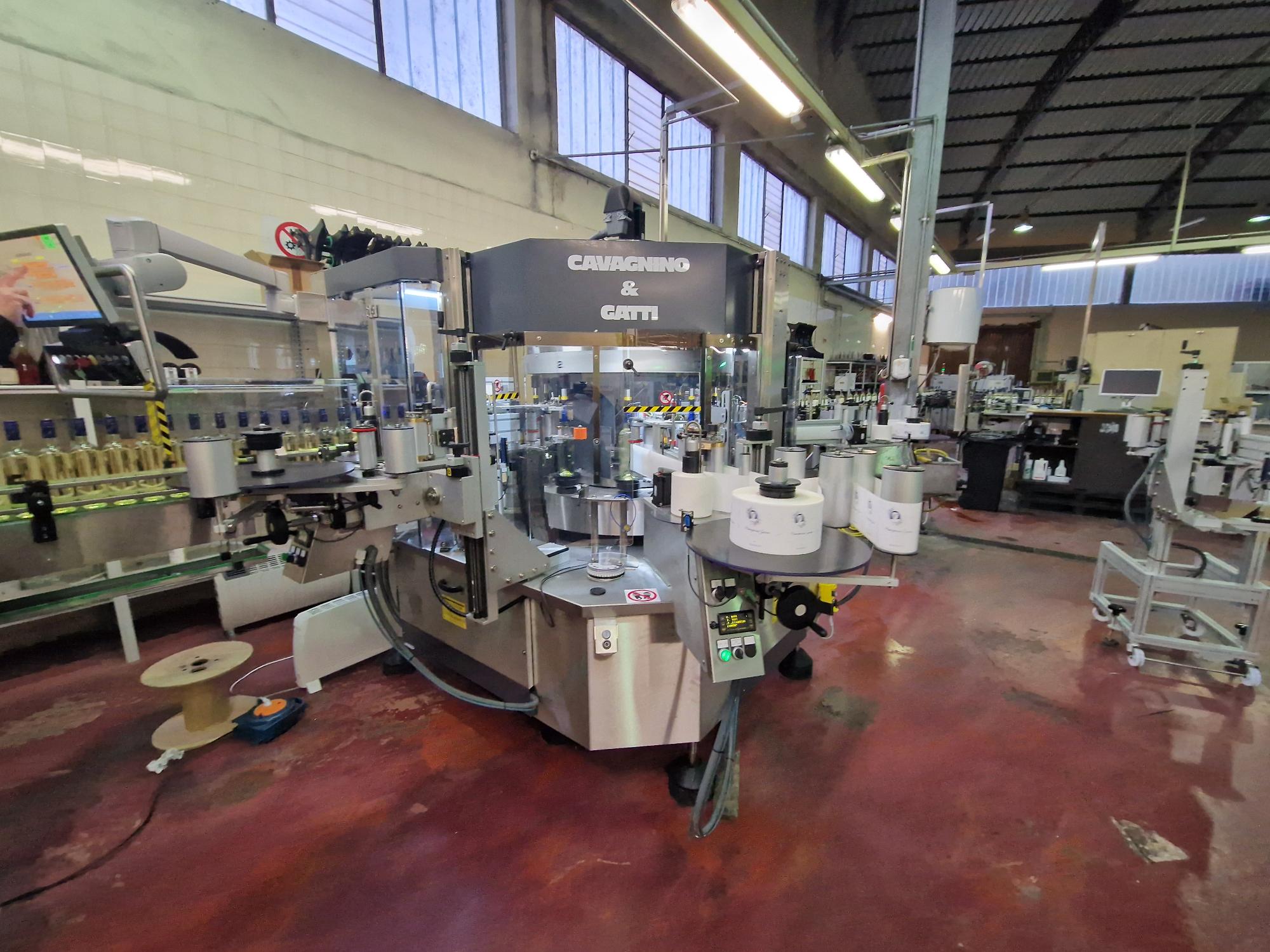
At Banfi’s Piedmontese winery in Strevi, in the province of Alessandria, the arrival of a new rotary labelling machine has brought about a specific change in the production process: the final labelling of the bottles, one of the last checks carried out before the products leave the factory. The facility is located in the building of the historic Bruzzone winery, founded in the mid-19th century and taken over in 1979 by the Italian-American brothers John and Harry Mariani – the same brothers who, the year before, together with oenologist Ezio Rivella, had founded Banfi in Montalcino. Since then, the Piedmontese site has brought the local sparkling wine tradition into the Group, whilst continuing to produce still wines such as Barbera, Cortese and Albarossa. Distinct functions are spread across three levels: the basement houses the sparkling wine production areas, using both the Traditional method and Martinotti method, with the bottles resting on pupitres; the ground floor accommodates the bottling and packaging line, the finished product warehouses and the analysis laboratory; finally, the first floor is home to the offices and the shop. Around twenty people work across this facility, the 30-hectare estate in Novi Ligure – which includes an on-site winemaking cellar – and a 7-hectare plot in Acqui Terme, with an average annual production that has recently stood at around one and a half million bottles, all bearing the Equalitas sustainability certification.
Almost one million euros invested in the business
The Group’s investments since 2024, totalling almost one million euros, have been focused to a lesser extent on the agricultural sector and, for the most part, on the renewal of machinery and plant, and on improving the quality of the packaging. Thanks to these investments, the bottling plant is now capable of processing 5,000-6,000 bottles per hour, mostly in the 0.75-litre size.
Antonio Massucco, Head Winemaker at Banfi Piemonte, summarises the philosophy behind the company’s decisions regarding plant technology as follows: «Rather than focusing on production capacity, we prioritise the pursuit of value and the utmost care at every stage of the process. Quality and care in the production of musts and wines, as well as precision and care in the bottling process, have been the key criteria guiding our investments and, consequently, our choice of suppliers».
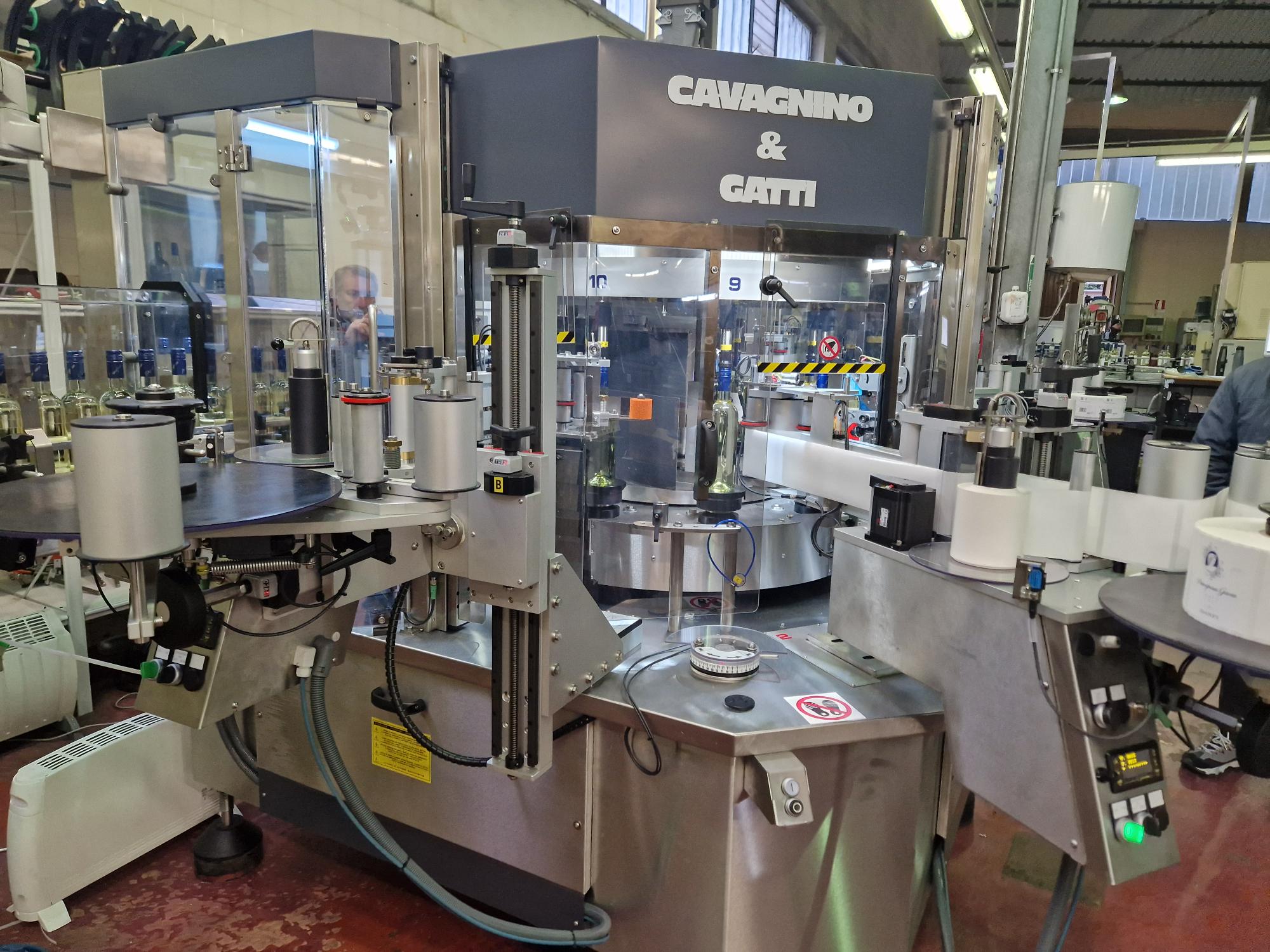
The partnership with Cavagnino & Gatti began around two years ago, following a meeting with the regional sales manager of the Canelli-based company, which was already well-known and highly regarded in the area for the build quality of its machinery. Banfi’s request was clear: to have access to advanced, precise and reliable technology that was simple for staff to manage in their day-to-day work – without burdening production line operations with administrative complications – and capable of providing the flexibility required to operate across a wide range of various applications. A key requirement, moreover, was particularly rapid testing and commissioning times, as the winery needed to start production within a very tight timeframe. This led to the collaboration between the two companies, with the acquisition of an adhesive labelling machine which now operates on the line dedicated primarily to Banfi Piemonte’s sparkling wines – a product that accounts for the largest share of production at the Strevi plant.
Five elements applied in a single step
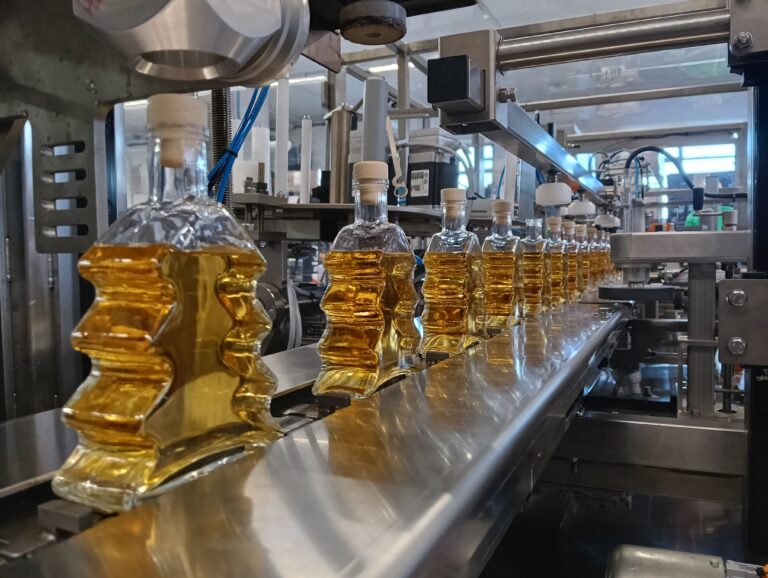
Umberto Pennacino, Sales Manager at Cavagnino & Gatti, explains the purchase in detail: «The machine in question is a rotary labelling machine offering extremely high flexibility and precision, with a 10 bottle platforms motorised carousel, specifically designed to meet the complex requirements of the premium wine sector and to operate at a production speed of 6,000 bottles per hour».
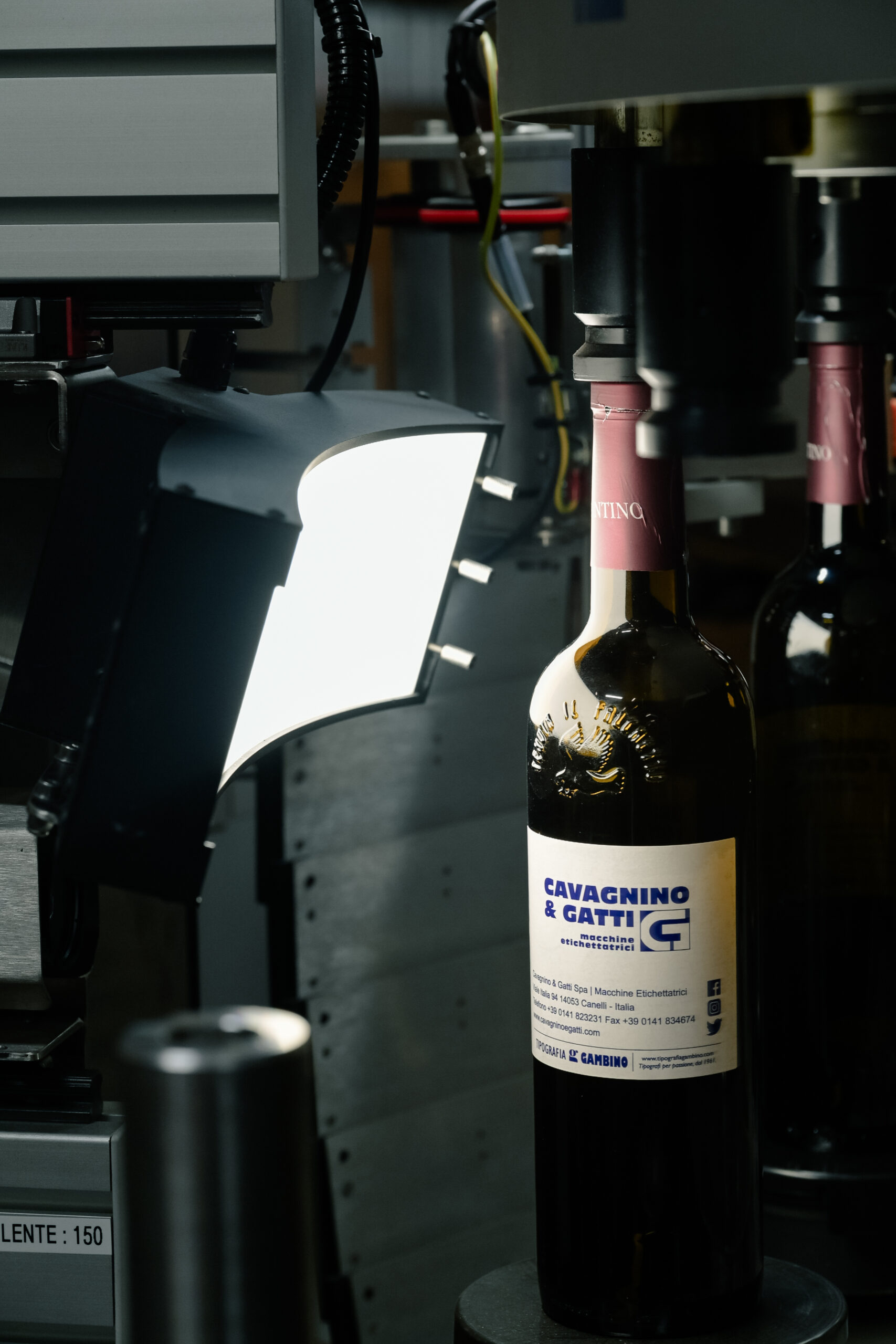
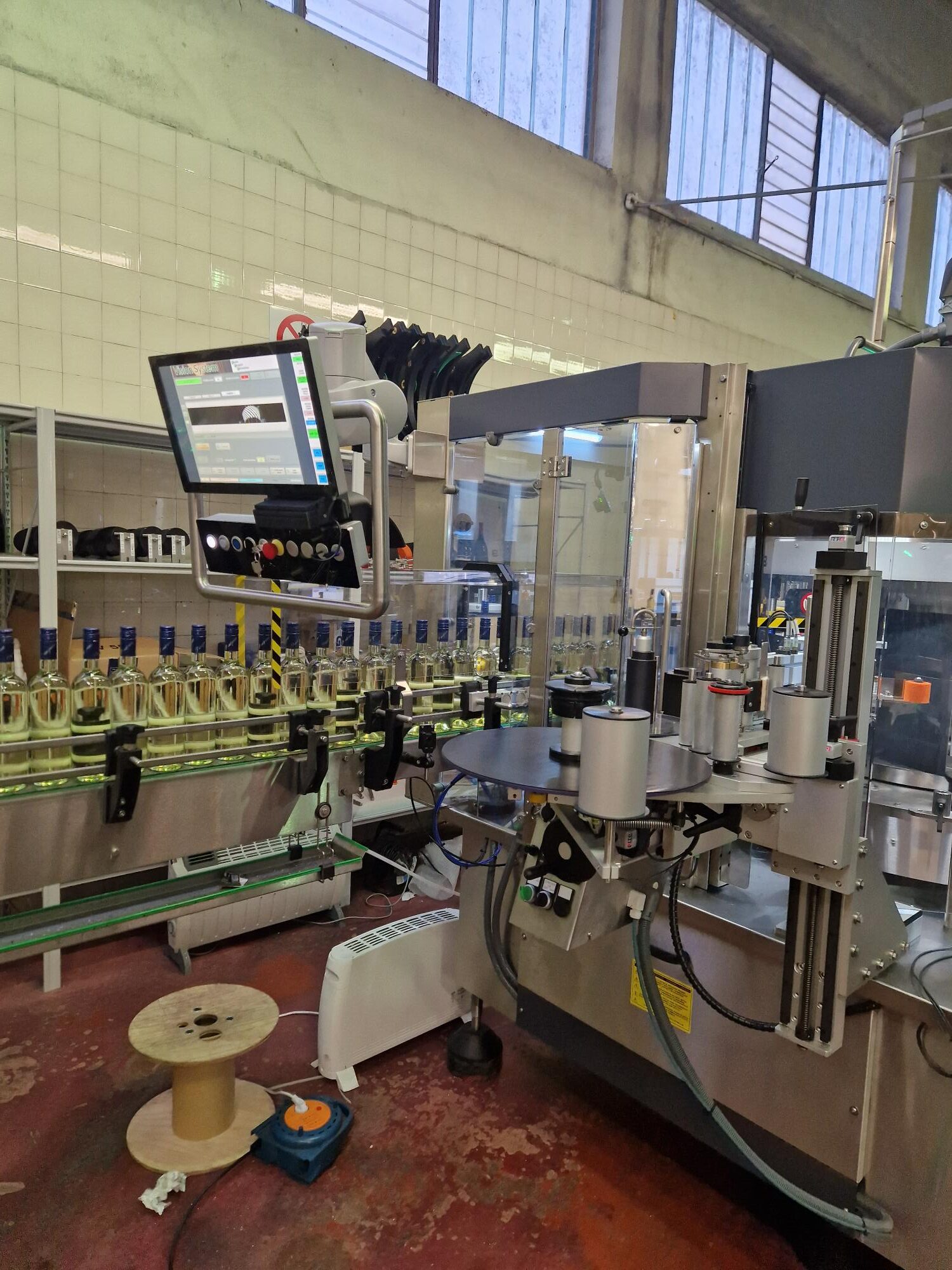
The system handles complex labelling configurations for both cylindrical and conical glass bottles, using five stations for self-adhesive paper labels capable of applying, in a single pass and in a synchronised way, five different elements to the same bottle: neck label, body label, tax stamp, tax mark and back label. The technological heart of the system, Pennacino explains, is the orientation system: «This is the advanced Vision System with a camera which gives the machine a level of absolute precision. This optical system allows the application to be spotted in relation to labels already applied on the container, detects the glass seam to position the labels away from the seam and ensure a flawless finish, and orients the bottle according to customised capsules, aligning the decorations embossed on the capsule with the main label beneath it». This configuration, Pennacino continues, is defined on the basis of a detailed analysis of bottle formats, labelling layouts, volumes and available space on the production line, even before the actual design phase begins.
Automatic checks and rapid format changeover
The attention to detail during the orientation phase therefore extends to the capsule as well, as the machine ensures the perfect alignment of text and logos – a detail that carries significant weight in the Traditional method sparkling wine sector, where the overall presentation conveys much of the product’s positioning on the shelf. Completing the picture are the control, warning and alarm systems, equipped with audible and visual signals, which promptly detect the failure to apply a label, collar or band, and automatically stop the machine in the event of consecutive errors. From an operational perspective, the flexibility of the system is ensured by multi-format star wheels and quick-adjustment components, designed to eliminate downtime during format changes and to handle small batches of highly customised bottles with ease.
For Massucco, the result is evident in the day-to-day operation of the line: «We have seen a significant improvement in the final labelling result, with greater precision and consistency. At the same time, the new machine has enabled us to reduce processing times and production waste, thanks to improved process efficiency and precision». The testing, carried out in-house by Cavagnino & Gatti using original bottles, labels and capsules supplied by the client, made it possible to start production at the Strevi plant in just a couple of days, compared with an average lead time of around six months for the entire system, from design to testing. This timeframe was reduced at the early stages in this case, thanks to rigorous preliminary testing carried out at the manufacturer’s facilities, specifically to meet the winery’s urgent production requirements.