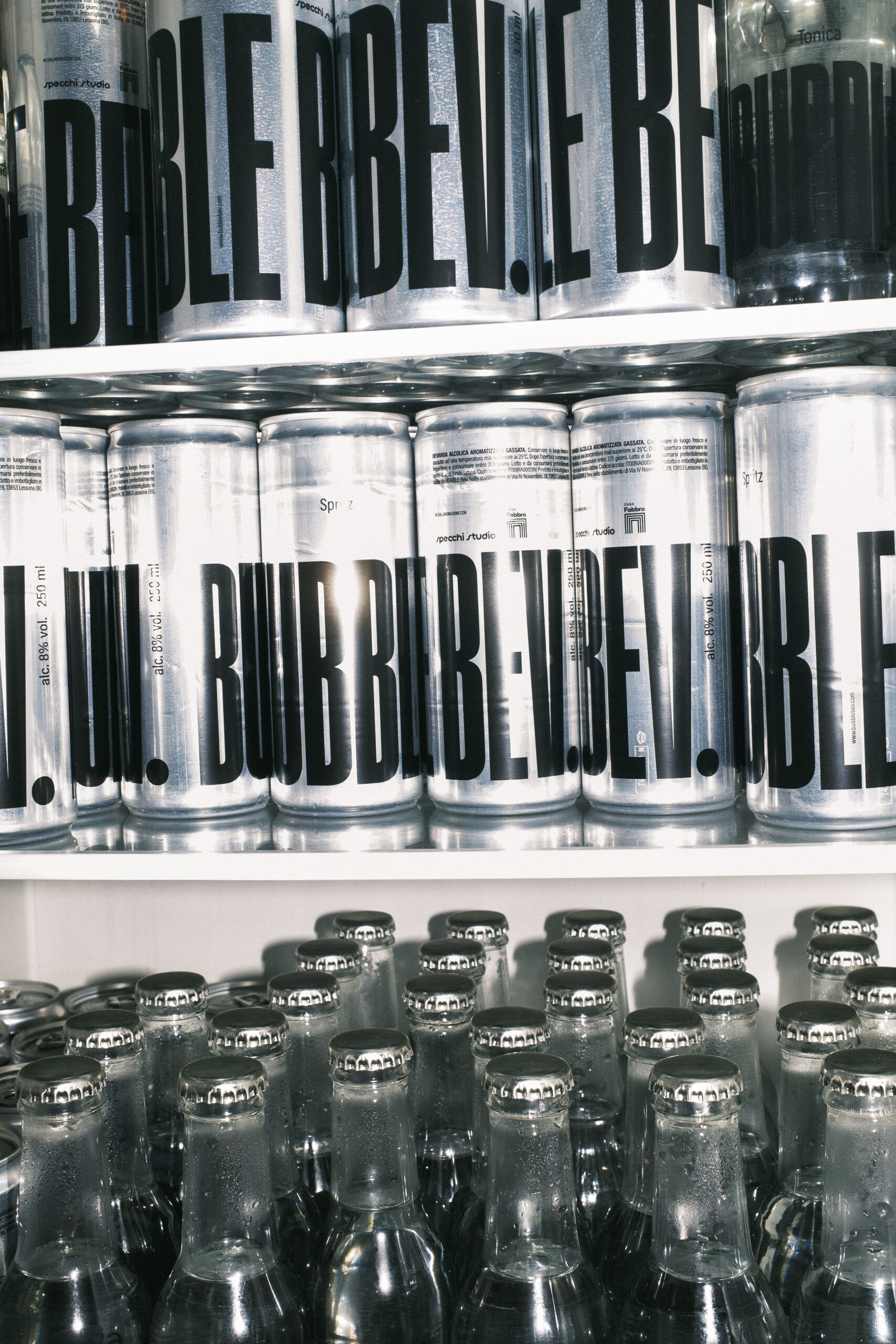
In the beverage sector, contract manufacturing is undergoing a period of transformation. For years, it developed according to a very specific model: most operators made the spare production capacity of their plants available, and anyone wishing to launch a new drink had to adapt to the supplier’s formats, minimum quantities and production constraints. Today, however, the growth of new brands, the rise of emerging product categories and the rapid pace at which tastes and consumption patterns are shifting this balance. More and more companies are seeking a partner who does not merely fill a bottle or a can only when there is ‘spare capacity’, but who is capable of supporting product development, from defining the recipe right through to production. This is the context in which Bubble Bev operates. The project took shape in 2021 in Lessona (Biella), gradually reinterpreting the concept of ‘contract manufacturing’ and building a model that integrates consultancy, product development, regulatory compliance, packaging and production. As well as expanding its services, the company has redefined the role of the co-packer within the beverage supply chain. «For us, contract manufacturing isn’t simply about producing a drink. It means becoming a partner who helps the client turn an idea into a market-ready product», explains Nick Ranghino, co-founder of Bubble Bev.
From an idea to a business model
Interestingly, Bubble Bev did not start out as a contract manufacturer. Its true origins date back to 2019, when Nick Ranghino and Luca Rosa founded Meadlight Drinks with the aim of producing and marketing mead. The pandemic brought the project to a halt right at the launch stage. But what initially seemed like an obstacle turned into an opportunity to view the market from a different perspective and identify a need that was still largely unmet by the Italian contract manufacturing sector. Ranghino, Rosa and Massimo Mengoli of FlaRa Holding – who had since joined the project team – realised that many businesses, from start-ups to established brands, faced a common challenge: finding a partner flexible enough to develop new drinks without having to adapt the project to a supplier’s production constraints or alter their own production set-up. «The contract manufacturing market – explains Ranghino – has historically been dominated by companies that produce mainly for their own brands and make their surplus production capacity available. This means high minimum order quantities, processes that offer little scope for customisation, and a limited willingness to take on non-standard projects. We started with a different approach. We began by listening to what the market was asking of us and realised that the need was not just to produce, but to support the development of projects».
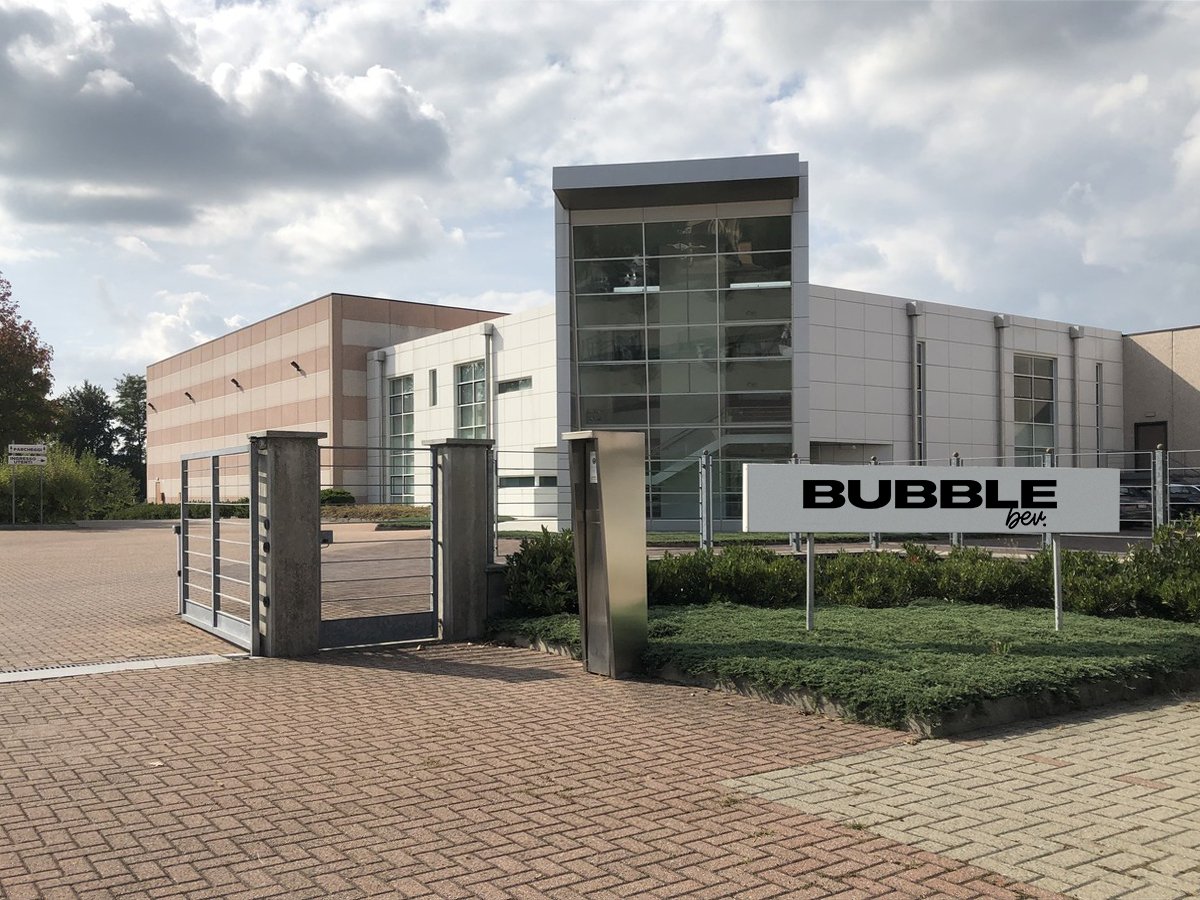
This marked a change of direction: Bubble Bev began to make its in-house expertise available, first through small, bespoke projects and then by building an increasingly comprehensive range of services. This evolution did not initially follow a pre-defined plan but was driven by observing the demands coming from the market. Each new project represents an opportunity to broaden the scope of services, invest in new skills and strengthen a model that differs from traditional contract, not so much in what it produces, but in the way it supports the client. Within a few years, the company expanded its Research and Development department, invested in new production lines and built a structure capable of supporting the client throughout the entire beverage development process. Production remains the end goal but is no longer the focus of the service offering. The value gradually shifts towards the expertise that precedes and supports the manufacturing process.
From contract manufacturer to development partner
What is Bubble Bev’s true distinguishing feature? Ranghino sums it up in one word: vertical integration. «Today’s customers are looking for end-to-end support. It is no longer enough simply to be a manufacturer: we must become part of their value chain». In practice, Bubble Bev can get involved right from the very earliest stages of a project’s development. Some customers arrive with a fully defined recipe and primarily require production support; others still need to turn an idea into a product that can be manufactured on an industrial scale. In the latter case, the work begins long before the product reaches the production line.
A single point of contact
So what is Bubble Bev’s workflow? Ranghino describes it as follows: «The first step is to analyse the project and understand how far along it is in its development. Following the sales phase, each client is assigned a project manager who coordinates the various activities and acts as the point of contact throughout the entire process. Working alongside this project manager are the Research and Development department, the technicians responsible for regulatory compliance, the packaging specialists and the production team. The aim is to create a seamless flow between different areas of expertise, ensuring the client does not have to deal with different points of contact at each stage of the project». The Research and Development department is involved in formulating the recipe, selecting ingredients and producing samples. At the same time, regulatory aspects are addressed, from labelling to the regulatory compliance required for marketing in the various markets. The workflow then continues with packaging design and production planning, maintaining constant coordination between all company departments. «Over the coming years, we would like to further digitise this process using tools that will allow clients to monitor the progress of the various project stages, without sacrificing their direct relationship with the company team», explains Ranghino.
Flexibility extends to the production lines too
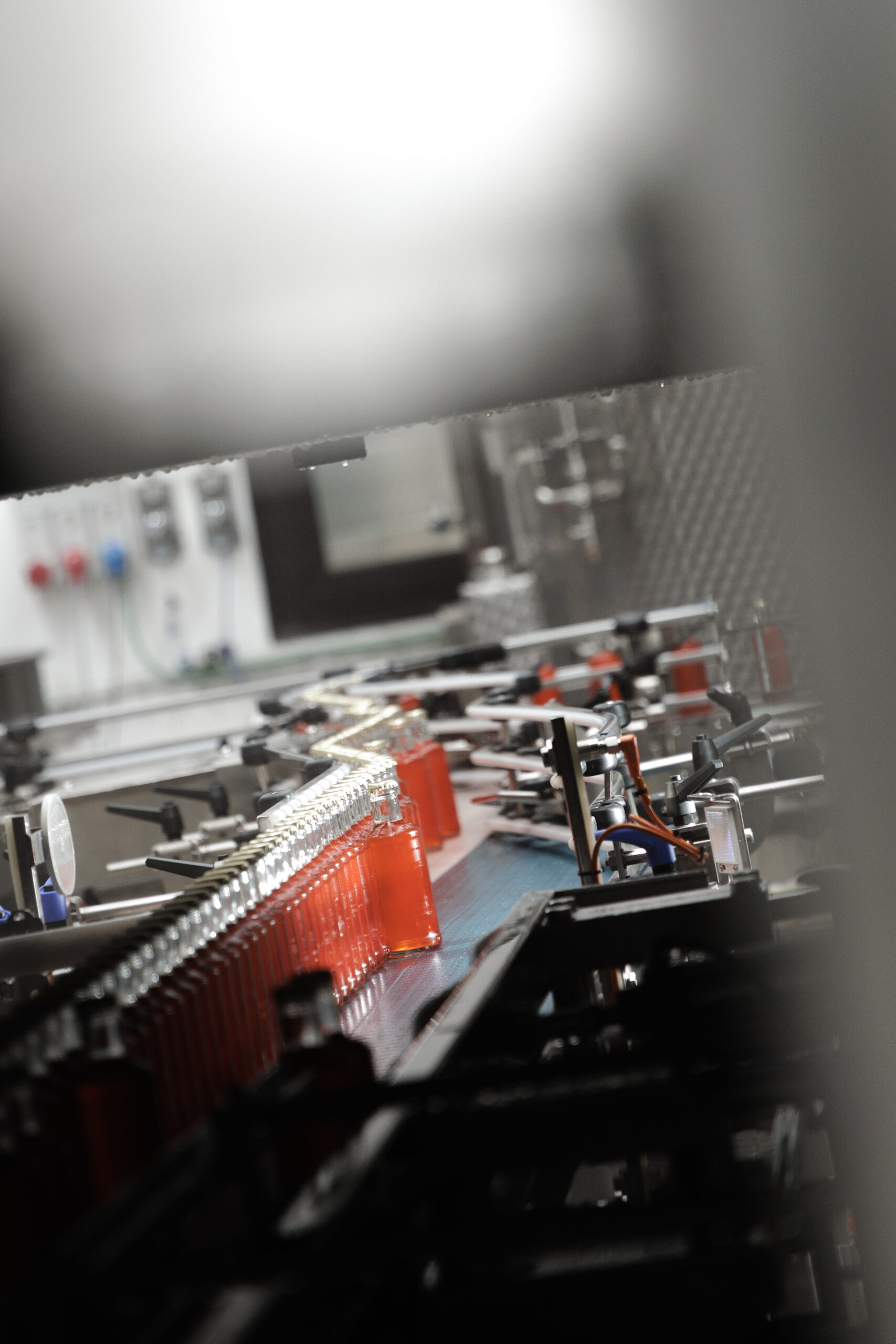
Bubble Bev’s plant design choices are also innovative. Indeed, rather than purchasing standard machines, Bubble Bev has worked with manufacturers to adapt the equipment to its operational needs, prioritising versatility as a competitive advantage.
The factory has been organised to handle different types of drinks, formats and packaging, prioritising operational flexibility over maximising volumes. This choice is consistent with a model that caters simultaneously to start-ups, retailers and established companies, each with specific production requirements.
Today, the plant is divided into areas dedicated to the handling of fresh and dry raw materials (and soon liquid ones too), which all converge in the packaging department. Here the production lines operate: a high-capacity line for glass and cans at medium speed (16–20,000 units per hour), a second line dedicated to smaller batches and various formats, and a specific line for keg filling. This configuration allows for a rapid switch between different production runs, whilst maintaining a high capacity to respond to market demands. The choice of technologies also follows the same logic: «We do not want to compete on high volumes – explains Ranghino –. That would mean going up against operators who have built their advantage on economies of scale. We prefer to differentiate ourselves by offering the ability to manage complex projects, different packaging types and specific requirements, turning flexibility into a key element of our service rather than just a production feature».
A privileged vantage point
The position Bubble Bev now occupies within the supply chain also allows it to observe market developments at close quarters. Start-ups, established brands and retailers turn to the company to evaluate new projects, transforming daily interactions with customers into a privileged vantage point for monitoring emerging categories and shifts in demand.
This privileged position also enables the company to spot certain trends early on. According to Ranghino, interest is currently growing in functional drinks and in low- and non-alcoholic categories, driven not so much by a desire to give up alcohol as by the search for different drinking occasions and a growing focus on wellbeing. «This applies to this year; next year could be different», says Ranghino, emphasising the speed at which the beverage sector is changing.