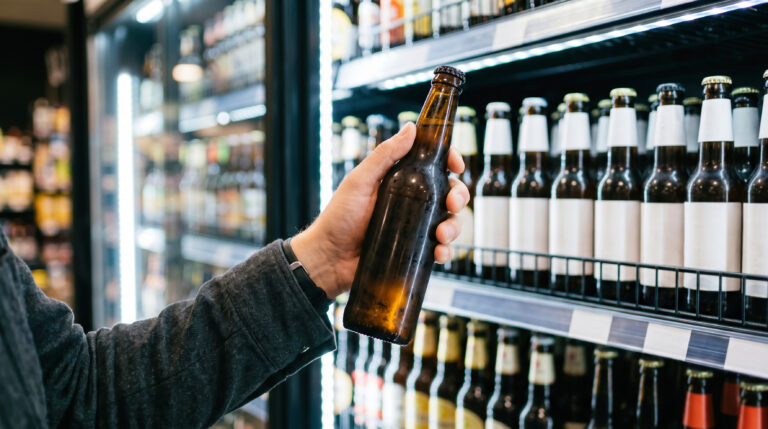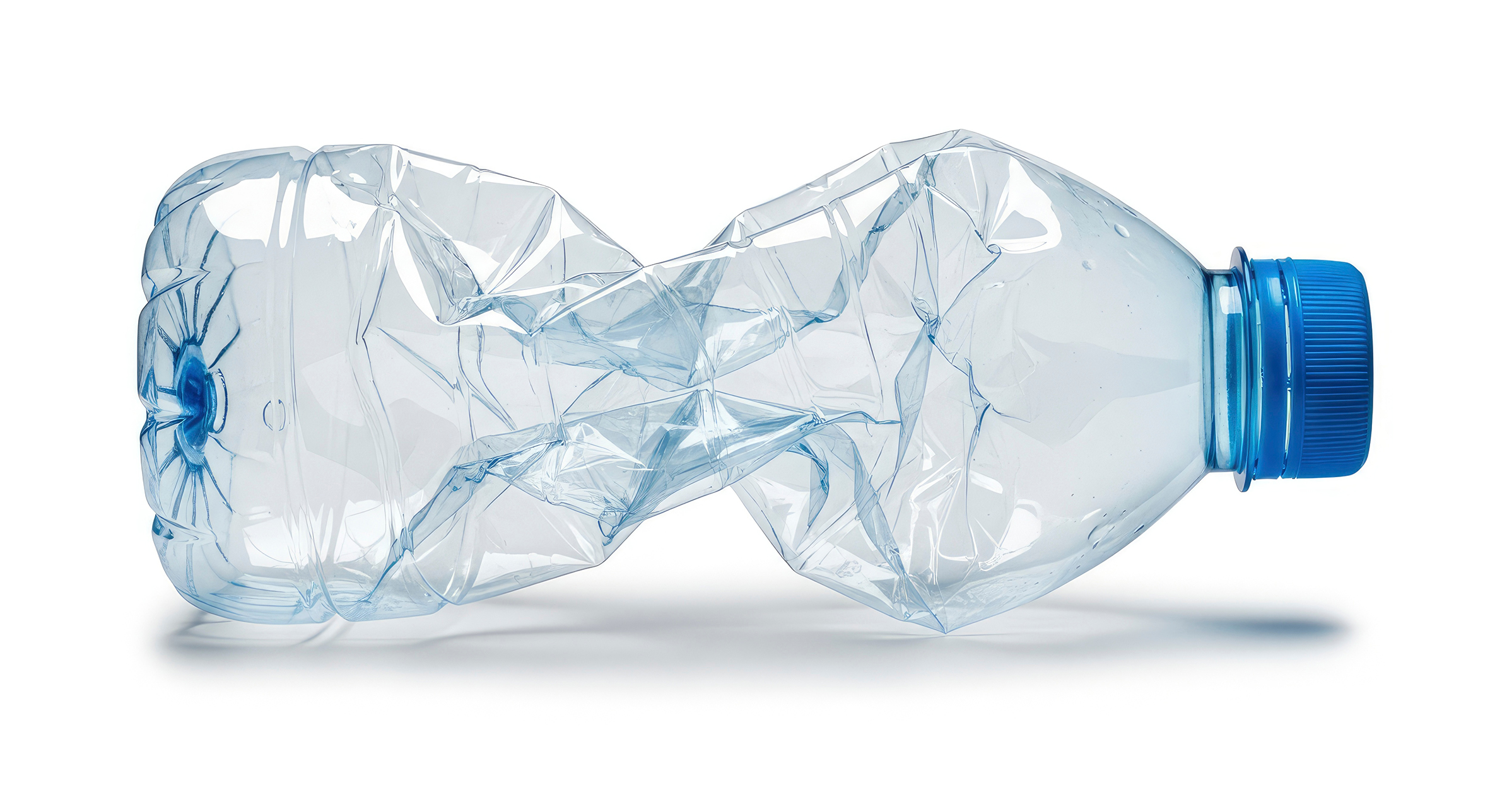
The requirement to increase the recycled PET content in beverage bottles is driving research and industry to develop materials capable of combining sustainability and performance.
The study by La Mantia and colleagues compares different mechanical recycling strategies to assess which is the most effective in the bottle-to-bottle process. The research compares mechanically recycled PET, PET regenerated via solid-state polymerisation (SSP) and blends obtained by combining virgin PET with recycled PET in varying proportions.
The aim is to investigate how the different materials influence processability, rheological properties and mechanical performance – key factors in the production of new bottles.
The results show that mechanical recycling leads to a gradual reduction in the polymer’s molecular weight and, consequently, in its viscosity and processability. SSP treatment, on the other hand, restores most of the characteristics of virgin PET, improving its mechanical strength and processability thanks to an increase in molecular weight and crystallinity. Blends of virgin and recycled PET have also proved to be an effective solution. Formulations containing between 10% and 50% recycled material maintained rheological and mechanical properties suitable for bottle production, confirming a strategy already adopted by the industry to reduce the use of virgin raw materials. However, PET regenerated using SSP demonstrated the best performance and, above all, offers a higher level of decontamination, which is a fundamental requirement for food-contact applications. The study therefore identifies regenerated PET as the most promising route to high-quality bottle-to-bottle recycling.
Bibliography: F. P. La Mantia , V. Titone , L. Botta , and P. Glerean . Mechanical Recycling Processes of Polyethylene Terephthalate (PET) in the Framework of Circular Bottle-To-Bottle Manufacturing. Journal of Applied Polymer Science 143, no. 1 (2026): e57954, https://doi.org/10.1002/app.57954