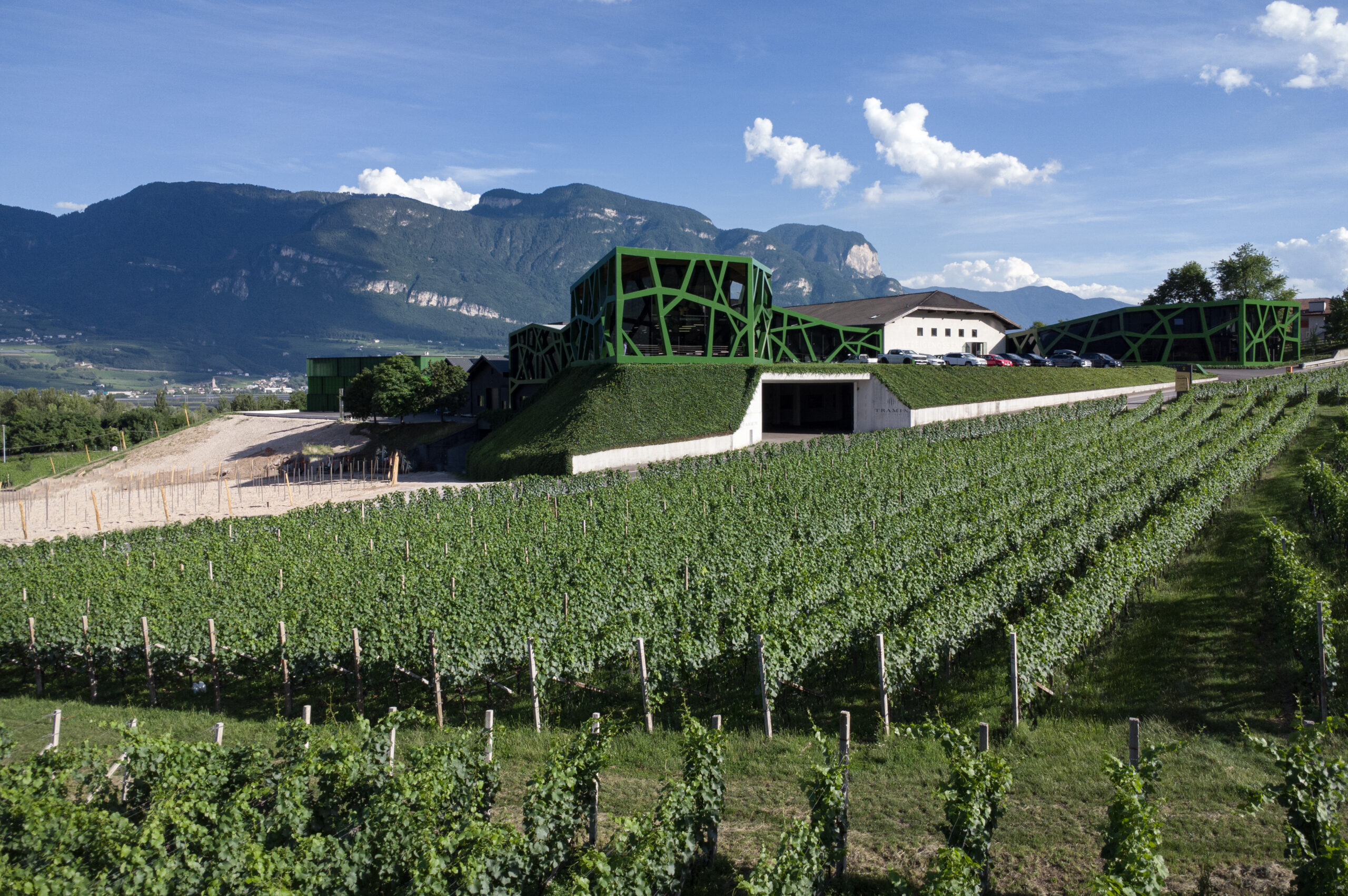
On 31 July, Cantina Tramin’s new production facility was inaugurated in Termeno; the project was described as the most significant in the cooperative’s 128-year history, making it the third-oldest wine cooperative in South Tyrol and one of the most awarded in Italy. The extension, most of which is underground, covers the stage preceding the actual winemaking process, from the reception of the grapes at harvest time through to their processing in the cellar. The new building comprises two underground levels, constructed on an area that had already been waterproofed to minimise the impact on the ground, and features a layout designed to handle even harvests requiring the simultaneous gathering of grapes from multiple plots quickly and gently. Furthermore, the processing makes full use of gravity, whilst three new presses increase the capacity to process the grapes with precision. «The project to expand and reorganise the production area will have a tangible and positive impact on the quality of our wines – explains Willi Stürz, oenologist and Technical Director at Cantina Tramin –. The facility opens up new possibilities for processing grapes separately and in small batches: in this way, we will further enhance the character of individual terroirs and plots, conveying the potential and identity of each vintage with greater precision». The project bears the signature of architect Werner Tscholl, who also designed the historic headquarters in 2010, now one of the most photographed wineries in Italy. The development completes the sculptural complex, which, in its form and colours, evokes vine shoots: a profiled glass façade, featuring various shades of green, preserves the lightness of the existing building and conceals the functional spaces, whilst the underground areas have been covered with soil and planted with vines, integrating the structure into the landscape. The solar panel system has also expanded alongside the new building and now meets two-thirds of the company’s energy requirements.
160 families, one supply chain
It was Christian Schrott who founded Cantina Tramin in 1898. As the village’s parish priest and, at the time, a member of the Vienna Parliament, Schrott, together with a group of local winegrowers, decided to set up the cooperative at a time when grape prices offered no security whatsoever to small-scale producers. In 1971, the company merged with the Cantina Sociale di Egna, expanding its membership and the areas it covered, and 1989 marked a turning point in quality with the launch of the Selezione Terminum project, followed in 1991 by the arrival of Willi Stürz, who was to steer the entire production towards excellence. Today, the cooperative, which produces 1.9 million bottles a year, comprises 160 member families and 270 hectares of vineyards situated between Termeno and the neighbouring municipalities of Egna, Montagna and Ora, at the foot of Monte Roen.
«In every bottle, one should recognise the personality of our territory, the character of the vintage and the uniqueness of our production style», says Stürz, explaining how this approach requires the utmost care both in the vineyard and in the cellar. The winery’s strength, Stürz explains, lies precisely in this approach: the cooperative operates across the entire value chain, from vineyard to market, managed in-house by a dedicated and passionate team, capable of capturing in its wines the multisensory charm of the territory and the creative precision of its winemaking style. In recent years, with this objective in mind, Cantina Tramin has made significant investments, spread across the winemaking department – with the purchase of three new presses -, a new warehouse and the refurbishment of the bottling area. A process of renewal which, as the winemaker himself admits, knows no respite: «This is a process of continuous modernisation, which also encapsulates the guiding principle behind our choices regarding plant and equipment. We demand reliability, efficiency and guarantees from our suppliers regarding the best possible integrity of their machinery».
Up to 5,000 bottles per hour
In the production area, the bottling line operates at a rate of 4,000-5,000 bottles per hour: a flow that passes through around ten separate stations before reaching the pallet ready for dispatch. The process begins at the APE depalletiser, which removes the empty bottles from the pallets and feeds them onto the conveyor belt towards the MBF filling unit.
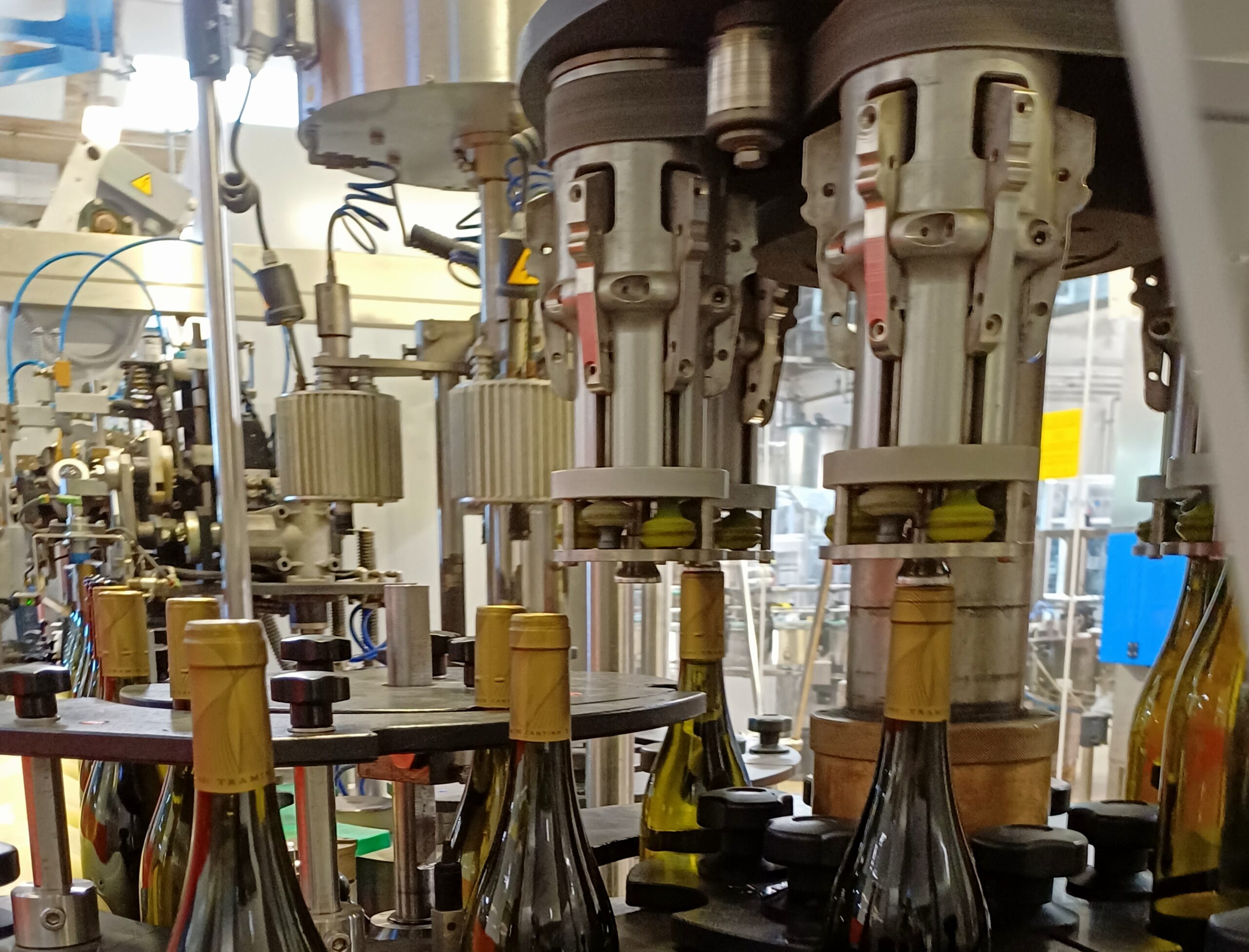
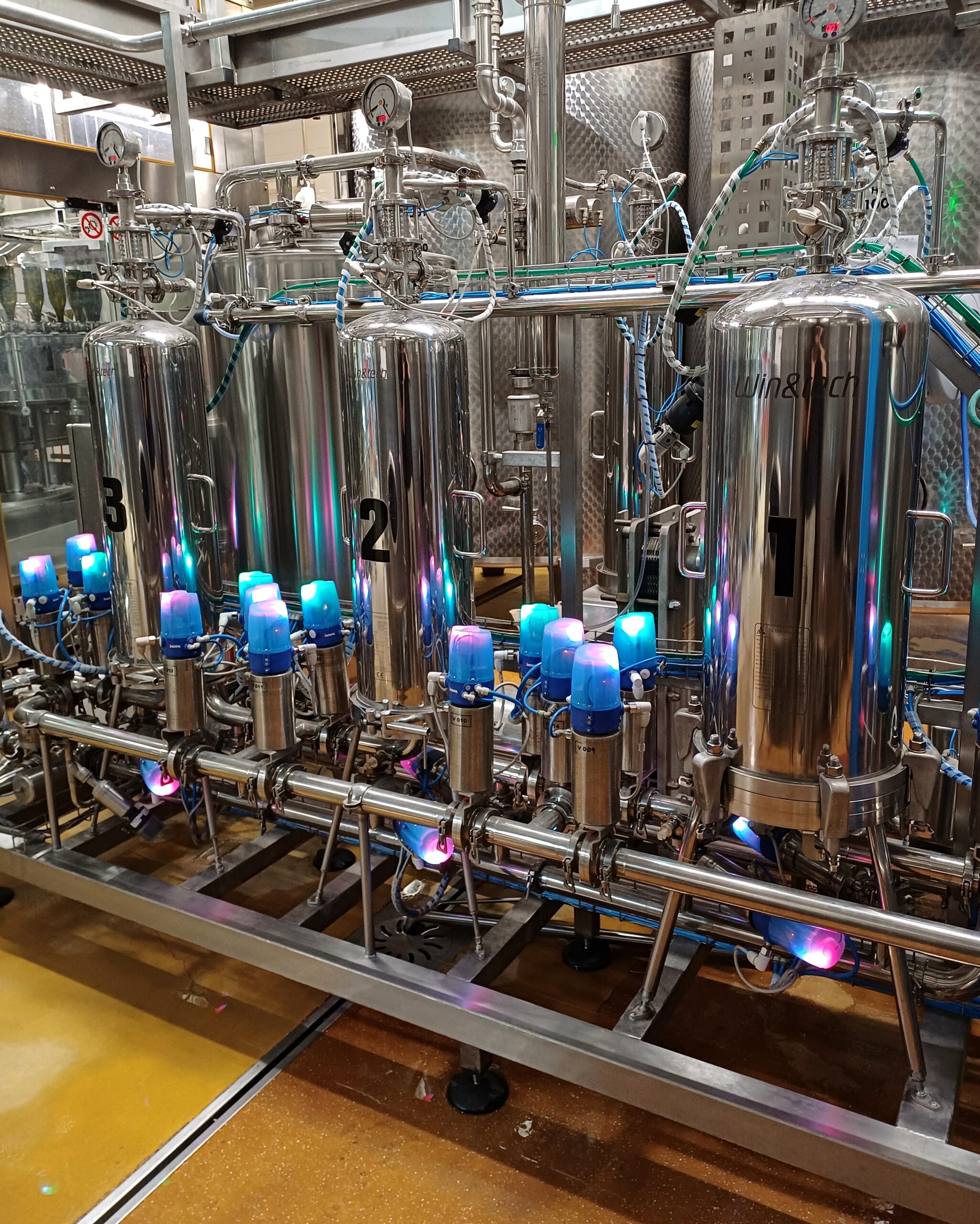
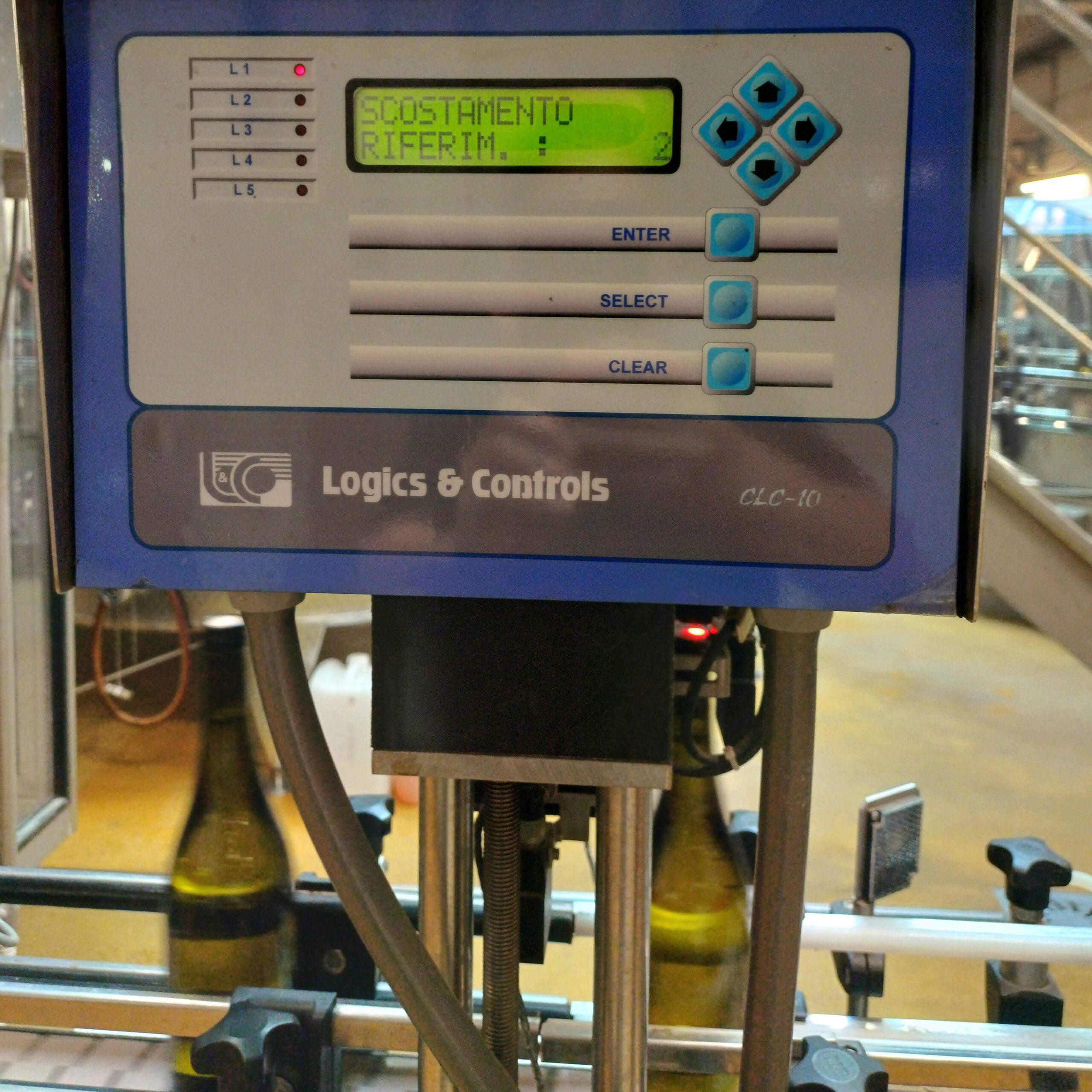
Before filling, the glass containers pass through the Win&tech automatic filtration and sterilisation station, where they are rinsed with sterile, filtered drinking water at 0.2 microns, maintained at a temperature of approximately 16 °C and a minimum pressure of 2.2 bar: if the inlet pressure falls below 2 bar, the system stops automatically to safeguard the microbiological integrity of the process. The rinsed bottles are then flushed with nitrogen before entering the actual filling stage, which takes place under slight negative pressure with pre-evacuation: a process that minimises the absorption of oxygen by the wine. The capping machine, integrated into the same monoblock, seals the bottle under vacuum by injecting carbon dioxide into the headspace, whilst the Logics & Controls filling control system checks the quantity of liquid in each container.
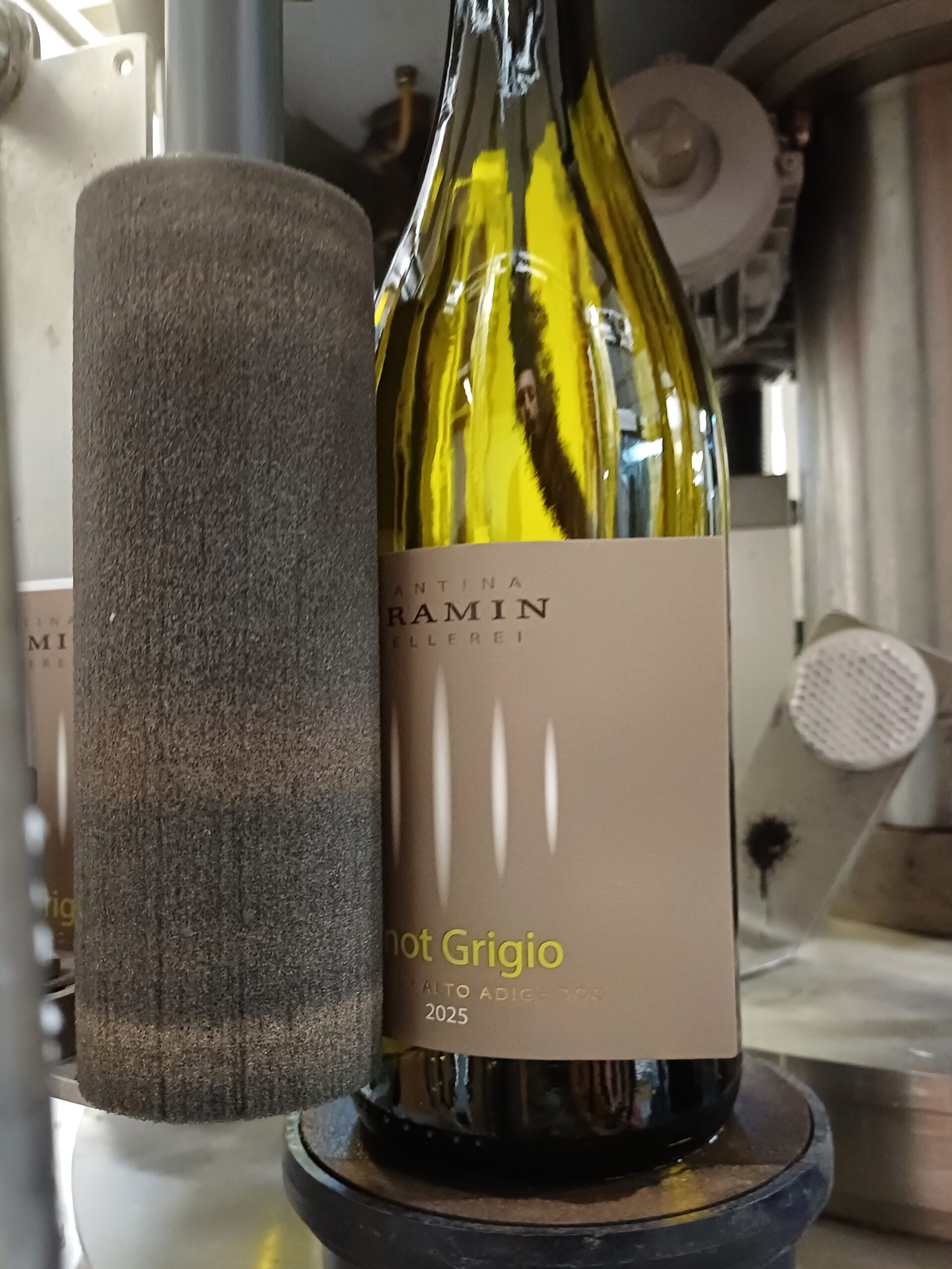
Once this stage is complete, the bottles pass through a washer-dryer for external cleaning, then proceed to a Robino & Galandrino capsuler and a Cavagnino & Gatti labeller, before reaching a Logics & Controls inspection machine – the most recent piece of equipment on the line -, which is responsible for counting the bottles and checking the correct presence of the label and capsule on each bottle. Finally, the process moves on to packaging: a Bortolin Kemo carton former prepares the cartons, which a Bortolin Kemo case packer fills by inserting the divider inserts; the carton is sealed with liquid glue by the Bortolin Kemo carton sealer – fitted with a carton weigher to check the total weight –, then labelled on the outside by the Marchem labeller and weighed a second time by the Top Control weigher. The final stage is a Bortolin Kemo palletiser, which completes the formation of the pallets ready for the warehouse.
Direct control at every stage
For Cantina Tramin, bottling is not a separate stage, but the final link in a supply chain managed in-house from the vine’s growth cycle right through to dispatch. «For us, it is essential to have direct control at every stage of our wines’ production, with bottling being the final step, during which we aim to minimise oxygen absorption». No new investments in the bottling line are planned for this year, but the winemaker reveals that the next purchase will be a labelling machine, needed to handle the customised bottles produced for certain wines: the aim is to introduce an electronic system capable of automatically recognising the orientation of the bottles, ensuring that labels are always applied with precision. A vision that is intertwined with long-term objectives: «We wish to further strengthen our position amongst Italy’s very top producers», concludes Stürz, noting that the journey undertaken in the world of high-quality Italian dining is set to continue in overseas markets as well, with the aim of enhancing the brand’s image and reputation. «Today, every bottle from Cantina Tramin reflects this terroir, as well as the grape variety, the style, the company’s vision and the distinctive characteristics of the vintage. We will remain true to ourselves and pursue our goals through the values that set us apart: creative precision, research, constant improvement and cohesion».