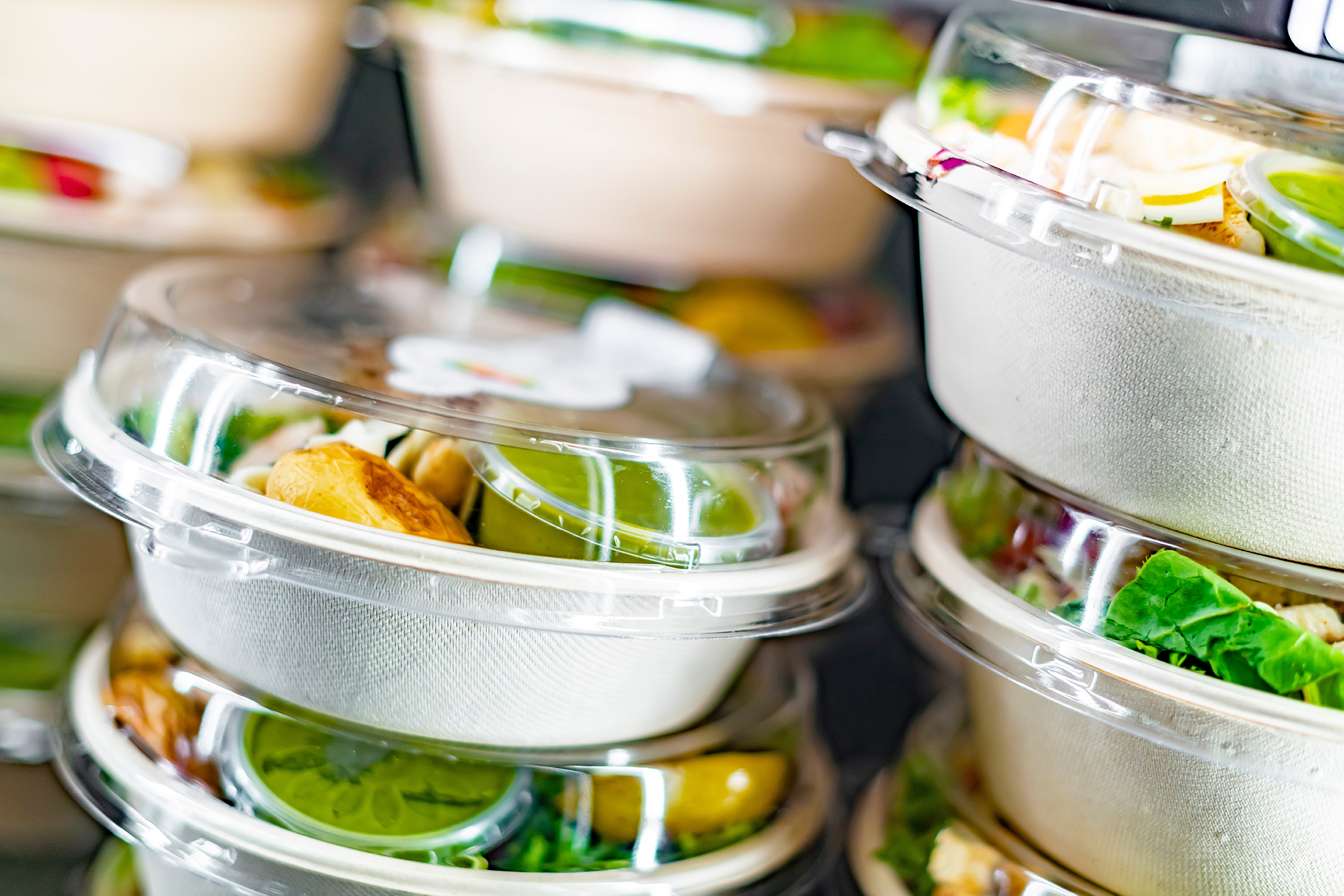
Replacing conventional plastics with bio-based materials represents a strategic challenge for improving sustainability in the food packaging sector. In this context, the aim of a recent study, carried out by a group of Italian researchers (Martins et al., 2025), was to develop and characterise bioactive films based on chitosan and riboflavin (CS/RF), with light-activated antimicrobial properties, aimed at reducing food waste and extending shelf life. Riboflavin, used as a natural photosensitiser, is incorporated into the chitosan matrix, and the films are prepared using a solvent casting technique.
The results show that the samples maintain good thermal and mechanical stability, exhibit excellent oxygen barrier properties and adjustable transparency, although they display moderate water vapour permeability in high-humidity environments. Exposure of the films to a blue LED light source promotes the formation of reactive oxygen species (ROS), which are responsible for the antimicrobial activity. The antimicrobial efficacy, assessed in vitro against Pseudomonas fluorescens, shows reductions in bacterial load of up to 97%. The results confirm the potential of CS/RF films as active and sustainable packaging systems, capable of extending food shelf life and contributing to the utilisation of naturally derived biopolymers. Further studies are needed to optimise performance under real-world storage conditions for different product categories.
References: D.M. Martins et al., National Conference on Food Science and Technology, Bologna, 9–10 June 2025, 80.