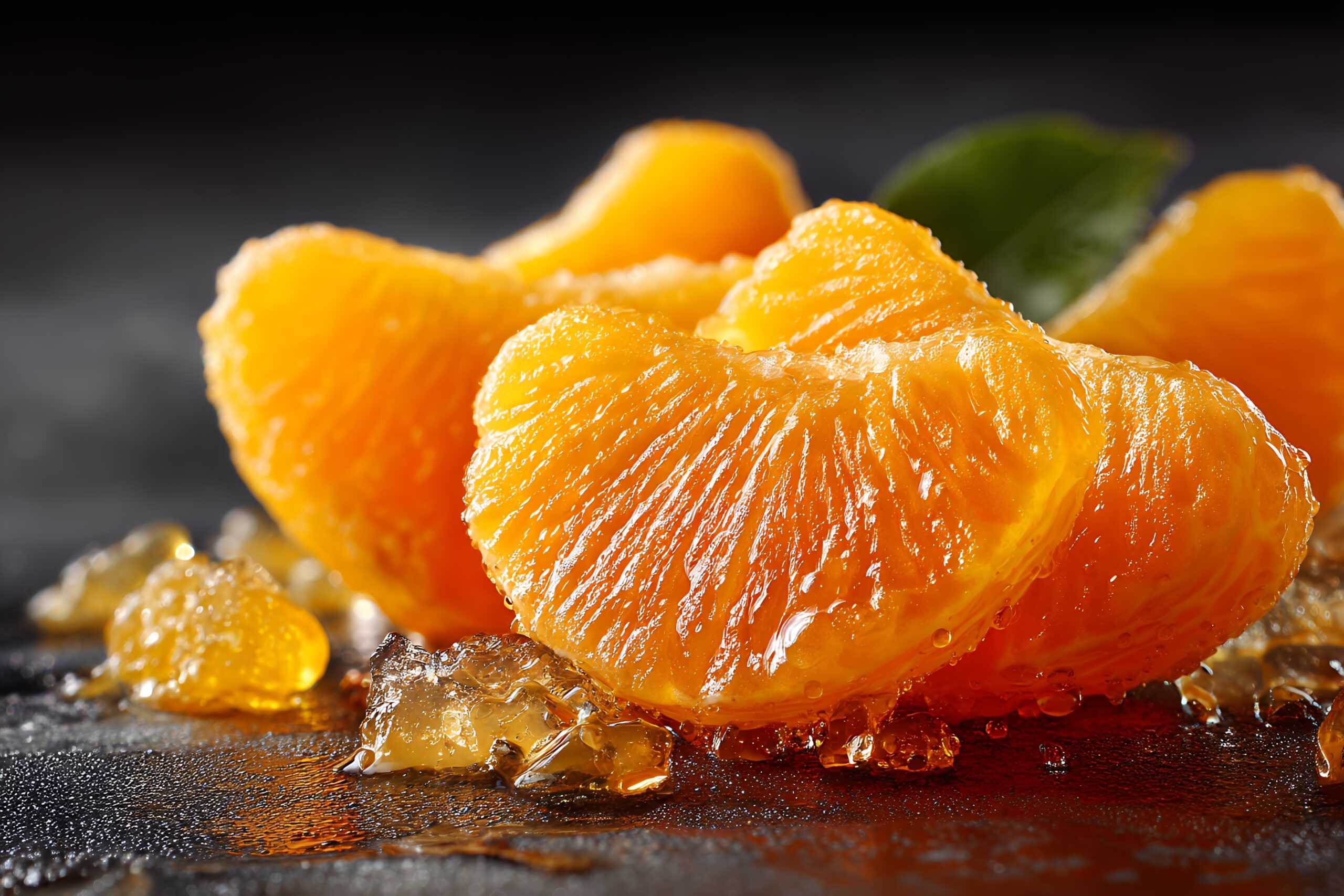
The aim of a recent study conducted by a group of Chinese researchers (Liu et al., 2025) was to evaluate the effects of fermentation with a native probiotic strain of Pichia terricola on the quality of dwarf mandarin purees.
The results indicate that the selected microorganism is able to dynamically regulate the ratio of organic acids to sugars in the product during the various stages of processing. Furthermore, it was observed that fermentation significantly increased the release of free and bound phenols in the treated samples, with total phenol and flavonoid contents increasing by 50.51% and 106.59%, respectively, compared to the unfermented product.
As a result, the antioxidant capacity of the treated purees increased by 15.20%, 56.94%, and 148.19%, as measured by the DPPH, ABTS, and CUPRAC methods, respectively. The ability to inhibit β-amylase, β-glucosidase, and pancreatic lipase increased by 38.60%, 27.34%, and 18.14%, respectively.
The increased activity of five enzymes produced by the probiotic microorganism and its metabolites alters the product’s microstructure, manifesting as increased porosity and a weakened structure. This facilitates the release and conversion of phenolic compounds, influencing their composition and content.
In summary, the study concludes that the proposed process significantly improves the functional characteristics of dwarf mandarin purees, offering a valuable biotechnological strategy and a benchmark for the industry.
Riferimenti bibliografici: S. Liu et al., Journal of Food Biochemistry, 2025, 1-15.