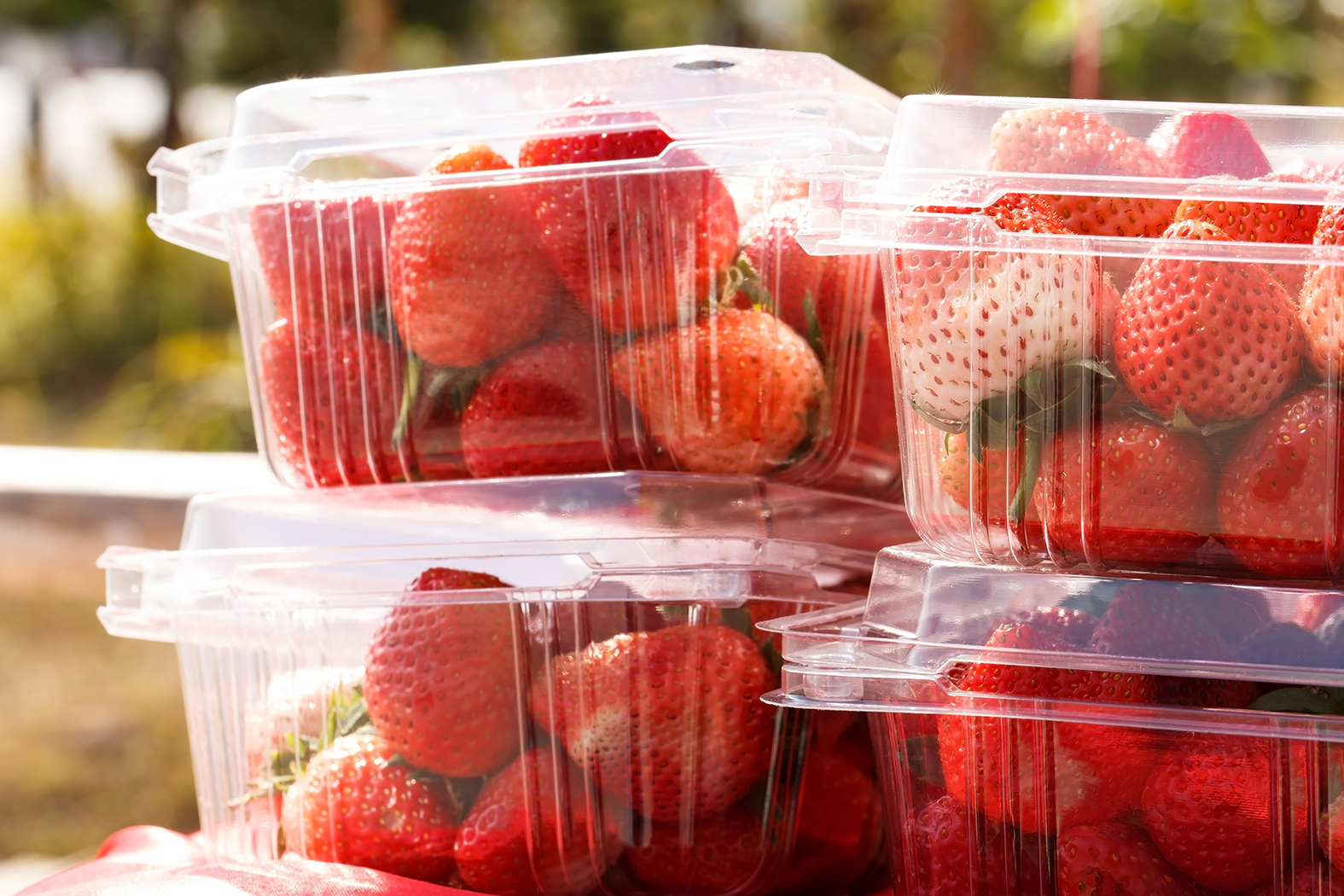
In 2024, global plastic production exceeded 400 million tonnes, nearly 40% of which was used in the packaging industry.
The most commonly used polymers for packaging are polyethylene terephthalate (PET), polyethylene (PE) and its numerous derivatives (HDPE, LDPE and LLDPE), polypropylene (PP) and polyvinyl chloride (PVC). In particular, low-density polyethylene (LDPE) films are widely used for food packaging because they are able to preserve the integrity and freshness of products thanks to their numerous properties, the most important of which are:
⦁ excellent transparency;
⦁ low water vapour permeability values;
⦁ Good mechanical properties, including excellent elongation at break;
⦁ chemical resistance;
⦁ good thermal stability.
However, all PE-based polymers, including LDPE, also have certain drawbacks. Firstly, they are produced from fossil fuels using energy-intensive processes, which emit greenhouse gases that contribute to global warming. Furthermore, when PE wrappers and containers are no longer used, they generate non-degradable waste that persists in the environment. To address these issues, bio-based materials are currently being used as a promising alternative to petroleum-derived polymers. Over the past decade, bioplastics such as cellulose and its derivatives, polyhydroxyalkanoates (PHAs), polybutylene succinate (PBS) and polylactide (PLA) have received increasing attention in the field of food packaging. Of these, PLA is one of the most widely used polymers for producing trays, bottles, cups and films, with production of approximately 6.7×10^5 tonnes in the last year. PLA can be derived from renewable resources such as maize, wheat or rice and is classified as ‘Generally Recognised as Safe (GRAS)’ by the Food and Drug Administration (FDA).
However, when PLA films are used for flexible food packaging, the following significant issues arise:
⦁ They exhibit poor ductility and break at an elongation of less than 10%;
⦁ They have poor thermal resistance;
⦁ They have high water vapour permeability;
⦁ They biodegrade only under specific conditions.
Among the main strategies for improving ductility and thermal resistance, the use of plasticisers is undoubtedly one of the simplest. However, most of the plasticisers currently in use are fossil-based, starting with polypropylene glycol, and this undermines the renewable origin and biodegradability of the final material. Therefore, a new generation of renewable plasticisers has been developed, including derivatives of levulinic, malic and tartaric acids. Although these green plasticisers have shown promising potential, some studies have revealed that, under certain conditions, they can pollute the environment and pose a threat to human health.