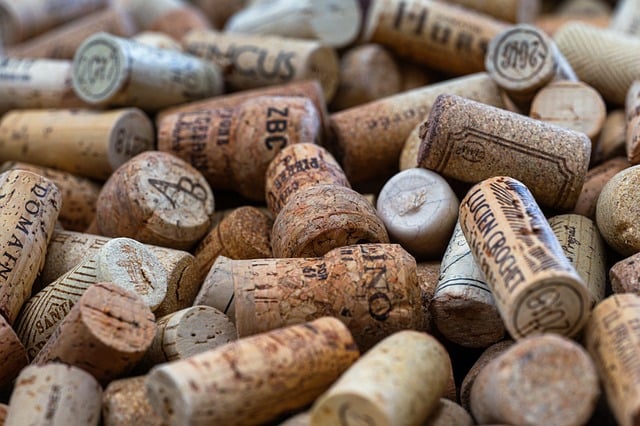
The Italian cork industry—which comprises approximately 480 companies and 2,370 employees—is facing a complex market environment: in 2025, the sector recorded a 2.5% decline in turnover (source: 2025 Financial Statements, FederlegnoArredo Research Center), reaching €342 million, continuing the slowdown that began in 2023 after two years of growth. Exports, accounting for 10% of total cork turnover, are worth €34 million, 87% of which are for cork stoppers, which are currently struggling with declining wine consumption and the need for alternative closure systems.
In this context, the possibility provided by Regulation (EU) 2018/848 to certify cork stoppers as organic could represent a concrete opportunity for competitive differentiation, especially in higher value-added markets, to further enhance the sustainability and traceability characteristics of this material, which thus aspires to become the only natural closure on national and international markets.
“Organic certification of cork closures represents a strategic opportunity for our sector”, states Alessandro Canepari, Head of the Cork Group at Assoimballaggi, “and could prove crucial at a time when the industry is also faced with alternative closures. For this reason, as an association representing the leading cork closure manufacturers, we have worked hard to realize this opportunity and make it an important tool for strengthening cork’s positioning in the organic segment as well. The added value of this certification lies in the fact that it involves the entire supply chain. It certifies not just the cork, but a production process, a distinctive feature that no other closure type can offer with the same characteristics. This is why Assoimballaggi member companies are ready to invest in certification and the necessary processes to seize this opportunity and thus offer the wine sector, including organic wine, a solution capable of combining sustainability and competitiveness”.
Certification not only concerns the final product, but also involves the entire value chain, which must meet rigorous requirements throughout the production process: from the management of cork oak forests and cultivation land to the agronomic practices followed, from bark harvesting to the subsequent processing and industrial production phases.
Assoimballaggi, according to a statement, welcomes the opportunity and supports the launch of the process that will allow natural cork closures to be certified as organic. This innovation is set to open up new development prospects for the entire Italian natural closure supply chain, confirming the role of member companies in sustainable innovation applied to agri-food production and packaging. Our members are deeply satisfied with this recognition, which rewards years of work and further confirms our ability to innovate by promoting natural materials, closely linked to the local area.