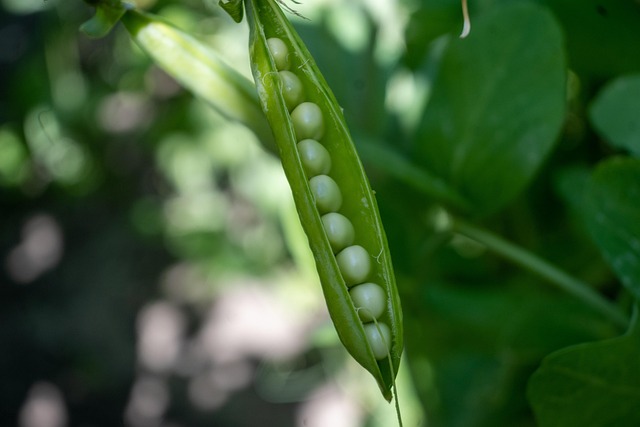
The growing demand for sustainable food systems has brought pea proteins to the forefront of industrial innovation, thanks to their nutritional and functional properties. However, they have inherent limitations, such as low solubility and difficulty in forming compact and stable protein networks.
The aim of a recent study by a group of Italian researchers (D’Alessio et al., 2025) was to evaluate the use of dry-fractionated pea proteins (a low-energy-impact technology that preserves the native structure) pre-treated with high-pressure homogenisation (HPH), in order to modulate their technological properties.
During the experiment, three pre-treatments were applied to protein solutions (6% w/v), varying the pressure-cycle combinations (15 MPa × 6; 22.5 MPa × 4; 45 MPa × 2), while keeping the applied energy constant.
The results indicate that these combinations do not significantly alter the molecular structure of the proteins. However, in the FTIR spectrum of the centrifuged samples, an increase in the band at ~1750 cm⁻¹ is observed, indicating the formation of ester bonds, which suggests a protective effect of the polysaccharide fraction. The treatments improve solubility by reducing insoluble particles, but without enhancing interfacial properties. Rheological analyses show that gels formulated with treated solutions exhibit fragmentation of starch and polysaccharides, forming more homogeneous matrices but with a more fragile structure. The effect of pressure does not result in more robust protein networks.
In summary, the study highlights the complexity of the interactions between proteins and the polysaccharide matrix in dry fractionated systems and the need to optimise HPH conditions to enhance pea proteins as a new food ingredient.
Bibliographical references: G. D’Alessio et al., National Conference on Food Science and Technology, Bologna, 9–10 June 2025, 95 .