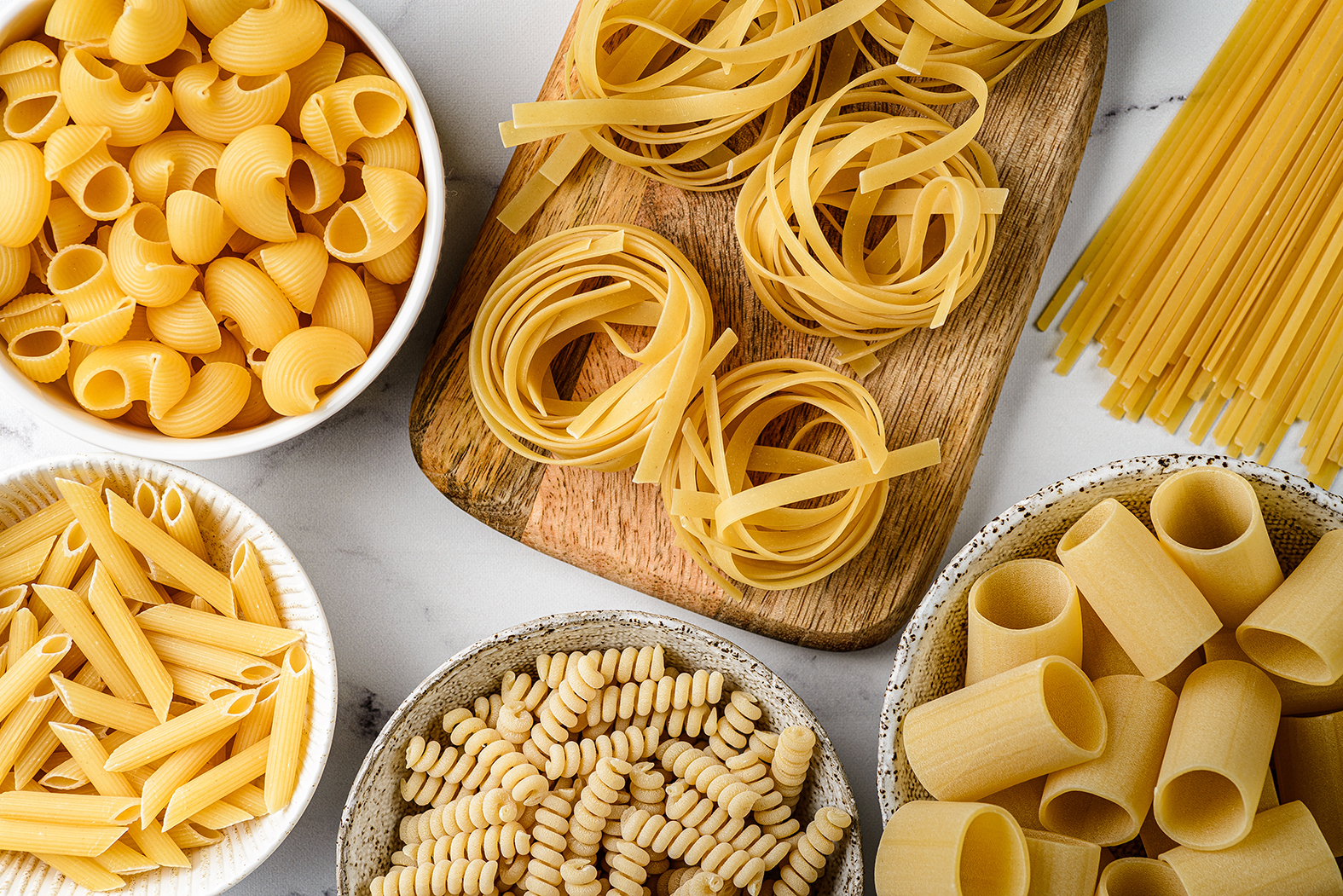
The production process is a decisive factor in the quality of dry pasta. Depending on whether low-temperature/long-time (LT-Lt) or high/ultra-high-temperature/short-time (HT-St/VHT-St) drying is used, not only the organoleptic and nutritional properties but also the product’s shelf life can vary significantly. The pasta’s aroma profile acts as a “fingerprint”, with specific volatile compounds serving as markers that reveal its production history and the heat treatment it underwent.
Therefore, a recent study conducted by a group of Italian researchers (Giannetti et al., 2025) aimed to identify innovative processes and quality indicators for pasta, using its aroma as a key indicator. For the experiment, 100 samples of spaghetti from five different brands were analyzed using headspace solid-phase microextraction coupled with gas chromatography-mass spectrometry (HS-SPME/GC-MS). The collected data underwent qualitative assessment, followed by processing using chemometric classification models: Partial Least Squares Discriminant Analysis (PLS-DA) and Soft Independent Modelling of Class Analogy (SIMCA).