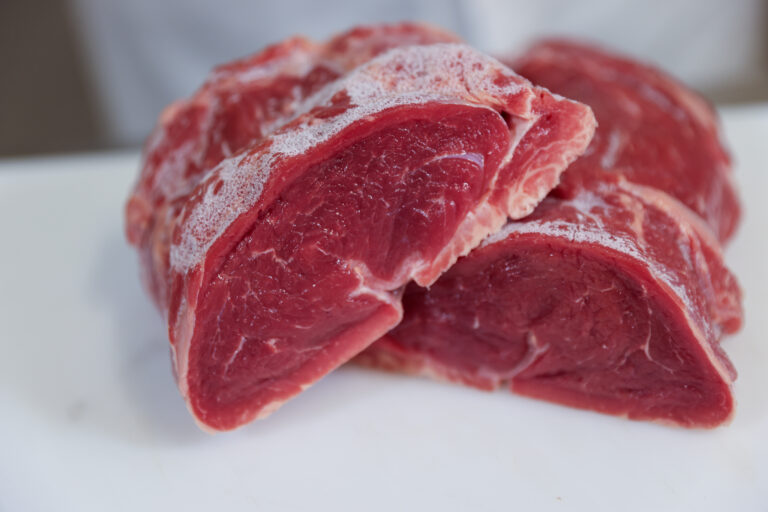
The physical properties of meat, such as elasticity, viscosity and firmness, are directly related to its sensory quality. Food rheology, as a discipline that studies the deformation and flow behaviour of products under the action of a force, can effectively characterise these properties.
The aim of a recent study conducted by a team of Chinese researchers (Liu et al., 2025) was to summarise the key advances made in this field. Determining rheological properties offers the unique advantage of dynamically analysing the microstructural evolution of muscle tissue under processing stress. In particular, the quantitative correlation between rheological parameters, such as elastic modulus and viscosity coefficient, with key quality indicators, such as myofibrillar protein denaturation and endomysial integrity, provides a new theoretical basis for predicting tenderness and assessing water-holding capacity.
According to the study, future developments are likely to focus on the integration of multiple technologies. For example, multimodal detection technologies that combine HSI (hyperspectral imaging), computer vision and dual sensors can capture the physical and chemical properties of meat from multiple perspectives, thereby improving the accuracy and reliability of detection. At the same time, innovations in nanotechnology and biosensors are providing increasingly sensitive and specific methods for the early detection of changes in product quality.
However, in order to improve the comparability and reliability of test results, further research is needed to standardise sample preparation methods, as well as to consider environmental impact and cost-effectiveness.
Bibliography: C. Liu et al., Processes, 13, 2025, 1-15.