There are career paths that do not proceed by accumulation, but by subtraction. They do not seek validation, do not chase trends, and do not respond to the market’s demands. These are paths that advance slowly, guided by a simple yet radical idea: wine is not a product, but a form of culture. Mattia Vezzola belongs to this quiet landscape. His story spans over fifty years of Italian winemaking without ever fully aligning with any trend, any dominant school of thought, or any simplification. From his first trip to Champagne in 1972 to his conscious return to Moniga del Garda (BS), via Conegliano, the Association of Oenologists, his experience with a major player in winemaking technology, and his pioneering work in Franciacorta, Vezzola has built a coherent vision –often countercultural, always grounded in the idea that origin is not a constraint, but an act of responsibility.
Between emerging technology and ancient gestures
The summer of 1972 is a date that often returns in his story: not as a founding myth, but as the first exercise in profound observation. A young man fresh from high school in Conegliano, a Mini Cooper, a Canadian tent, Champagne before his eyes. Not a pilgrimage, but rather a sudden exposure to a landscape that speaks through time. “A panorama from back then – about 15,000 hectares of exclusive vineyards surrounding bell towers and churches, creating a unique landscape – is precisely, even today, the emblematic image of a profound and intelligent winemaking culture and the perception that winemaking prior to the first half of the twentieth century could still have great things to teach, complementing the winemaking then considered modern“. It is in that contrast between emerging technology and ancient gestures that an intuition takes shape that will never abandon him: authentic innovation is born not from disruption, but from continuity, from “giving value to the origin“. An idea that finds even deeper roots in his father, Bruno Vezzola, a meticulous and quiet winemaker, for whom precision in his gestures was already a declaration of method. “Viticulture is a symbol of humility,” Mattia recalls, “perfectly represented by my father, one of the greatest winemakers I’ve ever known, careful even with the grip of the shears, ensuring a precise cut during pruning. He tirelessly sought perfection, knowing full well that it was impossible to achieve“.
A serious, complex and fascinating thing
This striving for a consciously unattainable perfection also informs Vezzola’s relationship with effervescence, for decades considered a marginalized practice in winemaking. For him, on the contrary, it becomes a complex language, charged with meaning. Something serious, complex, and fascinating. “Directly proportional to the finesse and micro-dimension of the perlage, today effervescence represents for me gentleness and lightness, the flavors of life“. This thought began to mature while much of the wine world, between the mid- and late-1960s, was chasing stainless steel and an increasingly marked standardization of the sensory profile, chasing then-innovative technology and the concept of standardization. A moment in which, according to the winemaker, much of the world abandoned its own physiognomy and uniqueness.
“Don’t think wine, but rosé champagne”
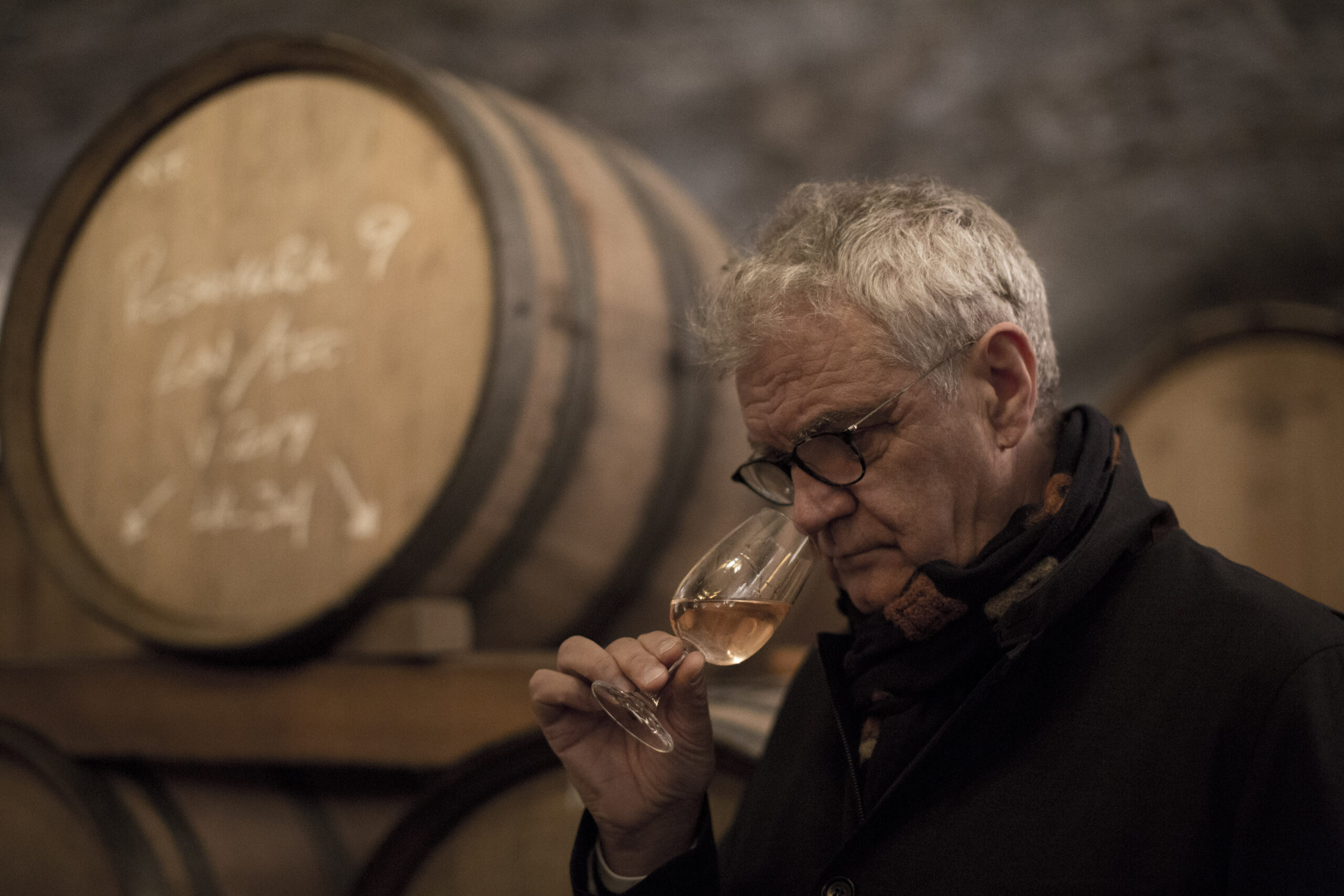
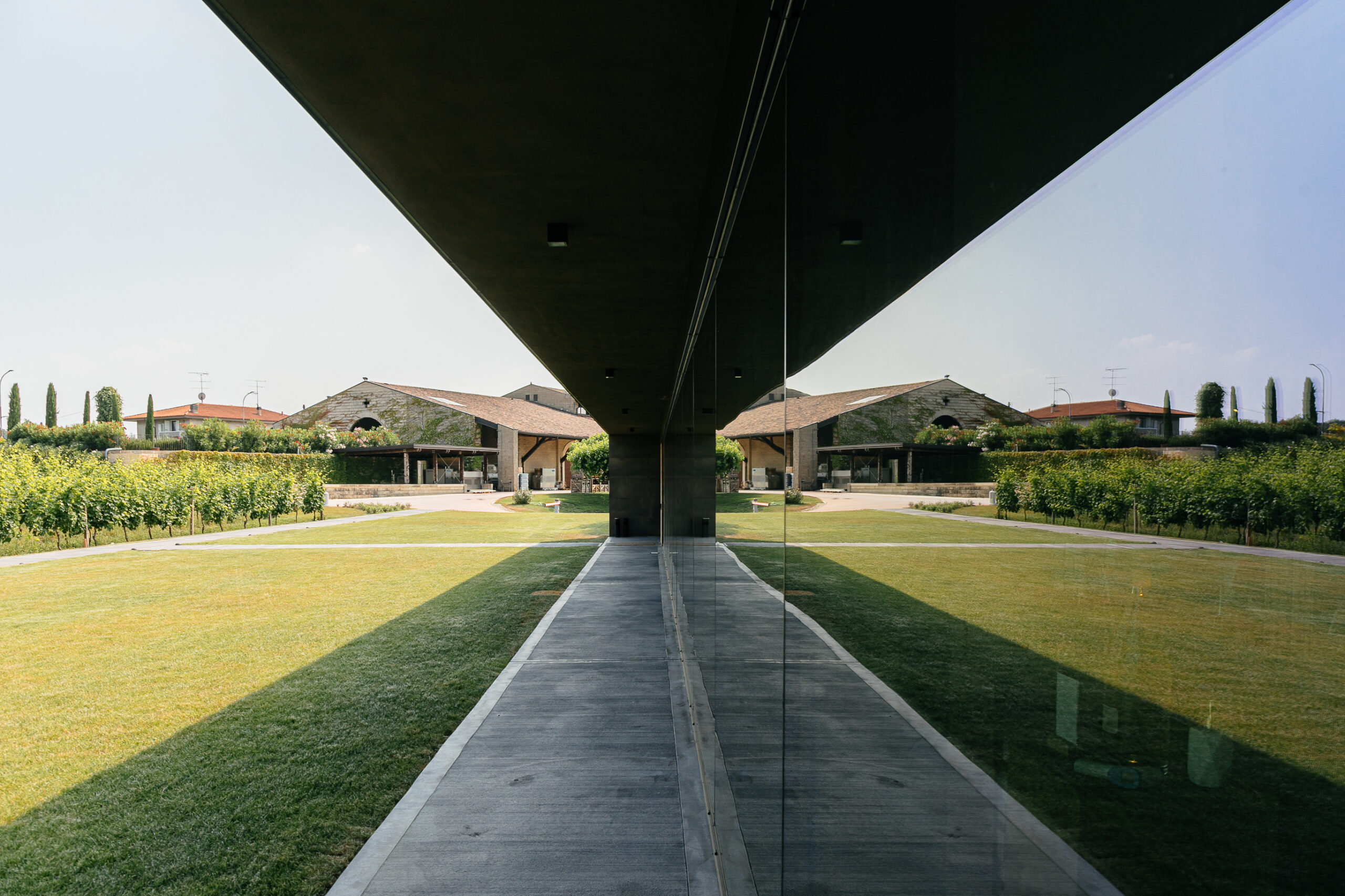
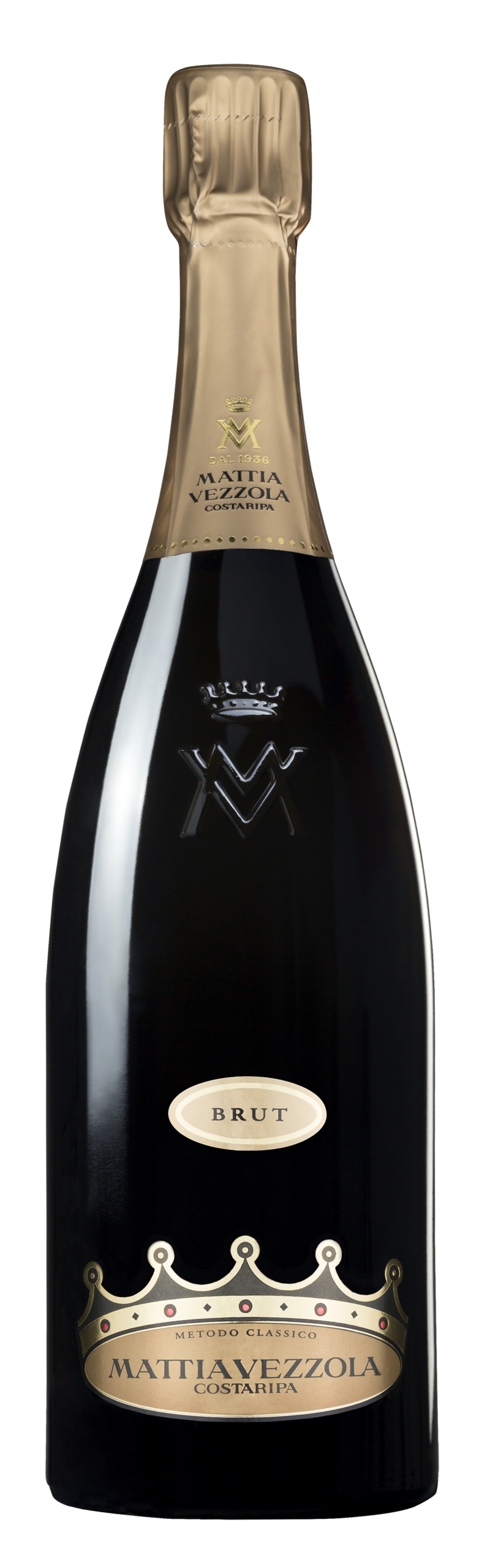
Vezzola’s career doesn’t unfold in silos. His experience in Conegliano, Champagne, his work at the Italian Oenologists Association – then a true laboratory for discussion – and his long tenure – nearly a decade – with a major global winemaking technology company – all contribute to building a vision that rejects simplification. Even the most important lessons often arrive lateral, almost confidentially. “Twenty years ago, Patrick Léon, oenologist and creator of Château D’Esclans, intimately suggested to me that great rosés are born from a single production philosophy, both viticultural and oenological, parallel to that of great champagnes: ‘Don’t think wine, but think rosé champagne’“. It’s a statement that encapsulates a method: not replicating models, but understanding their underlying structure, then reinterpreting them. For Vezzola, avant-garde is never an aesthetic gesture, but an ethical choice. When the first “Mattia Vezzola Metodo Classico” was born in 1973, there was no spirit of disruption or provocation, but rather a search for coherence, a freedom that perceived no external obstacles. “For me, there was no prejudice or resistance, but total freedom and a profound interest in seeking the most expressive form of lightness in the quality of effervescence”.
Where loves speak with the wind
that defies time
and redefines a
category
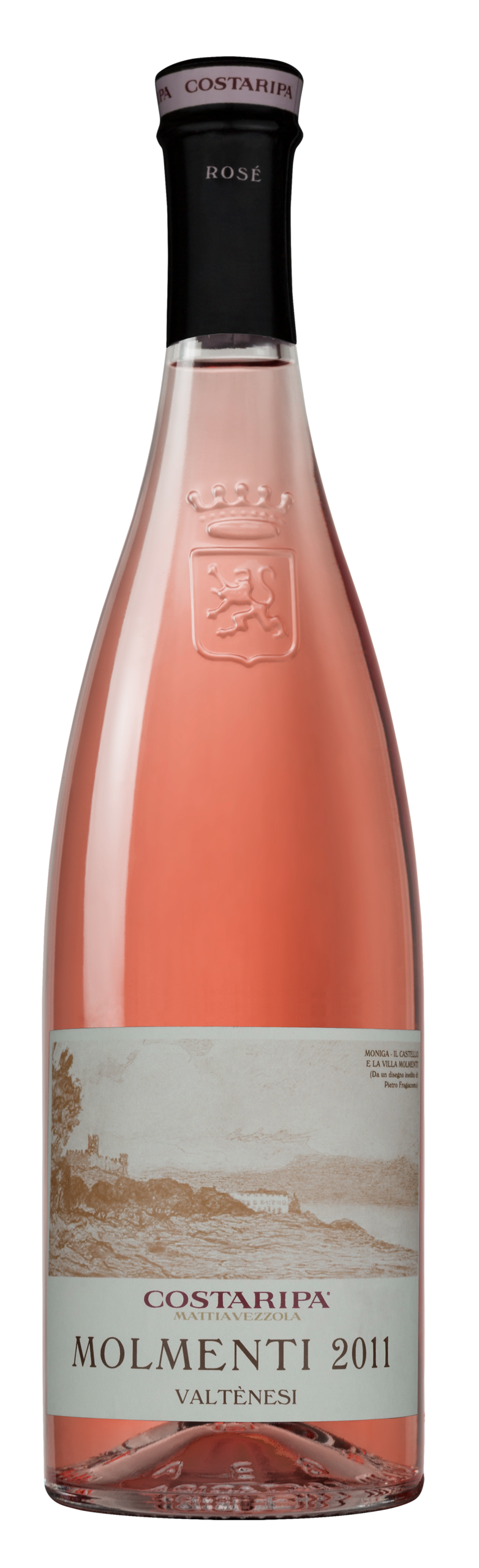
A decisive turning point in his career came in 1981, when he entered Franciacorta and began his experience with Bellavista. A vibrant environment, a territory still being defined, a cultural challenge rather than a technical one. “A detailed description of that period would be complex, but I can say that I transferred every detail of my travels, my research, and my profession to this reality, from viticulture to fermentation in the cellar, seeking the longevity of a type of effervescence that was practically nonexistent at the time. These innovations of mine have always been welcomed by my collaborators with enthusiasm and the utmost respect“. Forty years after beginning his journey, Mattia’s definitive return to Moniga did not mean closure, but rather uninterrupted continuity. In Costaripa, in fact, he has left a profound mark over time, creating wines that are now iconic and distinctive: from the rigorous valorization of Groppello Gentile with Maim – a project launched in 1984 to restore finesse and silkiness to one of Italy’s oldest grape varieties – to the breakthrough in 1992 with Molmenti, a rosé designed to challenge the equation between color and fleetingness and affirm time as an enological value, in a vision founded on the authentic expression of the terroir, sustainability, and respect for biodiversity. “I have never left Moniga, where ‘love speaks with the wind,’ as Giosuè Carducci recited. Before me, right now, is a vineyard nearly seventy years old, worked with my father’s horse, where since 1984 I have been pursuing the dream of giving Groppello Gentile the longevity that only the beauty of a masterpiece can grant“. “It’s breaking down that preconception that for too long has forced viticulture to fear experimentation“, he adds.
Passing on the lightness of living
Longevity, craftsmanship, and signature rosé are recurring terms when discussing Costaripa, which risks becoming a shortcut. Vezzola, however, identifies a structural misunderstanding in the market. “Simply, ‘pink-colored’ wines, now overused worldwide, are confused with the great rosé wines that have been produced exclusively for over a hundred years by dedicated viticulture. These are wines that require four hundred hours of work per hectare, without irrigation, and with strictly manual harvesting. Seeing is believing“. From this perspective, teardrop vinification and fermentation in wood aren’t intended as provocations, but as other tools to restore a wine’s texture capable of standing the test of time. “‘Teardrop vinification, an ancient practice, means separating the must from the skins exclusively by gravity. Fermentation in small white oak barrels, however, began in Costaripa in the early 1980s, with the specific aim of giving greater importance to the wine’s texture and its ability to evolve. Was it more of a technical or cultural challenge? “Generally, all new approaches are first a cultural challenge and, subsequently, also a technical undertaking“- The Molmenti rosé – named in homage to Senator Pompeo Gherardo Molmenti, who created the first Italian rosé from dedicated viticulture in Moniga in 1896 – thus becomes, for Vezzola, the symbol of a conscious break: a rosé designed to last twenty years and beyond. “Molmenti embodies the breaking of a prejudice. It is giving value to the work of entire generations who began this project in Moniga in the late 1800s, but it is also giving respite to all the winemakers who braved the First and Second World Wars, maintaining, with this viticulture and these wines, the lightness of life. Longevity and durability remain central values in my research“.
Between beauty, history and social commitment
For Vezzola, Valtènesi is not just a productive place, but a synthesis of landscape, climate, and civilization, “a land created to teach people to enjoy the finer things in life“. “The presence of six medieval castles and the natural continuation of the Lemon Riviera have for centuries expressed a vocation for hospitality and contemplation, inviting people to linger in a landscape of rare uniqueness. The hills of morainic origin, characterized by extraordinary biodiversity and a temperate climate, make Valtènesi the northernmost point in the world where an authentic Mediterranean environment is recognized. Pastel colors and hard-working, gentle people are synonymous with harmony, and the life of Catullus in Sirmione and D’Annunzio in Gardone Riviera are testament to this“. Social responsibility also finds concrete expression in Costaripa, far removed from rhetoric. The company has, in fact, combined its production with a concrete commitment to social issues, supporting the Christiaan Barnard Foundation, established in 1998 with the contribution of the famous heart surgeon of the same name and Princess Diana for humanitarian projects in pediatric medicine, particularly in Africa. From this bond, in 2000 a solidarity wine was born, now Campostarne, whose proceeds contributed to the heart transplants of two very young children. “This wine, created in support of the project, is undoubtedly one of the most beautiful things I have accomplished in my entire life“.
Reevaluating the cultural value of wine
“I believe that for the rebirth of our world, we need to return to a profound appreciation of the cultural value of wine. Without culture, we will be perpetually on the losing end. I consider parents the only lever to slowly but surely change the quality of our future. Without erudition, without education in independent thinking, there can be no solid future for wine or for the territories that express it. Only in this way can viticulture return to being a cultural language, not just a production sector, becoming history, landscape, a relationship with nature, and a space for personal expression. We try to convey this sentiment to all 10,000 people who visit Costaripa each year“. And faced with accolades – such as, five times, Best Winemaker of Italy – Vezzola’s response remains consistent with his journey: there is no room for showoff, nor for the idea of a definitively achieved goal. The award becomes an incentive to stay attentive, to cultivate an unquenchable curiosity and a subtle, fruitful dissatisfaction that fuels research. This tension lies in his relationship with nature, experienced as an active interlocutor, from which he continues to draw lessons, rather than certainties. Likewise, what Vezzola continues to personally oversee is the cultural dimension of Costaripa, understood as the ability to evolve without betraying itself, to “change without changing“. This is where the deepest meaning of his daily work lies: in transmitting a shared vision and preserving that original intuition that guides choices, guides time, and prevents wine from being reduced to mere execution. A posture that doesn’t claim, but teaches, doesn’t proclaim, but observes, allowing coherence, rather than recognition, to define the value of an entire life trajectory, founded on the idea that uniqueness is not built through opposition or imitation, but is affirmed by knowing how to present oneself to the world while remaining faithful to a unique and profoundly Italian identity.