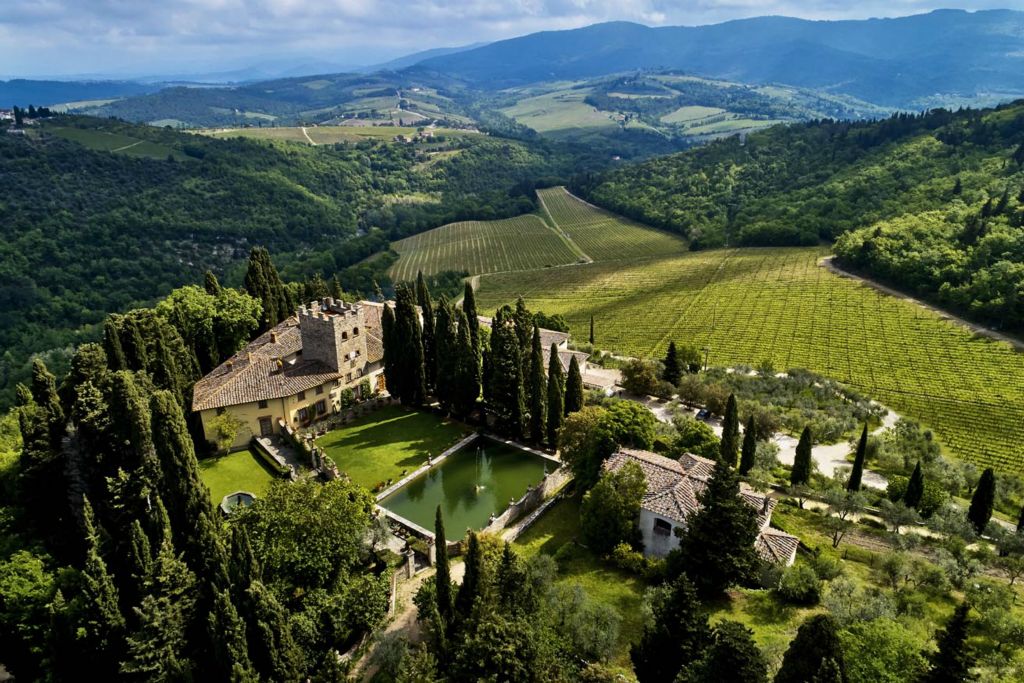
In the heart of Chianti Classico, Castello di Verrazzano commands respect for its remarkable historical continuity. A thousand years of presence in the area is not just an evocative element: it is a production system that has evolved without ever losing its core identity. The estate covers approximately 250 hectares, 50 of which are planted with vines. It is a large estate, but one that is managed with an approach that prioritises consistency over expansion. «The choice was to remain within our territorial boundaries, developing quality and identity rather than simply increasing volumes», says Luigi Cappellini, owner of the estate.
The core of production is Sangiovese, the grape variety that defines the territory, but also one of the most sensitive from a technical point of view. Its characteristics require constant attention: oxygen management, sulphite balance, precision in the most delicate stages of the process. Each stage can affect the final aromatic expression. It is precisely this consistency between grape variety, territory and process that explains the decision to invest in a new bottling line.
Artisanal production, global demands
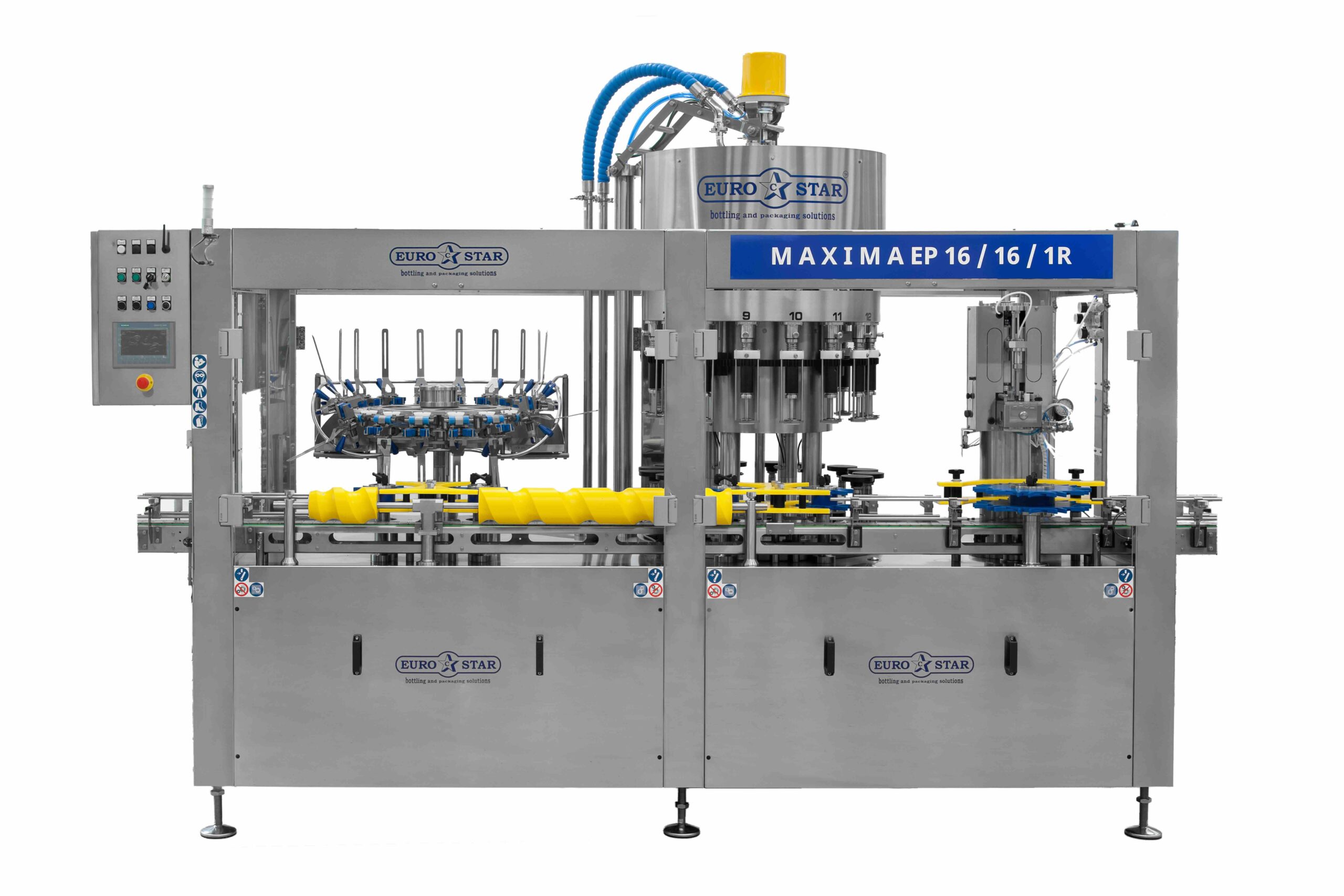
With around 250-300 thousand bottles per year, Verrazzano maintains an artisanal production approach. Luigi Cappellini himself follows the wine throughout its entire cycle: from the vineyard to the packaging. This continuity is a defining value, but it does not exempt the company from the need for control. International markets – particularly those in North America – require recognised certifications, consistent parameters and rigorous traceability. This is where the central tension arises: maintaining the craftsmanship of the process, but equipping oneself with tools capable of guaranteeing the precision and uniformity typical of industry. The new bottling line by EUROSTAR was born precisely from this need.
Why a new line?
«The investment was not motivated by an increase in volume, but by a qualitative and organisational necessity», says Cappellini. The objectives were clear:
- protection of aromatic integrity through a contactless wine-oxygen filling system;
- fine control of sulphurisation, to operate at very low levels consistent with the organic approach;
- total sanitisation, essential for a natural product that is sensitive to contamination;
- reduction of water and energy waste, consistent with the company’s self-sufficiency;
- quick format changeover, to handle 0.5 L, 0.75 L and 1.5 L bottles with simple and fast operations;
- structural compactness, to fit into a thousand-year-old cellar with spaces not designed for modern machinery.
A particularly important operational aspect concerns the management of the ‘attach and detach’ moments of the process. In a historic cellar, flows are not as linear as in a contemporary industrial plant. The presence of a buffer tank allows continuity to be maintained even when moving between different wine vats, compensating for any discontinuities upstream.
Perceived solidity and operational acceptance
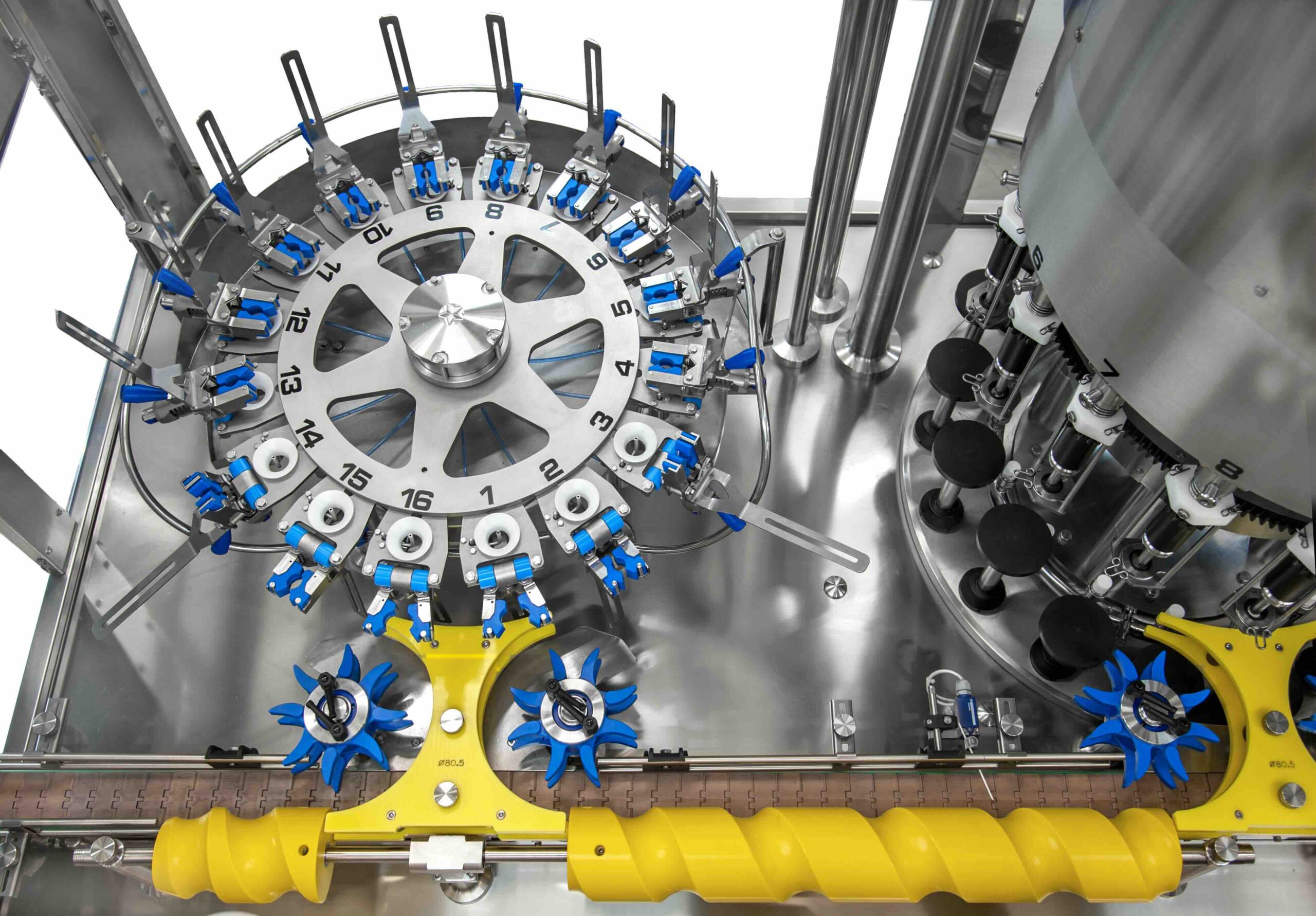
In addition to technical parameters, the company has placed great importance on structural solidity and operator perception. «In contexts with a long tradition, the machine cannot be a purely theoretical or self-referential element. It must demonstrate reliability over time, ease of maintenance, accessibility of components, and simplicity of use», says Cappellini. The operator is the one who dismantles, reassembles and cleans the system. If a lever is not where the hand naturally seeks it, the machine does not fit into the rhythm of the winery. Integration is not only technical, but also cultural. Low noise levels and the smoothness of the process also contribute to a more harmonious operating experience within a historic structure.
Less shock, more expressive continuity
«A significant sign is the reduction in the stress perceived in newly bottled wine. In the past, it was common to hear that a wine needed time to ‘recover’ after bottling. With the new line, this sensation is attenuated: the wine appears more stable right from the start, with better retention of its aromatic components». The filling process, which takes place in the absence of oxygen and with extremely low levels of sulphurisation, minimises oxidative and mechanical stress. In a company such as Verrazzano, where organic viticulture and regenerative organic agriculture are an integral part of the company’s identity, the protection of aromatic ‘nuances’ is not a detail, but a logical consequence of the work in the vineyard. If the goal is to respect the natural balance of the plant and intervene as little as possible, bottling must also be consistent: no unwanted contact with oxygen, fully sanitised environments, controlled management of process variables.
Reducing shock thus becomes a concrete indicator of the quality of the system as a whole. It is a sign that technology has understood the nature of the product. It is not just a technical improvement, but a continuity of expression between the tank and the bottle: the wine returned to the consumer is as close as possible to what comes out of the vat, without traumatic steps that alter its structure and aromatic profile.
Innovating in a thousand-year-old structure
Introducing a modern line into a building that has existed for a thousand years involves not only structural but also cultural challenges.
On the one hand, there are physical constraints: limited space, flows not designed for contemporary automation, the need not to alter the architectural balance. On the other hand, there is a consolidated technical memory, a way of working that has been handed down over time. The new EUROSTAR line has been accepted because it does not impose itself as a foreign element, but integrates into the system. Advanced technology without ostentation. Precision without unnecessary complexity. Modernity that does not disrupt operational consistency.
For Verrazzano, innovation is never an end in itself. Every investment must respond to a logic of consistency. The new bottling line is a step in this direction: it protects the integrity of Sangiovese; it allows for precise management of oenological parameters; it reduces the impact on resources; it fits harmoniously into a thousand-year-old structure; it is quickly accepted and ‘loved’ by operators.
In a winery that measures time in generations, technology must prove that it can last and integrate. It is not enough to be high-performing: it must become part of the daily rhythm. It is in this balance between history and process control that the meaning of the investment is understood. Not a break with the past, but a tool to preserve it with greater precision.