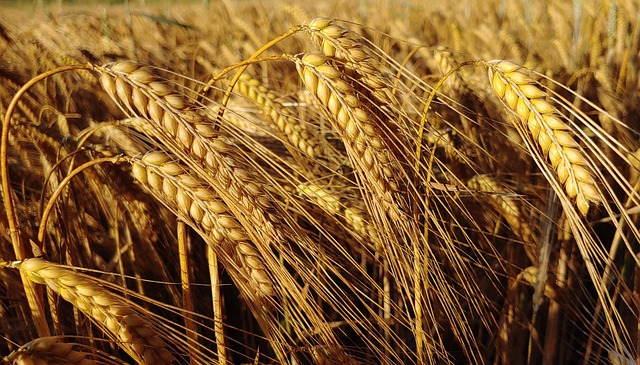
Drought and bad weather have ‘wiped out’ the barley harvest, with a 39 per cent drop, posing yet another challenge for Italy’s craft and agricultural beer sector as it pursues sustainable growth – a journey that in recent years has seen it become increasingly prevalent on people’s tables, whilst also fuelling new forms of tourism and focusing on the values of quality and the environment. This is the 2026 production report presented by Coldiretti and the Italian Beer Consortium during the meeting organised jointly with Fdai (Italian Agricultural Supply Chain) in Terrasini, in the province of Palermo, at the Bruno Ribadi factory.
The effects of climate change have drastically reduced yields, which have fallen from 55 quintals to 37 quintals per hectare. This represents a severe blow to the sector, particularly given that two-row brewing barley has above-average production costs, which this year have literally skyrocketed due to tensions linked to the conflict in Iran, including the closure of the Strait of Hormuz and rises in energy and fertiliser prices. It is no coincidence that Coldiretti and the Italian Beer Consortium have called for measures to support the sector, particularly in light of the commitment to sustainable production that has been pursued in recent years within the craft and agricultural beer sectors. Subsidies for the cultivation of two-row barley need to be increased, and farms must be given the opportunity to diversify their crops, as is also happening in the case of hops, the other key ingredient and symbol of beer.
On this occasion, the first batch of Kidda was brewed – a Sicilian lager produced entirely within Italy, ‘from field to glass’ – born out of a project promoted by Coldiretti and the Italian Beer Consortium, together with Filiera Agricola Italiana, under the ‘Firmato Dagli Agricoltori Italiani’ brand. The aim is to revitalise local beer production by establishing a short, sustainable and ethical supply chain involving local breweries, hop growers and cereal farmers, under the Trinacria brand. The beer is produced using 100 per cent Italian raw materials, with the malt made entirely from barley grown in Sicily.
Kidda’s brewing venture is merely the latest chapter in a trend that has taken hold in recent years, seeing a 20 per cent increase in businesses producing 100 per cent Italian beer – from the cultivation of barley and hops to the production of craft and farm-brewed lagers, ales and stouts. This phenomenon is also driving experiential tourism. According to Coldiretti/Ixe’, 13 million Italians have planned beer tourism experiences for the summer of 2026, ranging from simple tastings to visits to breweries and hop fields, demonstrating a rapidly growing trend centred on 100% Italian beer.
During the meeting, ongoing research activities were presented, carried out in collaboration with the University of Udine as part of the Filo Project funded by the PNC, focusing on reducing water and energy consumption in the malting process and on the production of distinctive malts using Italian two-row barley and resilient cereals. Studies carried out to date have shown that processing waste can now be utilised to produce thermal energy for use in the production process itself. However, researchers in Friuli are also experimenting with the use of by-products to produce charcoal for use in the treatment of waste water.
This is an example of how the Italian agricultural and craft beer sector is working to continually reduce its ‘ecological footprint’.