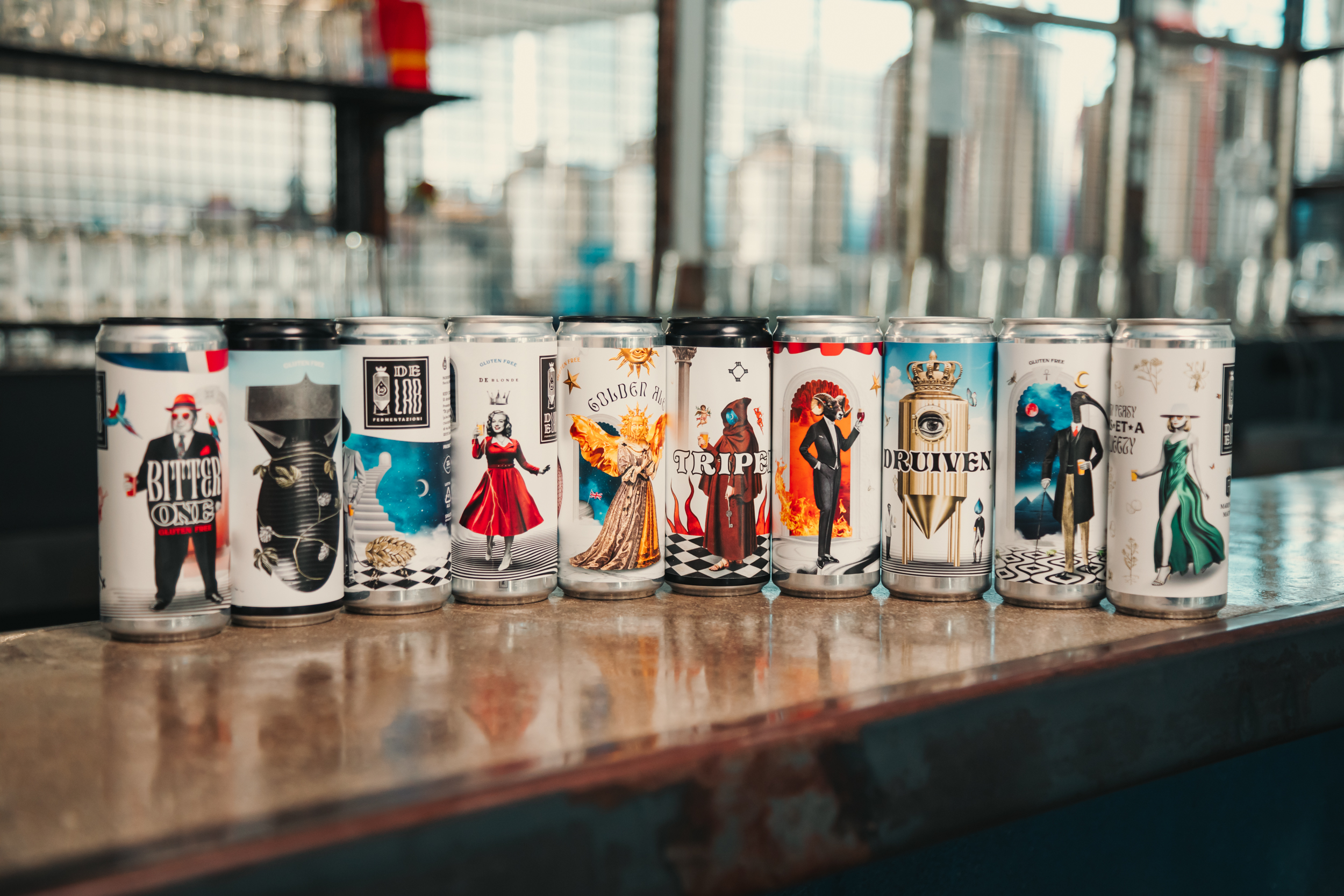
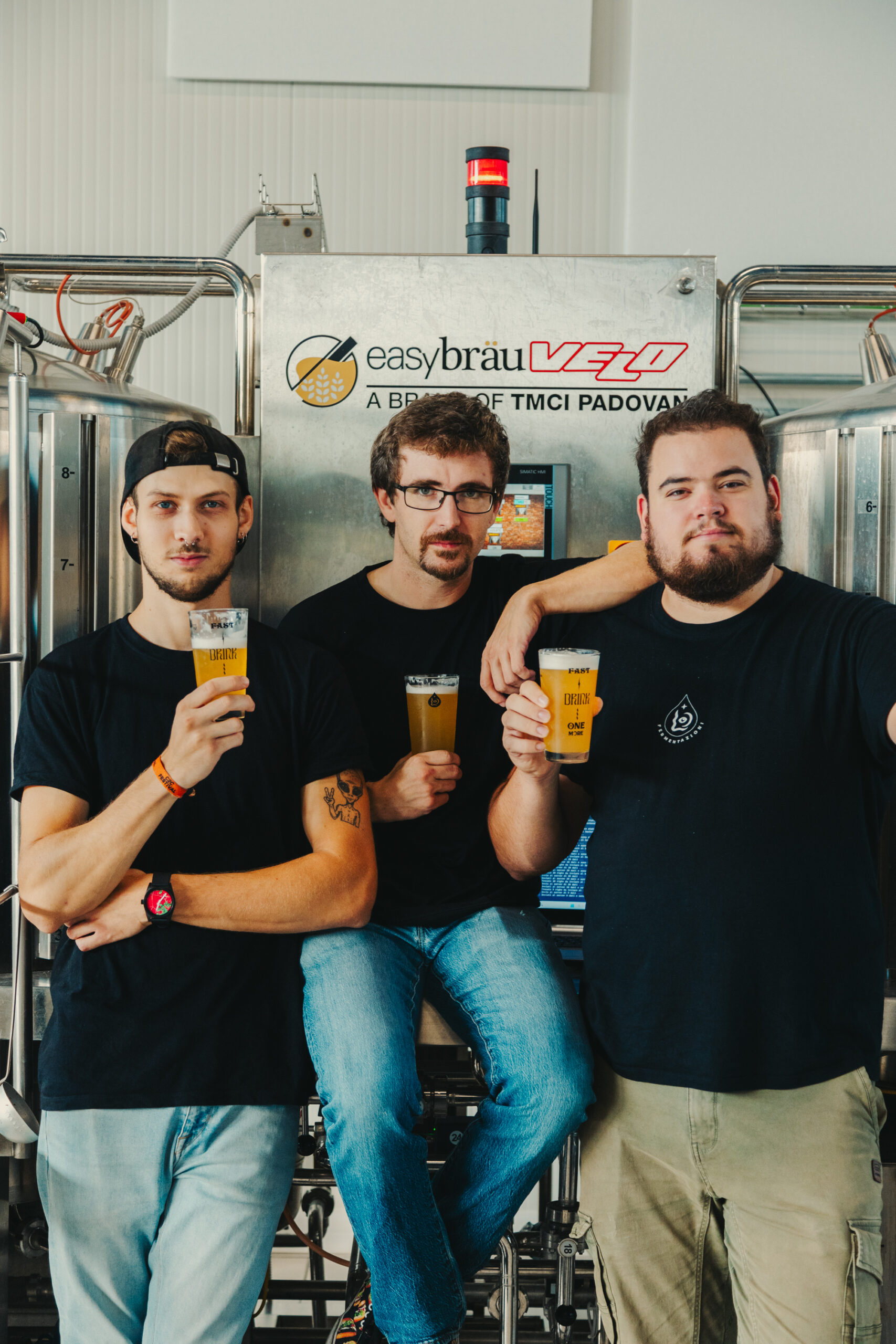
For the Surrealists, it was dreams that suggested new forms of reality. For De Lab, that same expressive impulse translates into brewing mastery, combining technique, terroir and a fascination with fermentation. The project took its first steps in 2021 as a beer firm. A year later, it went into production with its own plant and opened the brewpub: beer and smash burgers coexist side by side. Today, De Lab produces around 600 hectolitres of beer: production focuses mainly on top-fermented beers and the British brewing tradition, without neglecting lagers. Grape must, fruit, one-off recipes and gluten-free beers: creativity is their fertile ground. And the range could soon expand: “In the coming years, it’s not out of the question that other fermented drinks, such as kombucha, and a range of soft drinks, could be added to the taps.”
Small breweries are growing
From 10,000 litres in the first phase to 35,000 in the second year, and up to around 52,000 litres in the third. In 2025, the production of packaged beer reached almost 62,000 litres, with an average of 14–16 brews per month. Among the most recent investments, a canning machine and a labelling machine, in operation since June, have brought packaging stages previously outsourced to third parties in-house to the brewery. The increase in production has grown hand in hand with the definition of their identity. This journey was also reflected in Stefano’s third place in Fermento Birra’s Emerging Brewer 2025 award: “We are delighted and grateful for the recognition we have received. For us, it confirms that personal exploration can also find a place outside the most conventional models.” Alongside Stefano is Lorenzo Padovani, co-founder of the brewery. They are joined by Marco Marengo, Dario Digilio and Enrico Vernè.
Space-saving monoblock brewhouse
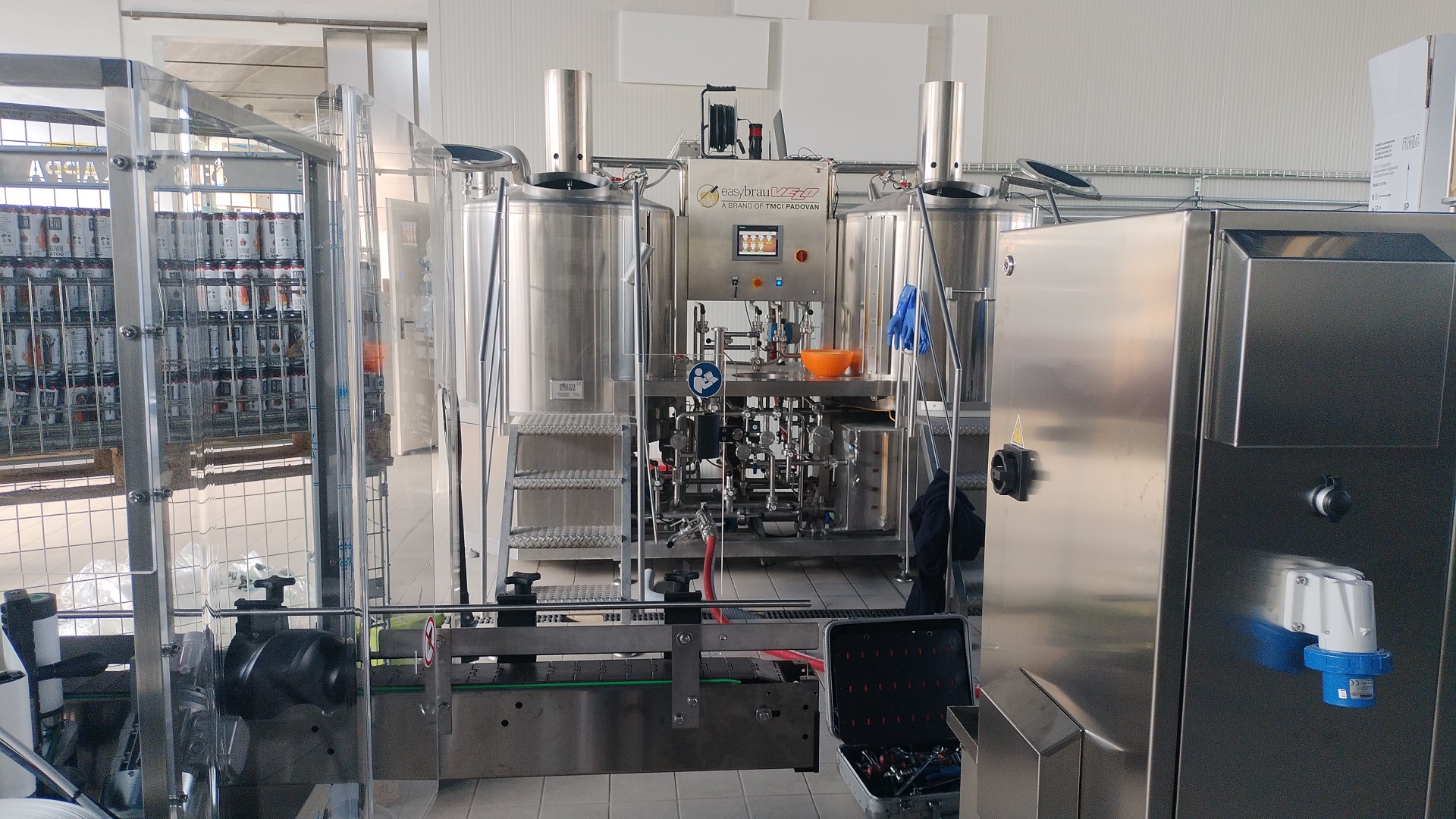
Designed for small breweries, brewpubs and farms, the EasyBräu-Velo monobloc brewhouse enables space to be optimised while maintaining a high degree of production flexibility. The two-vessel stainless steel configuration brings together all the brewhouse operations in a single system. “With a single brew, we can produce up to 550 litres at 20–21° Plato. When we produce beers with a lower concentration, we can also carry out two consecutive brews, reaching a total of around 1,000 litres.” Automation enables recipes to be stored, key process parameters to be monitored and the various stages to be managed from a single interface. Cleaning is also automated through the CIP (Clean-In-Place) system, which uses rotating spray balls to sanitise the vats without disassembling them.
The fermenters
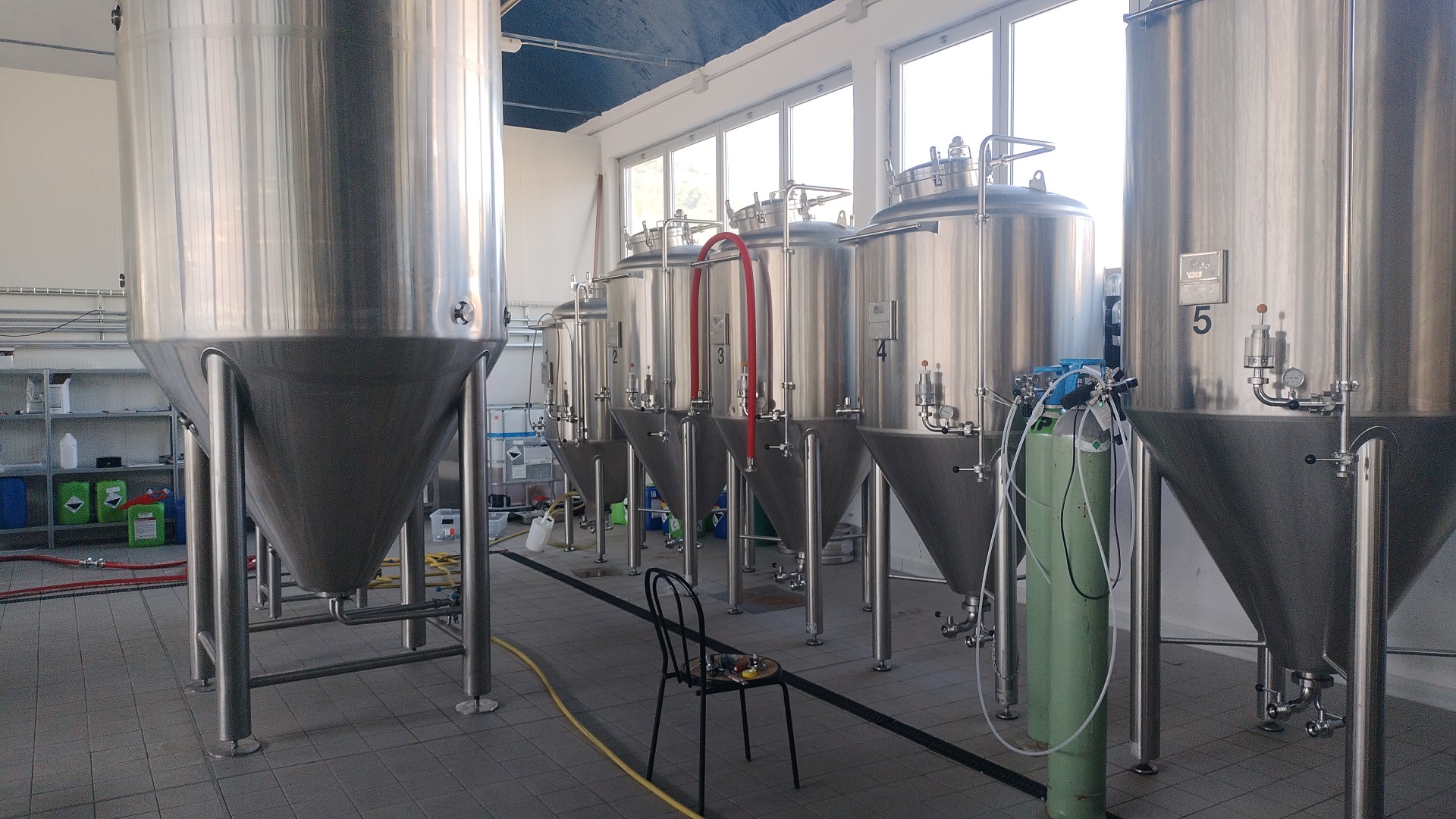
The winery has nine fermenters: three of 2,000 litres, three of 1,000 litres, two of 500 litres and one of 4,000 litres, giving a total capacity of 140 hectolitres. The stainless steel tanks have a conical base and laser-welded cooling jackets for temperature control, through which glycol water circulates. The cylindro-conical layout is typical of TMCI Padovan fermenters: they are also designed to be used as ageing tanks. The isobaric configuration also allows transfers to be carried out while keeping the product under pressure, limiting turbulence and gas loss. The cleaning operations are also designed to simplify tank management.
German soul, Italian nationality
The versatility of the systems is most strikingly demonstrated in Easy Peasy Nascetta Squeezy: the Berliner Weisse/Italian Grape Ale with which De Lab brings local grape must to the glass. The choice is also linked to Stefano’s professional background: before turning his attention to beer, he worked in a winery for several years, becoming familiar with the production processes and native grape varieties. “This year, we also won a major award for this Sour. For the grain component, we use 50% Italian malt and, for the remainder, unmalted wheat from the Marengo Mauro farm. We also buy the Nascetta from the same producer.” Grape must accounts for 20% of the recipe: “It arrives straight after crushing and is added during the whirlpool phase. As it is an unfiltered free-run must, before adding it we heat the beer wort to 70°C to avoid introducing unwanted flora.” The must then passes to the fermenter, where it comes into contact with a blend of wine yeasts and lactic bacteria. The result in the glass is a complex beer, in which the lactic component gives way to notes of fresh fruit and flowers, accompanied by a pronounced tanginess.