Recently, a new leavening method has been developed at the laboratory scale, in which a precise sequence of pressure variations is applied to the dough at high temperatures—a process that simultaneously bakes the product.
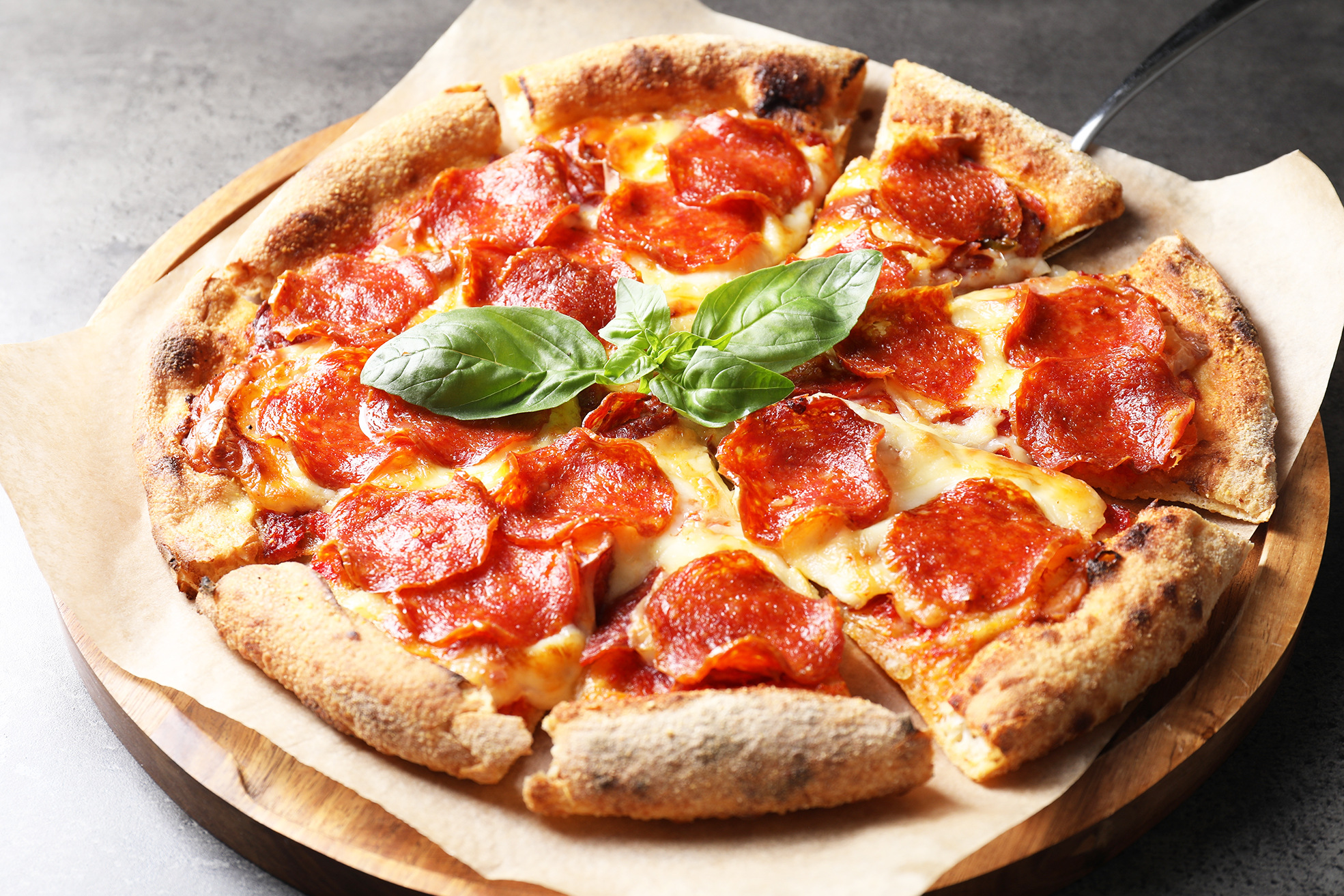
In a recent study, a group of Italian researchers (Di Lorenzo et al., 2025) explored this method further by applying it to Neapolitan-style pizza.
Specifically, the experiment analyzed the dissolution of bubbles—triggered by the application of pressure—and evaluated how various process parameters (namely, saturation time, maximum pressure, and the rate of pressure decrease) affect the volume and morphology of the final product.
The results indicate that increasing the saturation time enhances the final volume of the samples up to a certain plateau, while increasing the maximum pressure leads to a linear improvement in final volume. There is an optimal rate for the pressure decrease: if the rate is too low, the dough collapses before baking; conversely, if it is too high, the baked dough ruptures due to the force exerted by the gas attempting to escape. Furthermore, the specific way in which pressure is applied causes coalescence to occur within the dough as it bakes.
Based on these findings, a pressure vessel was designed, capable of baking a 28 cm pizza without the use of yeast. However, further research is required to better define the relationships between these variables and to refine the process.
Bibliographic references: E. Di Lorenzo et al., Food and Bioproducts Processing, 149, 2025, 325-336.