Master’s Thesis in Food Science and Technology, (December 2025) – Università Cattolica del Sacro Cuore – supervisor: Giorgia Spigno – emanuelefoppiani@gmail.com; giorgia.spigno@unicatt.it
The industrial processing of cocoa generates large quantities of cocoa bean husks every year; this by-product is traditionally regarded as waste with little commercial value, despite its high content of dietary fibre, phenolic compounds and bioactive methylxanthines.
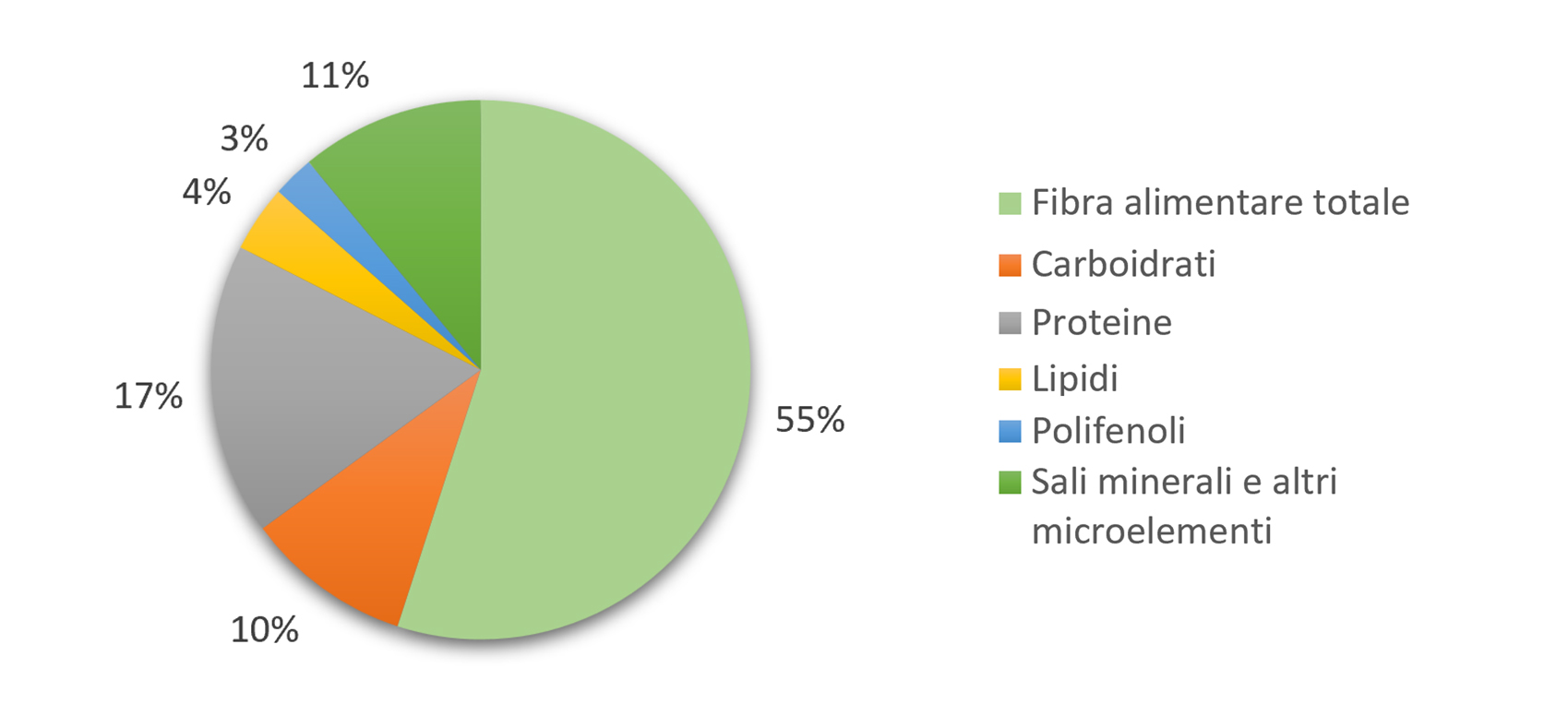
With regard to the average composition of cocoa husks (Fig. 1), the literature highlights a high total dietary fibre content, ranging from 39% to 66% on a dry weight basis, with the insoluble fraction predominating over the soluble fraction. Excluding lignin, the fibre composition is roughly divided into 45 per cent pectin compounds, 35 per cent cellulose and 20 per cent hemicellulose. Pectins, present in both soluble (high-methoxyl) and insoluble (low-methoxyl) fibre, confer gelling properties of functional interest on the matrix. Among the monosaccharides, glucose is the main component, followed by galactose, mannose, rhamnose, arabinose and xylose in descending order. Fermentable carbohydrates consist mainly of soluble fibre, as well as small quantities of soluble sugars and available starch. The protein content can range from 10% to 25% of the dry weight, and these proteins possess a good biological profile; however, roasting can reduce this content by up to 10%. The lipid content of the husks is relatively low (1.5–8% of the dry weight) but features an interesting composition. The primary fatty acids are oleic, palmitic, capric, and stearic acids, with an unsaturated-to-saturated fatty acid ratio of 0.66–0.74. The unsaponifiable fraction contains phytosterols—with stigmasterol as the predominant component—which are known for their ability to lower blood cholesterol levels and for their anti-inflammatory and antioxidant properties. As the main phytosterol, stigmasterol is also recognized for its potential to modulate lipid metabolism and counteract certain chronic inflammatory conditions. Polyphenols are the primary bioactive compounds found in cocoa husks, with a total phenolic content ranging from 3 to 90 mg of gallic acid equivalents per gram of dry husk. Among the flavanols, epicatechin is the most abundant component, followed by catechin and procyanidins B1 and B2. These compounds exert antioxidant activity that protects cells from damage caused by free radicals. Furthermore, they exhibit anti-diabetic effects by inhibiting specific digestive enzymes and contribute to cardiovascular protection by reducing LDL cholesterol and decreasing lipid peroxidation. Cocoa husks also contain methylxanthines, such as theobromine and caffeine, with theobromine present at concentrations 5–7 times higher than those of caffeine. Its effect on the central nervous system is more moderate than that of caffeine, yet it offers significant benefits—such as cardiac stimulation—which support overall cardiovascular health. The peels also contain a notable amount of ash, accounting for 6% to 12% of their dry matter, with potassium, calcium, and phosphorus as the primary elements. Furthermore, they contain significant quantities of B-group vitamins, which are essential for energy metabolism, as well as vitamin D and tocopherols; these play a key role in protecting cells from oxidative damage and supporting the body’s immune functions.
The valorization of cocoa husks through fermentation processes aligns with the principles of the circular economy and the development of new plant-based functional ingredients. Indonesia is currently undergoing a structural transition within its cocoa supply chain, shifting from a volume-driven model toward one based on traceable production and high-value-added market segments. This transition is supported by national standards (such as SNI 2323:2008), mandatory fermentation requirements for exports, and “bean-to-bar” initiatives that offer price premiums for properly fermented beans. In this context, Indonesian cocoa is establishing itself as a high-quality origin, as evidenced by recent international awards won by local producers. Meanwhile, the European and global markets are seeing the introduction of various commercial products derived from cocoa husks—primarily fiber-rich flours for baked goods, fortified snacks, and blends for infusions—which are increasingly valued as functional ingredients with a low environmental footprint. While these examples do not yet include large-scale production of beverages fermented exclusively from cocoa husks, they underscore the growing industrial interest in repurposing this by-product.
The objective of this thesis was to develop a fermented semi-finished product derived from cocoa bean husks. This involved characterizing the chemical-physical and microbiological evolution of the material under three different fermentation conditions, while also assessing its functional potential and the feasibility of scaling the process for industrial application.
Materials and methods
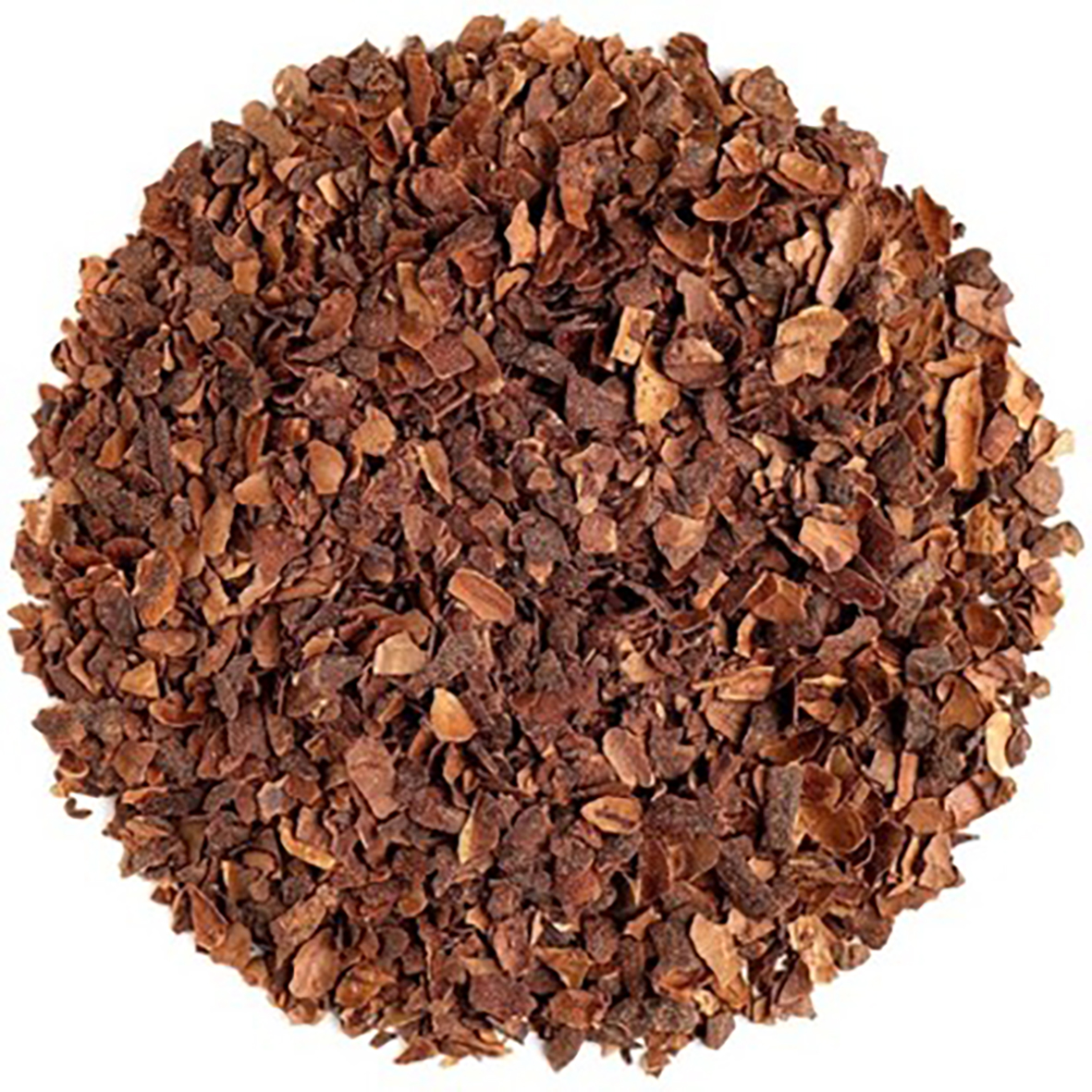
In this study, cocoa bean husks (containing some nib fragments) (Figure 2)—kindly provided by the company Bagai Cioccolato Buonissimo as a by-product of their processing of beans sourced from Indonesia—were utilized. Fermentation trials were conducted with the goal of maximizing the husk-to-water ratio (225 g/L, the maximum value determined through preliminary testing) for the production of a semi-processed ingredient. Given the high microbiological quality of the husks, it was decided to forgo sterilization prior to the fermentation process. Specifically, the husks tested negative for Salmonella and Listeria; yeast and mold counts were below the detection limit (< 10 CFU/g), confirming the effectiveness of the drying conditions and minimizing the risk of mycotoxin development. The total aerobic count at 30°C was 9.7 × 10⁴ CFU/g, which falls within the reference ranges reported in the literature for dried agricultural by-products—typically between 10³ and 10⁶ CFU/g, depending on drying and storage conditions. Six fermenters (each containing 2 L of water and 450 g of husks) were set up to test three fermentation conditions in duplicate: (1A, 1B) with the addition of 150 g of sugar; (2A, 2B) with the addition of 150 g of condensed milk; and (3A, 3B) with the addition of 150 g of sugar and rehydrated commercial water kefir (using 100 mL of the total water required for the process). In all cases, the procedure involved heating the water to 85°C, with the addition of sugar or condensed milk where specified. The peels were steeped in the hot water for 10 minutes, after which the mixture was cooled. Once the temperature reached 30–35°C, rehydrated kefir grains were added—a temperature range chosen to preserve microbial viability. The fermentation vessels were then incubated at 28°C for 15 days in a climate-controlled chamber. Samples were monitored at time points T0 (Oct 20), T1 (3 days), T2 (5 days), T3 (8 days), T4 (10 days), T5 (12 days), and T6 (15 days), with 10–20 mL aseptically withdrawn from each vessel. The following parameters were determined: pH (using a pH meter with a combined electrode); total polyphenols (via the Folin–Ciocalteu method, expressed as g/L catechin equivalents); sugars (glucose, cellobiose, xylose, arabinose, mannose/galactose) and organic acids (acetic, malic, succinic, citric, and tartaric acids) via HPLC; and CIELAB color coordinates (L, a, b*) using visible-light spectrophotometry (380–780 nm). Microbiological analyses were performed using Plate Count Agar (for total aerobic bacteria), Malt Agar (for yeasts and molds), MRS agar (for lactic acid bacteria, under anaerobic conditions), and GYC agar (for acetic acid bacteria), with serial dilutions up to 10⁻⁷ and incubation at 30°C for 24–48 hours. Sample 2A, having developed a light surface mold halfway through fermentation, was interpreted with caution and partially excluded from the results and evaluations presented below.
Results
Under all fermentation conditions, as expected, the pH decreased from initial values of 5.04, 5.15, and 4.93 (for tests 1, 2, and 3, respectively) to final values of 4.0, 4.5, and 4.27. Fermentation with the addition of sugar alone resulted in a drop in pH to 4.0 within just 10 days. In general, after the tenth day, the pH tended to stabilize and, in the case of fermentation with kefir, showed a slight increase.
Total polyphenol content exhibited a general downward trend, with marked declines in the early stages—attributable to oxidation, hydrolysis, and complexation processes typical of fermented plant matrices affecting the polyphenols released from the peels. In samples 1A, 1B, and 2B, an initial increase was observed between T0 and T1, likely due to the further release of polyphenols from bound fractions (beyond what was present in the initial infusion), followed by a subsequent decline. The overall decrease was more pronounced in samples 1B, 3A, and 3B, although many samples showed a partial recovery in catechin content by T6. Overall, the samples started with polyphenol levels of approximately 4 g/L (catechin equivalents) and ended with values of around 2.5 g/L.
HPLC analysis revealed a rapid consumption of glucose within the first 24–48 hours—particularly in the fermentation involving the addition of kefir—followed by stabilization at approximately 50 g/L in samples 2 and 3, and near 60 g/L in sample 1. Cellobiose and other minor sugars also showed marked reductions during the initial stages, with subsequent trends proving either more stable or subject to fluctuations, depending on the starter matrix used.
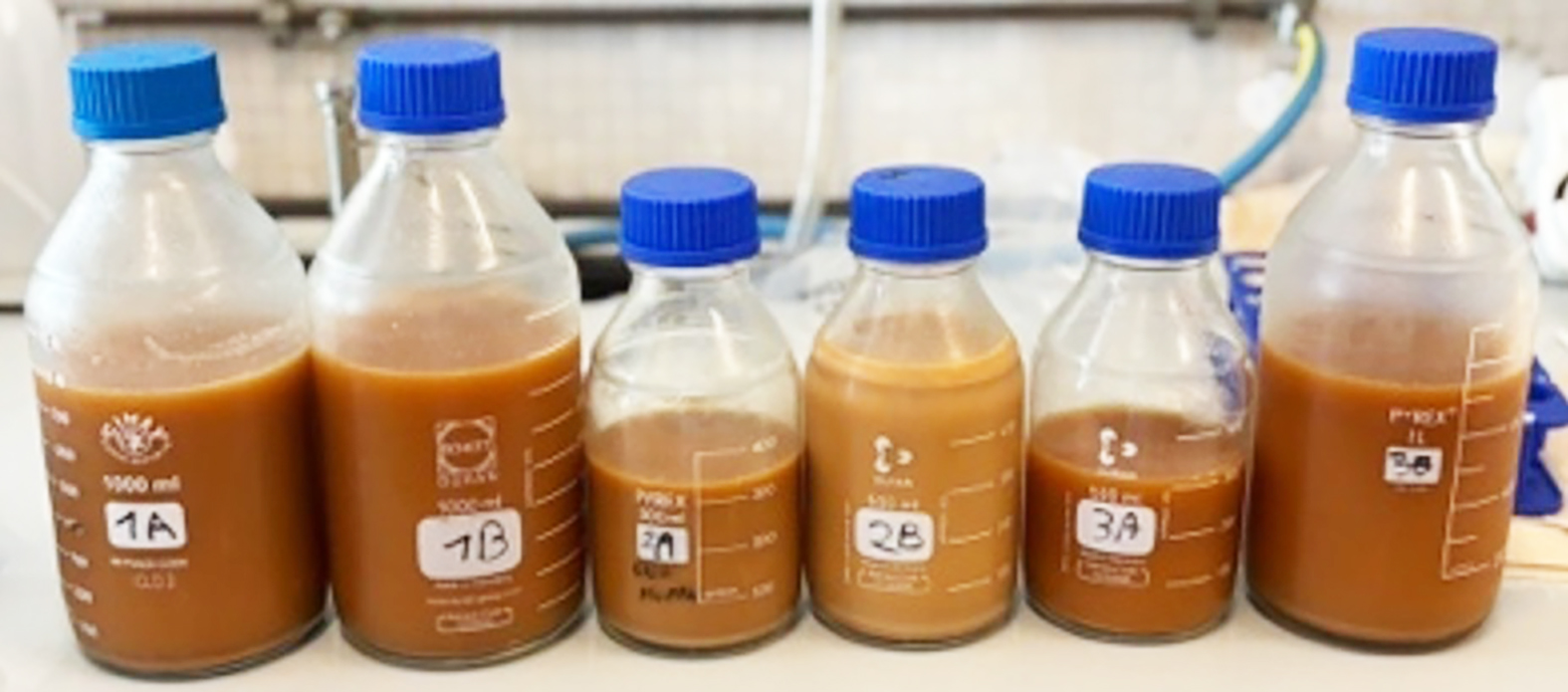
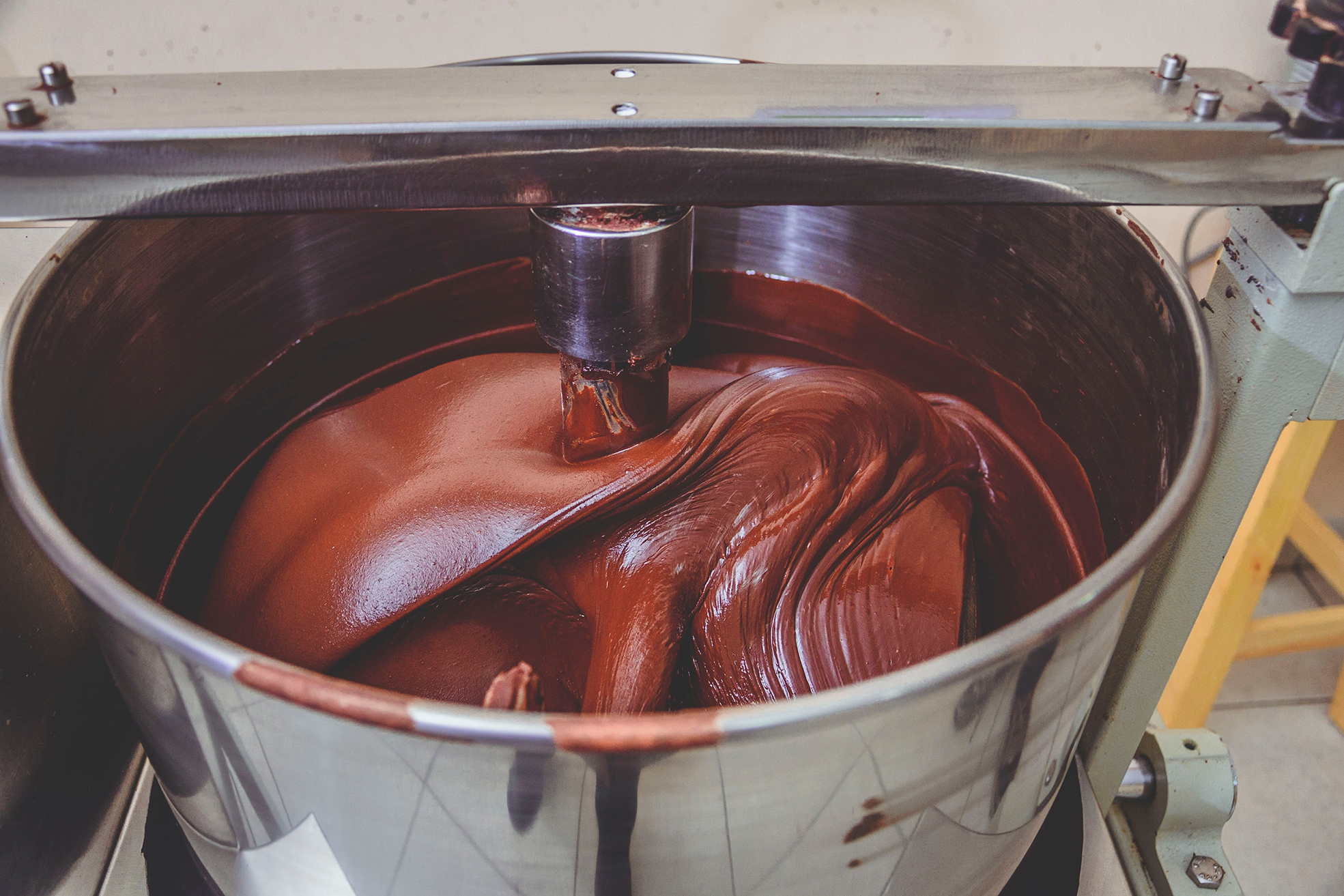
With regard to organic acids, acetic acid – which was present in all samples – increased to around 5 g/L (with the highest values found in sample 1). Higher concentrations were found for malic acid and succinic acid, both with final concentrations of around 10 g/L. Colour analysis revealed relatively increasing L* values, indicative of good brightness, with some differences between the samples (2B and 3B being slightly less light). Negative a* values generally indicate a green component typical of the starting matrix, whilst positive b* values indicate marked yellow hues, which can be interpreted as the result of phenolic and pigmentary transformations occurring during fermentation. The final samples were distinctly coloured and dense (Figure 3).
From a microbiological perspective, all the microbial loads analysed increased over 48–72 hours, peaking between T3 and T4 at levels of the order of 10⁷–10⁸ cfu/g. Between T5 and T6, the microbial loads on PCA, MA, MRS and GYC showed a downward trend whilst remaining above initial levels, indicating a stabilised microbial community dominated by lactic and acetic acid bacteria. Table 1 shows the total aerobic bacterial count values.
Table 1 – Progression of total aerobic microbial growth (CFU/g) during fermentation under the three conditions: 1 (with sugar), 2 (with condensed milk), and 3 (with sugar and kefir)
| T0 | T2 | T3 | T4 | T5 | T6 | |
| 1A | 2.00E+07 | 7.20E+05 | 2.88E+08 | 1.20E+08 | 5.60E+07 | 9.50E+07 |
| 1B | 8.00E+05 | 8.00E+04 | 6.40E+08 | 2.00E+07 | 1.00E+08 | 5.20E+07 |
| 2A | 6.00E+05 | 1.25E+06 | 1.60E+07 | 3.20E+06 | 4.80E+06 | 1.19E+08 |
| 2B | 5.40E+05 | 7.68E+07 | 1.56E+08 | 6.40E+06 | 1.28E+08 | 8.00E+07 |
| 3A | 2.20E+06 | 7.70E+05 | 4.40E+08 | 1.60E+08 | 1.30E+08 | 4.10E+07 |
| 3B | 6.90E+05 | 2.00E+04 | 1.20E+08 | 1.70E+08 | 1.72E+08 | 5.00E+07 |
Discussion
The observed fermentation pattern demonstrated that combining substrates rich in easily fermentable sugars (such as sugar or condensed milk) with the structured matrix of cocoa husks facilitates the rapid establishment of a complex microbial ecosystem, comparable to those found in well-established plant-based fermentations.
The reduction of the pH below the 4.5 threshold—achieved under all conditions within a relatively short timeframe—indicates that the intermediate product can attain an effective microbiological safety barrier, consistent with acidification strategies used in other fermented products. The slight rise in pH observed after time point T4 in samples 1A, 1B, 3A, and 3B suggests that the primary fermentation phase is essentially complete by around the ninth or tenth day, transitioning into a state of equilibrium between the production and consumption of acidic metabolites. When compared to preliminary trials (lasting 25–30 days, not presented here), these results indicate that, under controlled conditions, fermentation times can be significantly reduced while maintaining adequate safety levels and avoiding the excessive sensory acidity observed in earlier tests.
The dynamics of total polyphenols—characterized by an initial decline followed by a partial recovery in some samples—reflect complex transformations previously documented in other fermented plant matrices, where microbial enzymes and organic acids can both degrade phenolic fractions and release them from insoluble complexes.
The final increase in catechin levels observed in samples 1A and 2B—though not reproducible across all samples—is an intriguing finding. It suggests the existence of specific time windows during which the intermediate product might offer an optimal balance between phenolic content and acidity; however, this result requires further testing for confirmation.
The rapid consumption of sugar within the first 24 hours, coupled with the progressive accumulation of organic acids (acetic and succinic), points to a metabolic profile consistent with the sequential growth of lactic acid bacteria, acetic acid bacteria, and yeasts—a conclusion supported by growth patterns observed on MRS, GYC, and MA media. This dynamic mirrors that described in existing literature on cocoa fermentation and beverages such as kombucha, confirming that a matrix derived from peels serves as a suitable substrate for complex microbial consortia, particularly when water kefir is used.
From a practical standpoint, the observed microbial population trends suggest that pasteurization at the end of the fermentation process is necessary to ensure an extended shelf life—especially if the goal is to halt acidification and stabilize the sensory profile. Consequently, the choice of starter culture is critical, not only for the fermentation process itself but also for determining the subsequent stabilization strategy.
Conclusions
The results obtained demonstrate the feasibility of producing a fermented semi-finished product based on cocoa husks, capable of reaching a final pH <4.5 and microbial loads typical of established fermentation processes within a relatively short timeframe—characterized by a predominance of lactic acid and acetic acid bacteria, alongside a controlled development of yeasts.
The trends in pH, sugar consumption, and organic acid accumulation indicate that the primary fermentation phase concludes within approximately 10–12 days. This suggests that a process duration shorter than the 15 days tested could still ensure safety and fermentation stability, while having a lesser impact on perceived acidity.
The dynamics of polyphenols—showing an initial reduction followed by a partial recovery in some samples—highlight the potential to balance functional value (phenolic content) with sensory acceptability by adjusting factors such as process duration, starter culture composition, and operating conditions.
Looking ahead, cocoa husks—when appropriately fermented and stabilized—represent a promising base for the development of other functional and sustainable products, including beverages, spreads, sauces, and jams. This paves the way for further research into sensory characterization, the bioaccessibility of bioactive compounds, and industrial-scale production.