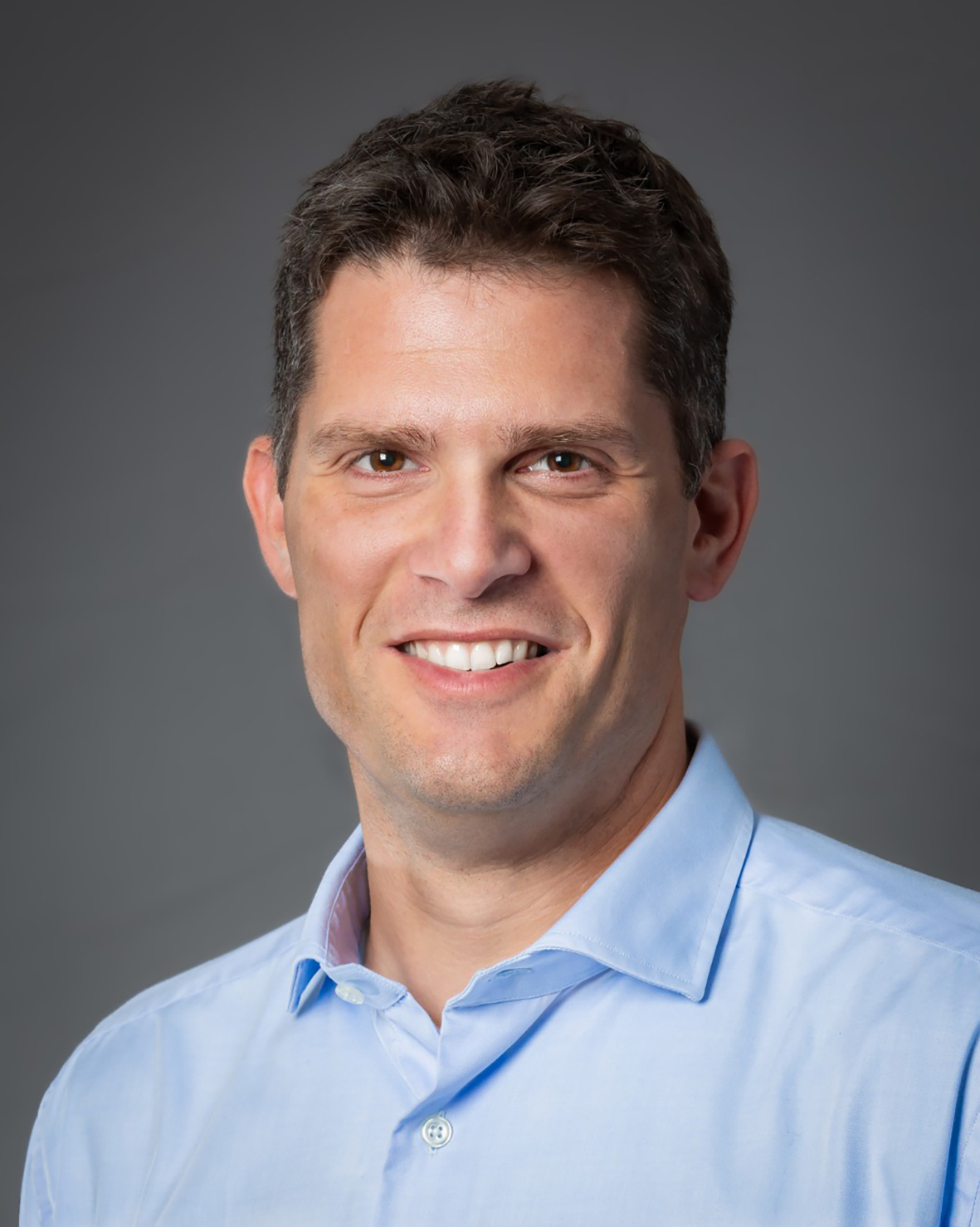
Working in the Research and Development and Innovation department of a food company means helping the company to produce what does not yet exist. To do this, you not only need to be able to look at things from a new perspective, but also to have a thorough knowledge of the raw materials, the processing methods and the market expectations, in order to understand whether you are on the right track. Dr Matteo Biasibetti, a food technologist from the Veneto region and current R&D food manager at Deimos Italy, talks about how he has built up his experience over time in terms of processing plants, the development of processes and products, their sustainability, and the ability to train his young colleagues.
What sort of training have you had?
After scientific secondary school, I enrolled in Food Science and Technology at the Faculty of Agriculture of the University of Padua. I completed the combined three-year degree and master’s degree course within the set timeframe and immediately took the state exam to register with the Order of Food Technologists of Veneto and Trentino-Alto Adige.
What did you enjoy most during your time at university?
I won’t hide the fact that I enrolled in Food Science and Technology as a fallback option. I wanted to study for a degree in Physiotherapy or Sports Science, but I didn’t pass the entrance exams, so I opted for my second great passion: ‘food’. I’m deeply grateful to fate for forcing me to choose this path, where I’ve discovered some of the endless ‘whys’ that drive food science – I’m referring, for example, to how bread gets its soft texture, how and why the colour of food varies, and what the conditions and effects are of micro-organism growth in a food matrix. It was love at first sight.
What topics did you cover in your degree theses?
For my bachelor’s degree, I studied the quality of milk intended for direct consumption in depth through a laboratory internship, with particular reference to the milk produced in my province of residence. For my master’s degree, I wrote an experimental thesis on the post-harvest quality of radishes and lamb’s lettuce grown in hydroponic cultures. Today I realise that I was unconsciously observing the future.
What prompted you, as a recent graduate, to focus your energies on research and development?
Fate and passion. Fate, because I immediately had the opportunity to join a Research and Development team, albeit only as an assistant. Passion, because working in this team ignited within me the ‘sacred fire’ that continues to burn and drives me every day to seek a deeper understanding of the physical, chemical and biological mechanisms that govern food processing, preservation and safety.
Starting work
What were your first steps into the world of work?
I was hired at PAVAN, now GEA. The company was and still is specialised in the design and construction of plants for dry pasta, machines and production processes for snacks, pellets, breakfast cereals, pre-cooked pasta and flour, non-traditional and gluten-free pasta. I initially worked alongside the technologists in charge of testing the new systems. My tasks included working on the customer’s premises to supervise the start-up of the plant, establish its operating parameters and then test it under real conditions, also checking the correct integration with the machinery upstream and downstream of our machines, drawing up the test reports, compiling the technical documentation and transferring to the company’s employees the elements necessary to manage the plant independently. I spent a lot of time travelling in Italy and abroad, so I had the opportunity to live in different parts of the world for relatively long periods. It was an extremely valuable experience. A few years later, I had to make the first crucial decision for my career: to continue on the path I had followed up to that point and become an excellent process testing technologist, with a specific focus on the plant engineering aspect, or to join a company dedicated to food production. I chose the second option and was hired by MAFIN in Galliera Veneta in the province of Padua.
What did the company produce?
It was, and still is, a leading company in the extrusion of snack pellets (semi-finished products to be expanded). Together with the research and development team, I carried out tests on pilot plants, helped to optimise processes to ensure defined quality standards and processing times were met, and took prompt action to resolve any issues on the production lines. Whenever our clients required it, I also handled voluntary certification processes, managing the documentation involved. This company has given me so much, both professionally and personally, and to this day remains, for me, a shining example of entrepreneurial excellence.
An entrepreneurial experience
After several years as an employee, he decided to start his own business and opened the FUEGO pizzeria. What led him to make this decision?
I loved making pizza and I decided to turn this passion of mine into a profession. Fuego was the complete fulfilment of a career dream: to apply the same approach used in industrial research and development to the restaurant business. It was an educational experience in every respect and profoundly changed my perspective on the world of work. I have acquired skills in the management of human and economic resources, while at the same time understanding the many difficulties and sacrifices required by such a demanding sector.
You then went back to working for a large company – what made you change your mind?
In 2015, I left MAFIN to run the pizzeria full-time, but shortly afterwards, my business partner began showing symptoms of a severe flour allergy. This unexpected turn of events forced us to sell the business. On my own, I wouldn’t have been able to manage everything. It was a difficult time; I suddenly found myself facing this major setback and feared I would no longer be able to control my professional future, until, thanks to a colleague who was a member of the Order of Food Technologists, I came into contact with Serris Italia, a company based in Campodarsego in the province of Padua. The company had been in business for a decade and its flagship product was frozen pizza bases for the HoReCa and Business-to-Business sectors. I was hired as Head of Research and Development and Quality Control. Once again, it was the perfect blend of my profession as a food technologist and my passion for pizza. Today, Serris Italia has grown considerably and offers food service operators a wide range of frozen products, such as raw doughs made with traditional and speciality flours (wholemeal, multigrain, khorasan wheat), pre-baked round bases, pinsa, tray-baked pizzas, shovel-baked pizzas, gluten-free products and snacks.
When developing a new recipe for frozen pizza or improving an existing one, what aspects do you consider first?
I have always prioritised production feasibility. Before launching a project, it is necessary to analyse its strengths and weaknesses, whilst also weighing up the costs and benefits. Based on the company’s resources, it is essential to identify which product can deliver the best performance in terms of productivity and quality. It is essential to comply with legal standards relating to product categories, hygiene and product safety, and it is equally important to meet consumer expectations in terms of palatability, organoleptic characteristics, nutritional claims and product formats.
Is there a difference between a frozen pizza, a pizza made in a pizzeria and a homemade pizza?
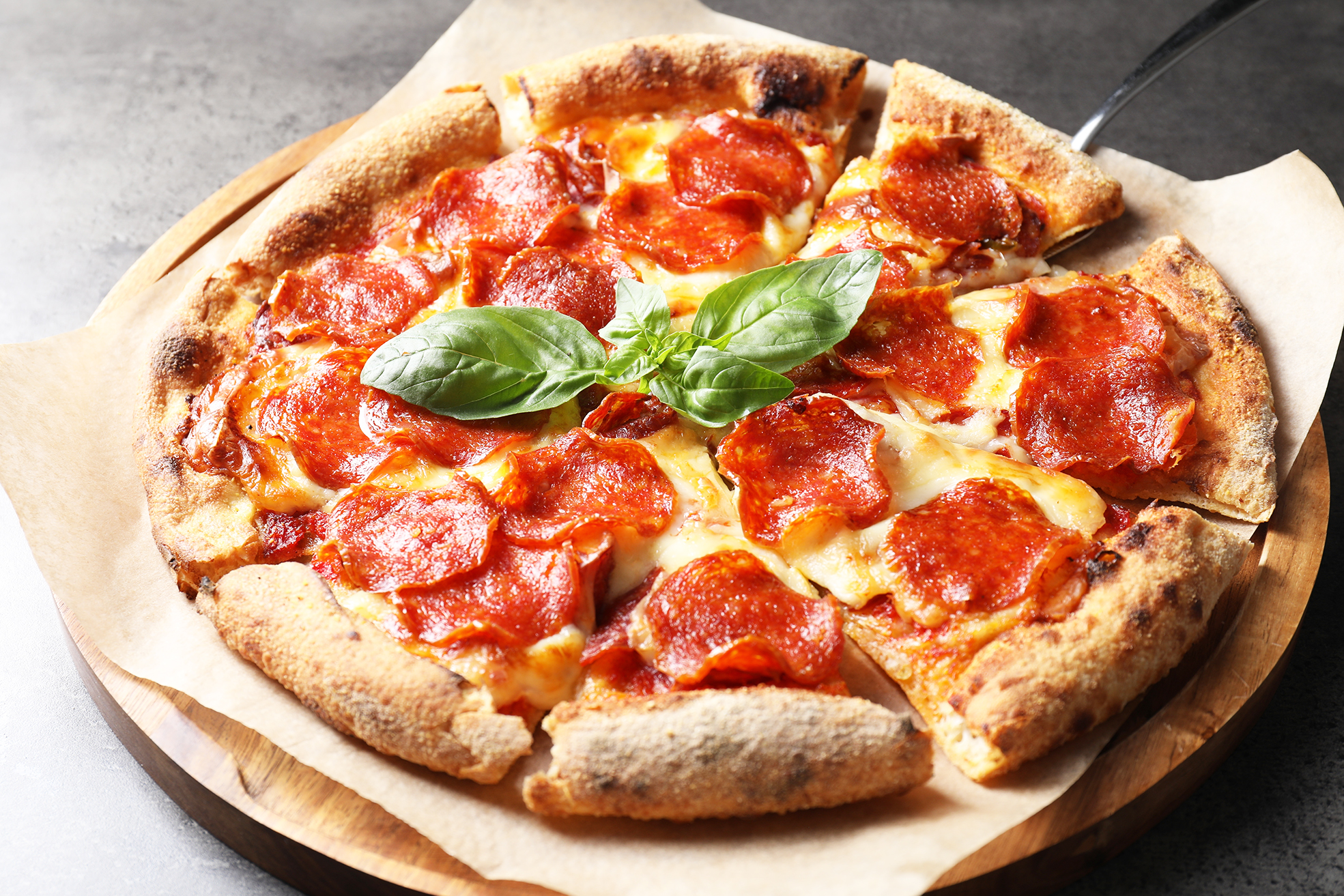
In my experience, yes. The reason is simple: the average quality of a product made on an industrial production line is different (not necessarily better or worse) from that of a product prepared in a pizzeria or at home. In an industrial setting, it is essential to maintain fixed standards, compatible with the capabilities of the production line and the operators, who rarely have formal training as pizza chefs. Work is therefore carried out using standardised raw materials and a rigid production process. Nothing is left to chance and there is no room for interpretation or significant variations. Production is broken down into a sequence of repetitive mechanical and manual operations. In a pizzeria or at home, the pace is different. The entirely manual process allows one to adapt to the natural variations in the dough, choose different ingredients each time and intervene ‘just in time’. In my view, it is not correct to make a direct comparison: these are different products, markets and prices. There are excellent products in the industrial sector, just as there are mediocre offerings in some pizzerias.
From Tecnical application manager to R&D manager
In 2020, he began his career at Deimos Italy, first as an application manager and then as R&D manager for the food division. Could you tell us a bit about your current company?
Deimos Italy is one of the companies within the SIDG (Specialty Ingredients Distribution Group) group, which distributes raw materials, ingredients and chemical compounds to various sectors: chemicals, pharmaceuticals, cosmetics, nutraceuticals and food. In addition to this, and thanks to the vision of my manager, Dr Riccardo Gross – an entrepreneur active in the distribution of food blends – Deimos Food Solutions was established. It is a spin-off of Deimos Italy. It is dedicated to the development of functional solutions (powdered blends) to improve the quality and performance of products across a range of food sectors: meat, bakery products and dairy. Our group possesses technical, application-based and commercial expertise in every segment of the food industry, including functional foods. Our in-house laboratory applies its know-how to simulate the processing conditions that may be encountered in various production settings.