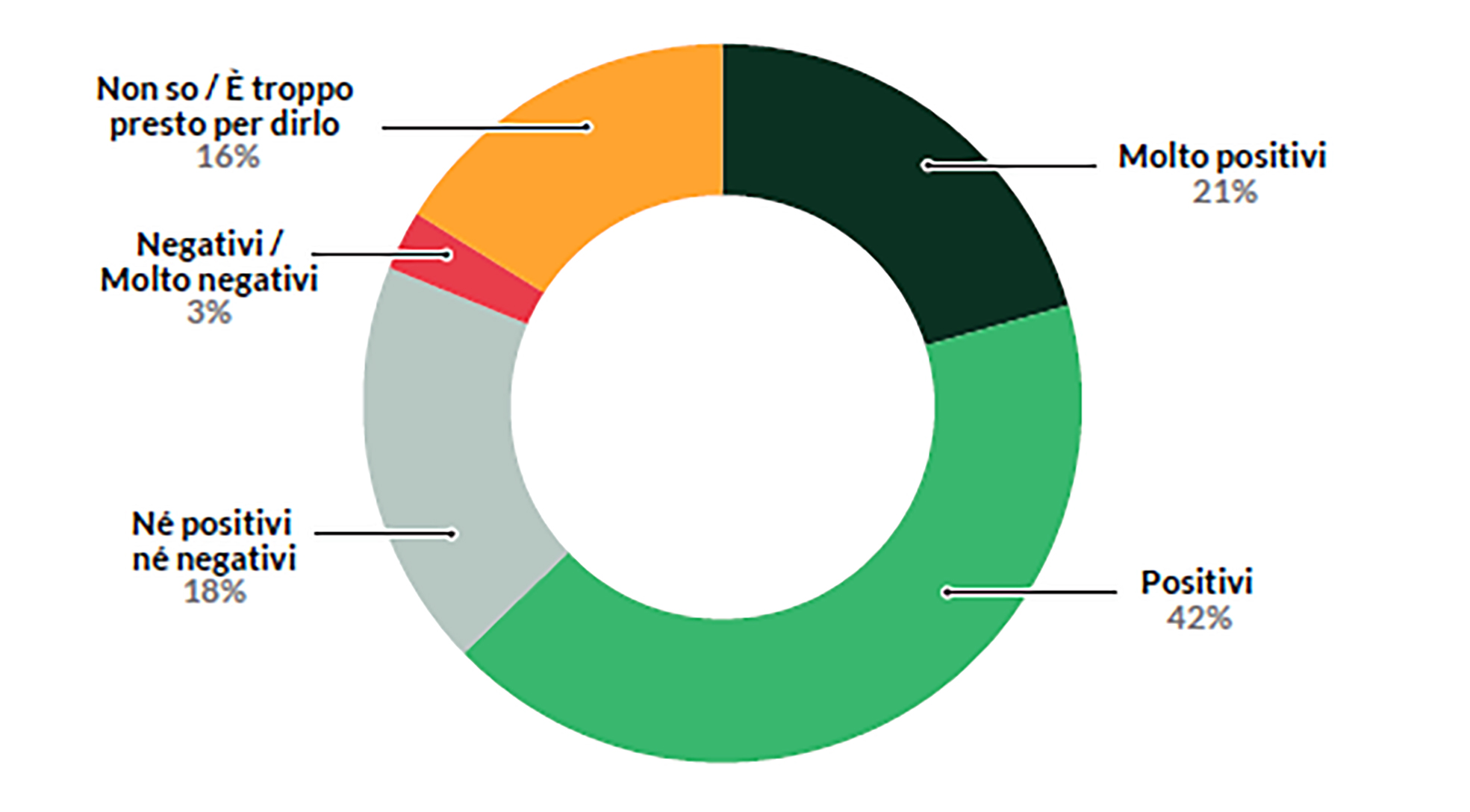
The European and Italian economic and energy systems face a twofold challenge: on the one hand, to harness the potential of Artificial Intelligence (AI) to improve efficiency, competitiveness and sustainability; on the other, to manage the growing energy impact of the digital infrastructure that enables its development. The ‘Digitalisation & Decarbonisation’ report, produced by the Politecnico di Milano, analyses, among other things, the level of AI adoption in Italian businesses, with a focus on the energy and manufacturing sectors. The evidence gathered shows an already active market, in which many companies have implemented numerous AI applications, particularly for forecasting consumption and prices, asset optimisation and predictive maintenance, with largely positive results. However, investment remains limited compared to the potential, held back mainly by uncertainties regarding the economic return. At the same time, there are strong expectations of growth in the near future, particularly linked to the development of generative AI, which is perceived as a technology capable of profoundly transforming operational and business models.
IA Continent Action Plan
From a regulatory perspective, the European Union is committed and determined to become a global leader in artificial intelligence – a leading AI continent. The AI Continent Action Plan aims to put this ambition into practice at European level. The plan is structured around five main pillars. The first focuses on strengthening Europe’s computing infrastructure by creating advanced centres to support the development of cutting-edge AI models. The second pillar focuses on ensuring access to high-quality data, which is essential for driving innovation in artificial intelligence. The third pillar promotes the adoption of AI in strategic sectors such as healthcare, industry and public services. The fourth aims to strengthen skills and attract talent, building a skilled workforce. Finally, the fifth pillar focuses on simplifying regulatory compliance, creating a regulated environment that fosters innovation in a secure manner.
Food industry case study
The report cites an interesting case study specifically relating to the food sector (cured meats), in a highly energy-intensive environment characterised by processes that consume significant amounts of both electricity and gas, due to the cooking stages and the lengthy cooling and storage cycles. With a view to sustainability and continuous improvement, the company has embarked on a comprehensive digitalisation programme aimed at energy efficiency and the modernisation of its asset management system. The process began with the attainment of ISO 50001 certification, which introduced a structured approach to measuring and controlling consumption. Through a preliminary assessment of processes, the mapping of the most energy-intensive stages and the installation of dedicated sensors, electricity and gas consumption data were digitised and integrated into an energy management platform equipped with advanced dashboards.
Continuous data collection, monitored and recalibrated over the first six months, enabled timely analysis of energy flows and the identification of inefficiencies, supporting both targeted corrective actions (e.g., reducing losses in compressed air circuits and the heating plant) and strategic assessments of supply sources, the feasibility of alternative technologies (geothermal energy, cogeneration upgrades), and investment planning. At the same time, the digitalization of plant health data enabled the development of an integrated asset management system that correlates the operating conditions of assets with their energy consumption. This integration enabled a predictive approach to maintenance, supporting timely interventions (such as reducing compressed air or steam losses) and enabling the assessment of the energy impact of maintenance activities. The creation of a reliable data history also highlighted the need for structural modernization interventions, especially on obsolete assets, guiding the definition of a multi-year roadmap that combines digitalization, technological revamping, and the progressive introduction of AI-based solutions. The project generated measurable operational and strategic benefits: among the most significant impacts were a 20% reduction in compressed air circuit consumption and a 7% improvement in gas consumption through improvements to the heating plant. At the decision-making level, increased awareness of consumption and asset performance allowed for a more objective assessment of energy investments and technology options, fostering a structured approach to the energy transition. The process, supported by dedicated governance, with the introduction of the Energy Specialist role and strong involvement of internal functions, took 18 months and today represents a replicable model of integrated digitalization, capable of combining efficiency, sustainability, and innovation in production processes.
Sensors and components
Another notable example involves an Italian start-up that was founded with a strong focus on hardware: it designs and manufactures sensors and specialised electronic components in-house, enabling the collection of reliable, real-time, granular data (i.e. at the most detailed and unprocessed level of available information) on environmental variables, electrical loads and the operating conditions of machinery. Based on the data collected by the sensors, machine learning algorithms have been developed to optimise energy management in buildings and for the predictive maintenance of industrial machinery.
With regard to building energy management, the sensors and actuators installed enable detailed data on environmental conditions (temperature, humidity, etc.) to be recorded. Using machine learning algorithms, electrical circuits are controlled directly, switching equipment on or off based on energy efficiency criteria and environmental conditions. The algorithms are based on decision tree models, which are effective at interpreting relationships between contextual variables and energy consumption. Furthermore, a linear regression model has been developed capable of estimating ‘reference’ consumption, i.e. the consumption that would have occurred in the absence of automated interventions. This approach enables a 15–20% reduction in energy consumption, actively demonstrating how AI can help achieve greater energy efficiency.
Alongside energy management, the application of sensors and the use of AI has enabled the development of predictive maintenance algorithms, primarily for the industrial sector. Vibration sensors and devices that monitor electrical and mechanical parameters continuously analyze the health of machinery, identifying anomalous patterns that can predict failures or malfunctions. The software used is actually based on two AI models that operate synchronously: on one hand, networks that automatically distinguish between normal operating conditions (e.g., engine on or off) and potentially suspicious intermediate states; on the other, a model used to measure system drift over time. This model compares the machinery’s current behavior with its initial, correct operating state, analyzing time series of data to assess how performance evolves over the asset’s life cycle. When the data deviates from expected configurations or shows significant drift, the system reports an anomaly, enabling targeted maintenance interventions and greater awareness of the machinery’s health and useful life.
Taken together, these two cases provide a concrete example of how the integration of physical sensors, IoT technologies, AI algorithms and automation can help reduce energy consumption and make various industries more efficient, sustainable and smart.