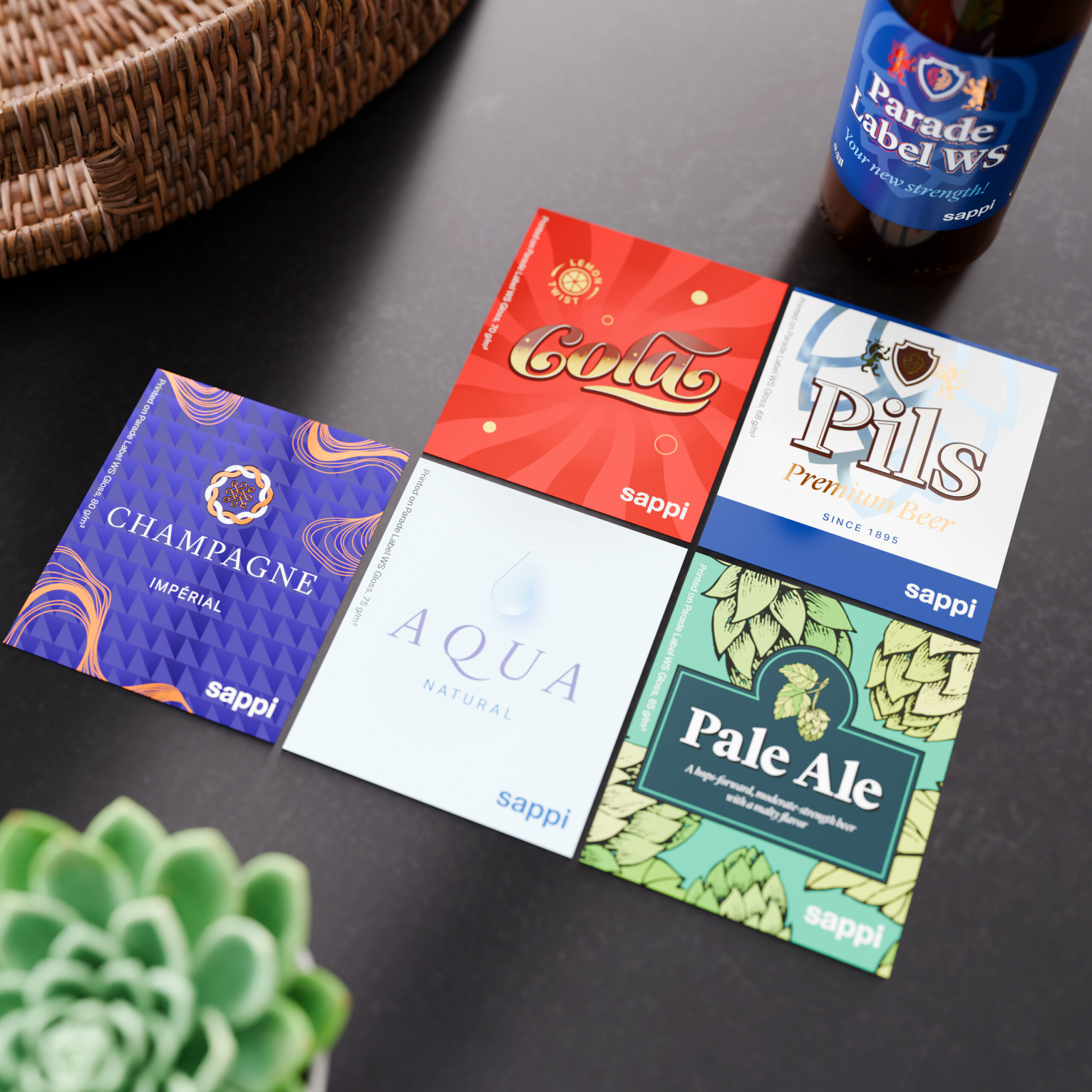
In the bottling sector, labels are increasingly becoming technical components as well as communication tools: they influence print yield, line stability, bottle washing cycle management, resistance in humid environments and compatibility with recycling processes. They are no longer merely a graphic and communication element applied downstream, but a functional part of the packaging system.
This evolution in the role of the label is the starting point for the strategy of Sappi (South African Pulp and Paper Industries), an international group specialising in coated papers and wood fibre-based materials, which is increasingly focusing its expertise, investments and product development on the food&beverage sector.
Historically strong in the graphics and speciality paper sectors, the company now also sees packaging and labels as an area of more stable growth and more dynamic applications. «In recent years, we have chosen to strengthen our presence in the world of labels because it is a segment with more stable dynamics than graphics and with interesting growth potential – explains Nicola Tisi, Managing Director of the Italian branch of Sappi Papier Holding GmbH -. For us, it’s a natural step: it means transferring consolidated expertise – such as surface quality and coating know how – to applications where technical performance is as important as aesthetics».
The direction, therefore, is not only commercial but also technological: to leverage the know-how on substrates and surfaces in a sector, food&beverage – where labels directly contribute to the packaging performance and the perception of the final product.
From graphic paper to label applications
The starting point is Sappi’s long-standing expertise in the production of wood-free coated papers and high-quality visual surfaces. This technical heritage – developed for graphic printing – is being progressively adapted to the needs of beverage and food labels. Surface quality affects several operational parameters: colour uniformity, print definition, ink behaviour, stability in converting processes, visual impact on the shelf.
«We have brought our expertise in surface quality to the world of labels. Printability and colour rendering are elements that help the product stand out», notes Tisi. The papers are developed with multi-process compatibility in mind – offset, rotogravure, flexo – to avoid products that are too vertical on a single technology, because, says Tisi, «If you develop a paper that is only valid for one printing technology, you lose economies of scale and application flexibility».
Production structure and supply chain integration
On an industrial level, one of Sappi Europe’s key assets is its integrated plant in Gratkorn (Styria, Austria), the company’s flagship facility in Europe, where the cycle starts with wood and ends with finished coated paper. It is a large-capacity plant with coating and production lines suitable for both high volumes and technical ranges. «Gratkorn Mill is an integrated plant that starts with logs and ends with finished paper. We are talking about very large machines and high production capacity. Premium magazines, catalogues, books and high-end advertising are printed worldwide on the approximately 860,000 tonnes of wood-free coated paper we produce here every year. We also produce around 90,000 tonnes of label paper used for bottles, cans, jars and tins».
In addition to its integrated plants, the group has specialised sites – including the two plants in Italy – focused on glassine, release liner and technical papers for labels and flexible packaging. The combination of scale and specialisation is part of Sappi’s operating model.
Where label solutions fit in
Nel food & beverage l’offerta riguarda più famiglie tecniche:
- wet glue label papers;
- wet strength paper (anti-tear);
- fronts for self-adhesive labels;
- glassine;
- functional papers for flexible packaging.
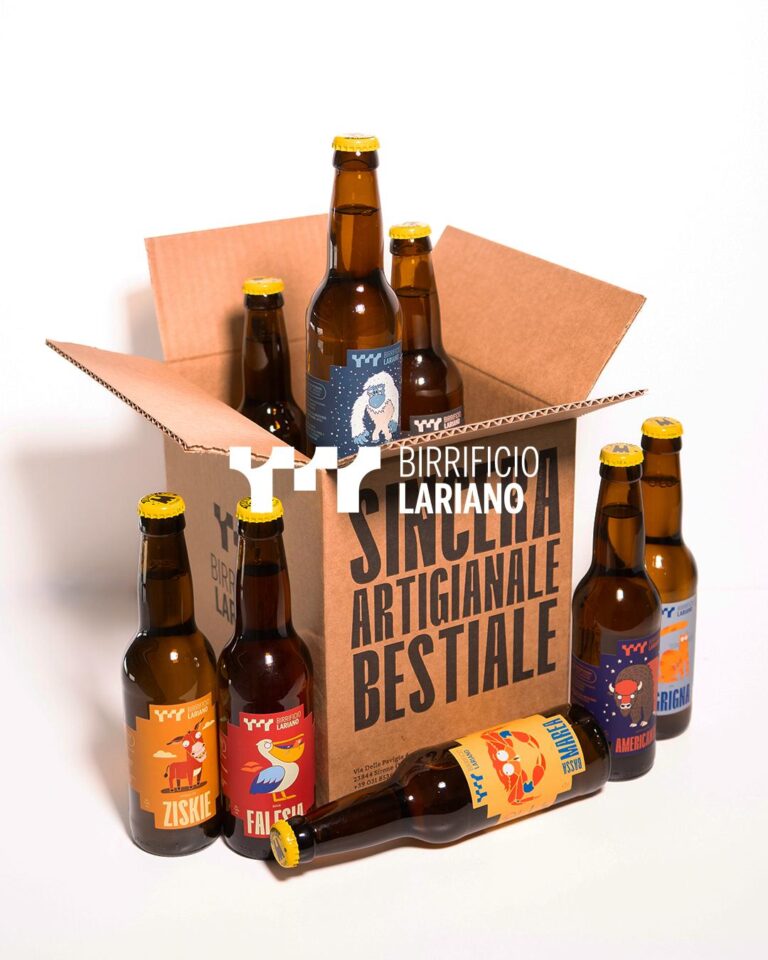
Wet glue labels remain typical of high print runs – beer, water, soft drinks, preserves – where line speed and application stability are key factors.
When it comes to returnable bottles, wet strength is linked to washing cycles: «The label must peel off cleanly without disintegrating, otherwise it will disperse in the water and cause problems for the process. If it peels off cleanly, however, it can be recovered and recycled as paper». The more decisive entry into the high-volume segment is linked to recent investments: «Previously, we focused on more specialised labels and small print runs. With the new investments, we have also entered the world of large numbers».