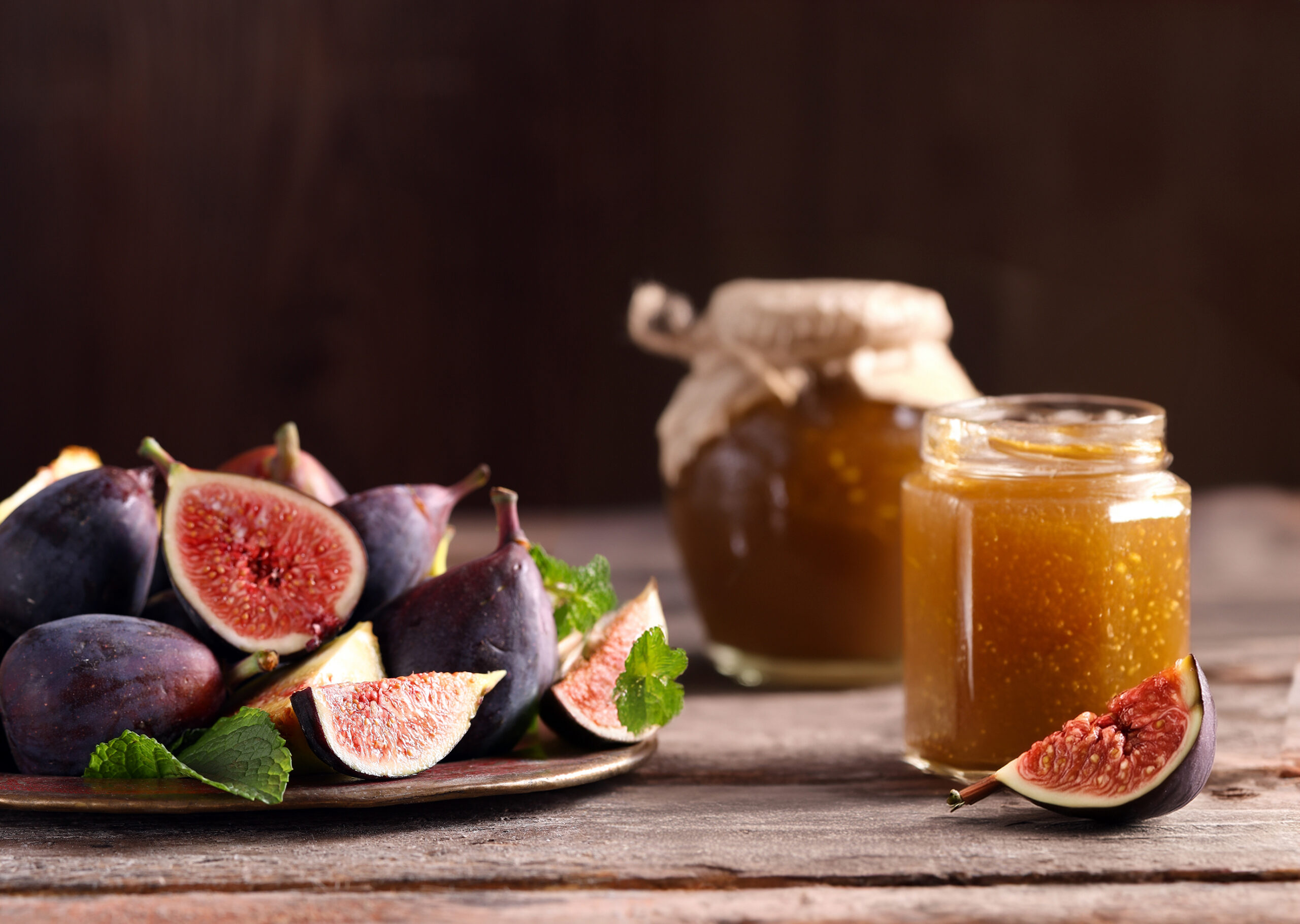
Figs (Ficus carica L.) are recognised for their rich nutritional profile and medicinal properties, including potential anti-cancer and cardiovascular benefits. This fruit is, in fact, rich in fibre, trace elements, polyphenols, proteins, sugars, organic acids and volatile compounds.
The aim of a recent study, carried out by a group of international researchers (Manik et al., 2025), was to evaluate the quality characteristics of three different fig jam formulations prepared using white sugar, cane sugar or honey as a sweetener. In particular, the samples were analysed in terms of: nutritional composition (fat, protein, fibre, vitamin C, carbohydrates and total solids), chemical properties (titratable acidity and pH), bioactive compounds (total phenolic, flavonoid and anthocyanin content) and microbial safety (count of bacteria, yeasts and moulds).
The results show that the fig jam made with honey has the highest levels of acidity, fibre, protein and vitamin C, whilst the one containing white sugar has the lowest moisture content and ash percentage. Total soluble solids, on the other hand, are higher in the jam made with brown sugar. Finally, no significant differences in phytochemical compounds were observed between the various samples.
In summary, the results highlight the influence of the type of sweetener on the quality characteristics of fig jam, identifying cane sugar as the best option for optimising both the nutritional value and the chemical quality and sensory properties of the product.
Bibliography: M.M. Manik et al., Health Dynamics, 2, 2025, 275-282.