In a scenario characterized by rising energy costs, economic uncertainty, and global challenges, the Italian glass industry continues its path towards transparency and sustainability. Revenue in 2024 was over €3.8 billion; the cost/income ratio improved to 88.2%; investments in the environment and safety reached €30 million. Circular economy performance is improving; water consumption has halved since 2016; the efficient use of natural resources remains high; 37% of energy consumed in 2024 is renewable, compared to 11% just two years earlier.
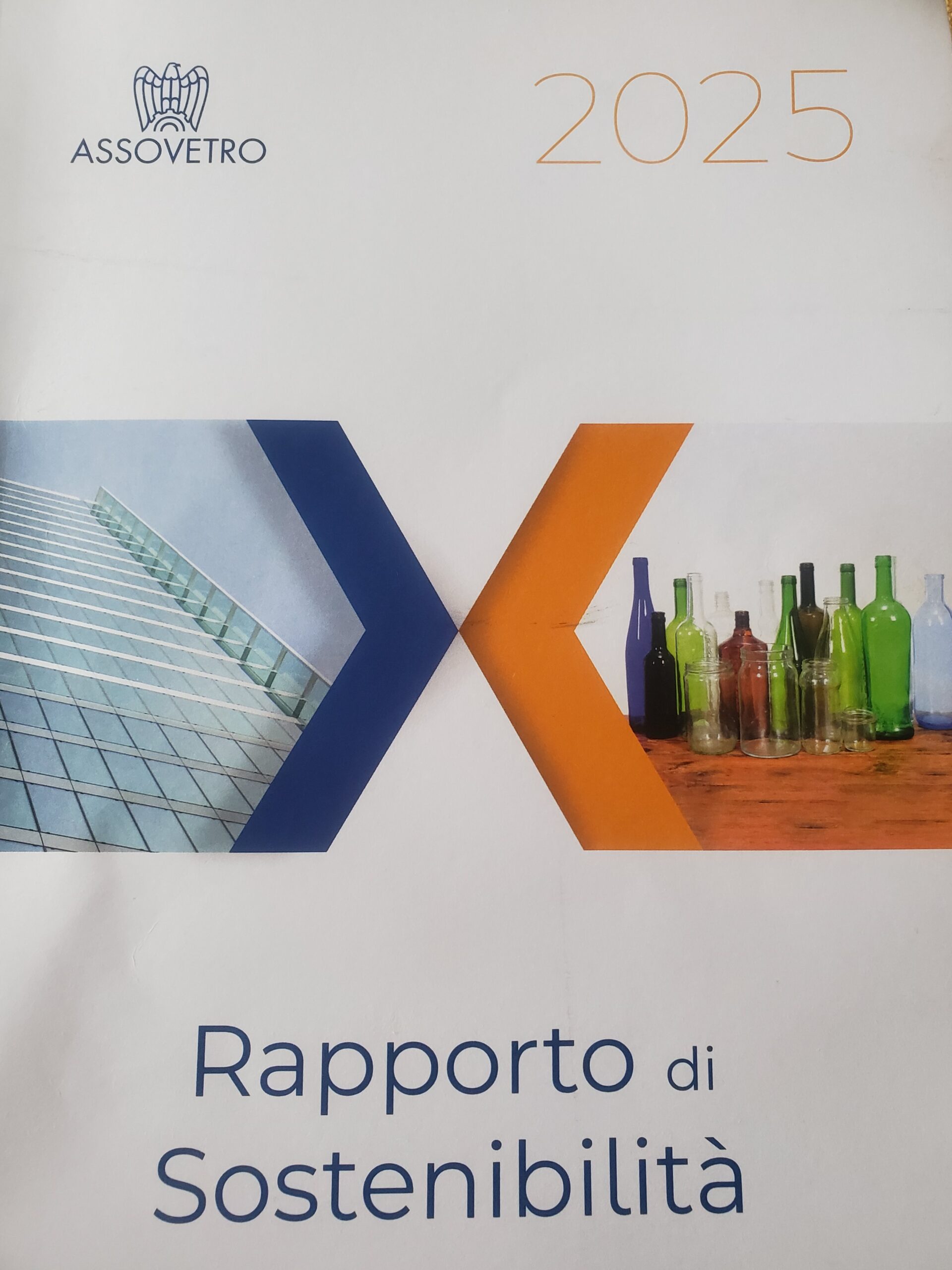
Assovetro’s fourth Sustainability Report presents a clear, accurate, and comprehensive picture of the Italian glass industry’s social, economic, and environmental performance during the two-year crisis of 2023-2024. For its reporting, it examined 14 member companies—11 hollow glass producers and three flat glass producers—which together represent approximately 80% of the industrial presence installed in Italy.
“This Report demonstrates“, said Marco Ravasi, President of Assovetro, “that despite the challenging environment, glass companies continue to pursue increasingly sustainable production, investing in research and development and adopting solutions to reduce environmental impact. As an industry, we remain steadfast in our commitment to pursuing the ecological transition, but the support of institutions and politicians is necessary to overcome a challenge that could change the way industry operates in Italy“.
Economic performance, turnover and investments
In the two-year period 2023-2024, glass production slowed to 5 million tons due to declining consumption caused by inflation and international tensions. The breakdown of glass production by Assovetro member companies shows the largest share, 86%, for the production of hollow glass (93.8% for containers for food and pharmaceutical products) and 12.2% for flat glass, construction, automotive, etc. Production cost trends highlight energy expenditure, which impacted production costs by 22.12% in 2023 and 18.90% in 2024 (in 2022, it had reached almost 29%, with peaks of 56%), with negative impacts on competitiveness. The turnover of €3.82 billion is generated primarily in Italy (73.7% in 2024). Investments in production facilities and innovation, which are among the main indicators of the glass industry’s propensity for technological upgrading, amounted to over €270 million in 2024 (approximately 9% of turnover), the highest amount since 2016, with the exception of a peak in 2018.
Renewables and circularity are growing
Glass production is an energy-intensive activity because it must reach high temperatures to melt and shape. Energy consumption is therefore a key indicator for the sector—from both an economic and environmental perspective—both in terms of absolute consumption, energy efficiency, and the use of energy from renewable sources. Over the two-year period under consideration, energy consumption, especially gas (65%), decreased slightly, partly due to the decline in production. The energy performance indicator remained constant between 2016 and 2024, at 0.18 TOE/ton of molten glass. The key finding for 2024 is the extraordinary growth in renewables, reaching 37%. This is due to an increase in companies using energy from non-fossil fuels and one company using 100% renewables.
CO2 emissions (mainly from the high-temperature melting process) produced per ton of molten glass increased slightly compared to 2021, but declined sharply compared to 2019-2020 (down approximately 70% compared to 40 years ago). Nitrogen oxide emissions also decreased by 36.5% compared to 2016, and sulfur oxide emissions by 42.9%. Water consumption was significantly reduced, thanks to the adoption of targeted techniques and systems: water consumption per ton of molten glass decreased from 2.16 m3/ton in 2016 to 1.18 m3/ton in 2024.
Glass remains a model for the circular economy: in 2024, separate waste collection increased to 91%, and glass packaging sent for recycling increased by 2.8%, with a recycling rate of 80.3%. In 2024, glassworks used an average of 57% recycled glass, saving raw materials, energy, and CO2. Environmental certifications, a key indicator of environmental awareness, are growing in terms of certified sites, +51 since 2016.
Social sustainability: more and more permanent contracts and a decreasing gender gap
At the end of 2024, Italian hollow glass and flat glass companies employed a total of 11,031 people, a number almost unchanged since 2016. From a contractual perspective, the two sectors are characterized by a clear prevalence of stable contractual forms (91.5%). Supplementary contracts mostly provide welfare services (73.7%) and the provision of collective variable bonuses. The glass industry is trying to bridge the gender gap. Female employment is higher among white-collar workers (25.8%) and managers (24.4%). Only 15.5% of top management positions are female. Training hours in 2024 totaled 174,735, with 31.4% of these hours being mandatory training in environmental, health, and safety at work.