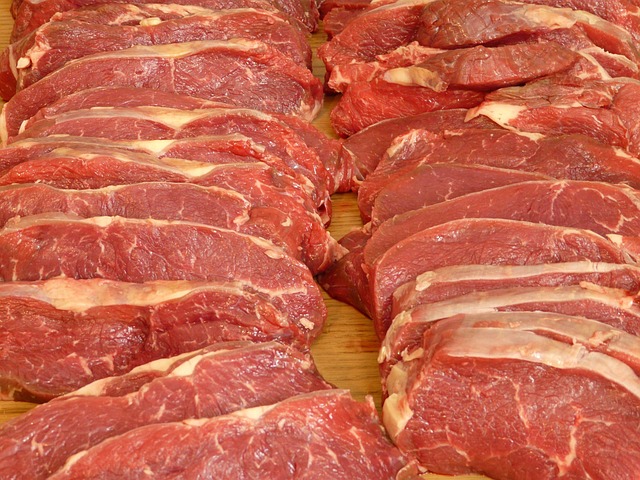
A recent study conducted by an international team of researchers (Mehdizadeh et al., 2025) aimed to develop a method for classifying meat samples—specifically buffalo, lamb, and beef—based on their total volatile basic nitrogen (TVB-N) levels, a key indicator of freshness. The approach utilizes a multiparameter sensor integrated with smartphone technology and artificial intelligence.
The sensor was developed using seven pH and redox indicators: aniline blue, Nile blue, alizarin red S, cresol red, methyl violet, methyl orange, and chlorophenol red.
Classification was performed using models based on linear discriminant analysis combined with principal component analysis (LDA-PCA) and genetic programming (GP).
According to the GP analysis, chlorophenol red, cresol red, and methyl violet were the most significant indicators, being selected frequently across 1,000 iterations.
The resulting mathematical models were then implemented into a smartphone application, which demonstrated high classification accuracy and excellent performance metrics for all three types of meat.
Specifically, the LDA-PCA model achieved discrimination accuracies of 96%, 81%, and 88% for buffalo, lamb, and beef, respectively.
In summary, these findings highlight the potential of the proposed method for the reliable, non-destructive, and real-time assessment of meat freshness.
Bibliographic references: S.A. Mehdizadeh et al., Smart Agricultural Technology, 10, 2025, 100822