€4.5 billion contribution to Italian GDP and €2.4 billion in tax revenue generated along the supply chain. These are some of the key findings of the study1 on Heineken’s economic impact in 29 European markets – 21 of which are operational, including Italy, and 8 of which are served through exports – conducted by Steward Redqueen, a consultancy firm specialising in assessing the socioeconomic impact of companies.
The study, which analyses data for 2025, provides a snapshot of the company’s contribution to the European economy and to each of the countries analysed, highlighting an impact that goes far beyond direct production activities and involves an extensive network of suppliers, distributors, retailers and food service and hospitality businesses.
According to the study, Heineken Italia’s overall contribution is equivalent to 0.2% of the country’s GDP and 7% of the value added generated by the national beverage industry. Italy is also the second-largest European market in terms of absolute contribution to GDP supported by Heineken, after the United Kingdom (€6.4 billion). This result is part of a broader European context, where the company contributes a total of €34.2 billion to GDP, equivalent to 0.15% of the economy of the markets analysed.
Economic and employment contribution throughout the supply chain
In 2025, Heineken supported a total of 61,800 jobs in Italy, of which 2,027 were direct and around 59,700 were throughout the supply chain. Specifically, for every job within the company, a further 29 jobs are supported in the rest of the Italian economy. This impact is also significant at the European level, where HEINEKEN supports a total of 429,300 jobs and each direct employee supports a further 13 jobs along the supply chain.
The HoReCa sector plays a significant role, accounting for 60% of the indirect jobs supported by the company. Bars, restaurants, hotels and other out-of-home establishments are, in fact, an important component of the supply chain, contributing to the distribution of products and the generation of economic and employment value in the local area. This contribution is also evident at European level, where Heineken supports 186,400 jobs in the hospitality sector, generating a contribution to GDP of €6.4 billion.
The economic impact of HEINEKEN Italia also translates into resources for households, businesses and public finances. Of the total €4.5 billion in added value generated, approximately €2.4 billion can be attributed to tax revenues generated throughout the entire supply chain, taking into account not only the taxes paid directly by HEINEKEN but also those associated with the activities of suppliers, distributors and customers. One billion euros, on the other hand, represents the value allocated to households, and 1.1 billion euros the value allocated to businesses. According to the study, for every euro spent by consumers on Heineken beers, 47 cents go to public authorities in the form of taxes generated along the supply chain. These also include excise duties on beer, a specific tax that is paid at the stage of production and release for consumption of the product and that contributes to the creation of value along the economic chain up to the final consumer. For Heineken Italia, excise duties paid amount to approximately €210 million per year, equivalent to around 4 cents for every beer released for consumption, representing a significant component of the total tax contribution generated by the supply chain.
Italian suppliers and local sourcing: a supply chain that generates value
The link with the national production system is also evident from the procurement data. In 2025, Heineken purchased goods and services from Italian suppliers for €834 million, equivalent to 4% of total purchases by the Italian beverage industry. The main procurement items include €282 million for finished products, €175 million for packaging and €22 million for raw materials, including barley malt and other ingredients used in production. These figures show how the company’s activities are part of a system of economic relations that involves various national production sectors.
Tourism and hospitality: the value of beer in the out-of-home economy
Heineken’s economic contribution also extends to the tourism sector, which is closely linked to the food service and hospitality industries. Regarding the tourism component—based on 2024 data—the study estimates that total spending by domestic and international tourists across the 21 European markets analyzed reaches approximately €828 billion annually. Of this, nearly €2.5 billion is attributable to tourist spending on beers from Heineken’s portfolio—equivalent to roughly 2 million 33cl beers purchased by tourists every single day—accounting for 7% of Heineken’s total contribution to GDP in Europe. This value is primarily reflected in the hospitality sector, which accounts for approximately €1.5 billion, highlighting the role of bars, restaurants, and hotels not only as social hubs but also as drivers of the tourism economy.
In Italy, tourist spending on Heineken beers reaches €147 million, generating value throughout the entire supply chain: €94 million is attributable to the commercial establishments and venues that sell the products, €30 million to tax revenue, and €23 million to Heineken. Furthermore, tourist spending accounts for 3% of consumer expenditure on Heineken brands within the “out-of-home” (hospitality/food service) channel, confirming the contribution of tourism to the economic activity linked to the beer supply chain.
The study, presented as a preview at the Comun Nuovo brewery
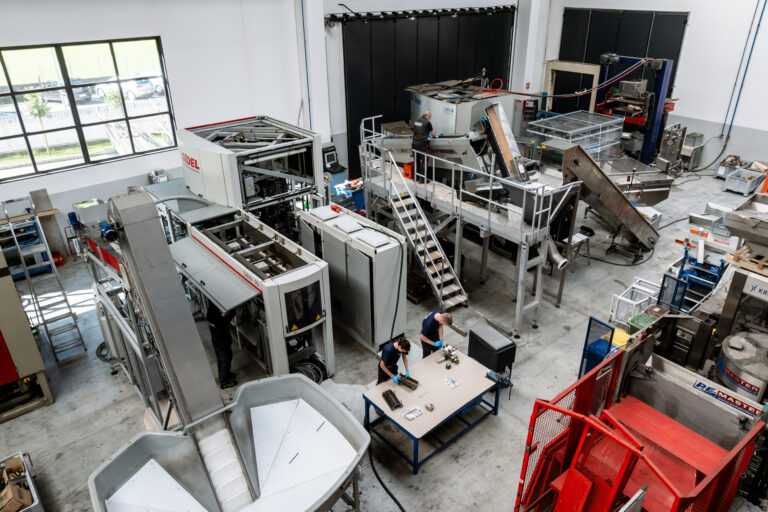
The study’s key findings were unveiled on Friday, November 6, at the Heineken brewery in Comun Nuovo (Bergamo)—the largest in Italy, accounting for 45% of Heineken Italia’s total production. The event brought together representatives from national and local institutions as well as various associations, providing an opportunity to discuss the economic and employment contributions of the beer supply chain and its role within the Italian production system.
- The study analyzes data for 2025 using a multi-regional input-output economic model, which makes it possible to estimate the contribution of business activities to GDP and employment throughout the entire supply chain—including suppliers, distributors, and operators in the commercial and hospitality sectors. The data regarding indirect employment represent an estimate of the jobs supported by Heineken’s operations across the value chain and do not refer to personnel directly employed by the company. These estimates represent the portion of economic and employment activity attributable to Heineken’s operations along the supply chain, rather than the entirety of the business conducted by individual suppliers, distributors, or commercial establishments. ↩︎