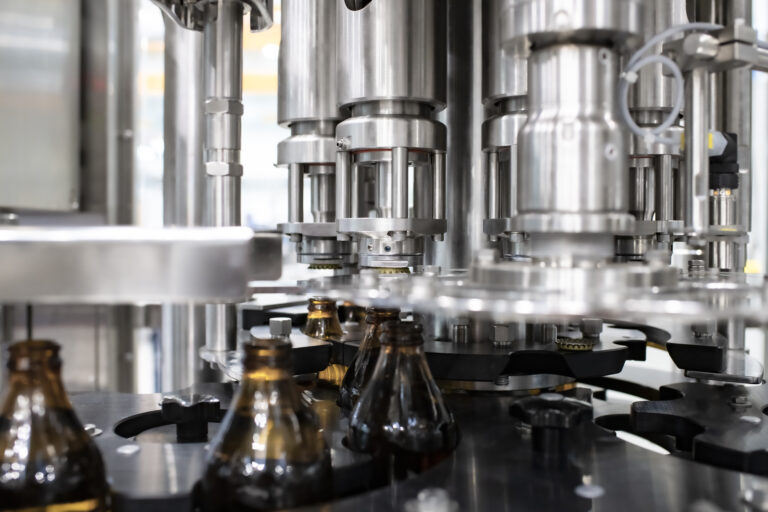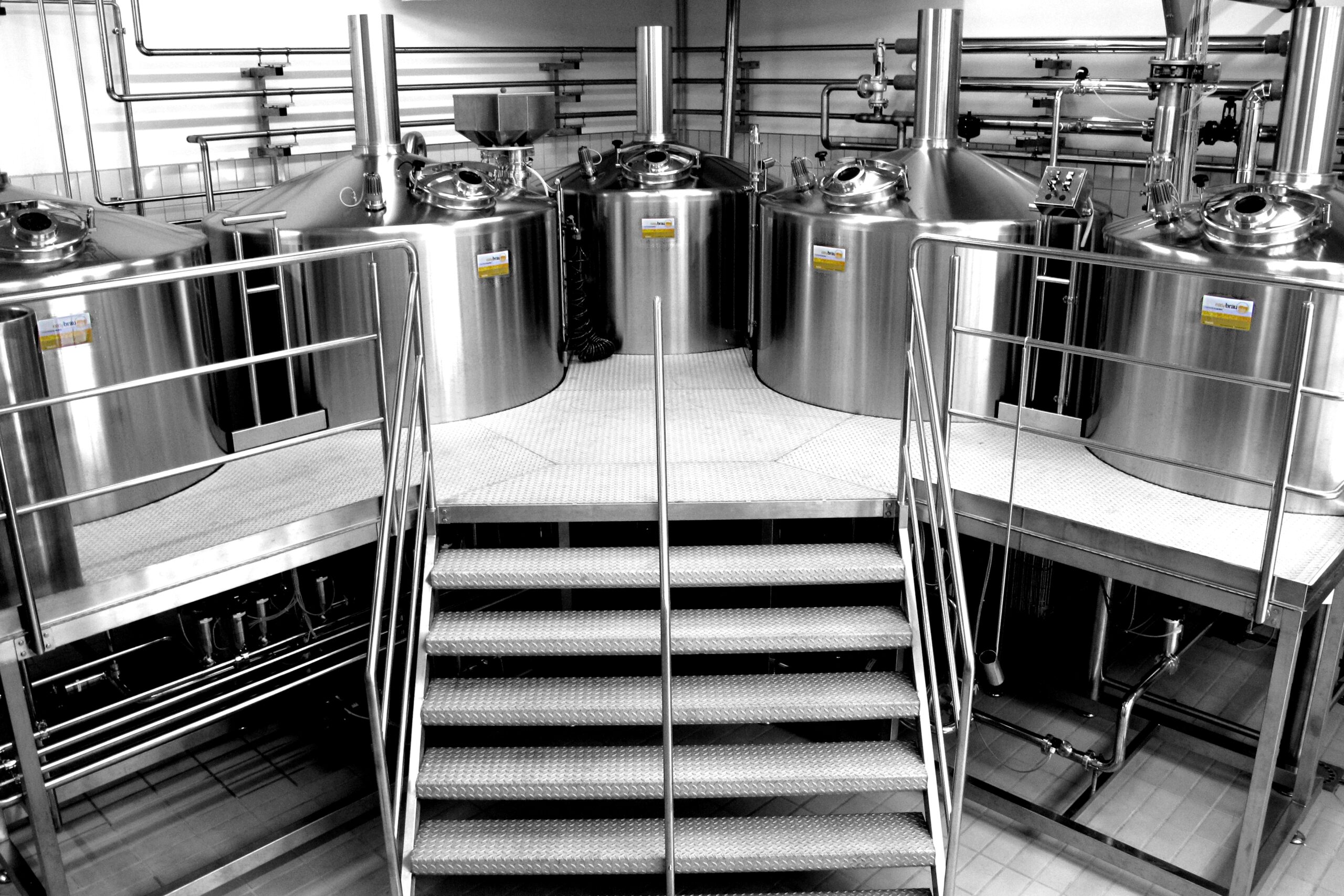
Easybräu-Velo is a premium brand that designs and manufactures brewing systems and equipment. Born from the combined know-how and expertise of several major domestic companies with decades of market experience, it operates in the field of beer production systems for both the craft and industrial sectors.
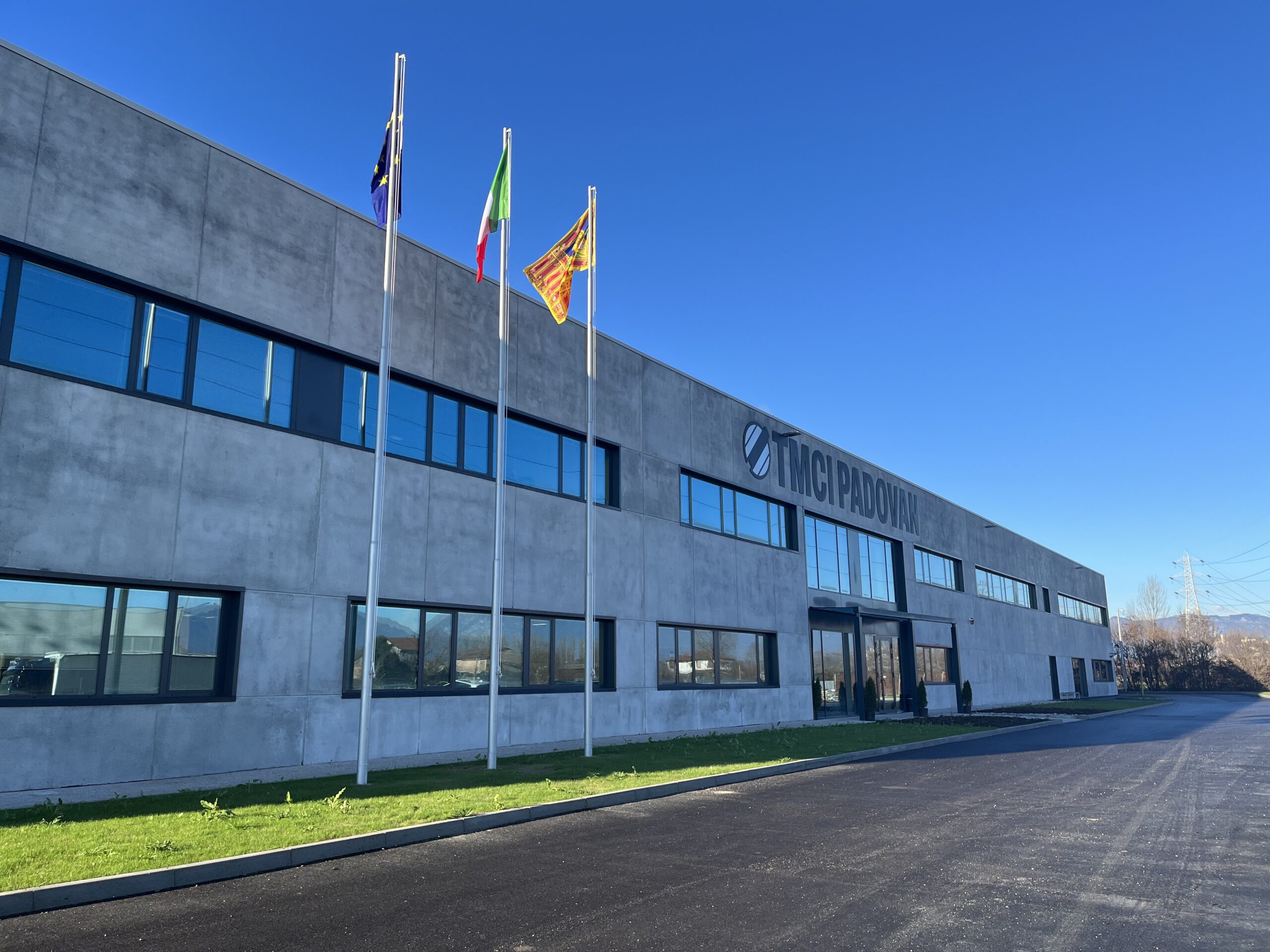
Having recently joined the Omnia Technologies Group — a comprehensive technology partner for the design and construction of machinery and processing plants across various food and beverage industries — Easybräu-Velo offers an extensive product range. This spans from brewhouses and brewpubs (available for batch sizes ranging from small [1 hl] to large [150 hl]) to fermenters and maturation tanks, which also come in various capacities. All of this is complemented by a wide array of auxiliary equipment, such as dry-hopping systems, yeast and aroma tanks, filters, pasteurizers, and more.
Easybräu-Velo has recently developed an innovative brewhouse management system leveraging the capabilities of Ignition. Ignition is a software platform for developing industrial applications and is highly regarded by developers working in the field of process automation.
The platform offers advanced features that enable the implementation of a wide range of applications — from classic SCADA and advanced HMI visualization to remote monitoring IoT, tracking and historian functions, and even MES-oriented capabilities for scheduling and comprehensive production management.
For years — practically since its market debut — Ignition has been distributed and supported in Italy by EFA Automazione. This company is part of a Tech-Group led by Relatech, a “Digital Enabler Solution Know-how” (DESK) company listed on the Euronext Growth Milan market. Relatech has been active for over twenty years in cutting-edge “Digital Enabler” technologies, including Cloud, Cybersecurity, IoT, Big Data, Blockchain, and Machine Learning.
A system that speaks the master brewer’s language
At the heart of the innovative brewing process automation and control system developed by Easybräu-Velo using Ignition is i-Get Brewery. This platform — designed to align as closely as possible with the operational logic of the brewing world — derives its strength from the seamless integration of data across the brewhouse, laboratory, cellar, and production assets. And that is not all.
i-Get Brewery can be described as the first brewhouse management system on the market to feature “Smart Recipe” technology. This function enables the automatic generation of recipe data—typically tied to the machinery—based on process data linked to the product itself. But let’s take things in order.
As Alessandro Sanson, Senior Software & Automation Specialist at Easybräu-Velo, explains, the project “originated a few years ago from the desire to create a platform that is flexible, effective, and closely aligned with typical brewery workflows. It uses the brewer’s own language to create and manage recipes, control energy consumption, and comprehensively monitor and track both products and processes. Indeed, Easybräu-Velo’s goal is to offer solutions adaptable to the production philosophies of major European brewing traditions; this allows the company to meet diverse needs and achieve an excellent finished product, regardless of the specific recipes involved“.
Many contenders, only one winner: Ignition
Ignition proved fundamental in achieving the goals Easybräu-Velo had set for itself; after testing several systems, its capabilities turned out to be the best fit for the purpose.
“Among the features that made Ignition the ideal platform for this project are the agile interaction it enables with data and effective data integration via standard SQL databases—a universal connector that allowed for the development of a consistent, efficient data matrix”, states Alessandro Sanson. “Furthermore, its scalability, flexibility, and lack of limits regarding tags and trends make Ignition the best value-for-money solution currently on the market”.
The system comprehensively covers the operational areas involved in the beer production cycle. The i-Get brewery platform includes features ranging from raw material management (receiving, storage, milling, dosing) to brewhouse processes (wort production, batch control, and the potential handling of other products like tea or soft drinks), CIP (Clean-in-Place) procedures, utility management (process water, steam plant, glycol, air handling, etc.), cellar operations (fermentation, bottling, packaging, yeast management, CIP), and laboratory functions (sample traceability and production reporting).
“Ignition offers powerful native SQL integration capabilities, making it an extremely effective tool for anyone needing to bridge the gap between the OT and IT worlds”, notes Alessandro Sanson.
Smart Recipe, a new way to manage ingredients
The major innovation that effectively makes i-Get Brewery the first system to feature “Smart Recipe” functionality is its ability to automatically generate recipe data based on process data. To achieve this, the recipe editor allows for the simulation of effects resulting from changes to process parameters: the system creates an interactive, real-time graphical profile, projecting production times and highlighting when machine limits are reached based on the specific outcome.
Using a calendar-based scheduler, the recipe linked to a batch can then be converted and launched into production. Essentially, once a standard profile for a specific beer type is defined, the system autonomously calculates the values required to produce it. This is done without altering stored data; instead, it involves adjusting one of three key parameters: malt quantity, cold wort volume, or malt laboratory yield. Similarly, the system applies automatic corrective actions based on discrepancies between actual raw material weights and theoretical values, thereby rectifying handling errors.
Field data indicates that this dynamic recipe management approach — and the resulting automated calculation optimization — led to a measured 25% saving in raw materials during the system’s very first installation. This is a significant achievement when compared to the previous operating method, which relied on the brewer’s manual calculations—calculations that were previously considered beyond question.
Actual savings also extended to utilities; the system manages these via a calendar featuring customizable time slots and holiday settings, enabling the optimization of energy and water consumption. This allows for precise production planning and scheduling, free from the constraints of fixed batch-to-lot relationships. “Smart” management applies not only to recipes or utilities but also to other system components, such as non-linear actuators. Indeed, their behavior in relation to a specific physical quantity can be defined by graphically modifying the characteristic curve through the adjustment of three points. Once the curve is modeled, the system calculates the corresponding polynomial function, establishing the specific control setting without delays or stabilization wait times.
Inspired by ISA 88 standards
For its modeling and subsequent development, the system drew inspiration from the ISA-88 standard, which defines universal methods and specifications for batch control systems. This enables, for instance, the optimization of communication between various components by establishing a standard data structure for data exchange within the system architecture.
Consequently, i-Get Brewery is designed — right from the specification phase — to automatically generate diagnostic information, cross-references, synchronization data, interlocks, handling routines, trends, and reports. To achieve this, the system analyzes the overlap of multiple matrices to automatically arrive at the correct result.
For example, managing operations based on “routes” rather than “devices” has significantly contributed to the previously mentioned water and energy savings, as these objects already contain information regarding the volume or time required for filling.
“The ‘route’ concept — derived from the ISA-88 ‘equipment module’ — was introduced to automate procedure-related design“, explains Sanson. “Relevant devices (i.e., the associated control modules) can be linked to each route, thereby creating dynamic physical paths that are independent of the procedural logic. This allows similar plants to be managed simply by varying the matrices, without needing to alter the PLC code. Matrix-based management enables the vertical development of information, enhancing the overall flexibility and scalability of the system“.
Having a structured list of devices belonging to the various units makes it possible to obtain reliable, automatically generated information for proper system management. Examples include the secure management of process interlocks and the automatic coordination of different processes that — being concurrent — may need to utilize the same manifolds.
A system ready for AR and AI
Created specifically for the brewing industry, the system developed by Easybräu-Velo is effectively a universal tool, as it comprehensively and openly addresses all batch processing requirements.
Thanks to a matrix architecture based on SQL databases, there are no limits to information management: for instance, for every individual pipe depicted in the system schematic—which features dynamic color-coding—it is possible to retrieve a historical list of the products that have passed through it, linked to the corresponding production batch and source unit. This establishes a traceability system that connects all components with production data.
Furthermore, thanks to Ignition’s communication capabilities — such as the Gateway module — the system can interface via OPC-UA with third-party elements or IoT platforms. This paves the way for future system evolution through the integration of technologies like AR (Augmented Reality)—for example, to support advanced diagnostics or smart process monitoring—or AI (Artificial Intelligence), which could serve as an excellent, natural complement to enhance ‘smart recipe’ functionalities.
Added value that goes beyond Ignition
Regardless of the potential evolutionary paths the system might take, one thing is certain: the collaboration with EFA Automazione has proven to be a genuine source of added value. This applies not only to the Ignition platform but also to many other aspects—notably EFA’s ability to ensure the immediate availability of essential connectivity components during the shortages experienced a few months ago, such as Crevis programmable I/O modules, Anybus multiprotocol network couplers, and HMS Networks’ Ewon Flexy industrial gateways/routers.