For Leone de Castris, bottling wine in 1925 – at a time when Italy was still unfamiliar with the modern concept of packaged quality – meant anticipating a paradigm shift. In that seemingly technical choice, one could already glimpse an industrial vision which, a century on, still defines the identity of this Apulian winery, one of the longest-standing and most representative in the Italian wine sector: not merely a historic winery, but a production system that has transformed time into method. The technical organisation at Leone de Castris is guided by a clear principle: quality is not achieved at the end of the process, but is established right from the moment the grapes arrive. In this sense, the sorting stage represents the first level of quality control. The Pellenc linear destemmer with sorting table allows for a thorough inspection of the raw material, removing non-compliant elements and ensuring a high degree of consistency in the product destined for winemaking. This is a crucial step in a production context that must ensure organoleptic consistency across large volumes and in markets with varying expectations. Quality standardisation does not imply uniformity of expression, but rather a reduction in unwanted variables. It is on this basis that the repeatability of the result is built, an essential element for a business that exports almost half of its production. «Every production decision stems from the desire to best express the terroir – emphasises oenologist Antonio Tripaldi –. Technology allows us to work with greater precision, but the objective always remains to enhance the identity of the grapes, in accordance with a precise stylistic consistency».
From empirical methods to a controlled process
One of the most sensitive stages of winemaking is the drying process, which is traditionally subject to environmental variables that are difficult to control. To address this, the winery has introduced two dedicated rooms equipped with systems for the precise monitoring of temperature, humidity and ventilation. The shift from empirical management to parametric control allows for continuous monitoring of the grapes’ development, enabling intervention when necessary and ensuring greater consistency in quality. «The aim is not to mass-produce the product, but to ensure that every batch meets the expected characteristics». This approach reflects a vision in which technology does not replace experience, but makes it more effective. The winemaking department is structured around three refrigerated, vacuum-sealed Siprem presses, designed to perform gentle extractions and maximise aromatic expression: the ability to simultaneously control temperature and oxygen is a key factor in preserving freshness, integrity and a clean nose.
These characteristics are particularly relevant for wines such as rosé, historically central to the winery, and for reds vinified in stainless steel, as in the case of the Fontana di Vite project, a Primitivo di Gioia del Colle DOC aged exclusively in stainless steel to maintain a fresh and dynamic profile, “crisp and youthful”. «This modern red wine preserves its aromatic integrity and expressive liveliness, standing out for its versatility and drinkability, and is ideal from the aperitif through to the end of the meal, capable of accompanying a wide range of food pairings», comments the winemaker. Vinification thus becomes a process of precision, in which every variable is monitored and calibrated. «Our history is an important legacy, but it has never been a limitation – Tripaldi assures us –. Innovation allows us to preserve the wine’s characteristics without distorting them, avoiding oxidative changes and maintaining a clean, recognisable expression».
Consistency, traceability and operational continuity
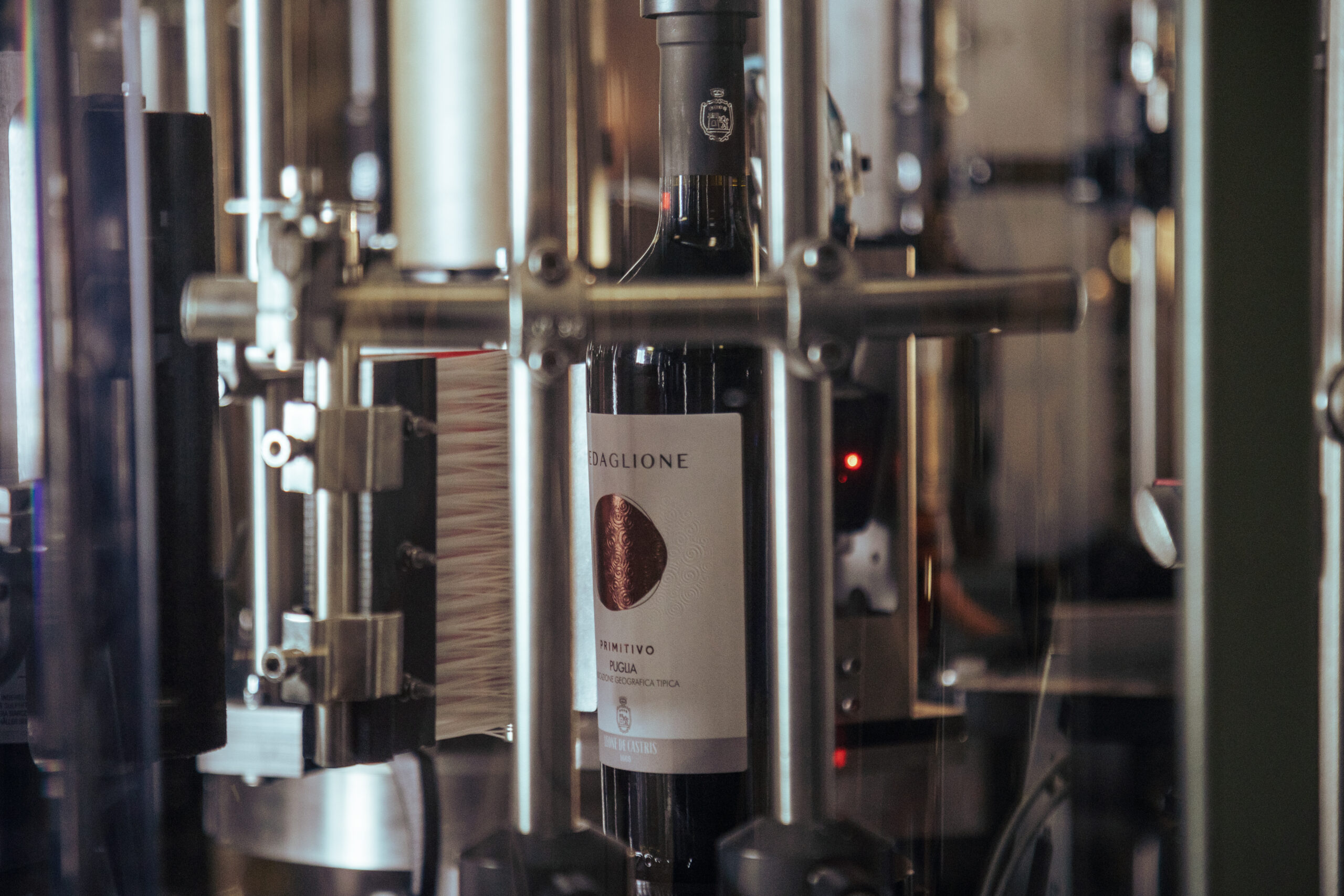
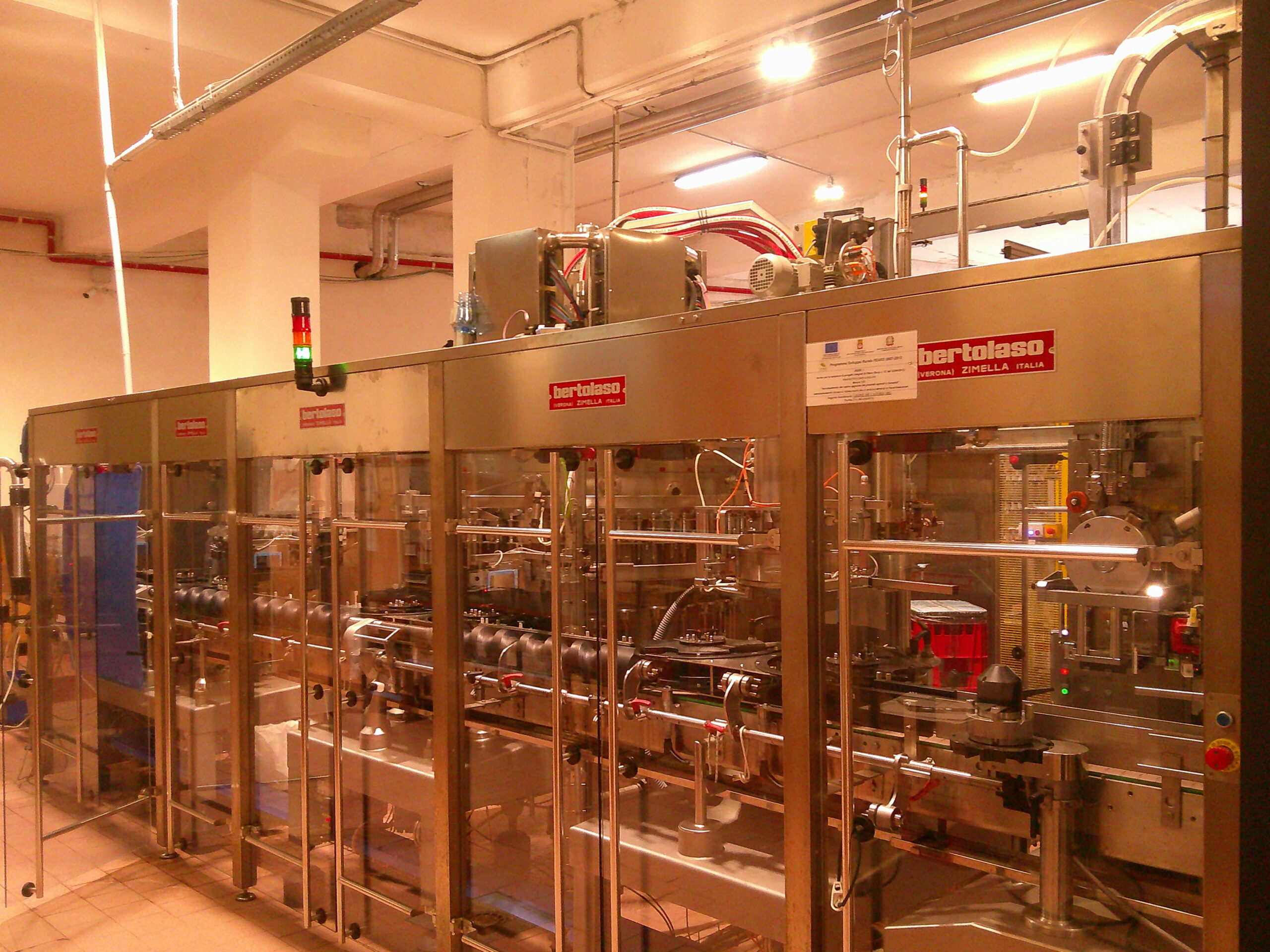
At the heart of the production system lies the bottling line, designed as a continuous and coordinated flow. Bertolaso’s Elettra 1400 monoblock, with a capacity of 5.000 bottles per hour, forms the central element of a line designed for an annual production of approximately 2 million bottles.
The decision not to oversize the plant reflects a strategy aimed at striking a balance between industrial efficiency and direct control, with bottling taking on a strategic role, becoming the point where product traceability, safety and consistency are consolidated.
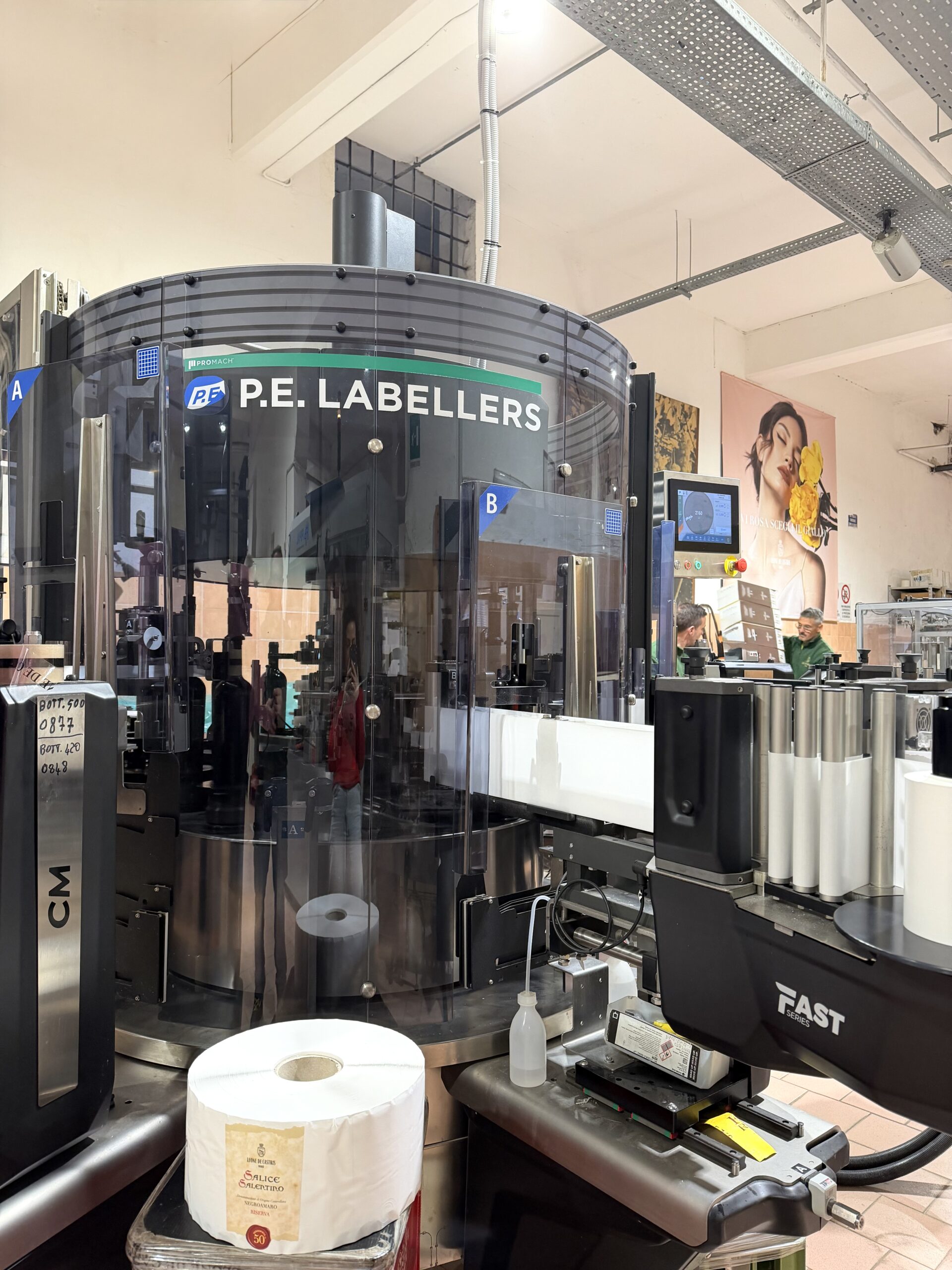
Completing the line are a P.E. Labellers Modular CM (2023) labeller, a Cosmapack depalletiser and an integrated Fipal system for managing the forming, sealing and cartoning stages.
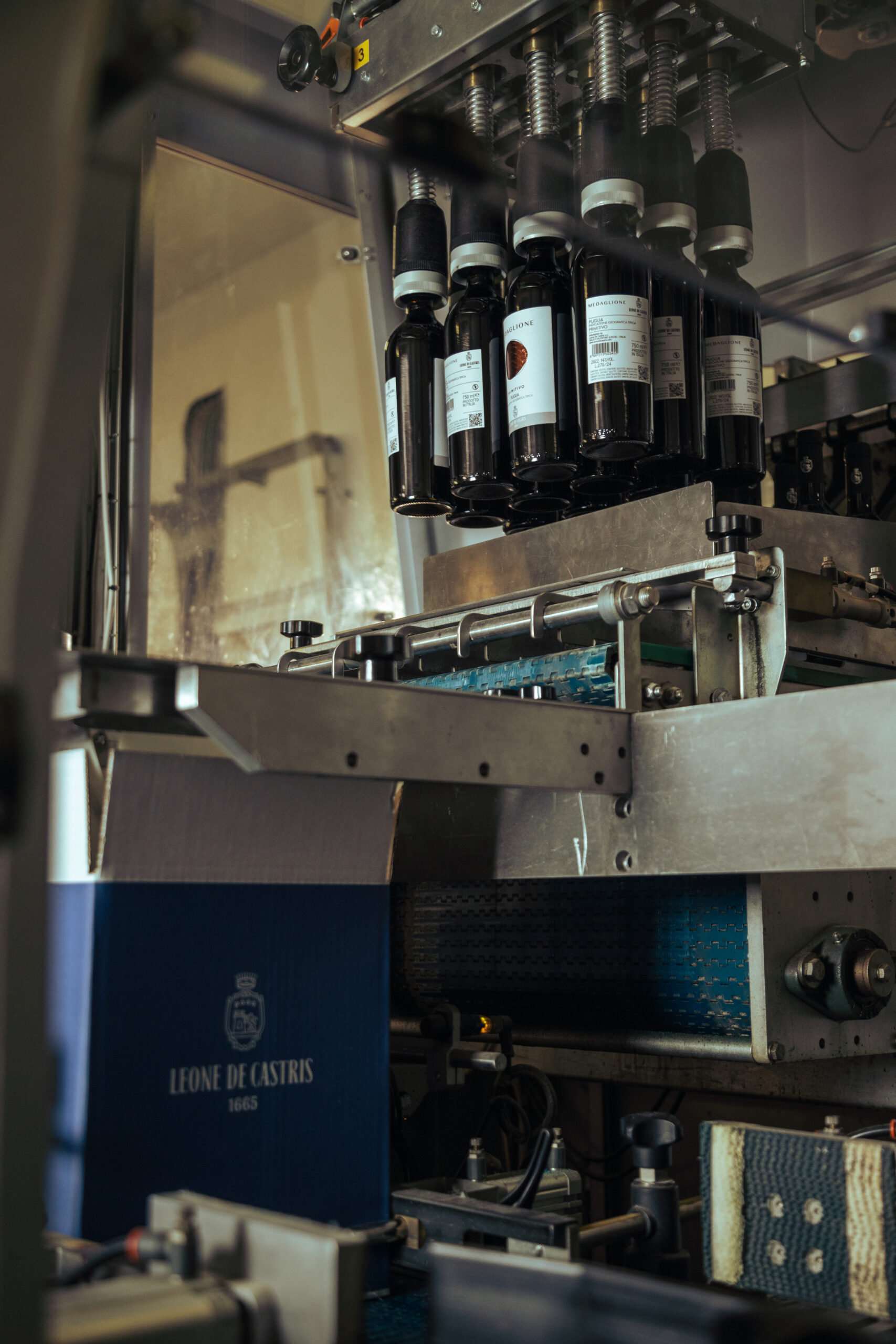
The integration of the machines reduces downtime and critical issues, ensuring operational continuity and precision in packaging, crucial factors for foreign markets, where regulatory compliance and packaging quality directly impact brand perception.
«Industrial organisation is a structural component of our business model – explains Tripaldi –. Exports account for around 40% of turnover and demand high standards in terms of consistent quality: markets such as Germany, the United States, Japan, China and Northern Europe require reliability and consistency over time».
The ability to maintain the organoleptic profile of a distinctive wine rooted in its territory, whilst respecting year-to-year variations, depends, according to the oenologist, on rigorous control of the winemaking and bottling stages.
«Batch planning, the synchronisation of product availability with the distribution calendar and traceability management form an integrated system that enables precise operation on an international scale. In this context, technology becomes a guarantee of consistency, without compromising the terroir’s identity: Negroamaro, Primitivo and the estate’s other grape varieties thus find an infrastructure capable of supporting their expression, reducing unwanted variables».