Current climate change and the alarming scarcity of water suggest the need to switch to alternative crops other than common cereals.
In this context, millet, one of the main food sources in arid and semi-arid regions (Africa, India and China) and the sixth most important crop in the world, shows characteristics of marked sustainability compared to the major cereals. Among the different varieties of this crop, pearl millet (Pennisetum glaucum L.) stands out for its high content of fibre, minerals and antioxidants.
The aim of a recent study, carried out by a group of Italian researchers (Parenti et al., 2025), was to evaluate the effects of using this cereal on the quality of bread. For the experiment, pearl millet was ground as wholemeal flour, half of which was fermented with Saccharomyces cerevisiae and Companilactobacillus paralimentarius (for 24 h at 28°C) and then dried (for 20 h at 30°C).
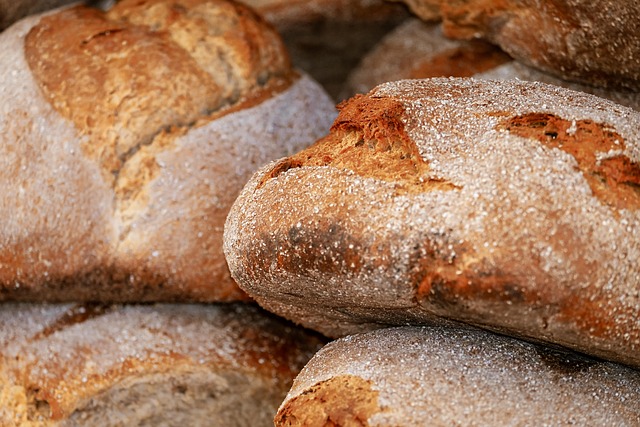
The results show that fermentation and particle size have significant effects on the technological properties of millet flours, while wheat-millet blends (80:20) behave similarly to 100% wheat. The presence of millet in bread reduces the specific volume, without changing the softness of the crumb, and brings about some differences in the other texture parameters, as well as in the colour.
In conclusion, the results obtained so far expand our knowledge of the technological properties of millet and show that it is possible to obtain a quality bread with 20% wholemeal millet flour, enriching the nutritional profile of the product.
Bibliographical references: O. Parenti et al., National Conference on Food Science and Technology, Bologna, 9–10 June 2025, 45