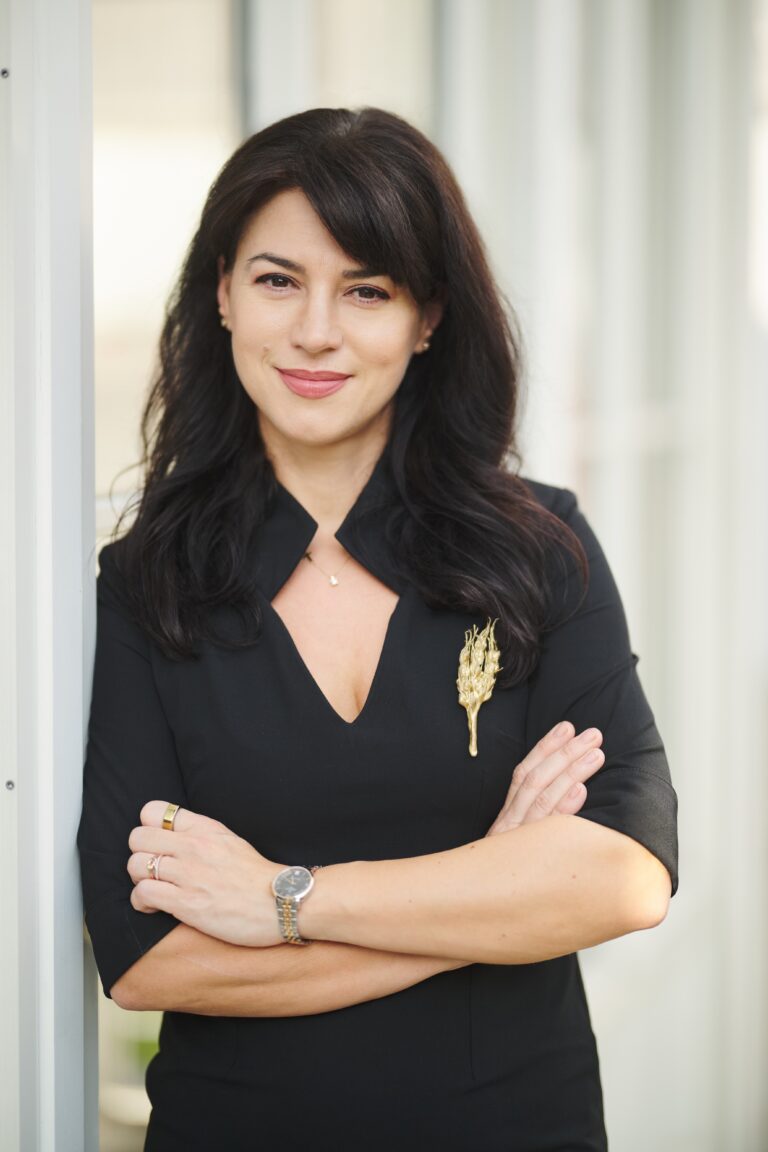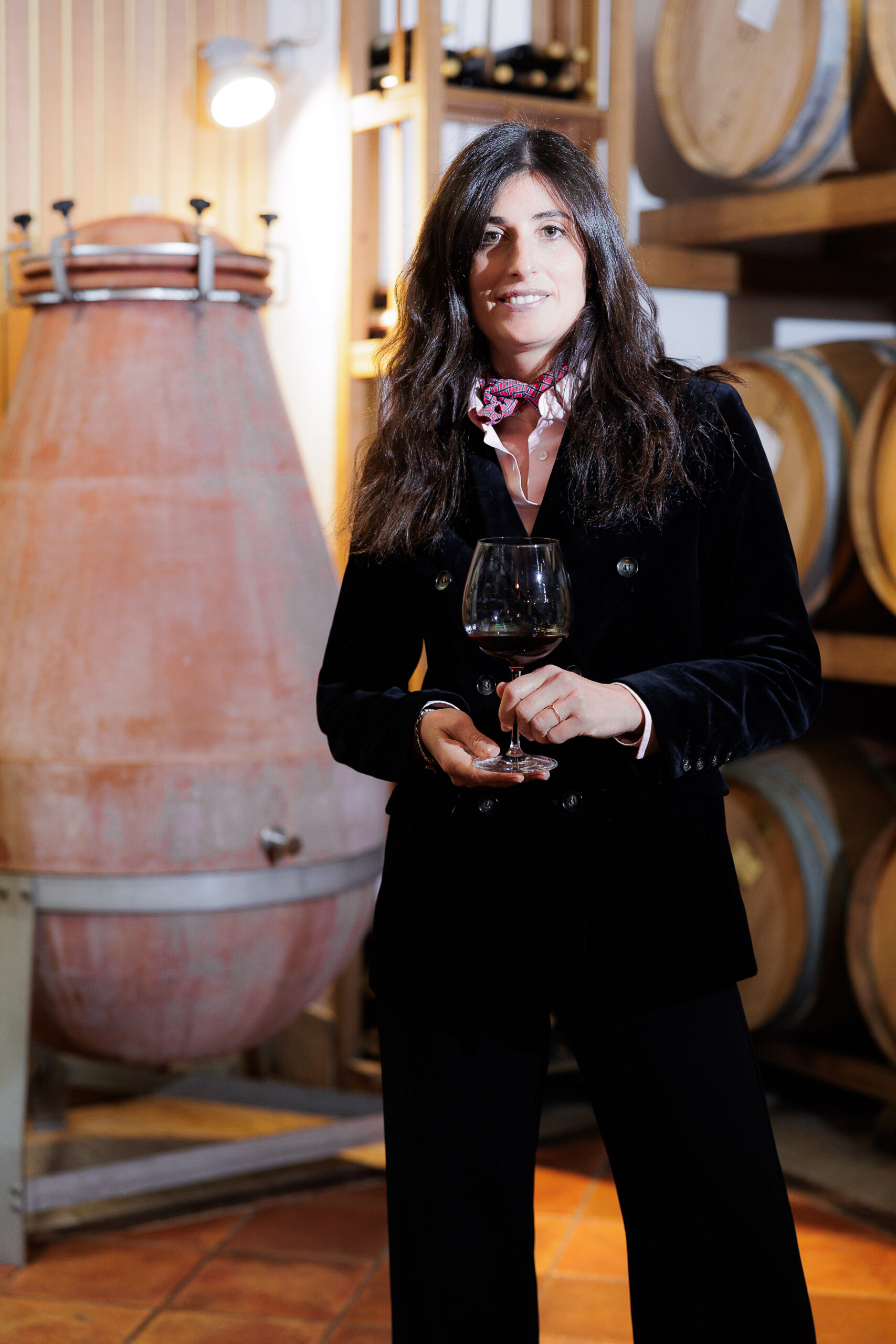
Il Roccolo di Mezzomerico, a family-run business, has built its model on a fully internally managed supply chain, limited production, and a structural connection to local agricultural history. This is the expression not of a positioning strategy, but of a precise and coherent vision developed over time. Today, the company is led by Francesca Gelmini, along with her mother, Margherita. A far from linear journey led Francesca from international legal training to her return to the vineyard and cellar, at a delicate moment of generational transition, when she decided that Nebbiolo could become a life project. She told us about it herself, retracing not only her own personal and professional journey, but also the evolution, production and organizational choices, challenges faced, and future goals of her business.
Francesca, how would you describe yourself today, considering your personal journey and your role in the company?
I would describe myself as a very determined, curious person, deeply connected to my homeland. I trained as a lawyer with an international background characterized by rigor, method, and discipline. At the same time, however, I grew up among the vines: I understand seasonality, agricultural work, and respect for nature’s rhythms. On a personal level, I seek authenticity, balance, and harmony, while at work, I believe that passion is the determining factor: it’s what guides my choices and gives meaning to my presence in the company. My goal is to contribute to the growth of Il Roccolo while maintaining intact the values that make it unique: family tradition, a deep connection to the land, and direct contact with the land. The company’s strength, in my opinion, lies precisely in its ability to transform a family history into a solid project, both present and future.
What were the key milestones in your education and professional career?
I graduated in Law from the University of Milan with honors, then earned a Ph.D. in EU Competition Law, with periods of research as a Visiting Researcher at the University of Paris 1 Panthéon-Sorbonne. I also completed a Master’s degree at King’s College London, with honors. This development as a lawyer has provided me with a structured working method, in-depth analytical skills, and the ability to operate in global contexts. I worked for several years in international law firms in Milan and Rome, in highly organized and highly complex environments. Although not directly related to the wine sector, these experiences were extremely formative, as they allowed me to develop skills that I now consider essential: problem solving, managing pressure and responsibility, organizational skills, attention to detail, and the ability to deal with very different realities and sensitivities. Specifically, my experiences in Paris and London allowed me to develop enormous open-mindedness and a greater ability to listen and observe, as well as teaching me to communicate effectively and tackle complex problems with clarity. I learned to see difficulties not as insurmountable obstacles, but as challenges that can be faced with method and determination. This international perspective today represents a precious resource: it allows me to combine my deep ties to my family and local roots with a broad, contemporary, and structured perspective.
What led you to leave your already established career to return to the family business?
Roccolo has always been part of my life. As a child, I grew up among the vines and the cellar, participating in the grape harvests, and this allowed me to develop a deep connection with the company and an instinctive understanding of its rhythms. Over time, the call to my land and my family’s history has grown ever stronger. The loss of my father, five years ago, was a turning point: it made me understand more clearly the value, dedication, and vision behind what my parents had built. I felt that such a commitment deserved continuity, not only on an emotional level, but also on a practical level. A year ago, I understood that the time had come to return, choosing a path that was certainly more uncertain than the previous one, but profoundly authentic. It was a decision dictated by love, responsibility, and identity. Today, I am involved in all phases: production, management, sales, relations, and communications. I coordinate the company together with my mother, a constant source of teachings: I share every strategic and operational decision with her. It’s a four-handed job, and his experience is a fundamental point of reference for me. Managing everything internally requires constant presence and responsibility, but it also allows for rapid and profound learning: every day I can observe, intervene, understand the technical dynamics, and address any issues with a comprehensive approach to the entire production process.
The most significant challenges?
Undoubtedly the emotional one related to the generational transition and the transition from one generation to the next.” “Returning to work here has meant for me returning to a dimension that I feel deeply mine, following the operations between the rows and the entire production process as part of a dynamic and stimulating activity, which allows me a complete vision of every phase and daily growth.” Francesca Gelmini with her mother Margherita at the loss of my father. Joining the company meant taking on an important legacy, made up of values, perspective, and commitment. A great responsibility, but one that has fueled a tremendous motivation. The other challenge was integrating my legal and international training with agricultural and manual work, which was very different from what I was used to: I had to learn to combine method and instinct, strategic vision and concrete operations, study and manual skill. Finally, there is the daily challenge of growing the company while maintaining its artisanal identity and production style, operating in a complex and competitive market without distorting its essence. All of this requires balance, consistency, and thoughtful decisions, but it is precisely this that makes the journey stimulating and deeply exciting.
Tell us a little about your current production.
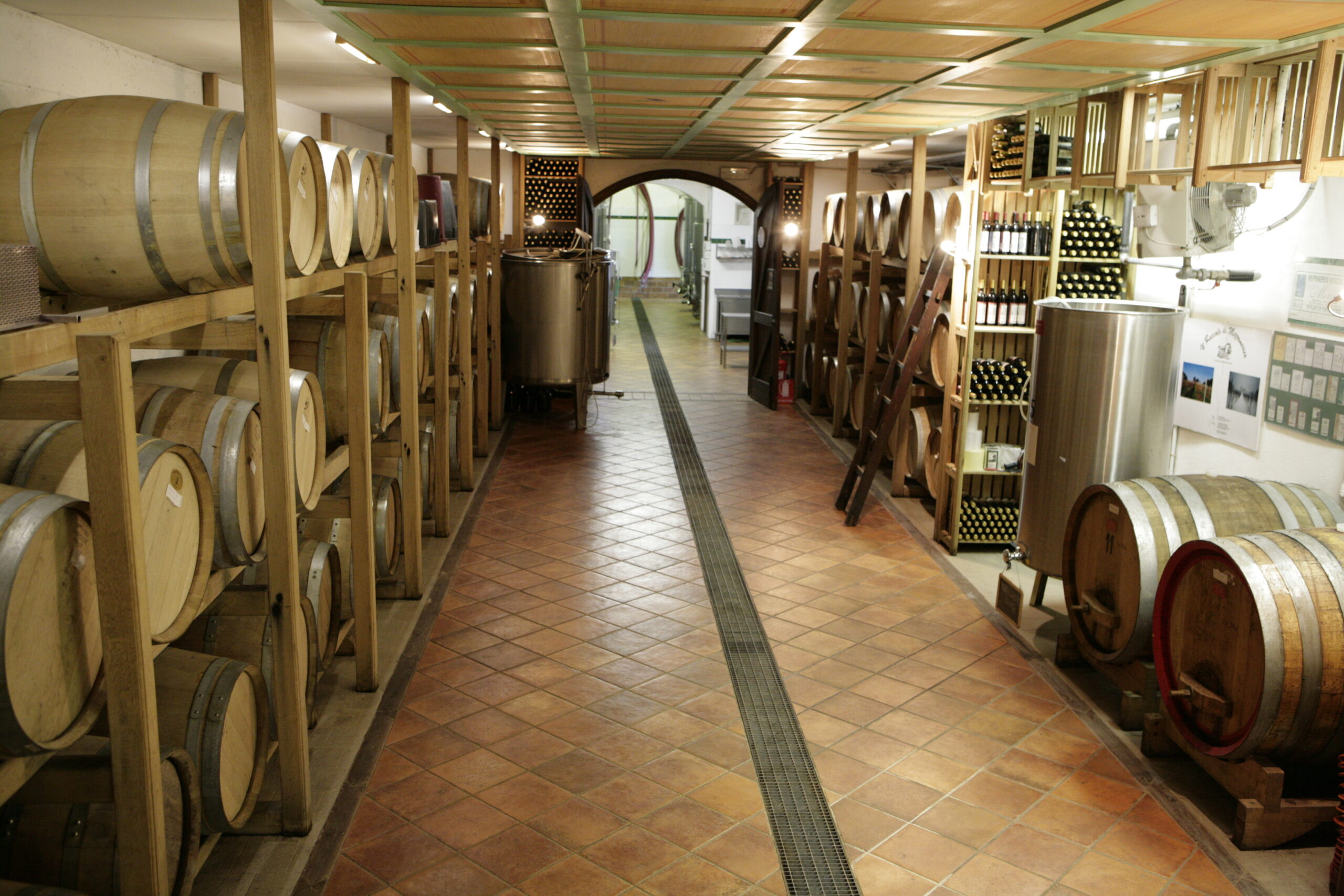
We cultivate approximately 7 hectares of vineyards, the majority of which—3 hectares—is dedicated to Nebbiolo; we also produce, among others, Bonarda Novarese, Vespolina, and Colline Novaresi Bianco. We began systematically producing our wines in 1990—the year of the first harvest after the renovation—and today we average around 30,000 bottles per year across 13 labels, all made from our own grapes and with strict quality and process control. Nothing is outsourced. The choice of family management and the exclusive cultivation of estate-grown grapes, following the “vineyard to bottle” supply chain, is a central aspect of our history, allowing us to monitor every step: from tending the land to harvesting, all the way to bottling. We don’t use herbicides in the vineyard, we conduct constant agronomic and meteorological monitoring, and yields are intentionally limited: each vine produces small, concentrated bunches, with high-quality sugars, aromas, and structure. The winery has been equipped with modern equipment, such as temperature-controlled steel tanks, French oak barriques, and cutting-edge filtration and bottling systems. Thanks to these modern technologies and a careful and respectful approach, we can craft and age wines that fully express the character of Nebbiolo and other native grape varieties, while maintaining an elegant and territorial profile. Our true strength is that we follow everything, truly everything, 360 degrees. Not delegating means knowing, observing, growing, and ensuring consistent quality.
Quality over quantity, then.
Exactly, this is our philosophy! Respect for the land, its rhythms, and the raw materials. Every choice is guided by the values my parents pursued and passed down: authenticity, craftsmanship, consistency. We want each of our bottles to tell our story and our region.
Looking to the future, what are your goals and dreams?
Seeing that those who taste our wines recognize their identity, history, and care is our greatest satisfaction right now. For the future, we aim to grow with balance, develop wine tourism, enhance the territory, and continue to combine tradition, quality, and sustainability, including through the use of photovoltaic panels and green materials. Our dream is to increasingly raise awareness of our business among a national and international audience, maintaining our authentic and family-like character, embodying an authoritative symbol of this region, and passing the company on to future generations.