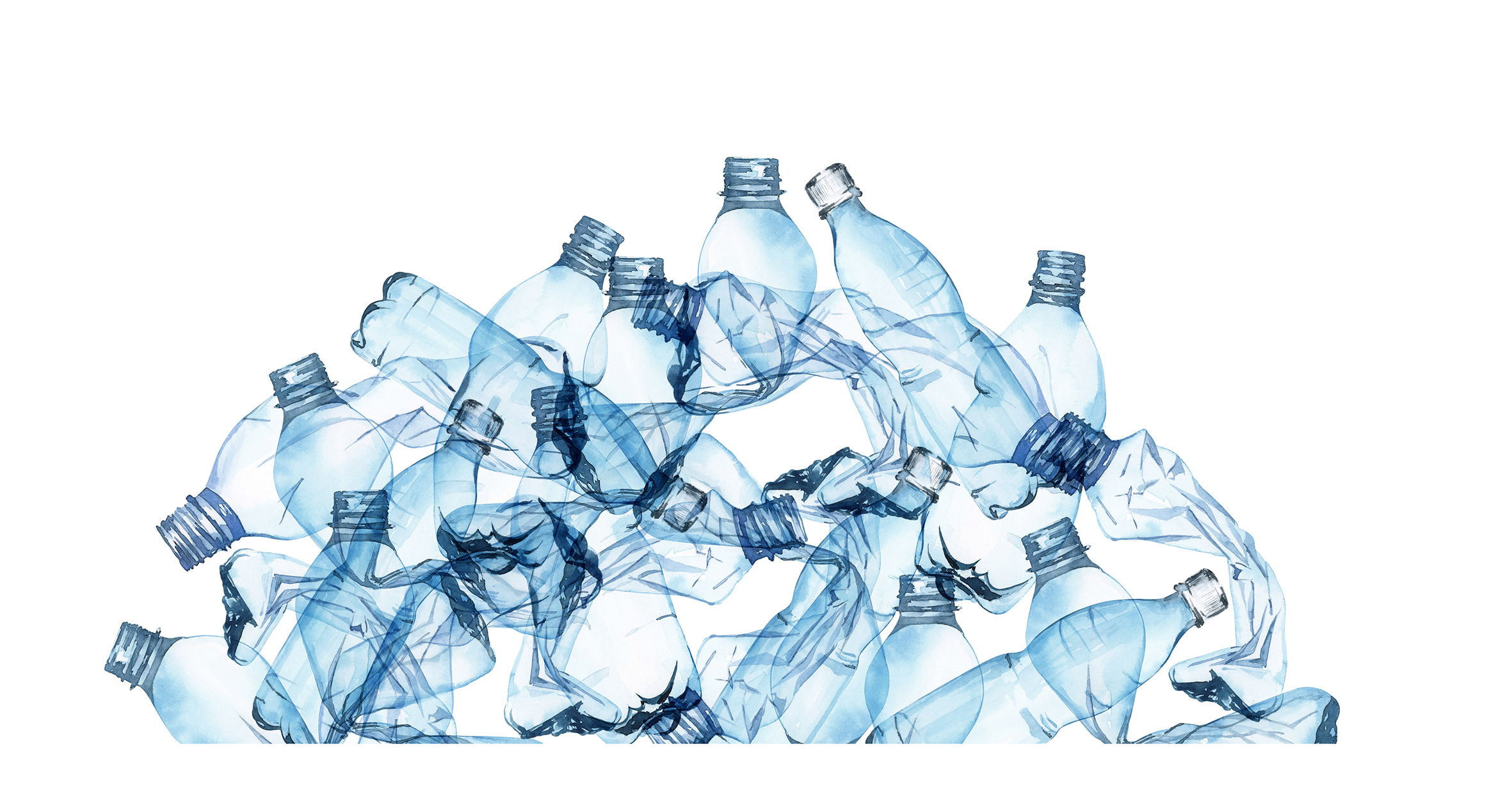
Mechanical recycling of PET is the foundation of bottle circularity, but in the plant, it doesn’t simply mean “remelting and regranulating.” Each step affects the polymer’s chemistry, energy consumption, and food contact safety. Bezeraj and colleagues relate molecular phenomena (degradation, chain repairability, volatile formation) to actual process phases and life cycle analysis.
The paper proposes a decision-making framework that integrates polymerization engineering and LCA to determine when mechanical recycling remains the best option or when it is appropriate to combine it with processes such as depolymerization or, in extreme cases, energy recovery. From a plant engineering perspective, the process includes optical and spectroscopic sorting, shredding, washing, and decontamination—including with heated caustic solutions—followed by drying and extrusion.
Water stands out among the critical factors: although not a contaminant, it promotes hydrolysis and the formation of byproducts. For this reason, moisture must be reduced to values in the order of 0.02% by mass before remelting, or managed with solid-phase repair strategies. Regarding contamination, the study emphasizes the role of unintentionally added substances, potentially critical for migration into foods. Hence the importance of rigorous controls on incoming flows and compliance with migration limits.
For bottling, the message is clear: mechanical recycling is a chain in which each unit can improve or compromise viscosity, purity, and suitability for use. Industrial innovation today focuses on lines that combine decontamination and increased intrinsic viscosity through solid-phase reactors, with targeted interventions to reduce acetaldehyde and other volatiles.
Bibliographic references: Bezeraj, Erion and Debrie, Simon and Arraez, Francisco J. and Reyes, Pablo and Van Steenberge, Paul H. M. and D’hooge, Dagmar R. and Edeleva, Mariya. State-of-the-art of industrial PET mechanical recycling: technologies, impact of contamination and guidelines for decision-making. RSC Sustainability, 2025, 3-5. https://pubs.rsc.org/en/content/articlelanding/2025/su/d4su00571f