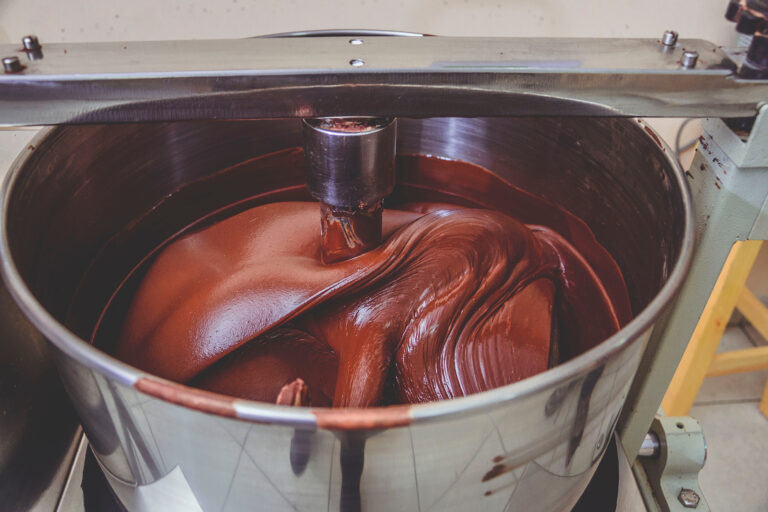
In many organisations, the information gathered (data from plant, production lines, maintenance, quality control, stock, orders, distribution and management systems) is often scattered across different software programmes, spreadsheets, manual reports and tools that do not always communicate with one another. The result is a fragmented view of processes, which can slow down decision-making and make it more difficult to address inefficiencies, anomalies, machine downtime or waste.
The value of operational data
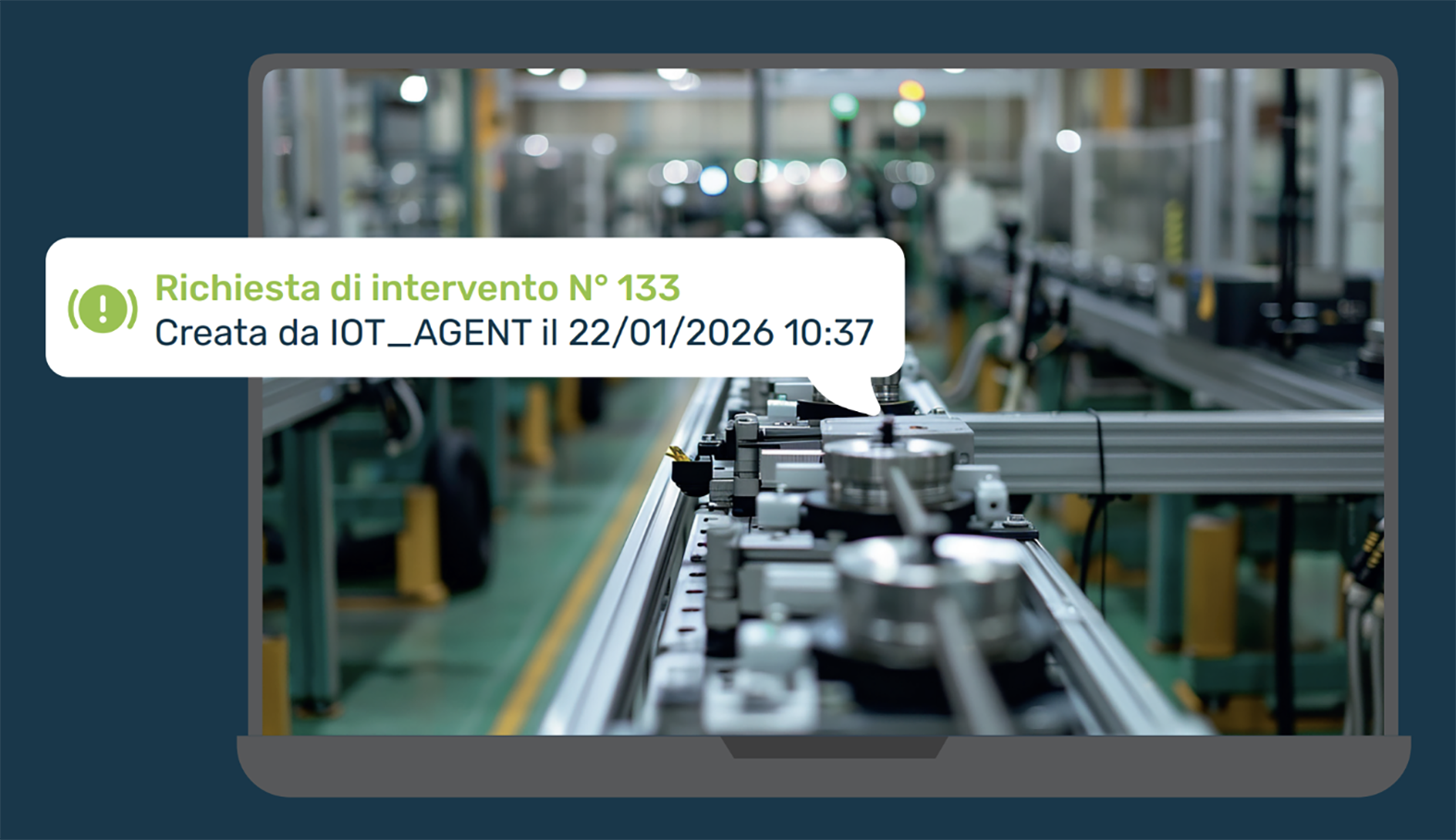
In the Food & Beverage sector, production continuity is crucial. A sudden shutdown, an unavailable production line, unscheduled maintenance or a fault detected too late can lead to delays, rework, wastage of raw materials, sub-standard products, additional costs and difficulties in meeting planned deadlines and volumes. This is where OmniaK comes in: the cloud-based solution developed by Kiwibit to support companies in the digital management of assets, maintenance and operational activities. OmniaK enables companies to centralise information relating to their assets: technical specifications, documentation, checklists, work orders, maintenance plans, deadlines, intervention timelines and activity histories. In this way, the company can move beyond fragmented management and build a more organised, accessible and shared database. For a food or beverage company, this means having greater control over what happens every day on the production floor: the equipment involved, planned interventions, recurring issues and areas where inefficiencies arise.
IoT and predictive maintenance: taking action before a breakdown
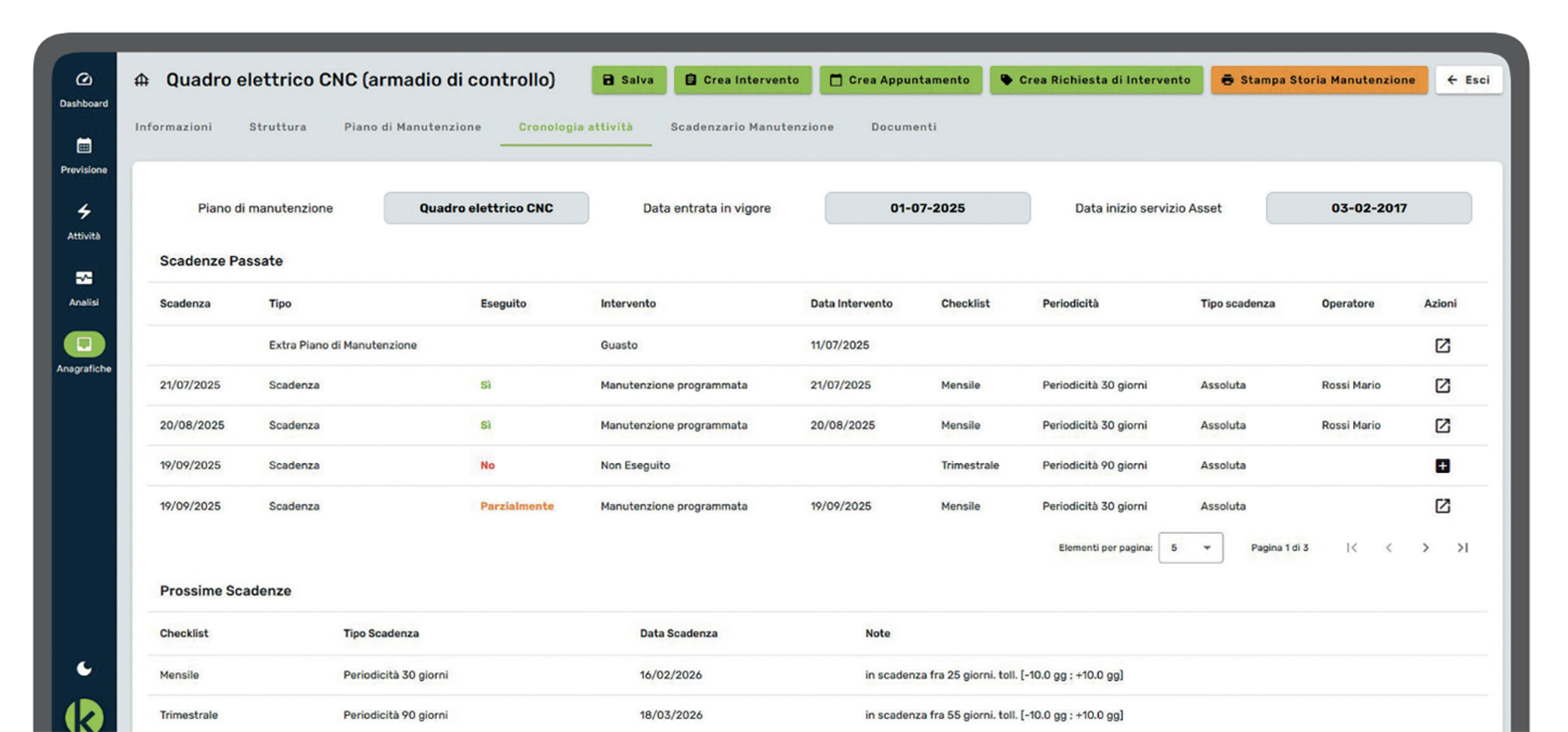
The integration of digital platforms and IoT technologies represents one of the most significant developments. Through sensors fitted to machinery or connections to systems already in place within the company, it is possible to collect data on the operation of plant and transfer it to a digital environment where it can be monitored and analysed. This shift enables a move away from reactive maintenance – which involves intervention only after a breakdown has occurred – towards a preventative and predictive approach. In the traditional model, the problem is addressed only once it has become apparent: a component breaks down, the production line stops, and intervention becomes urgent. With an approach based on IoT and data analysis, however, the company can identify signs of anomalies, values outside specified thresholds or recurring patterns that foreshadow a potential malfunction. In the food sector, preventing downtime does not merely mean reducing maintenance costs, but also safeguarding production continuity, minimising the risk of waste and maintaining a more consistent process quality. Predictive maintenance enables interventions to be planned based on the actual condition of the assets.
AI and machine learning: turning data into actionable insights
Data collection is only the first step. The value increases when this data is analysed and transformed into actionable insights. This is where artificial intelligence and machine learning come into play, as they can support the analysis of data collected in the field, the identification of recurring patterns and the construction of predictive models relating to asset behaviour. In the context of OmniaK, AI should not be seen as an abstract concept or something disconnected from day-to-day work, but as a technology that supports operational decision-making. It can help to process large amounts of information, highlight anomalies, suggest priorities, identify the most critical assets and ensure that maintenance interventions are managed more promptly. For a Food & Beverage company, this means being able to analyse very specific questions more precisely: which systems experience recurring issues? Which interventions cause the most downtime? Which machines are most prone to wear and tear or faults? Which maintenance activities can be carried out in advance to avoid disruptions during critical production periods?
Operator safety and process continuity
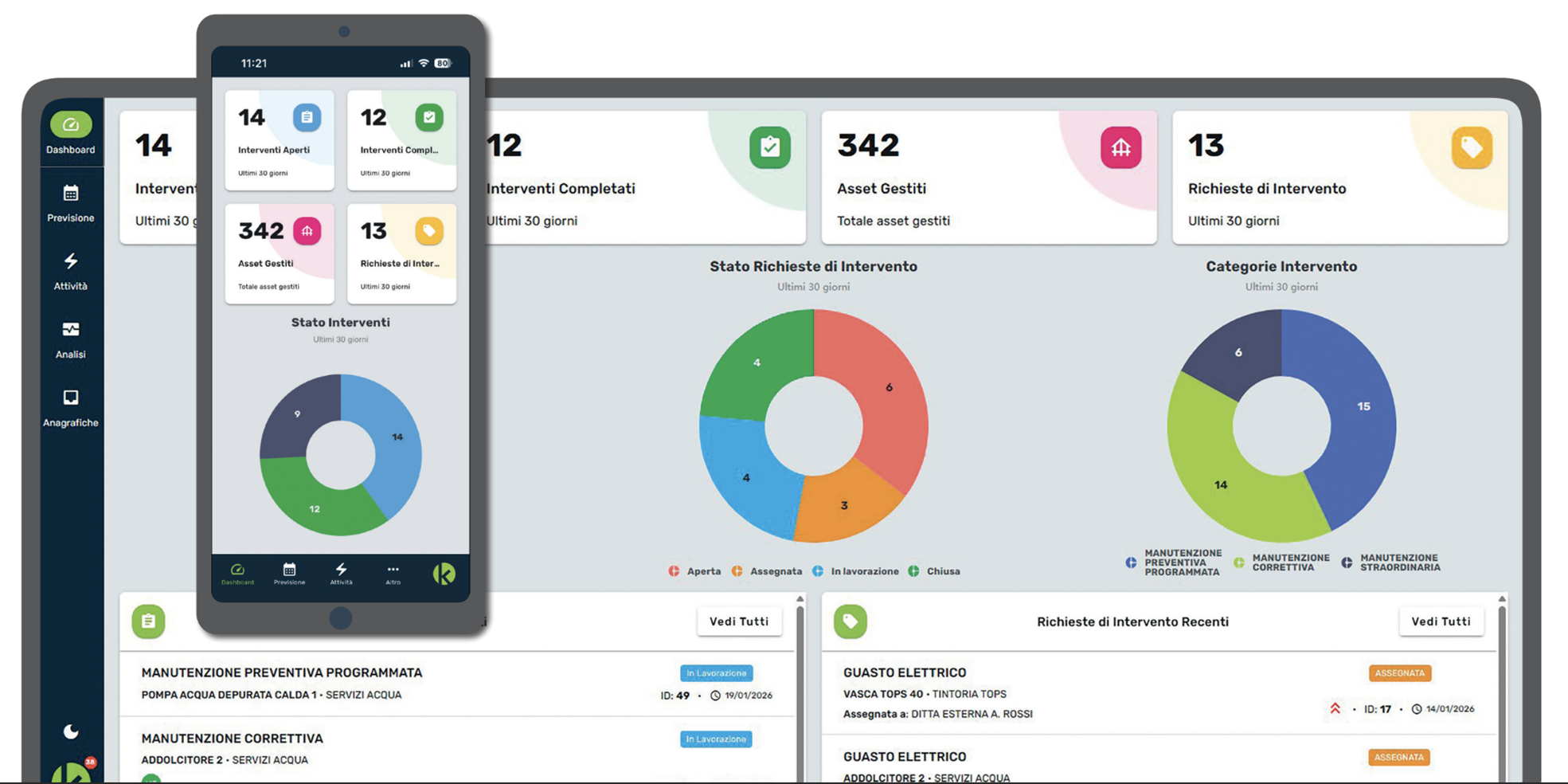
The issue of safety is central on several levels. There is the safety of processes and production quality, but there is also the safety of operators working in close proximity to machinery, production lines and plant. An asset operating outside its specifications or a machine that has not been properly maintained can pose risks to production continuity and to the people involved in operational activities. OmniaK was also developed with this in mind: to contribute to a more structured management of maintenance tasks, to make critical information more visible and to support a preventive approach to maintenance. Integration with IoT sensors and alert systems enables the status of assets to be monitored and action to be taken before a deviation in operation turns into a breakdown or a hazardous situation. Digitising maintenance therefore means not only increasing efficiency, but also making the relationship between people, machines and processes more controlled, traceable and safe.
Virtual reality and training: better preparation for those working on plant and equipment
Another distinctive feature concerns virtual reality, as applied to training and instruction. In food processing plants, where machinery and production lines can be complex and highly specialised, the training of operators and maintenance staff is crucial. VR enables the creation of digital environments or models of production spaces and machinery, which can be used for immersive training programmes. Operators can thus familiarise themselves with systems, procedures and risk areas before working on site. This approach is also useful for external maintenance companies, which often have to operate in unfamiliar environments. Preparing via a virtual model can make their work more informed, organised and safe, and help them become more resilient.